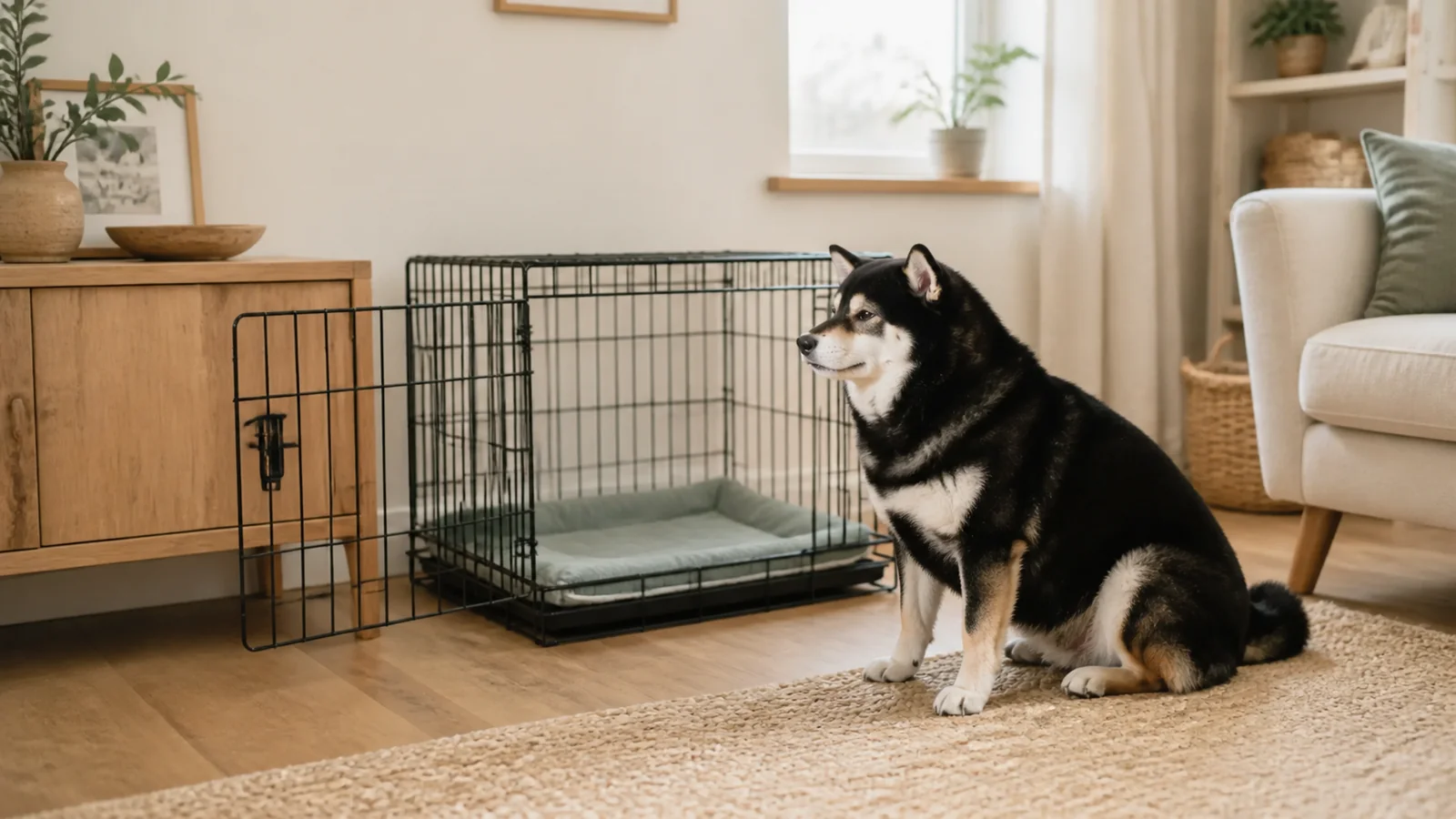
A home dog crate should be comfortable enough for routine use, easy enough to clean, and sized for the dog that will actually use it. The right choice depends on room placement, dog behavior, door access, cleaning needs, and whether the crate will stay in one place.
Use the Dog Crates pillar for the broader buying framework, then compare this guide with Best Heavy-Duty Dog Crates when ordinary wire is being damaged, the Large Dog Crate Guide, Small Dog Crate Guide, crate size guide, Dog Crate Mats Guide, Dog Crate Cover vs Furniture Crate, Dog Crate Furniture Guide, Dog Kennel vs Dog Crate, and soft vs wire crate guide.
If you want a printable setup pass before shopping, open the Dog Crate Setup Checklist and keep it beside the product listings.
Quick read
TL;DR
- Best starting point for many homes: a folding wire crate with the right internal dimensions, secure latches, and a removable tray.
- Measure before buying. The crate should let the dog stand, turn around, and lie down comfortably.
- Room placement matters as much as crate type.
- Furniture-style crates can work, but check ventilation, cleaning access, and chew resistance.
- Soft crates are not the best default for home use if chewing, scratching, or escape attempts are likely.
- Choose bedding carefully so it adds comfort without blocking the door or reducing usable height.
- Match the crate to behavior, not just decor. Panic, chewing, and escape attempts change the risk profile.
Quick answer
For most home routines, start by comparing folding wire crates. They ventilate well, offer visibility, often include divider panels, and usually have removable trays for cleaning. They are not always the most attractive option, but they are practical and easy to evaluate.
Choose a furniture-style crate when the crate will stay in a visible living area and your dog is calm enough for that material. Choose a plastic crate when your dog prefers a more enclosed feeling or when a portable shell fits the use case. Choose a soft crate only for dogs that are already crate-comfortable and not destructive. If your dog panics, chews barriers, bends wire, or tries to escape, pause the purchase and talk with a veterinarian or qualified behavior professional before relying on a standard home crate.
Share & embed
Puppy home routine
Wire crate with divider
- Look for
Adjustable space, tray, visibility, airflow
- Avoid
Oversized crate without divider
Living room setup
Furniture-style crate
- Look for
Cleaner appearance, stable location, enclosed feel
- Avoid
Poor ventilation, hard cleaning, chew-prone surfaces
Calm adult dog
Wire, plastic, or furniture-style crate
- Look for
Match room, behavior, and cleaning needs
- Avoid
Choosing by looks alone
Light travel or visits
Soft crate for trained dogs
- Look for
Portable, foldable, lighter weight
- Avoid
Using soft crates for chewers or escape artists
Home crate selector
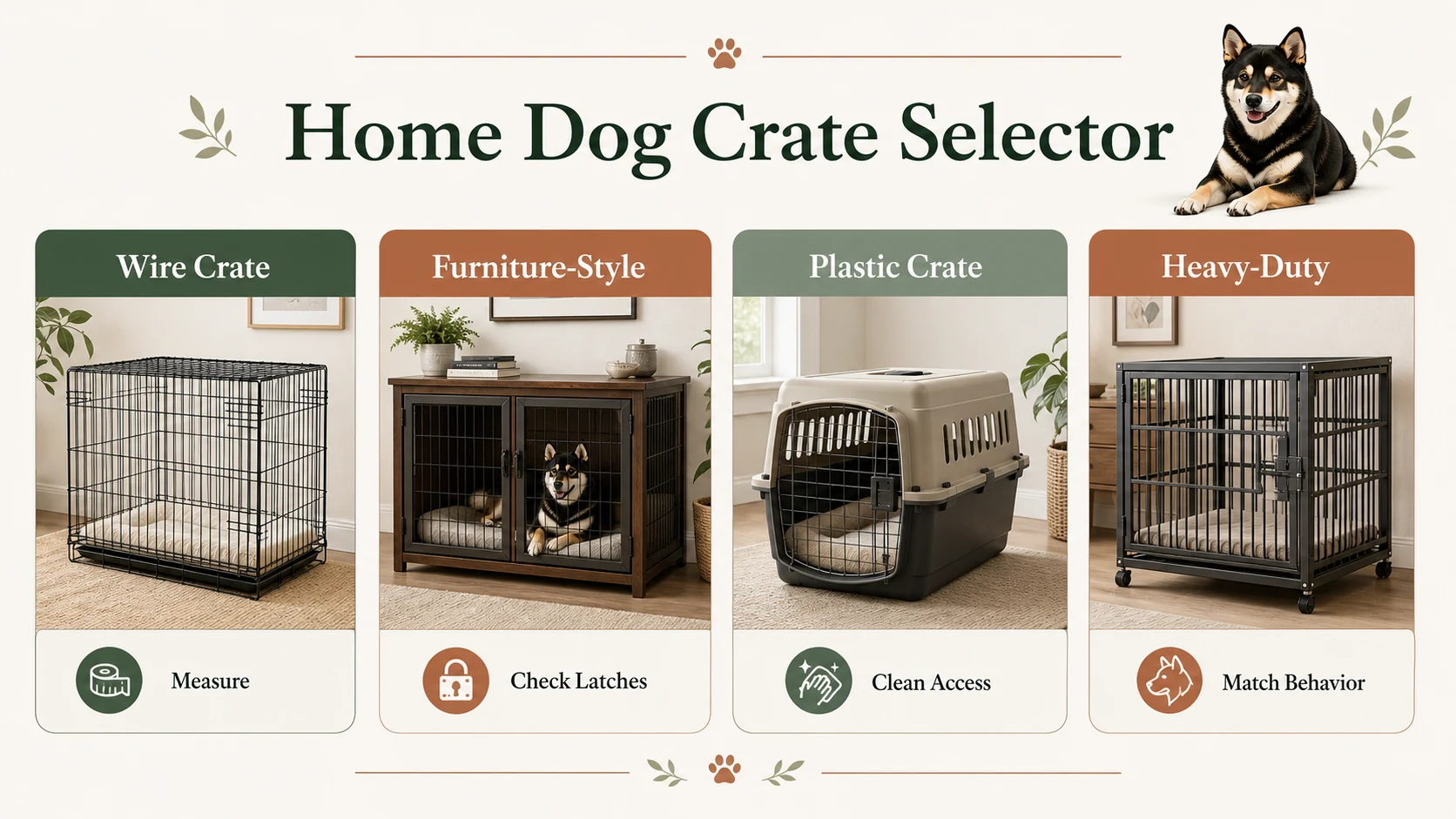
Different home crate styles solve different problems. The safest first pass is not "which crate looks best?" but "which crate fits the dog, room, cleaning routine, and behavior profile?"
Share & embed
| Option | Best for | Key features | Caveat | Merchant |
|---|---|---|---|---|
Folding wire crate | Puppies, many calm adult dogs, flexible room setups | Divider options, visibility, tray access, airflow | Can rattle and is not right for panic or escape attempts | See direct product examples below |
Premium collapsible crate | Visible rooms where design, rounded edges, access points, and easy folding matter | Cleaner look, multiple access points, fitted accessory ecosystem | Usually costs more and still needs size checks | See direct product examples below |
Furniture-style crate | Calm dogs in living rooms, offices, and bedrooms | Blends into furniture, stable location, den-like look | Poor match for chewing, scratching, or accidents | See direct product examples below |
Heavy-duty metal crate | Dogs that have damaged ordinary crates or need a stronger supervised home setup | Stronger frame, heavier door, lockable wheels on some models | Not a substitute for behavior care or gradual crate training | See direct product examples below |
Wire, furniture-style, or plastic?
Wire crates are common because they are versatile. They fold, ventilate, allow visibility, and often include dividers. For puppies and general home routines, they are the easiest first comparison point.
Furniture-style crates can make sense in living rooms, offices, or bedrooms where a standard wire crate would dominate the room visually. They still need to function like dog gear. Check door swing, airflow, interior measurements, surface durability, and whether the base can be cleaned after accidents. If you might only need to soften the look of a wire crate, compare Dog Crate Cover vs Furniture Crate before buying. Use the Dog Crate Furniture Guide if the crate will double as an end table, nightstand, or decorative room feature.
Plastic crates feel more enclosed. Some dogs rest better with less visual stimulation, and plastic shells can be easier to move than furniture-style crates. They may have less airflow and visibility than wire crates, so placement matters.
Heavy-duty metal crates can be a comparison category when a dog has already damaged ordinary wire or furniture-style crates. Treat that as a behavior and safety signal, not just an upgrade prompt. A stronger crate can reduce some equipment failures, but it does not fix panic, separation-related distress, or unsafe confinement routines.
| Option | Best for | Key features | Caveat | Merchant |
|---|---|---|---|---|
Folding wire crate | Most home setups and puppy routines | Ventilation, divider options, easy visibility, removable tray | Can rattle and look utilitarian | See direct product examples below |
Furniture-style crate | Living rooms and offices | Blends with furniture, enclosed feeling, permanent placement | Often heavy, pricier, and harder to clean | See direct product examples below |
Plastic crate | Dogs that prefer enclosure | More den-like, portable, sturdy shell | Less airflow and visibility than wire | See direct product examples below |
Soft crate | Calm dogs and light travel | Lightweight, foldable, softer sides | Bad match for chewers or escape attempts | See direct product examples below |
Safety and construction checks
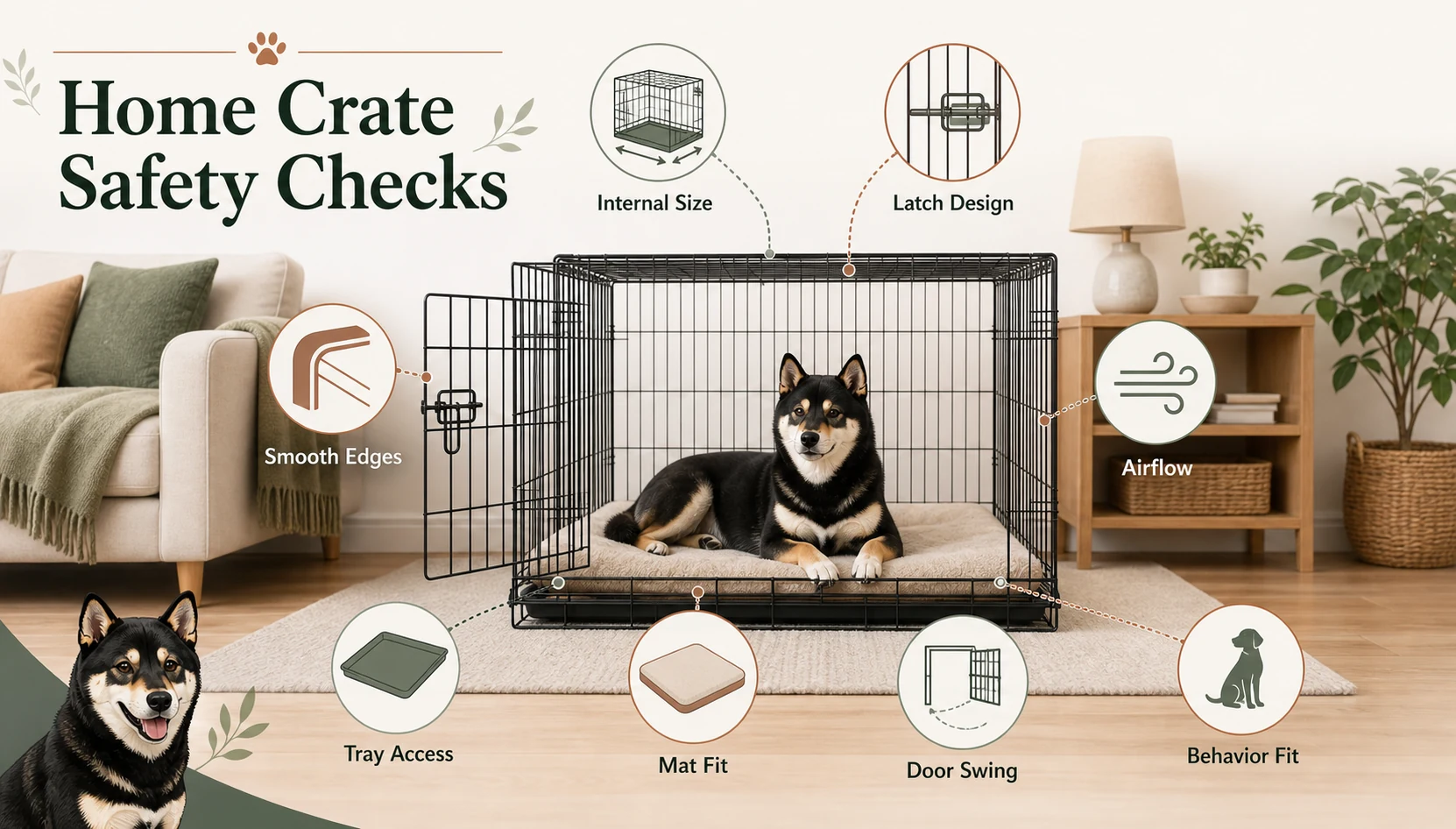
For a home crate, construction details matter more than marketing phrases. Look for stable panels, latches that are hard for the dog to bump open, rounded or covered edges, clean welds or joints, a tray that sits flat, and a door that does not twist when opened.
Share & embed
Check these details before keeping the crate:
- Internal dimensions: the dog should be able to stand, turn, and lie down without the mat stealing too much height.
- Latch design: slide bolts, locking tips, dual latches, or recessed hardware should be easy for you to use and hard for the dog to bump from inside.
- Panel stiffness: side panels and doors should not flex easily during normal handling.
- Smooth edges: check corners, wire ends, tray lips, hinges, and door openings by hand.
- Ventilation: airflow matters especially in corners, warm rooms, and partly covered setups.
- Tray and mat access: you should be able to remove the tray and mat without moving half the room.
- Door swing: the open door should not block walkways, drawers, closet doors, or furniture paths.
- Behavior fit: chewing, clawing, panic, or repeated escape attempts mean the crate choice and training plan need a rethink.
Home placement
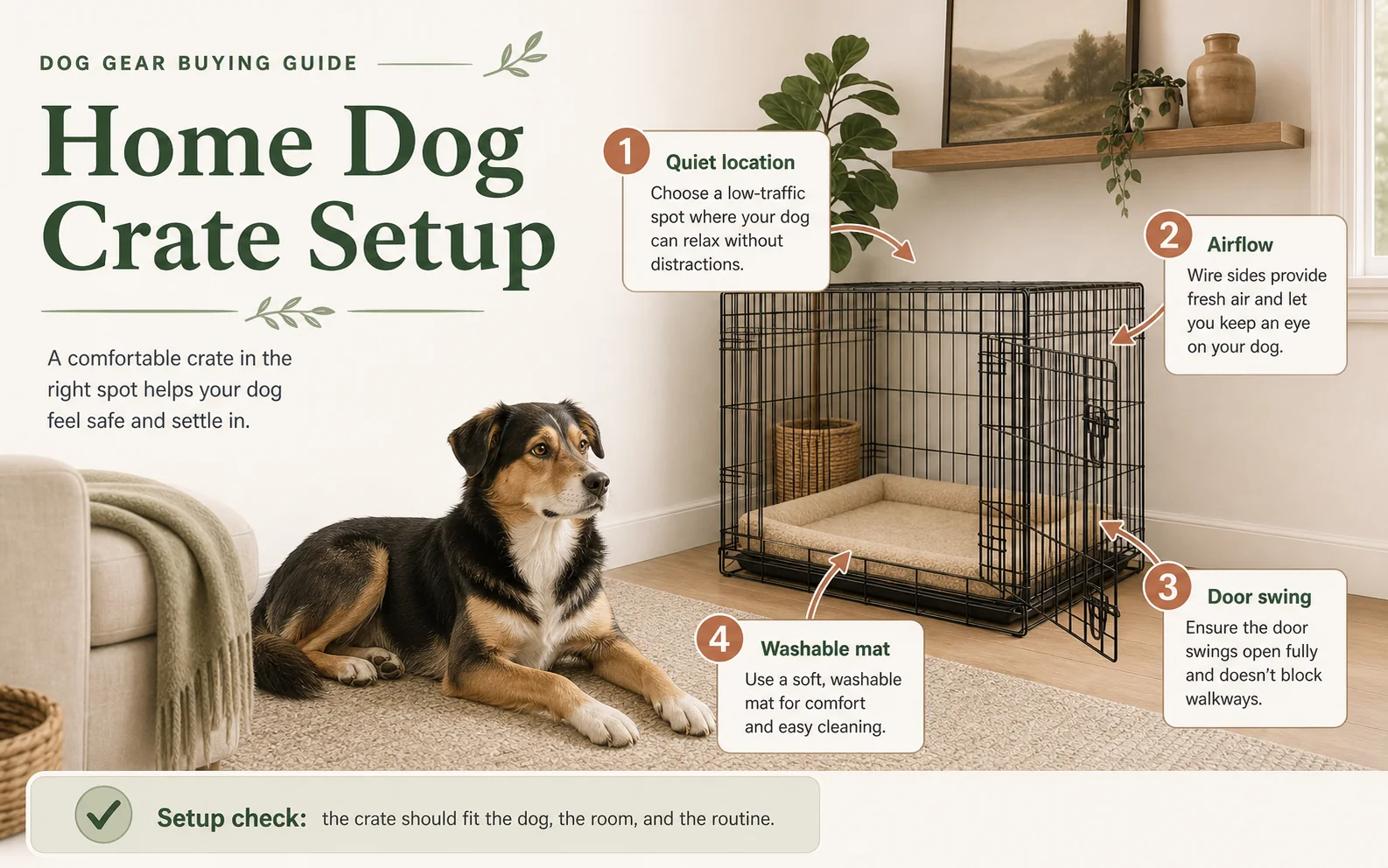
Place the crate where your dog can rest without being isolated from normal household rhythms. Avoid direct heat, cold drafts, high-traffic walkways, and spots where the dog is constantly disturbed.
Before buying, measure the room location:
- Will the door open fully?
- Will the crate block a hallway, drawer, sofa path, or closet?
- Can you remove the tray or bedding without moving furniture?
- Is there enough airflow?
- Is the floor protected from rattling, scratches, or accidents?
Dogs often settle better when the crate is near people but not in the busiest part of the room. A calm corner of a living room, bedroom, or office may be better than an isolated utility area.
For dogs that are new to crates, introduce the setup gradually rather than treating the crate as furniture first and a training tool second. The AKC's step-by-step crate training guide is a useful external reference for building comfort with the crate over time.
Sizing and dividers
The crate should usually allow the dog to stand, turn around, and lie down comfortably. If the crate is for a puppy, a divider can make the crate useful while the dog grows. The divider should be stable, simple to adjust, and secure enough that the puppy cannot push through it.
Use the Dog Crate Size Guide before choosing a size, or run the Dog Crate Size Calculator if you want a cautious starting range. Internal dimensions matter more than outside measurements.
Cleaning and noise
For home use, cleaning matters from the first week. Puppies, muddy paws, shedding, illness, and accidents can make a crate unpleasant quickly if the tray, mat, and corners are hard to reach.
Wire crates with removable trays are usually easier to clean. Furniture-style crates may have seams or corners that trap hair. Plastic crates can wipe down well, but ventilation openings and doors still need attention.
Noise also matters. Wire crates can rattle on hard floors, especially if the tray shifts. A mat under the crate or rubber feet can help, as long as the setup stays stable and safe.
Budget and quality tiers
Budget wire crates can be reasonable for calm dogs when the dimensions, latches, tray, and divider fit the routine. They are not a good default for dogs that chew, claw, or push hard against barriers.
Mid-tier and premium home crates often improve access points, door feel, finish quality, tray design, wheels, folding mechanics, or appearance. Heavy-duty metal crates may be relevant after ordinary crates have failed, but that should also trigger a behavior and routine review.
Direct product CTAs
These are direct Amazon product CTAs for comparison, not fixed universal winners. Check the current Amazon listing, internal dimensions, latch design, return policy, and the dog's behavior fit before buying.
What Dogs Like may earn from qualifying purchases. Affiliate links do not change the checks in this guide.
Common mistakes
✓ Better buying habits
- Measure the dog and the room before comparing crates.
- Check internal dimensions, not only outside size.
- Choose crate type by behavior and use case.
- Prioritize safe latches, smooth edges, and cleaning access.
- Use dividers for many growing puppies.
- Think about noise on hard floors.
- Inspect the crate after assembly and after early normal use.
× Mistakes to avoid
- Buying a decorative crate before checking ventilation.
- Using a soft crate for a dog that chews or scratches.
- Placing the crate in direct sun, drafts, or a busy walkway.
- Adding bedding that blocks the door or makes the crate too short.
- Leaving cleaning access as an afterthought.
- Treating the crate as a substitute for training or exercise.
- Using a standard crate for panic, repeated escape attempts, or barrier damage without professional input.
Related guides
Use the Dog Crate Setup Checklist as a printable pre-purchase pass. Use the Dog Crate Size Guide for measurements and divider choices, or the Dog Crate Size Calculator for a cautious starting range. Read Dog Crate Cover vs Furniture Crate if you are deciding between covering an existing wire crate and buying a decorative crate. Read the Dog Crate Furniture Guide before buying a decorative crate for a living room, office, or bedroom. Read Dog Kennel vs Dog Crate if listings mix crate, kennel, dog cage, travel carrier, and outdoor-run wording. Read the Dog Crate Mats Guide before choosing thick bedding, washable pads, or non-slip mats for the home setup. Read Soft Dog Crates vs Wire Dog Crates and Wire vs Plastic Dog Crates if you are deciding between material types. For puppy routines, print the Puppy Crate Training Schedule. Return to the Dog Crates pillar for the full category overview.
Frequently asked questions
Should a crate include a bed?
Often yes, but the mat should match the dog's chewing habits and cleaning needs. Some puppies need simpler washable mats at first.
Are furniture-style crates better?
They can look better in a room, but they are not automatically better for the dog. Ventilation, sizing, cleaning, and door design still matter.
Where should a crate go in the house?
Choose a calm spot near normal household life, away from drafts, direct heat, and busy walkways.
Is a wire crate too exposed?
Some dogs like visibility; others rest better with a partial cover or more enclosed crate. Make changes gradually and keep airflow in mind.
Can a home crate be too large?
For some puppy routines, yes. A divider can help create a smaller usable space while the dog grows.
What is easiest to clean?
Wire crates with removable trays are often easiest for accidents. The bedding still needs to be washable and safe for the dog.
What should I check after assembling a home crate?
Check door swing, latch movement, sharp or rough edges, tray fit, panel stiffness, divider stability, and whether the mat blocks the door or reduces usable height.
Are heavy-duty crates better for home use?
They can be useful when ordinary crates have not been strong enough, but they are not automatically better for every dog. Panic, escape attempts, and barrier frustration need behavior support as well as equipment review.
Should I choose a crate by wire gauge?
Wire thickness can be useful when a listing clearly provides it, but most buyers should also check panel stiffness, latch design, welds or joints, bar spacing, edges, tray fit, and current owner feedback.