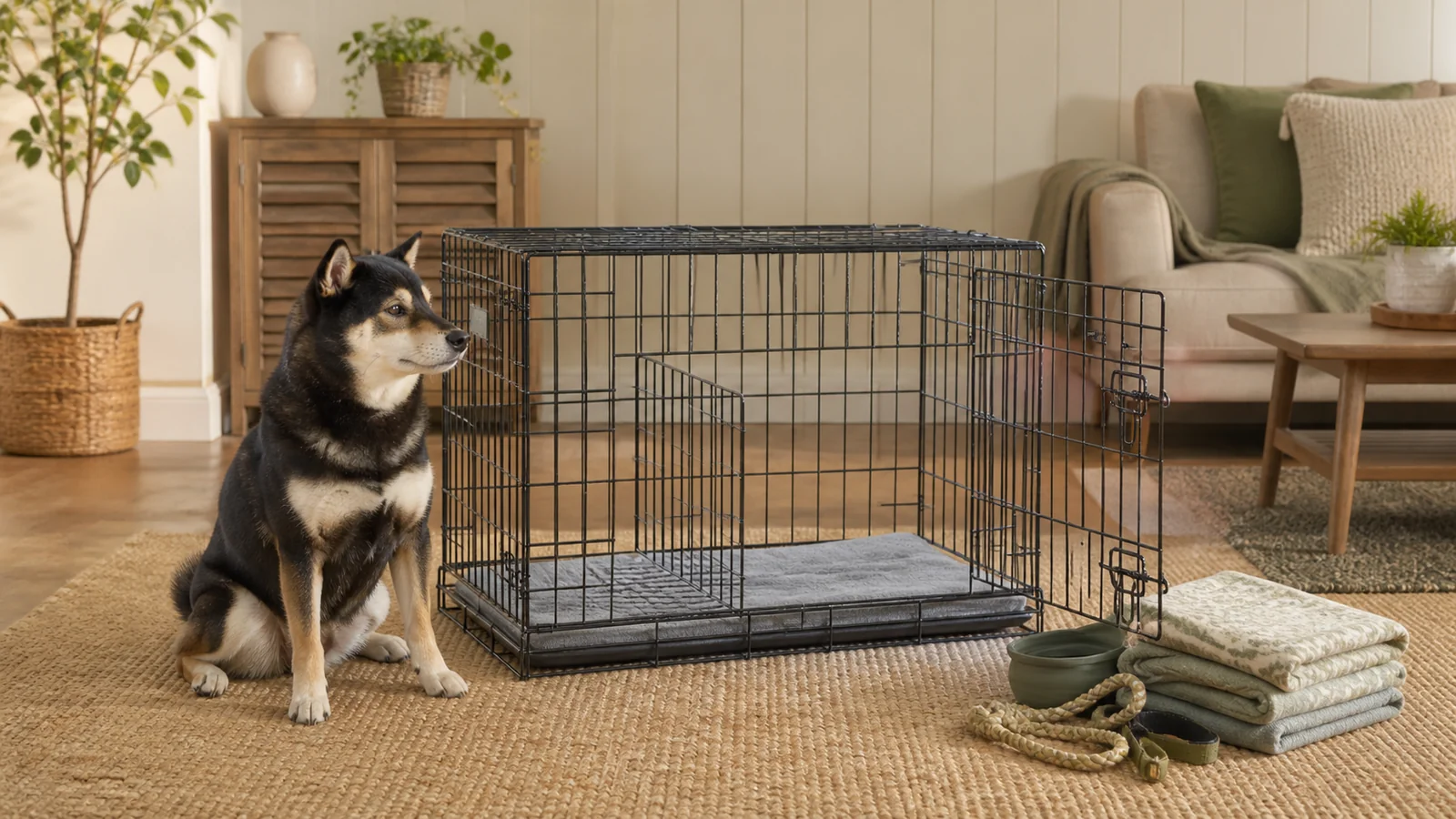
Puppy crates need to handle growth, accidents, chewing, cleaning, and early routines. A crate for a puppy is not just a smaller version of an adult home crate because the setup may need to change every few weeks.
Start with the Dog Crates pillar for the full crate framework. Use this guide when the main decision is what kind of crate makes sense during puppy growth and early home life. Use the Small Dog Crate Guide for compact interiors, bar spacing, and bedding-height checks, or the Large Dog Crate Guide when planning for a large-breed puppy's adult crate and room footprint.
Before comparing puppy listings, use the Dog Crate Setup Checklist to check measurements, divider setup, bedding, and cleaning access. Use the Dog Crate Mats Guide before choosing a first washable mat, thick pad, or waterproof liner. If listings use broad kennel or dog cage wording, read Dog Kennel vs Dog Crate before buying. If you are planning daily crate practice, print the Puppy Crate Training Schedule to track potty breaks, meals, naps, and short training sessions.
Quick read
TL;DR
- Best starting point: a wire crate with a secure divider and removable tray.
- Buy for growth carefully: a divider is usually better than an oversized open crate.
- Cleaning matters immediately because accidents and muddy paws are common.
- Avoid soft crates for most puppies because chewing and scratching can damage fabric.
- Keep bedding simple until chewing and accident habits are clearer.
- Recheck crate size often during growth spurts.
Quick answer
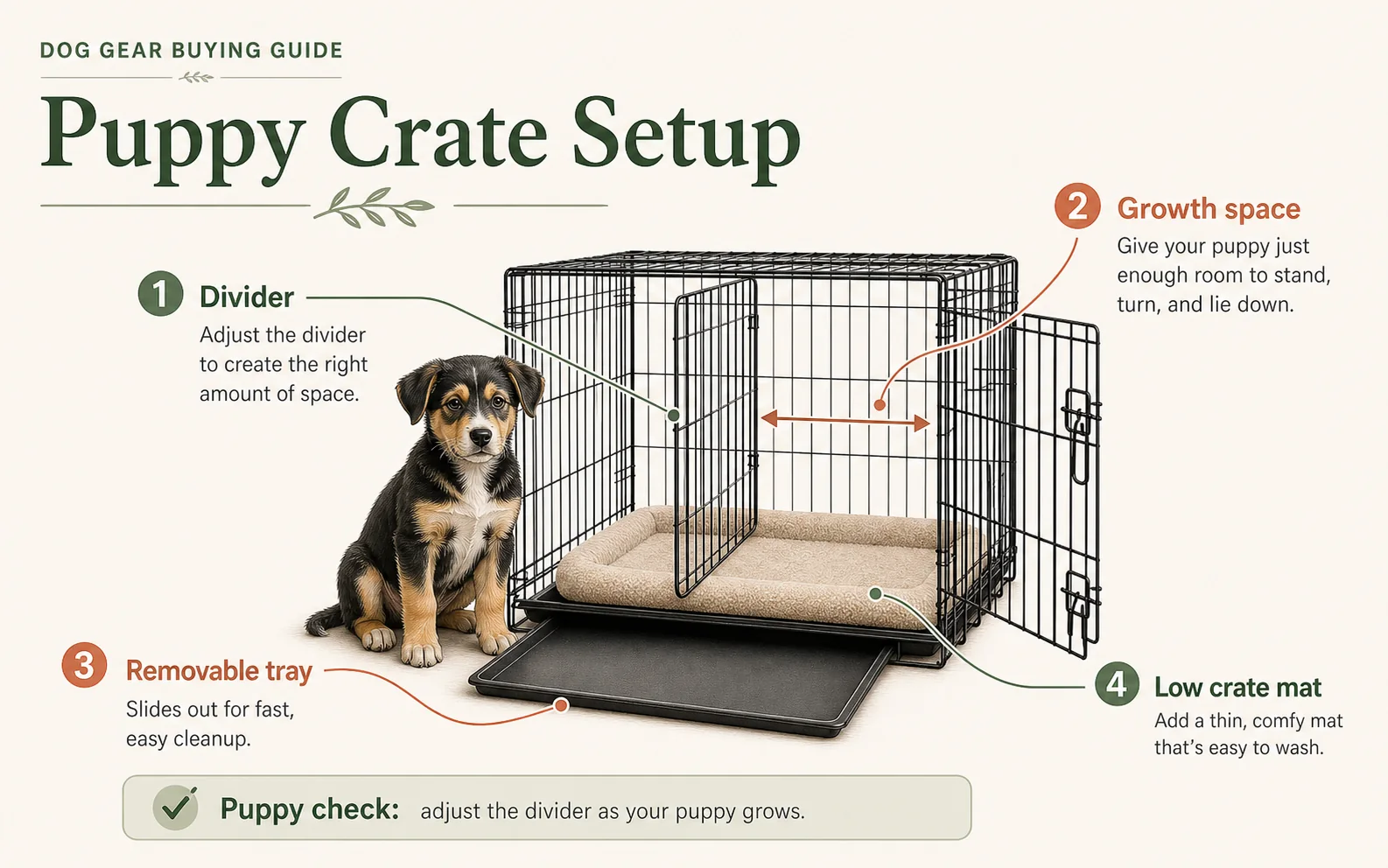
For many puppies, choose a folding wire crate with a divider panel, removable tray, secure latches, and enough adult-size range for expected growth. The divider lets you adjust usable space while the puppy grows.
Soft crates are usually not the best first crate for puppies. Fabric, mesh, and zippers are easier to damage, and cleaning can be harder after accidents.
Share & embed
Growing puppy
Wire crate with divider
- Look for
Adjustable space, tray, visibility, airflow
- Avoid
Huge crate without divider
Accidents likely
Wire crate with removable tray
- Look for
Fast cleanup, washable mat, simple floor
- Avoid
Fabric crate that holds odor
Chewing stage
Structured crate plus simple mat
- Look for
Less fabric to destroy, easy inspection
- Avoid
Soft crate or plush bedding
Shared living room
Wire or furniture-style crate after habits are clear
- Look for
Permanent placement, safe door access, cleaning
- Avoid
Decor-first crate too early
Divider setup
A divider lets one crate adapt as the puppy grows. The usable area should allow standing, turning, and lying down without giving a very young puppy a huge empty space. Recheck the divider regularly because puppies can grow quickly.
The divider should attach securely and should not leave gaps. If the puppy can push through or get stuck, it is not the right setup.
Size and growth
Use the Dog Crate Size Guide before choosing a crate. If adult size is uncertain, compare breed expectations with current measurements, but do not rely on a breed chart alone.
For mixed-breed puppies or uncertain growth, choose a practical, adjustable crate rather than trying to predict the perfect adult size immediately.
Cleaning and bedding
Puppy crate cleaning should be simple. A removable tray, washable crate mat, and easy access are more useful than decorative bedding. Thick beds can reduce usable height, bunch at the door, and become unsafe if the puppy chews them.
Start with bedding that matches the puppy's habits. Some puppies need a simple washable mat before they are ready for a plush bed.
Placement and routine
Put the crate where the puppy can rest without being isolated from normal household life. Avoid busy walkways, direct heat, cold drafts, and places where the puppy is constantly disturbed.
A bedroom crate may help some households overnight. A living-area crate may help daytime routines. The best location is the one that supports calm rest, supervision, and realistic cleaning.
Optional training support
Add training ideas around the crate routine
Brain Training for Dogs is an online course with force-free training ideas and mental-stimulation games that may help you build calmer daily routines around rest, supervision, and engagement.
Use it as supplemental education, not as a substitute for safe crate introduction, veterinary care, professional behavior support, or direct supervision when a puppy is stressed, panicking, chewing, or trying to escape.
What Dogs Like may earn from qualifying purchases. Affiliate relationships do not change the checks or cautions in this guide.
| Option | Best for | Key features | Caveat | Merchant |
|---|---|---|---|---|
Wire crate with divider | Most puppies | Adjustable size, visibility, removable tray | Can rattle and look utilitarian | See direct product examples below |
Washable crate mat | Puppies with accidents or muddy paws | Simple comfort, easier cleaning, low profile | Less support than a full bed | See direct product examples below |
Plastic crate | Puppies needing more enclosure | Den-like shell, less visual stimulation | Less airflow and visibility than wire | See direct product examples below |
Soft crate | Older calm crate-trained puppies | Lightweight and portable | Poor match for chewing and accidents | See direct product examples below |
Category picks
These are category-level recommendations, not fixed single-product winners.
Common mistakes
✓ Better buying habits
- Use a secure divider for growing puppies.
- Keep the first bedding simple and washable.
- Recheck size during growth spurts.
- Prioritize removable trays and easy cleaning.
- Place the crate where routine supervision is realistic.
× Mistakes to avoid
- Buying a huge open crate without a divider.
- Starting with a soft crate for a chewing puppy.
- Adding thick bedding that reduces usable height.
- Ignoring latch quality and divider gaps.
- Choosing by decor before cleaning and safety.
Related guides
Use the Dog Crate Setup Checklist before buying a puppy crate. Use the Dog Crate Mats Guide when bedding thickness, washable mats, puppy accidents, or chewing risk are part of the setup. Use the Puppy Crate Training Schedule when you are planning potty breaks, meals, naps, and gradual crate practice. Read the Dog Crate Size Guide for measurements and divider sizing. Use Best Dog Crates for Home Setup for room placement. If you are building the whole puppy routine, pair crate planning with Dog Collar vs Harness for Puppy and the Puppy Walking Gear Checklist so walks, ID tags, and growth checks are not an afterthought. After chewing risk, accidents, and divider needs are stable, use the Dog Crate Furniture Guide before moving to a decorative crate. Use Dog Kennel vs Dog Crate if you are comparing kennel, cage, carrier, and crate terms. Compare Soft Dog Crates vs Wire Dog Crates before choosing fabric. Return to the Dog Crates pillar for the full framework.
Frequently asked questions
What type of crate is best for a puppy?
A wire crate with a secure divider and removable tray is a practical starting point for many puppies.
Should I buy a crate for adult size?
Often yes if it has a divider. Without a divider, an adult-size crate may be too open for some early routines.
Are soft crates good for puppies?
Usually not as a first crate. Puppies may chew fabric, scratch mesh, or have accidents that are harder to clean.
What bedding should go in a puppy crate?
Start simple with a washable low-profile mat that does not block the door or create chewing risk.
How often should I move the divider?
Move it whenever your puppy needs more room to stand, turn, and lie down comfortably.