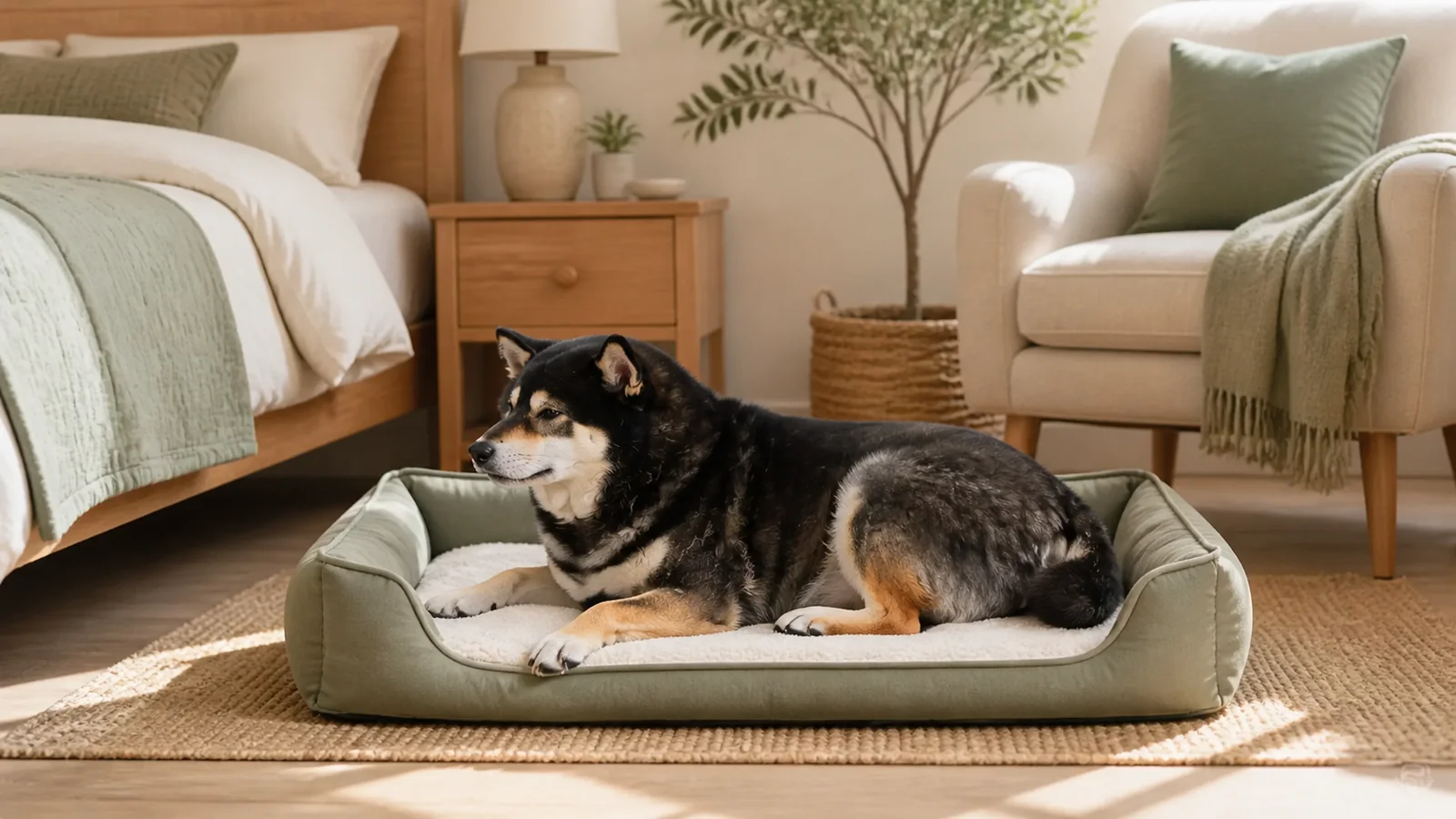
Orthopedic dog beds are worth considering when a dog needs more support than a thin cushion or basic crate mat can provide. They are especially relevant for large dogs, senior dogs, heavy dogs, and dogs that spend long stretches resting in one spot.
Start with the Dog Beds pillar if you want the broader buying framework before comparing support-focused options. This guide focuses only on supportive beds: what the label can mean, what to check before buying, and which category-level options are sensible starting points. If the question is whether orthopedic and memory foam mean the same thing, read Orthopedic vs Memory Foam Dog Bed before comparing current listings.
Quick read
TL;DR
- Best starting point: a flat orthopedic foam bed with a removable washable cover and enough room for your dog to change position.
- Do not trust the word orthopedic by itself. Check foam thickness, usable surface area, cover design, and recent owner feedback.
- Senior and large dogs often need low entry as much as they need thick foam.
- Bolsters help some dogs that curl or lean, but they reduce usable sleep area.
- Cleaning matters: a supportive foam bed is only practical if the cover comes off and the foam is protected.
- Ask a vet if pain, stiffness, recovery, or mobility changes are part of the decision.
Quick answer
For many dogs that need extra support, choose a rectangular orthopedic foam bed with a flat sleep surface, a removable cover, and enough space for the dog's real resting position. That shape works for sprawlers, large breeds, and senior dogs that need room to adjust without climbing over high edges.
Choose a bolster orthopedic bed when your dog clearly likes leaning against furniture, curling into corners, or resting their head on an edge. Choose a lower-profile orthopedic mat when the bed needs to fit near a sofa, in a bedroom, or inside a crate-like rest area without adding too much height. Use the Dog Bed Placement Guide when entry route, floor traction, or room flow are part of the support decision.
Share & embed
Large or heavy dog
Flat orthopedic foam bed
- Look for
Wide sleep surface, foam that does not collapse, removable cover
- Avoid
Thin pillow beds, small bolsters, vague size labels
Senior or stiff dog
Low-entry supportive bed
- Look for
Easy step-on height, stable surface, washable cover
- Avoid
Tall sides, deep nest beds, slippery covers
Dog that curls or leans
Orthopedic bolster bed
- Look for
Raised edge, supportive base, usable inner dimensions
- Avoid
Bolsters that take away too much room
Messy or shedding dog
Orthopedic bed with washable cover
- Look for
Removable cover, liner, sturdy zipper, clear drying instructions
- Avoid
Beds that only say washable without details
What makes a bed orthopedic?
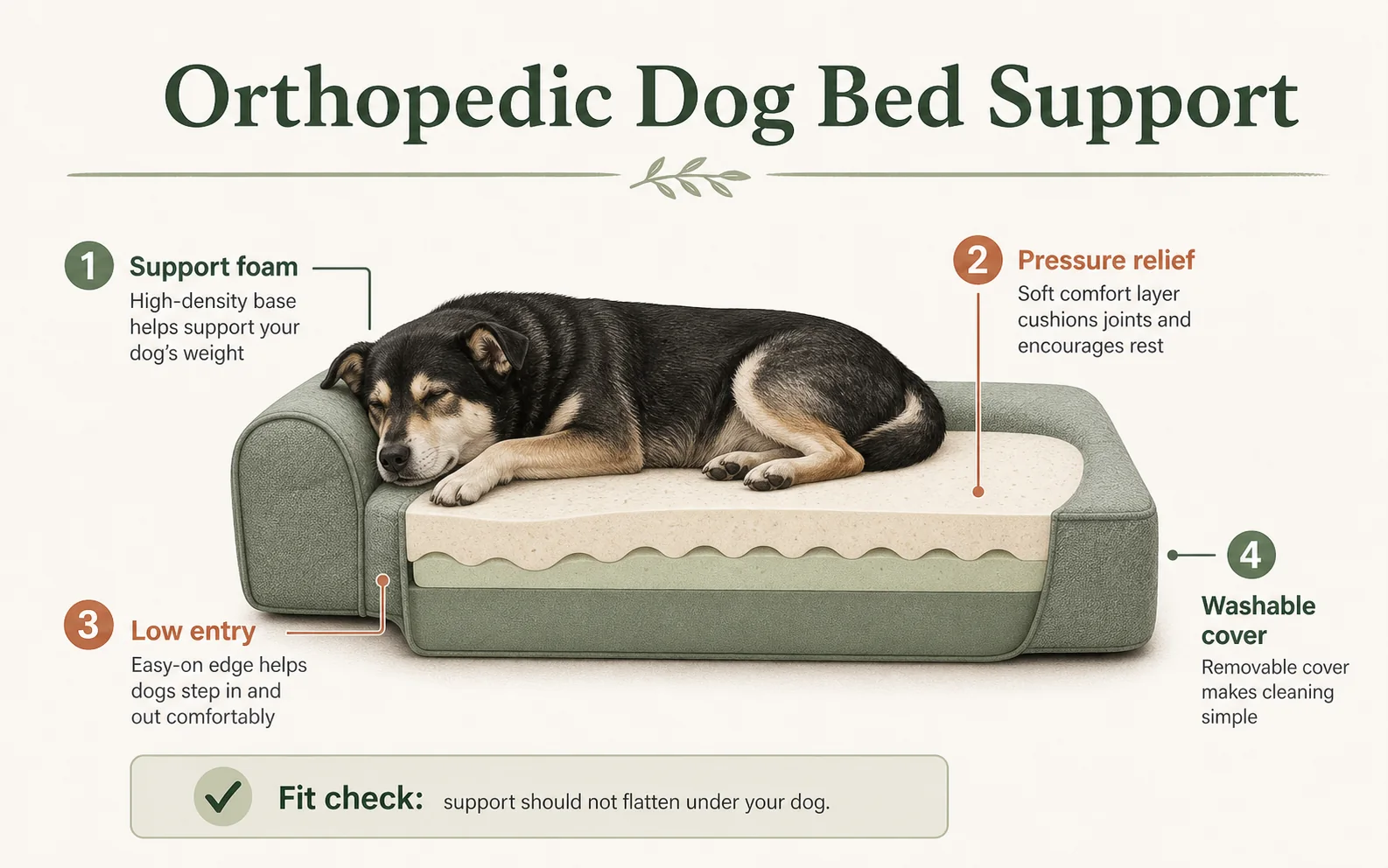
The term usually points to a supportive foam core, but it is not a regulated promise. Some listings use it for thick memory foam, some use it for egg-crate foam, and some use it loosely for any bed that looks firmer than a pillow bed. Treat the word as a clue, not proof.
Look for specific details: foam thickness, foam type, whether the sleep surface stays flat under weight, and whether the bed has a removable cover. If a listing does not show internal dimensions or cover construction, compare it more cautiously. Use the Dog Bed Materials Guide if foam, cover fabric, liners, warmth, or fill are the main comparison points.
Foam types and support
Solid foam usually gives a flatter, more stable sleep surface than loose fill. Memory foam can feel contouring, but it may retain warmth and can feel too soft for some dogs. Egg-crate foam can improve airflow and reduce pressure points, but thin egg-crate layers may compress quickly under large dogs.
The practical question is not which foam sounds most premium. It is whether the bed keeps your dog off the hard floor, lets them shift naturally, and does not flatten into a thin cushion after routine use.
Size and entry height
Support does not help if the bed is too small. Measure your dog while they are lying in their normal sleep position, then add room for turning and stretching. For bolsters, check the inside sleep area, not only the outside dimensions.
Entry height matters for senior dogs, short-legged dogs, and dogs that are stiff after rest. A very thick bed can be supportive, but if it is hard to step onto, the shape may be wrong. A lower entry or one open side can be more useful than extra height.
For aging dogs or dogs with mobility changes, treat bed choice as one part of the home comfort picture. The AAHA senior care guidelines for dogs and cats are a helpful veterinary reference for broader senior-care context, but pain, limping, or sudden stiffness should be discussed with a veterinarian.
Cover and cleaning
Orthopedic beds usually rely on a removable cover because the foam core should not go through the washer. Check whether the cover zips off easily, whether the zipper looks sturdy, and whether the foam has a liner. A waterproof or water-resistant liner can help with accidents, drool, damp paws, and odor, but it should not make the bed noisy or uncomfortable.
If cleaning is the main concern, pair this guide with the washable dog beds guide and the Dog Bed Cleaning Schedule so cover washing, liner checks, drying, and odor notes do not get skipped.
Orthopedic bed types compared
| Option | Best for | Key features | Caveat | Merchant |
|---|---|---|---|---|
Flat orthopedic foam bed | Large dogs, seniors, sprawlers | Wide surface, easier entry, strong support baseline | Can be warm or heavy | See direct product examples below |
Orthopedic bolster bed | Dogs that curl, lean, or use edges | Supportive base plus headrest or back edge | Less usable sleep area than outside size suggests | See direct product examples below |
Waterproof-liner orthopedic bed | Accidents, drool, damp paws, odor control | Protects foam from moisture and smells | Some liners feel crinkly or warm | See direct product examples below |
Low-profile orthopedic mat | Crates, bedroom corners, easy step-on access | Lower height, simpler placement, portable options | Usually less plush than a full bed | See direct product examples below |
Category picks
These are category-level recommendations, not fixed single-product winners. Use them to start comparison shopping, then check current dimensions, foam details, cover design, return policy, and recent owner feedback before buying.
What Dogs Like may earn from qualifying purchases. Affiliate links do not change the fit, support, cleaning, or durability checks used in this guide.
Common mistakes
✓ Better buying habits
- Measure the dog in a real resting position before choosing a size.
- Check foam thickness, cover system, and inner sleep area.
- Choose low entry for dogs that are stiff, short-legged, or senior.
- Prioritize removable covers and foam protection for everyday use.
- Read recent owner feedback for compression, odor, heat, and zipper problems.
- Compare return policies before buying a large or expensive bed.
× Mistakes to avoid
- Treating "orthopedic" as a guaranteed quality claim.
- Buying by breed label instead of measurements.
- Choosing a tall or deep bed for a dog that struggles with entry.
- Ignoring cover removal, drying time, and foam liners.
- Buying a bolster bed without checking the usable center area.
- Assuming memory foam is always cooler, firmer, or better.
Related guides
Use the Dog Bed Size Guide before choosing a size. It explains how to measure dogs that curl, sprawl, or switch positions.
Read Washable Dog Beds for Easier Cleanup if odor, shedding, accidents, or muddy paws are part of the decision. Use the Dog Bed Cleaning Schedule once the bed is in use.
Use Orthopedic vs Memory Foam Dog Bed before treating memory foam as the same thing as orthopedic support. Use the Dog Bed Materials Guide before comparing memory foam, egg-crate foam, liners, plush covers, or woven covers.
If age, entry height, accidents, floor traction, or changing mobility are the main concerns, use Best Dog Beds for Senior Dogs for the complete senior-focused decision path.
Return to the Dog Beds pillar for the broader framework across bolsters, washable beds, crate mats, cooling beds, and room placement. For bedroom, living room, office, and senior-dog setup decisions, read the Dog Bed Placement Guide.
Frequently asked questions
Are orthopedic beds only for senior dogs?
No. Senior dogs may benefit most, but large dogs, heavy dogs, and dogs that rest for long periods may also do better with a more supportive bed.
Is memory foam always best?
No. Memory foam can feel supportive, but it may retain heat and may be too soft for some dogs. A stable foam surface with the right size and cover can matter more than the label.
Should the bed have bolsters?
Bolsters can help dogs that like to lean or curl. Flat beds are often better for dogs that stretch out, overheat easily, or need easier entry from every side.
How thick should an orthopedic dog bed be?
There is no single perfect thickness. Large and heavy dogs usually need more depth than small dogs, but foam quality, surface stability, and usable area matter too.
Can an orthopedic bed help arthritis?
It may make rest more comfortable, but it is not treatment. If arthritis, pain, or mobility changes are involved, ask a vet for guidance.
How do I keep an orthopedic bed clean?
Choose a removable washable cover and consider a liner to protect the foam. Follow drying instructions carefully because damp foam or covers can hold odor.