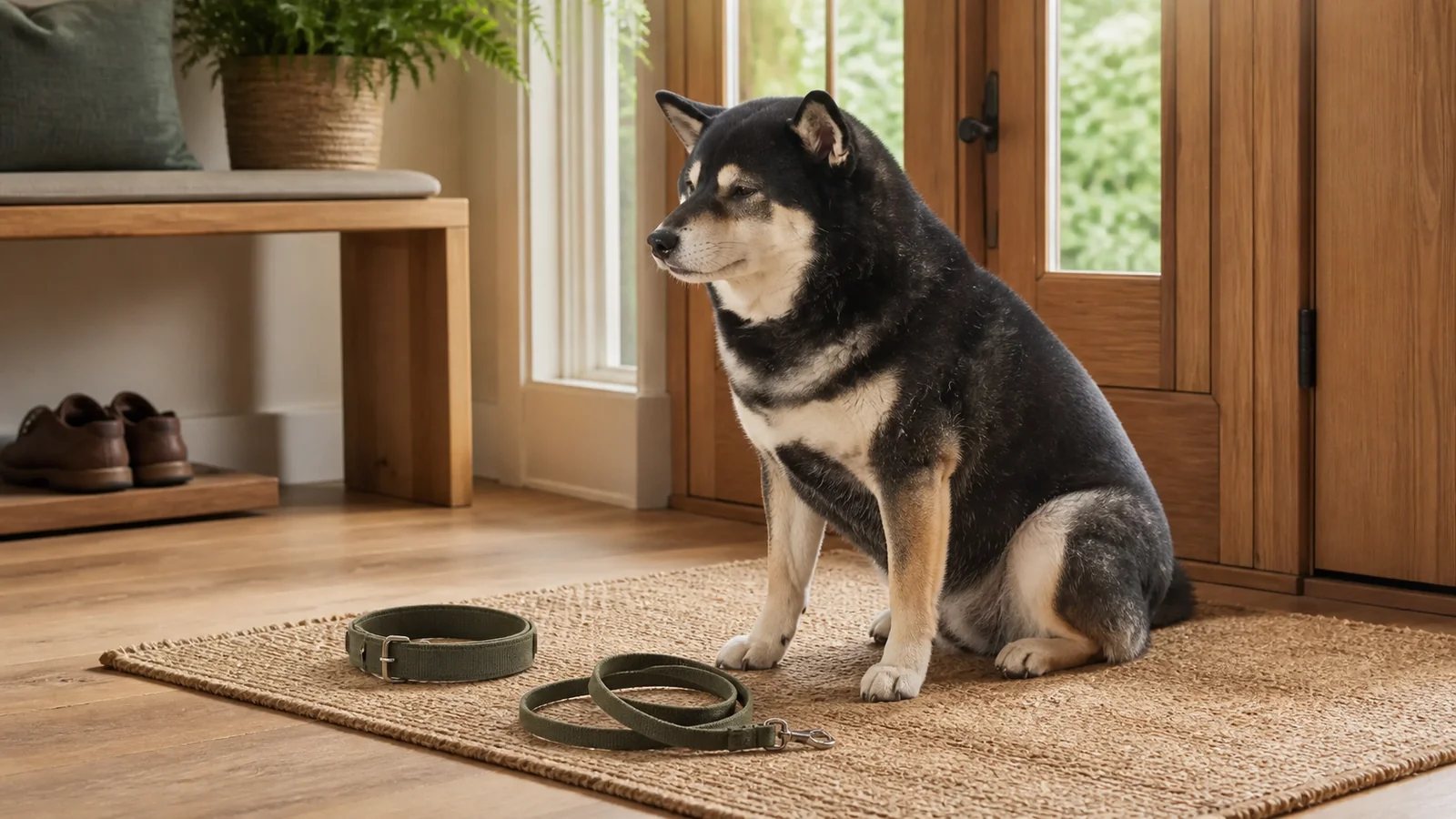
The best everyday walking setup is usually simple: a well-fitting collar for ID, a comfortable leash, and a harness when your dog benefits from body-based control. The details still matter because small hardware, bad fit, or the wrong leash length can make daily walks harder.
For the full category overview, start with the Harnesses, Collars & Leashes pillar, then use the Dog Collars hub or Dog Leashes hub for the narrower path. For collar-specific material, cleaning, hardware, and reflective details, read the Dog Collar Materials Guide, and use the Martingale Collar Guide when limited-slip fit is the question. For harness-specific fit, read the Dog Harness Fit Guide and use the Harness Fit Checklist. If the setup is for a puppy, use Dog Collar vs Harness for Puppy, Puppy Harness Size Guide, and Best Leash for Puppy before deciding whether the leash should attach to the collar or harness. If leash length is the main question, use the Dog Leash Length Guide. If material, grip, weather, cleaning, or clip hardware is the main concern, use the Dog Leash Materials Guide.
Quick read
TL;DR
- Best default leash: a simple six-foot leash with a comfortable handle and sturdy clip.
- Best default collar: a flat adjustable collar used for ID and calm everyday routines.
- Use a harness for many walks if your dog pulls, lunges, is very small, or should avoid neck pressure.
- Retractable leashes are situational, not the best everyday choice for crowded areas.
- Long lines are useful for training and open spaces, but not tight sidewalks.
- Check hardware regularly: clips, buckles, stitching, and tag rings wear over time.
Quick answer
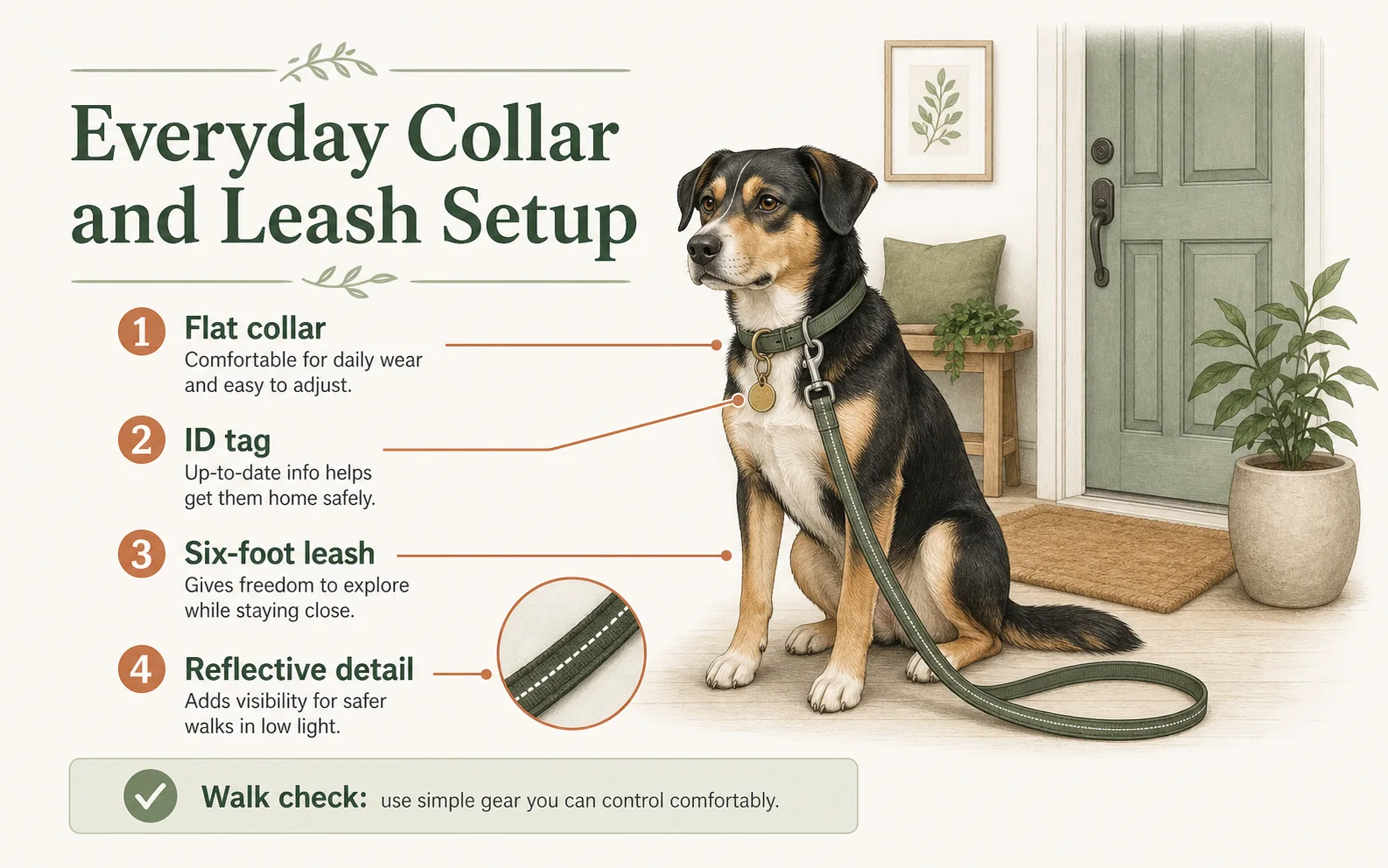
For most daily walks, choose a flat collar for ID tags, a simple six-foot leash for predictable handling, and a well-fitted harness if the leash should not attach to the collar. That setup is plain, but it works in neighborhoods, sidewalks, parking lots, and routine outings.
Choose wider or stronger gear for large dogs and lighter gear for small dogs. Choose reflective details for low-light walks. Add a long line only when you have open space and enough handling skill to manage extra length safely.
Share & embed
Everyday neighborhood walk
Six-foot leash
- Look for
Predictable length, comfortable handle, sturdy clip
- Avoid
Retractable leash in crowded areas
ID and daily wear
Flat collar
- Look for
Adjustable fit, tag ring, comfortable width
- Avoid
Loose collar that slips off
Small or delicate dog
Light collar plus harness for walks
- Look for
Low weight, body-based control, secure fit
- Avoid
Heavy clips and neck-only control
Training in open space
Long line
- Look for
Controlled distance, recall practice, grippy material
- Avoid
Long lines on sidewalks or parking lots
Collar fit
A flat collar should be snug enough that it does not slide over the head, but not so tight that it presses into the neck. Check fit regularly for growing puppies, thick-coated dogs, and dogs whose weight changes.
The collar's main job is often identification. Even when your dog walks on a harness, a collar can carry ID tags, license tags, and contact information. The leash does not always need to attach to the collar.
If you want an electronic recovery layer in addition to readable ID, compare cellular, radio, and subscription tradeoffs in Best GPS Dog Collars.
Leash length
A six-foot leash is the most useful everyday length for many owners because it balances movement and control. It gives the dog room to walk normally while keeping them close enough for crossings, passing people, and tighter paths.
Shorter traffic handles can help in brief moments, but they should not be the only handle for a full walk. Longer leashes can be useful in open places but become harder to manage around bikes, cars, other dogs, and narrow sidewalks.
Clips, handles, and materials
The leash clip should match the dog. A tiny clip may be wrong for a strong large dog. A heavy clip may be uncomfortable for a small dog. Check whether the clip opens easily, closes fully, and does not feel flimsy.
Handles should feel comfortable in your hand. Rope, nylon, leather, and padded materials all have tradeoffs. Nylon is common and easy to clean. Rope can feel secure but may burn hands if a dog lunges. Leather can be comfortable but needs care.
Retractable leashes
Retractable leashes can work for some calm dogs in open areas, but they are harder to control in crowded sidewalks, parking lots, elevators, shops, and narrow paths. The changing length can surprise people and dogs, and the handle is harder to secure under sudden tension.
For everyday walks, a standard leash is usually more predictable. If you use a retractable leash, reserve it for open areas and stay aware of distance, traffic, and other people.
For general walk routines and safety habits, the ASPCA's dog walking tips are a helpful external reference. If your dog is fearful, reactive, or uncomfortable around people or other dogs, the ASPCA's dog bite prevention resource is useful context for reading stress signals and giving dogs space.
Long lines
Long lines are useful for recall practice, decompression walks, and giving a dog more space in safe open areas. They require attention. A long line can tangle, wrap around legs, or create too much speed before the dog reaches the end.
Use a long line with a harness rather than a neck collar when possible, and avoid using one near traffic or crowded paths.
| Option | Best for | Key features | Caveat | Merchant |
|---|---|---|---|---|
Flat collar | ID tags and calm daily wear | Simple, adjustable, lightweight | Not ideal as sole control for every dog | |
Six-foot leash | Most everyday walks | Predictable length, simple handling, good control | Less freedom than long lines | |
Long line | Training and open spaces | Controlled distance, recall practice, more freedom | Requires space and handling skill | |
Reflective leash or collar | Low-light walks | Improves visibility, useful in early or late walks | Does not replace safe handling |
Safety and visibility
For low-light walks, reflective stitching, bright colors, clip-on lights, or reflective collars can help. Visibility features are useful, but they come after basic fit and hardware quality. A reflective leash with a weak clip is not a good trade.
Inspect walking gear regularly. Replace collars, leashes, and clips that show fraying, cracked plastic, bent metal, loose stitching, or unreliable buckles.
Category picks
These are category-level recommendations, not fixed single-product winners.
Common mistakes
✓ Better buying habits
- Use a flat collar for ID even if walks use a harness.
- Start with a six-foot leash for routine walks.
- Match leash width and clip size to the dog.
- Check collar fit regularly.
- Choose reflective details for low-light routines.
- Inspect stitching, clips, buckles, and tag rings.
× Mistakes to avoid
- Using a collar as the only control point for a strong puller.
- Choosing retractable leashes for crowded sidewalks.
- Buying heavy hardware for a small dog.
- Letting a collar get too loose after coat changes.
- Using long lines near traffic.
- Keeping worn clips or frayed webbing in service.
Related guides
Read Dog Harness vs Collar if you are deciding where the leash should attach. Read Dog Collar Materials Guide when nylon, leather, coated webbing, reflective collar details, or ID hardware are the main comparison. Read Dog Collar vs Harness for Puppy, Puppy Harness Size Guide, and Best Leash for Puppy if growth, first walks, and puppy ID tags are part of the decision. Read the Dog Harness Fit Guide if your dog pulls, slips gear, or needs body-based walking control. Use the Dog Leash Length Guide when choosing between standard leashes, long lines, and close-control options. Use the Dog Leash Materials Guide when nylon, leather, rope, coated webbing, grip, or wet-weather cleaning is the main comparison. Print the Harness Fit Checklist before keeping a new harness. Return to the Harnesses, Collars & Leashes pillar for the full walking gear framework.
Frequently asked questions
Are retractable leashes good for everyday walks?
They can work for some calm dogs in open areas, but they are harder to control in crowded sidewalks, parking lots, and tight spaces.
Should the collar or harness hold the leash?
Many dogs do well with ID on the collar and leash attachment on a harness. The right setup depends on your dog's behavior, body shape, and training needs.
What leash length is best?
A six-foot leash is a practical default for many daily walks. Long lines are better for open areas and training.
How tight should a collar be?
It should be secure enough not to slip off and loose enough not to press into the neck. Check the fit regularly.
Are long lines safe?
They can be useful in open areas, but they require attention and space. Avoid them near traffic, crowds, and tight paths.
What collar material is best?
There is no single best material. Nylon is common and easy to clean, leather can be comfortable with care, and reflective materials help in low light.