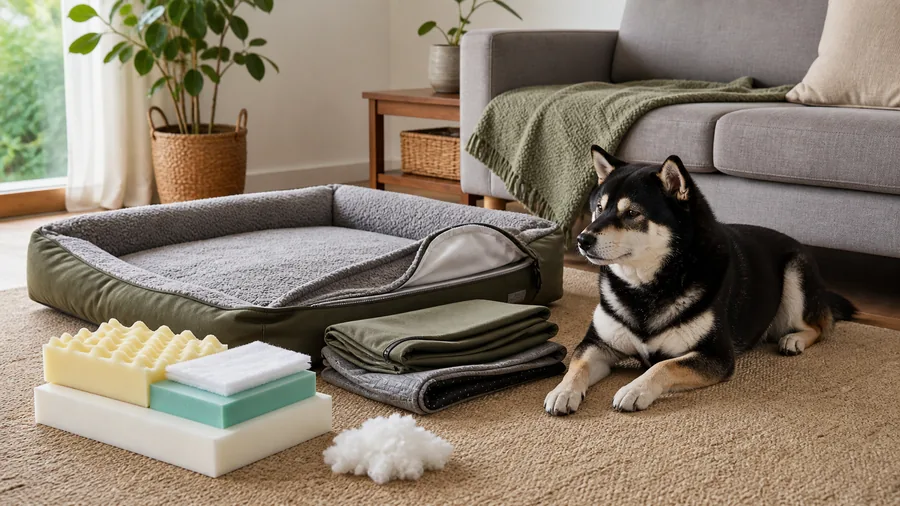
Dog bed material affects comfort, cleaning, odor, hair release, warmth, support, moisture protection, and how long the bed stays useful. The right material is not always the softest one. It is the one that fits your dog's body, sleep style, home, and cleaning routine.
Start with the Dog Beds pillar for the full bed framework. Use this guide when the main question is what the bed is made from and how those materials behave after everyday use. Use the Waterproof Dog Bed Guide when outer fabric, liner, seams, zipper openings, and foam protection must work as one system. If the listing compares orthopedic support and memory foam, use Orthopedic vs Memory Foam Dog Bed alongside this material guide.
Quick read
TL;DR
- For many homes, start with a removable washable cover and a protected foam core.
- Foam support matters most for large dogs, senior dogs, and dogs that rest for long periods.
- For foam beds, compare density, thickness, CertiPUR-US-style claims, and liner protection instead of trusting the word orthopedic by itself.
- Plush tops feel cozy, but they can trap hair, warmth, and debris.
- Tough fabric helps with scratching and digging, but no soft dog bed should be treated as safe for chewing.
- Tightly woven covers can be easier to wipe, but some dogs prefer softer sleep surfaces.
- Waterproof liners protect foam, but may add noise, stiffness, or warmth.
- No bed material is a behavior solution for destructive chewing, pain, anxiety, or sudden rest changes.
Quick answer
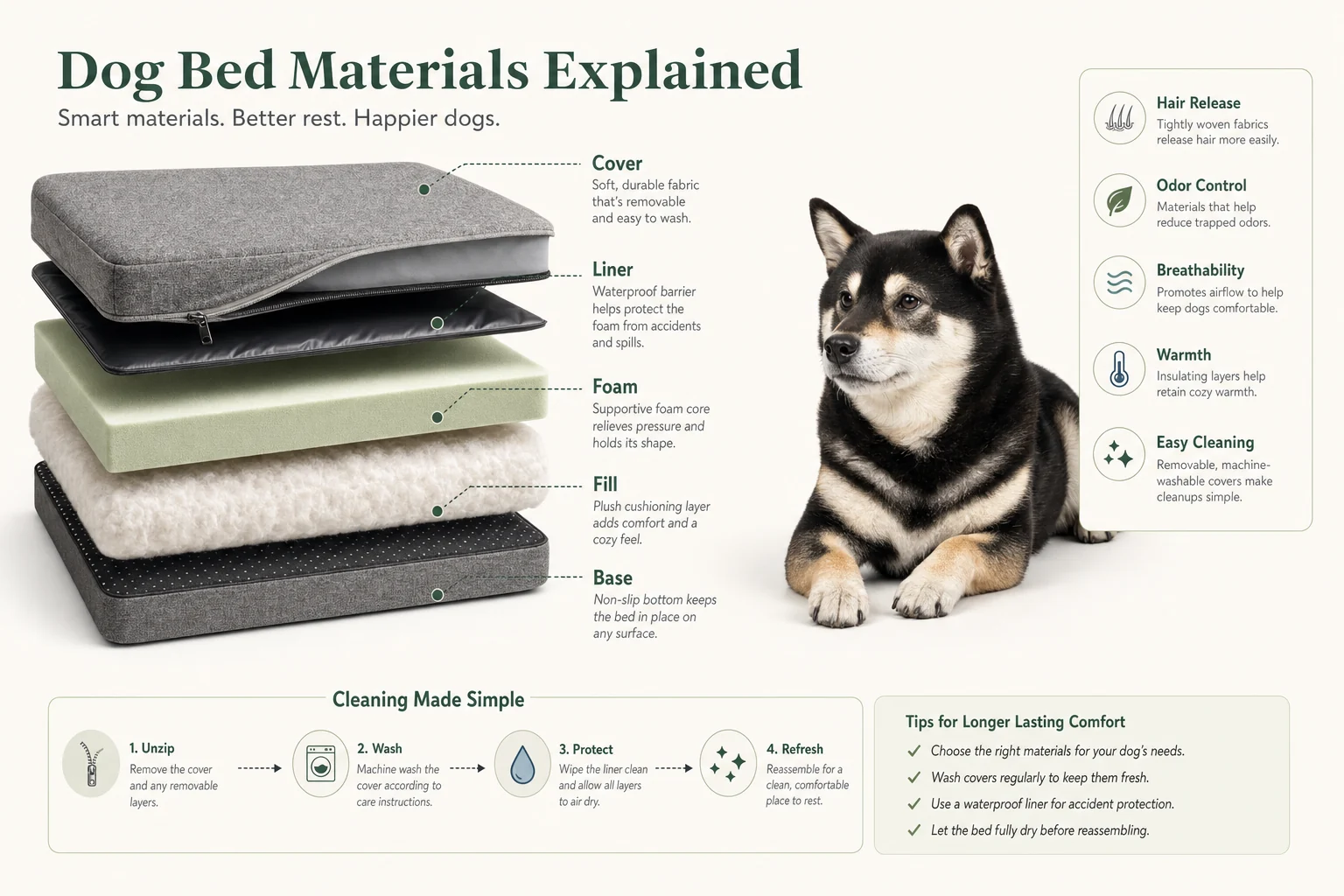
Choose dog bed materials by separating the bed into layers: outer cover, sleep surface, liner, foam or fill, and bottom fabric. The outer cover should match cleaning needs. The sleep surface should match comfort and temperature. The core should match support needs. The liner should protect the core when moisture, odor, accidents, drool, or damp paws are realistic. For large or senior dogs, compare actual foam construction, not only the words soft, plush, or orthopedic.
Share & embed
Heavy shedding or muddy paws
Removable-cover bed
- Look for
Tight weave, hair release, easy zipper access, fast drying
- Avoid
Deep plush that traps fur and dries slowly
Large or senior dog
Flat foam bed
- Look for
Stable support, enough thickness, low entry, protected foam
- Avoid
Loose fill that compresses flat
Puppy or accident risk
Cover plus waterproof liner
- Look for
Moisture barrier, washable cover, simple construction
- Avoid
Unprotected foam and complicated seams
Warm sleeper
Breathable fabric or flatter surface
- Look for
Less heat trapping, easier airflow, simple cover
- Avoid
Thick plush tops and noisy waterproof layers
What this guide can and cannot claim
This is a researched buying guide, not a veterinary recommendation, lab test, or certification audit. What Dogs Like does not claim that one fabric, foam density, or brand is universally safest for every dog.
Use manufacturer-stated material details, certification labels, care instructions, return policies, and recent owner feedback when comparing exact products. If your dog has pain, stiffness, limping, pressure sores, skin reactions, destructive chewing, or a sudden change in resting behavior, ask a veterinarian or qualified professional before treating a bed purchase as the solution.
Cover fabric
The cover is the material you will touch, vacuum, wash, unzip, and inspect most often. It matters as much as the foam inside.
Common cover fabrics include plush fleece-style tops, sherpa-style surfaces, microfiber, canvas-like woven fabric, polyester blends, and upholstery-style fabric. Plush and sherpa can feel cozy, but they often hold hair and warmth. Tighter woven covers may release hair better and wipe more easily, but some dogs find them less soft.
For durability-focused beds, compare denier, weave tightness, seam placement, zipper protection, and whether the fabric is described clearly. Cordura-style nylon, ballistic nylon, canvas, and ripstop fabrics can be useful for dogs that scratch, dig, or drag bedding around, but fabric strength does not make a soft bed safe for unsupervised chewing.
Check the zipper too. A strong cover can still fail if the zipper track, pull, or seam around the zipper is exposed, weak, or easy for a dog to grab.
Sleep surface texture
Texture affects whether a dog actually uses the bed. Some dogs like soft pile, some prefer a firmer fabric, and some avoid noisy or slippery surfaces. If your dog already avoids plush beds, buying a thicker plush top may not solve the issue.
For dogs that overheat, avoid deep pile unless the bed is used in a cool room. For short-coated dogs or dogs that curl tightly, a warmer surface may be welcome. For heavy shedders, think about hair release before appearance.
Foam and fill
Foam gives structure. Loose fill gives softness. Neither is universally better.
Solid foam and memory foam are useful when support matters, especially for large dogs, heavy dogs, senior dogs, and sprawlers. Egg-crate foam can improve airflow and reduce pressure points, but thin layers may compress faster. Loose polyester fill can feel soft at first, but it may shift, clump, or flatten over time.
When comparing foam beds, look for actual specifications where available: foam thickness, whether the core is a solid slab or shredded fill, whether a support layer sits below a softer comfort layer, and whether the maker mentions density, ILD, or compression behavior. Indentation Load Deflection, or ILD, is a foam firmness measurement. Most dog-bed listings do not explain it well, but the concept is still useful: a bed should resist bottoming out under your dog's hips, shoulders, and elbows.
Be careful with thin foam beds marketed as orthopedic. A thick-looking cover or tufted top can hide a low-support core. For a large dog, senior dog, or dog that rests for long periods, stable support and enough usable foam depth matter more than a soft first touch.
Use the Best Orthopedic Dog Beds for Support guide when foam support is the main decision.
Certifications and material claims
Certifications can help you compare material claims, but only when the listing clearly names the standard and the part of the bed it covers. CertiPUR-US is commonly used for polyurethane foam claims. OEKO-TEX Standard 100 is commonly used for textiles tested for certain harmful substances. These labels are useful signals, not a replacement for checking the exact current listing.
Also be cautious with phrases such as chew-resistant, military grade, calming, medical grade, and orthopedic when the listing does not explain the material, seams, liner, foam construction, or certification context. These can be useful search terms, but they are not guarantees.
Liners and moisture protection
A liner protects the core from accidents, drool, damp paws, and odor. Waterproof and water-resistant layers can be useful, but the tradeoffs matter. Some liners feel crinkly, trap warmth, or make the bed harder to fold and wash.
For puppies, senior dogs, and dogs that come in wet from outside, a liner is often more practical than relying on cover washing alone. For dogs that dislike stiff or noisy bedding, check owner feedback carefully before buying a waterproof design.
Breathability, warmth, and odor
Warmth is not just about thickness. Plush tops, waterproof layers, dense foam, and poor airflow can all make a bed feel warmer. Breathable covers and flatter sleep surfaces can help dogs that move off beds after a short rest.
Odor often starts when moisture reaches the core or when covers stay damp after washing. Dry covers fully before putting them back on foam. Use the Dog Bed Cleaning Schedule to keep cover washes, liner checks, and drying notes practical.
Chewing risk and durability
Fabric strength helps, but no soft bed should be treated as indestructible. Dogs that chew bedding, shred seams, or swallow fabric need supervision and a safer setup, not just a tougher-sounding cover.
Look for reinforced seams, covered zippers, durable woven fabric, and simple shapes with fewer loose edges. Avoid beds with decorative cords, weak zipper pulls, or fluffy pieces a dog may remove.
For diggers and scratchers, compare ripstop fabric, ballistic nylon, Cordura-style covers, protected seams, and replaceable covers. For actual chewing or fabric swallowing, remove damaged bedding and use a safer managed setup, then use Best Chew-Proof Dog Beds to compare armored edges and ingestion limits. A tougher cover can reduce wear, but it is not a training or behavior plan.
Material choice by dog and routine
Use this matrix to narrow the first comparison set. It is not a universal medical or size chart; always check current product details, dimensions, return policy, and your dog's actual behavior.
| Option | Best for | Key features | Caveat | Merchant |
|---|---|---|---|---|
Large or senior dog | Solid orthopedic foam or layered foam core | Enough usable thickness, low entry, removable cover, protected foam | Ask a veterinarian about pain, stiffness, limping, or pressure sores | |
Digger or scratcher | Ripstop, ballistic nylon, Cordura-style, or canvas cover | Tight weave, protected zipper, reinforced seams, simple shape | Not safe for chewing or fabric swallowing | |
Puppy or accident risk | Washable cover plus waterproof inner liner | Foam protection, simple cover removal, fast drying | Noisy or warm liners may bother some dogs | |
Heavy shedder or muddy paws | Tight woven removable cover | Hair release, vacuuming, zipper access, clear wash instructions | Deep plush can hold hair and dry slowly | |
Warm sleeper | Breathable cover, flatter surface, or elevated airflow design | Less pile, simpler layers, lower heat retention | Very dense foam and waterproof layers may feel warm | |
Burrower or small dog | Softer plush top, bolster, or nest-style fill | Warmth, nesting feel, soft sleep surface | Can trap hair, debris, and heat |
Budget and material tiers
Low-cost beds often use loose polyester fill, thin foam, simple polyester covers, and basic zippers. They can work as backup beds, small-dog beds, travel beds, or short-term options, but inspect flattening, clumping, seam wear, and wash performance.
Mid-range beds often improve cover removal, foam thickness, waterproof liners, zipper access, and fabric weight. This is usually where everyday washable and orthopedic-style beds become more practical for repeated use.
Premium beds usually justify the price through thicker solid foam, clearer certification claims, replaceable covers, stronger zipper protection, better liners, denser woven fabrics, or brand-specific durability systems. A higher price still does not remove the need to check size, foam details, fabric feel, and owner feedback.
Material types compared
| Option | Best for | Key features | Caveat | Merchant |
|---|---|---|---|---|
Plush or sherpa top | Dogs that like warm cozy surfaces | Soft, nest-like, inviting for curlers | Can trap hair, warmth, and debris | |
Canvas-like woven cover | Muddy paws, shedders, daily cleanup | Often easier to wipe and vacuum | May feel less soft | |
Flat orthopedic foam | Large dogs, seniors, sprawlers | Stable support, open surface, low entry options | Can be heavy and warm | |
Waterproof liner | Accidents, drool, damp paws, odor control | Protects foam from moisture | Can feel noisy, stiff, or warm | |
Polyester fill bed | Small dogs and soft backup beds | Lightweight, often affordable | Can flatten or clump |
Direct product examples to inspect
These are direct Amazon product examples, not final rankings. Product details, materials, sizes, prices, certifications, and availability can change, so check the current listing before buying.
Category options to compare
These are category-level starting points, not product rankings. Compare current listings by usable size, cover removal, liner design, foam or fill details, wash instructions, return policy, and recent owner feedback.
Affiliate shopping checks
Compare bed materials after choosing the layer you need
What Dogs Like may earn from qualifying purchases. Affiliate links do not change the material checks in this guide.
Common mistakes
✓ Better buying habits
- Separate cover, liner, core, and bottom fabric before comparing beds.
- Prioritize removable covers when cleaning matters.
- Check foam details for large, heavy, or senior dogs.
- Use liners when moisture, odor, or accidents are realistic.
- Match texture to how your dog already rests.
- Read owner feedback for cover shrinkage, zipper problems, odor, warmth, and flattening.
× Mistakes to avoid
- Buying the softest-looking bed without checking cleaning.
- Assuming waterproof always means comfortable.
- Treating orthopedic as proof without checking foam construction.
- Ignoring hair release and drying time.
- Choosing loose fill for a dog that needs stable support.
- Treating tougher fabric as a solution for destructive chewing.
Related guides
Use the Dog Bed Size Guide and Dog Bed Size Calculator before choosing dimensions. Use the Dog Bed Placement Guide when room flow, cover removal, or senior access matter. If the same bedding decision overlaps with crate setup, compare Dog Bed vs Crate Mat before choosing thickness, bolsters, or low-profile mats.
For cleanup details, read Washable Dog Beds for Easier Cleanup and print the Dog Bed Cleaning Schedule. For support, compare Best Orthopedic Dog Beds for Support, Orthopedic vs Memory Foam Dog Bed, and Best Dog Beds for Large Dogs. For shape, read Bolster vs Flat Dog Beds. Return to the Dog Beds pillar for the full bed framework.
Frequently asked questions
What is the best dog bed material?
There is no universal best material. For many homes, a removable washable cover, protected foam core, and practical sleep surface are the safest starting point.
Are waterproof dog beds better?
They can be better when accidents, drool, damp paws, or odor are realistic. They can also feel warmer, stiffer, or noisier, so comfort still matters.
Is memory foam always better for dogs?
No. Memory foam can be supportive, but it may retain heat and may feel too soft for some dogs. Stable support, usable size, and cover design matter together.
What is the difference between orthopedic foam and egg-crate foam?
Orthopedic foam usually refers to a more supportive solid or layered foam core, while egg-crate foam is a convoluted surface cut for airflow and pressure distribution. Either can be too thin or too soft, so compare foam thickness, density details, cover fit, and whether the bed bottoms out under your dog.
Should I look for CertiPUR-US or OEKO-TEX on a dog bed?
These certifications can be useful comparison signals when the listing clearly explains which layer is certified. CertiPUR-US is commonly connected to foam claims, while OEKO-TEX Standard 100 is commonly connected to textile testing. Still check the current product page, care label, and manufacturer wording.
Is ballistic nylon or Cordura-style fabric safe for chewing?
No soft dog bed fabric should be treated as safe for chewing. Ballistic nylon, ripstop, Cordura-style covers, and canvas can help with scratching, digging, and wear, but a dog that chews or swallows bedding needs supervision and a safer setup.
Why does a waterproof liner matter?
A waterproof or water-resistant inner liner can help protect the foam core from accidents, drool, wet paws, and odor. It can also add warmth, stiffness, or noise, so check owner feedback and confirm whether the liner is removable or built into the cover.
Which fabric is easiest to clean?
Tighter woven covers often wipe and vacuum more easily than deep plush. The zipper, liner, and drying instructions matter as much as the fabric name.
What if my dog chews bed fabric?
Do not rely on a soft bed material to solve destructive chewing. Use supervision, remove unsafe damaged bedding, and ask for qualified help if chewing creates risk.