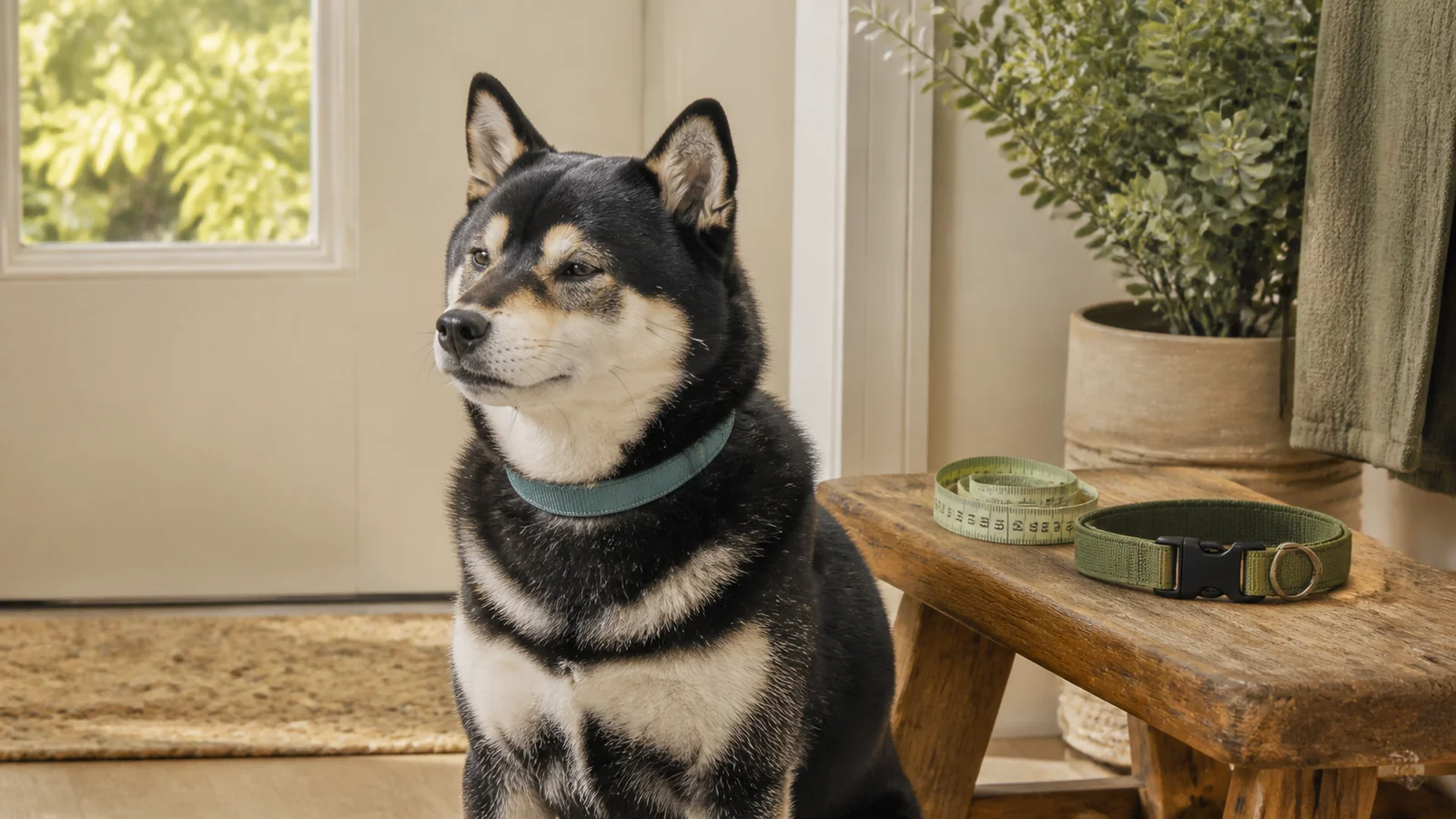
A dog collar should be secure enough to hold ID tags and stay in place, but comfortable enough for everyday wear. Sizing is simple in theory, but puppies, thick coats, weight changes, and hardware choices can complicate it.
Start with the Dog Collars hub for the curated collar path or the broader Harnesses, Collars & Leashes pillar. Use this guide before buying a flat collar or adjusting a collar that slips, rubs, or feels too tight. If a dog backs out of a flat collar, read the Martingale Collar Guide before choosing a limited-slip design. If material, cleaning, reflective detail, or hardware is the main question, read the Dog Collar Materials Guide. If the collar is for a growing puppy, pair this with Dog Collar vs Harness for Puppy. If the leash should attach to a harness instead of the collar, read Dog Harness vs Collar and use the Harness Fit Checklist alongside this guide.
Quick read
TL;DR
- Measure the neck with a soft tape, then compare with the collar's size range.
- A collar should not slip over the head or press into the neck.
- Puppies need frequent fit checks during growth.
- Coat changes can affect fit, especially for thick-coated dogs.
- Use collars for ID even when walks use a harness.
- Check width and hardware weight for small, large, and sensitive dogs.
Quick answer
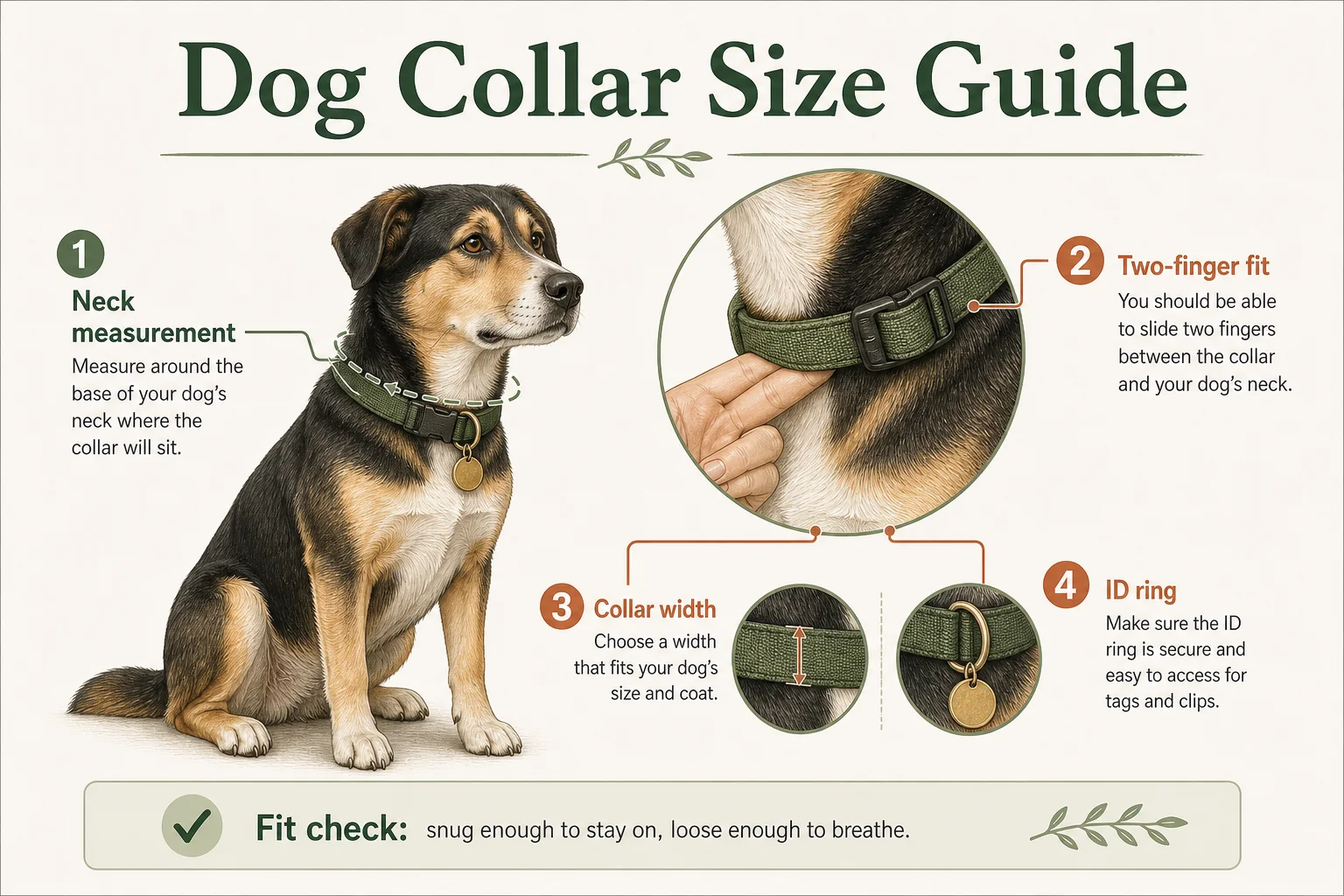
Measure around the part of the neck where the collar normally sits. Choose a collar whose adjustment range includes that measurement comfortably. After fitting, check that the collar is secure, flat, and not pressing into the skin.
For many dogs, the collar's main job is ID. If your dog pulls or should avoid neck pressure, attach the leash to a harness and keep the collar for tags.
Share & embed
Adult dog
Flat adjustable collar
- Look for
Measured neck range, secure buckle, tag ring
- Avoid
Buying only by breed size
Growing puppy
Adjustable lightweight collar
- Look for
Room to grow, frequent checks, light hardware
- Avoid
Leaving the same fit too long
Thick-coated dog
Collar checked through coat changes
- Look for
Seasonal fit checks, visible tag access
- Avoid
Collar hidden too tight under fur
Small dog
Light collar and hardware
- Look for
Low weight, narrow width, secure fit
- Avoid
Heavy clips and bulky buckles
Measure the neck
Use a soft tape measure around the neck where the collar sits. Keep the tape snug but not tight. If you do not have a tape measure, use a string and measure it against a ruler.
Compare the measurement with the collar's size range. Do not choose a collar where your dog's measurement sits at the extreme end unless the brand's guidance supports it.
Fit checks
After fitting, check whether the collar lies flat, whether the buckle presses awkwardly, and whether the collar can slip over the head. Dogs with narrow heads or thick necks may need extra care.
The collar should not cause coughing, gagging, rubbing, or hair loss. If leash pressure causes discomfort, use a harness for walks.
Puppies and coat changes
Puppies can outgrow collars quickly. Check fit weekly during fast growth. Thick-coated dogs may also need seasonal checks after grooming, shedding, or coat growth.
Never leave a tight collar on a growing puppy. A collar that fit last week may be too tight now.
Width and hardware
Collar width should match the dog. Small dogs usually need narrower, lighter collars. Large dogs may need wider collars and stronger hardware, but bulky gear can still be uncomfortable.
Check tag rings, buckles, stitching, and quick-release mechanisms regularly. Replace damaged collars instead of waiting for failure.
| Option | Best for | Key features | Caveat | Merchant |
|---|---|---|---|---|
Flat adjustable collar | Most dogs for ID and daily wear | Simple, adjustable, tag-friendly | Not ideal as sole control for every dog | |
Lightweight puppy collar | Growing puppies | Low weight, adjustable range, easy checks | Outgrown quickly | |
Reflective collar | Low-light routines | Visibility, simple daily use | Does not replace safe handling | |
Wide dog collar | Some large dogs | More surface area, stronger hardware options | Can be bulky or warm |
Category picks
These are category-level recommendations, not fixed single-product winners.
Common mistakes
✓ Better buying habits
- Measure the neck before buying.
- Check fit after grooming or coat changes.
- Recheck puppy collars often.
- Match collar width and hardware to dog size.
- Use a harness for walks when neck pressure is a concern.
× Mistakes to avoid
- Buying by breed label alone.
- Leaving a puppy collar unchecked during growth.
- Using heavy hardware on a small dog.
- Keeping frayed collars or bent tag rings.
- Attaching the leash to a collar for a strong puller.
Related guides
Read Dog Collar Materials Guide if nylon, leather, coated webbing, reflective trim, hardware, or cleaning is the main buying question. Read Dog Harness vs Collar if you are deciding between neck attachment, body attachment, or collar-for-ID plus harness-for-walks. Read Dog Collar vs Harness for Puppy when puppy growth, first collar practice, and early walks shape the decision. Read Collars and Leashes for Everyday Walks for leash pairing and daily use. Use the Dog Harness Fit Guide and Harness Fit Checklist if walks should use body-based control. Use the Dog Leash Length Guide when leash length is part of the decision, and the Dog Leash Materials Guide when leash grip, weather, cleaning, or hardware matters. Return to the Harnesses, Collars & Leashes pillar for the full framework.
Frequently asked questions
How do I measure a dog collar size?
Measure around the neck where the collar sits, then choose a collar whose adjustment range includes that measurement comfortably.
How tight should a dog collar be?
It should be secure without pressing into the neck. Follow the collar maker's fit guidance and check for slipping or rubbing.
How often should puppy collars be checked?
During fast growth, check at least weekly. Puppies can outgrow collars quickly.
Should my dog wear a collar with a harness?
Often yes. The collar can carry ID while the harness handles leash attachment.
What collar width is best?
Small dogs usually need lighter, narrower collars. Larger dogs may need wider collars, but comfort still matters.