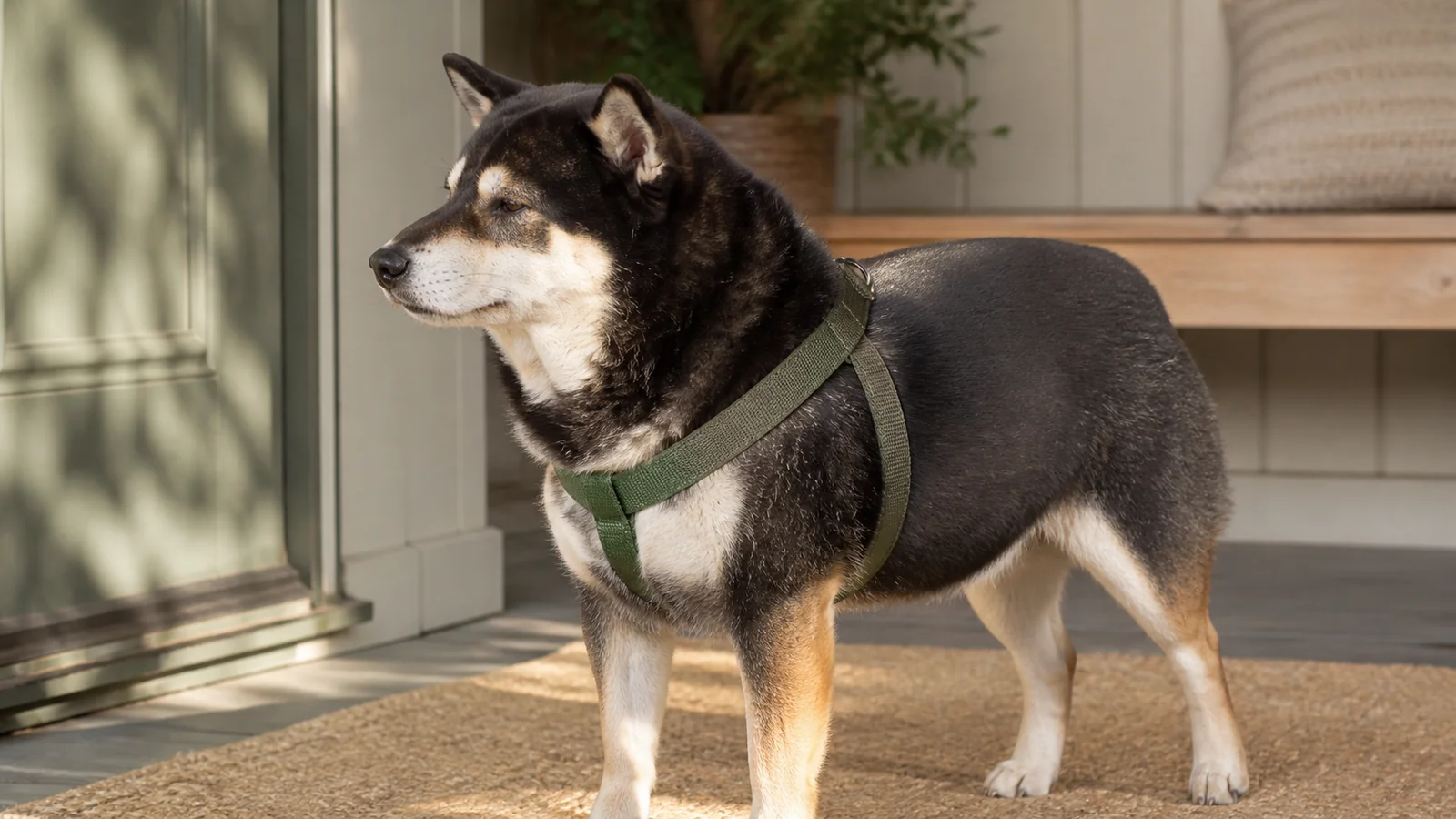
A good harness should stay secure without rubbing, pinching, sliding, or blocking natural shoulder movement. Fit matters more than the number of clips, handles, or marketing features.
Start with the Dog Harnesses hub for the curated harness path or the broader Harnesses, Collars & Leashes pillar. Pair this with the No-Pull Dog Harness Guide when front-clip fit and pulling-management limits matter, the Dog Seat Belt and Car Harness Guide for vehicle-specific restraint, Dog Harness vs Collar, Dog Collar vs Harness for Puppy and Puppy Harness Size Guide when growth checks matter, and the printable Harness Fit Checklist.
Quick read
TL;DR
- Measure chest girth first, then compare with the brand's size chart.
- A harness should not rub behind the front legs or rotate around the body.
- Shoulder movement matters: the front shape should not restrict normal walking.
- Front clips can help handling, but they do not train loose-leash walking by themselves.
- Recheck fit after the first few walks because straps can loosen.
- Remove most walking harnesses after walks unless the design is meant for extended wear.
Quick answer
For many dogs, start with an adjustable Y-front harness that matches the dog's chest girth and allows natural shoulder movement. It should sit securely on the body without pressing into the neck or sliding into the armpits.
Choose back-clip harnesses for relaxed walkers and simple routines. Consider front-clip designs for some pulling management, but use them with training and fit checks. Avoid bulky harnesses that look secure but shift, rub, or block movement.
Share & embed
Everyday fit issue
Adjustable Y-front harness
- Look for
Chest girth range, shoulder freedom, multiple adjustment points
- Avoid
Harnesses that sit tight behind the legs
Relaxed walker
Back-clip harness
- Look for
Easy leash attachment, simple handling, less neck pressure
- Avoid
Using it to solve strong pulling alone
Pulling management
Front-clip harness
- Look for
Changes leash angle, may help handling
- Avoid
Assuming it replaces training
Hard-to-fit body
Highly adjustable harness
- Look for
Neck and chest adjustments, return policy, careful trial walk
- Avoid
Buying by weight alone
Measure chest girth
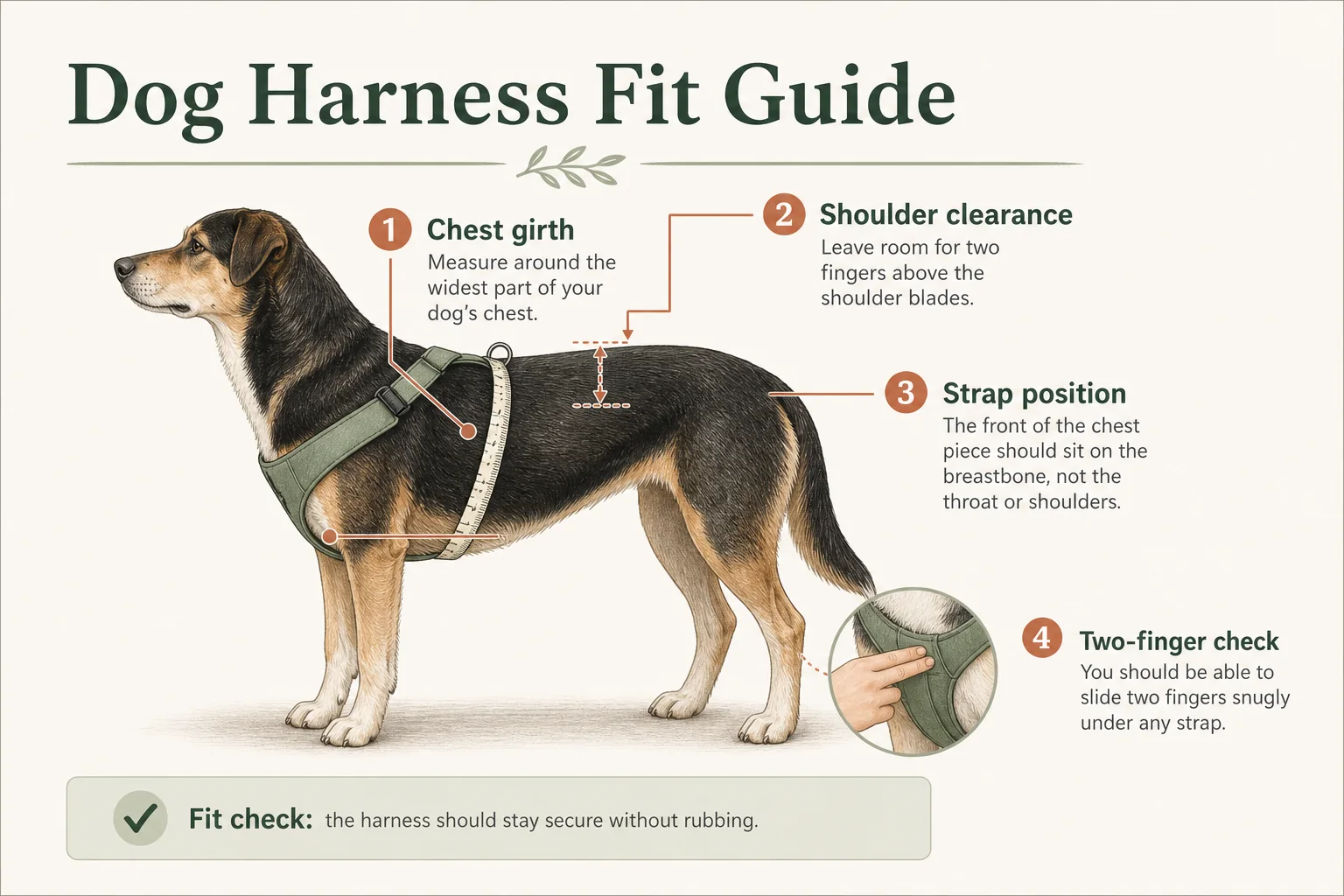
Chest girth is the most important starting measurement. Wrap a soft tape measure around the widest part of the rib cage, usually just behind the front legs. Keep the tape snug but not tight. Compare that measurement with the specific brand's chart.
Do not choose by weight alone. Two dogs with the same weight can have very different chest shape, neck size, leg length, and coat thickness.
Strap position
A harness should sit on the rib cage, not jammed into the armpits. Straps that rub behind the front legs can cause irritation over repeated walks. Buckles should not press into sensitive areas, and adjustment sliders should stay flat.
The neck opening should not press into the throat. A harness that rides too high can create neck pressure, while one that hangs too low may shift or interfere with the legs.
Shoulder movement
Watch your dog walk from the side. The front legs should move naturally. If the harness crosses the shoulder in a way that limits stride, try a different shape or size.
Y-front harnesses are popular because they can leave the shoulders freer when fitted correctly. That does not mean every Y-front harness fits every dog. Body shape and adjustment range still matter.
Front clip or back clip?
A back clip is simple and works well for many relaxed walkers. A front clip can help some handlers manage pulling by changing the leash angle. It is not a magic fix. A dog can still pull in a front-clip harness, and a poor fit can twist the harness around the body.
Some harnesses include both front and back rings. That can be useful if the harness fits well, but extra hardware is not valuable if the basic shape is wrong.
For broader walk routines beyond gear fit, the ASPCA's tips for getting more out of walks with your dog are a useful external reference. Treat harness choice as one part of walking comfort, not a complete training plan.
| Option | Best for | Key features | Caveat | Merchant |
|---|---|---|---|---|
Y-front harness | Everyday walks and shoulder freedom | Natural movement, adjustable fit, body-based control | Fit varies by brand and body shape | |
Back-clip harness | Relaxed walkers | Simple leash attachment, easy handling | May give strong pullers more leverage | |
Front-clip harness | Some pulling management | Can improve handler control in some cases | Not a training replacement, may rotate | |
Step-in harness | Small dogs and dogs that dislike over-head gear | Can be easy to put on | May fit poorly on some chest shapes |
Adjustment workflow
Fit the harness indoors first. Let the dog stand naturally. Adjust straps evenly, then walk a few steps and watch for shifting. Check the armpit area, chest strap, neck opening, buckles, and leash ring position.
After a real walk, check again. Look for red marks, flattened fur, rubbing, or the harness rotating. Straps often settle after movement.
Category picks
These are category-level recommendations, not fixed single-product winners.
Common mistakes
✓ Better buying habits
- Measure chest girth before choosing a size.
- Check shoulder movement during a real walk.
- Keep straps away from the armpit area.
- Recheck fit after the first few walks.
- Match clip style to behavior and training needs.
- Inspect buckles, stitching, and leash rings regularly.
× Mistakes to avoid
- Buying by weight range alone.
- Ignoring rubbing behind the front legs.
- Assuming a front clip stops pulling by itself.
- Leaving a wet or muddy harness on after the walk.
- Choosing bulky hardware for a small dog.
- Keeping a harness that rotates around the body.
Related guides
Read Dog Harness vs Collar if you are deciding whether the leash should attach to a harness or collar. Read Dog Collar vs Harness for Puppy and Puppy Harness Size Guide when the harness is for a growing puppy and needs frequent fit rechecks. Read Collars and Leashes for Everyday Walks to pair the harness with the right leash and collar. Use the Dog Leash Length Guide if leash length changes the walk, and use the Dog Leash Materials Guide if grip, weather, cleaning, or leash clip hardware changes the setup. Print the Harness Fit Checklist for the first fitting and post-walk rub check. Return to the Harnesses, Collars & Leashes pillar for the broader walking gear framework.
Frequently asked questions
Can a harness stop pulling?
A harness can change leverage, but it does not train polite walking by itself. Use fit, handling, and training together.
Should dogs wear harnesses all day?
Usually no. Many harnesses are designed for walks, not all-day wear. Remove the harness after walks unless a professional has advised otherwise.
How tight should a harness be?
It should be snug enough not to shift, with room under key straps according to the manufacturer's guidance. Check movement, not just tightness.
Why does my dog's harness rub?
Common causes include wrong size, poor strap position, bulky seams, wet gear, or a shape that does not match the dog's body.
Is a front clip or back clip better?
Back clips are simple for relaxed walkers. Front clips may help with some pulling management, but only if the harness fits and stays centered.
What if my dog is between sizes?
Check the brand's guidance, adjustment range, and return policy. Do not keep a harness that rubs, twists, or restricts movement.