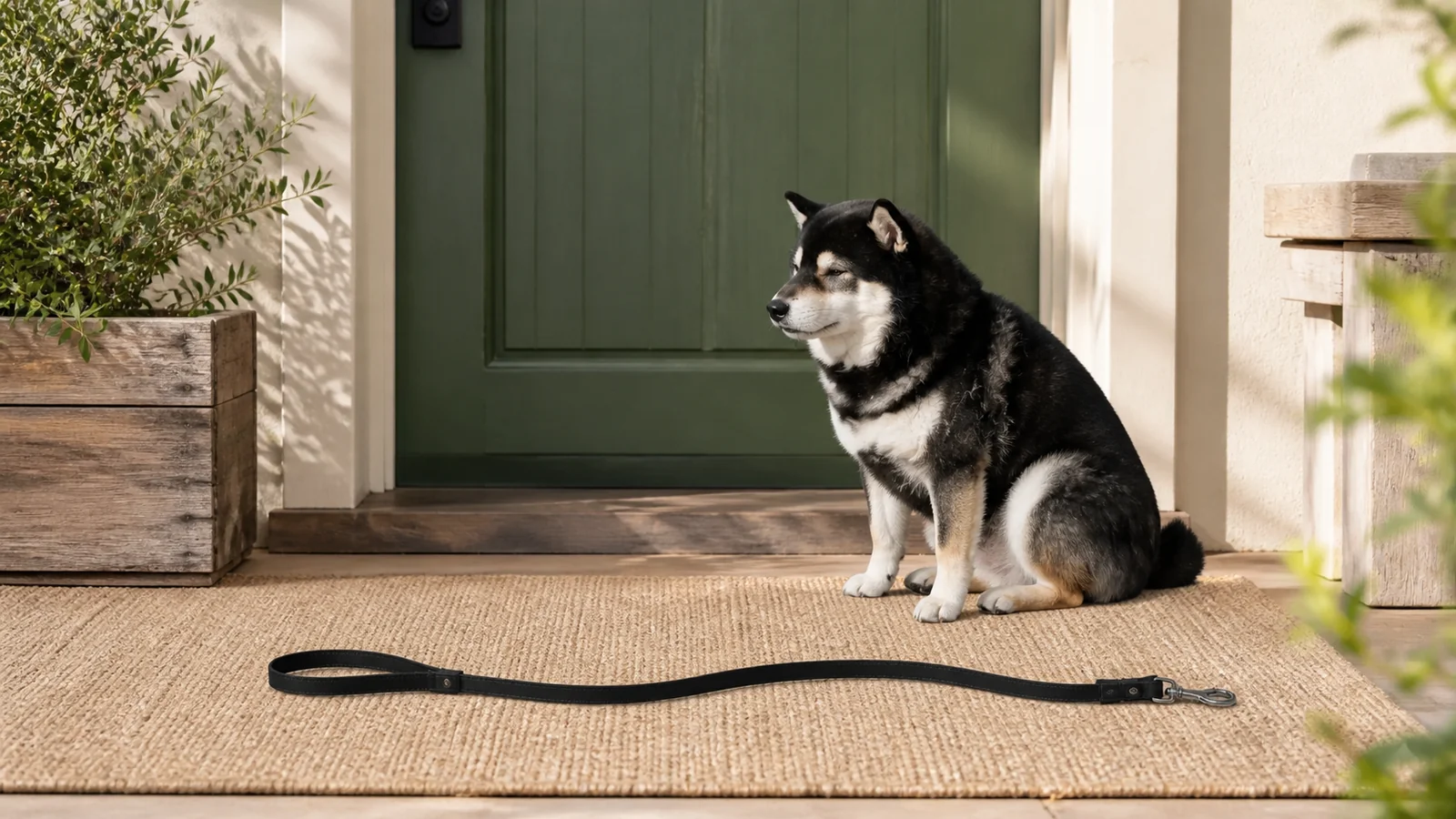
Leash length changes the whole walk. A leash that feels easy in an open park can be awkward on a sidewalk, and a short leash that feels controlled near traffic can be frustrating for sniffing or training practice.
Start with the Harnesses, Collars & Leashes pillar for the full walking gear framework. Use this guide when the main decision is whether a 4-foot, 6-foot, 10-foot, long-line, or retractable leash fits your routine. If the leash is for a young dog, read Best Leash for Puppy first.
Quick read
TL;DR
- Best default for many walks: a simple six-foot leash with a comfortable handle and sturdy clip.
- Four-foot leashes are useful for brief high-control moments, tight sidewalks, or traffic-heavy areas.
- Ten-foot leashes and long lines are for open areas, training practice, and handlers who can manage extra length.
- Retractable leashes are situational, not the simplest choice for crowded sidewalks or parking lots.
- Match the clip and width to the dog, not just the leash length.
- Use longer lines with caution: tangles, sudden speed, and traffic risk matter.
Quick answer
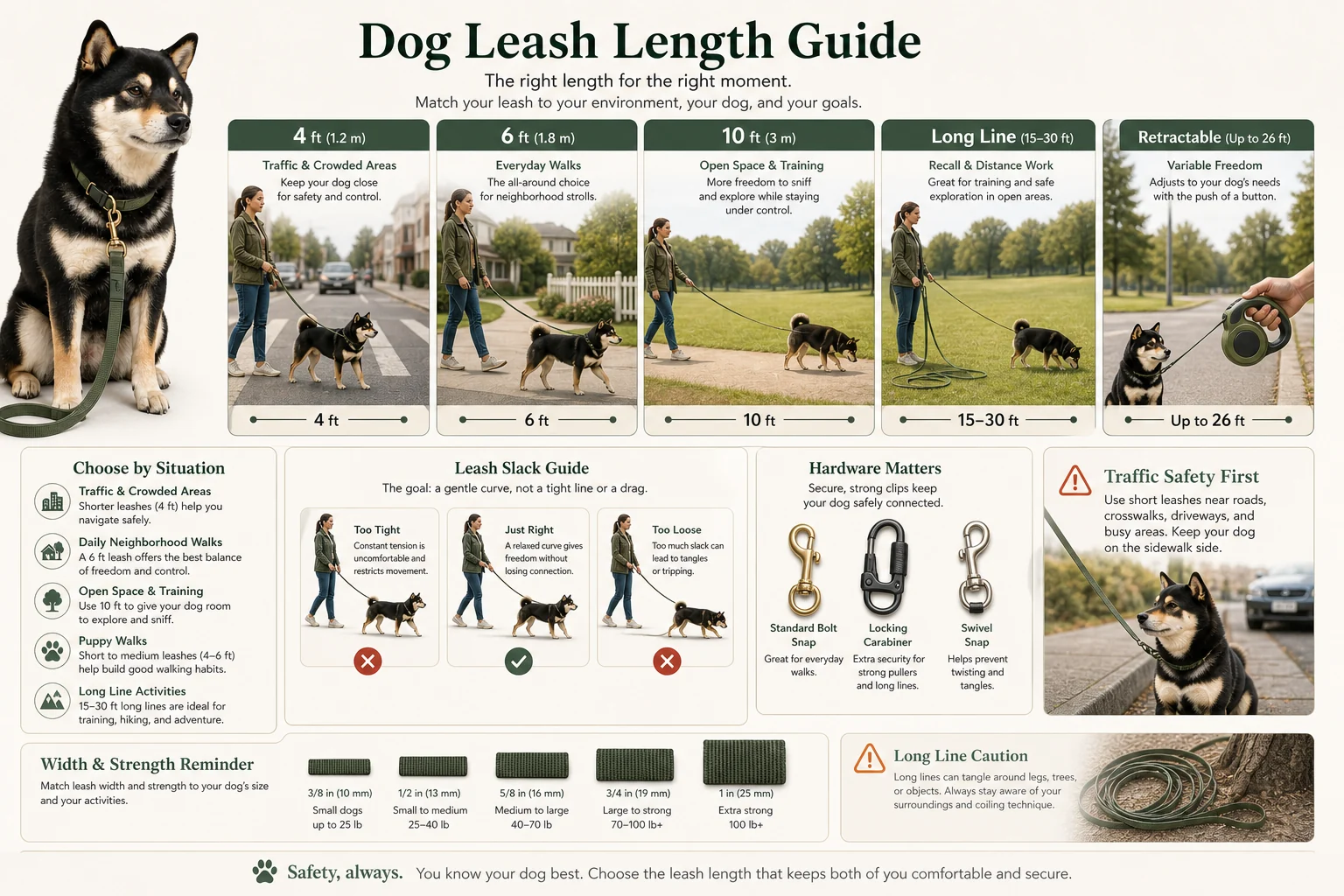
For most everyday neighborhood walks, start with a six-foot leash. It gives enough room for normal movement while keeping your dog close enough for crossings, passing people, and changing direction.
Choose a shorter leash when the walk is mostly traffic, tight sidewalks, elevators, stores, or crowded paths. Choose a longer leash or long line only where there is enough space and you can handle the extra length safely.
Share & embed
Crowded sidewalks or traffic
4-foot leash or traffic handle
- Look for
Close handling, less slack, quicker response
- Avoid
Using long lines near cars or tight paths
Most daily walks
6-foot leash
- Look for
Predictable length, enough movement, simple handling
- Avoid
Retractable leash in crowded areas
Training in open areas
10-foot leash or long line
- Look for
More distance for recall and decompression
- Avoid
Letting the dog hit the end at speed
Puppy walks
Light 6-foot leash
- Look for
Predictable handling, lighter hardware, easy supervision
- Avoid
Heavy clips, long dragging lines, retractable tension
Four-foot leashes
A four-foot leash keeps the dog close. It can be useful in traffic-heavy areas, busy sidewalks, elevator entrances, vet offices, parking lots, and places where sudden slack creates risk.
The tradeoff is freedom. A short leash can become frustrating if the entire walk is held too tight. Use it for routes where close handling is actually needed, not as a substitute for training.
Six-foot leashes
A six-foot leash is the practical default for many homes. It is long enough for normal walking and sniffing, but short enough to manage around other people, bikes, curbs, and doorways.
If you only buy one standard leash, this is usually the category to compare first. Check handle comfort, stitching, clip size, material feel, and whether the leash width matches your dog's size.
Ten-foot leashes and long lines
A ten-foot leash gives more distance while still staying more manageable than a very long training line. It can work for open sidewalks, quiet parks, and sniffing walks when traffic and crowding are low.
Long lines, often 15 to 30 feet or more, are for open-space practice. They can help with recall training and decompression walks, but they require attention. Long lines can tangle, wrap around legs, drag through mud, or let a dog build speed before reaching the end.
Use longer lines with a well-fitted harness when possible. Avoid attaching a long line to a neck collar if there is any chance the dog will hit the end suddenly.
Retractable leashes
Retractable leashes can work for some calm dogs in open areas, but they are harder to manage in crowded places. The length changes quickly, the handle is bulky, and the thin cord can surprise people or tangle around legs.
For everyday sidewalks, parking lots, shared paths, and passing other dogs, a standard leash is usually easier to control. If you use a retractable leash, keep it for open, low-risk areas and stay aware of distance.
Material, width, and hardware
Length is only one part of leash choice. A leash should feel secure in your hand and match the dog in front of you. Thin lightweight leashes may suit small dogs. Wider webbing, sturdy clips, and reinforced stitching may suit larger or stronger dogs.
Common materials include nylon, rope, leather, biothane-style coated webbing, and padded handles. Each has tradeoffs. Rope can feel secure but may burn hands under sudden tension. Leather can be comfortable but needs care. Coated webbing can be easier to wipe clean but may feel stiff.
Use the Dog Leash Materials Guide if material feel, mud, rain, odor, leash burn risk, or hardware are as important as length.
| Option | Best for | Key features | Caveat | Merchant |
|---|---|---|---|---|
4-foot leash | Crowded paths, traffic, brief close control | Less slack, simpler passing, close handling | Too restrictive for relaxed sniffing | |
6-foot leash | Most everyday walks | Predictable length, simple handling, good default | Less freedom than long lines | |
10-foot leash | Quiet open walks and light training | More sniffing room while still manageable | Needs more space and attention | |
Long line | Recall practice and open fields | Controlled distance, training flexibility | Tangles, speed, and traffic risk | |
Retractable leash | Some calm dogs in open areas | Variable length, convenient freedom | Harder to control in crowded spaces |
Category picks
These are category-level recommendations, not fixed single-product winners. Use them to start comparison shopping, then check clip strength, handle comfort, leash width, material feel, and recent owner feedback.
Common mistakes
✓ Better buying habits
Better leash choices
- Start with a six-foot leash for everyday walks.
- Use shorter handling near traffic or crowded paths.
- Reserve long lines for open areas and training practice.
- Match clip size and leash width to your dog's size.
- Check stitching, handle comfort, and hardware regularly.
- Pair long lines with a well-fitted harness when possible.
× Mistakes to avoid
- Using long lines near cars, bikes, or tight sidewalks.
- Letting a dog hit the end of a long line at speed.
- Choosing retractable leashes for crowded areas.
- Buying heavy clips for small dogs.
- Keeping frayed webbing, cracked handles, or sticky clips.
- Treating leash length as a substitute for training.
Related guides
Start with the curated Dog Leashes hub when length, material, puppy use, traffic handling, and long-line practice are still being compared together. For a complete walking setup, read Collars and Leashes for Everyday Walks. For waist and convertible systems, use Best Hands-Free Dog Leashes before choosing working length or bungee. Use the Dog Leash Materials Guide when grip, nylon, leather, rope, coated webbing, cleaning, or clip hardware are the main comparison points. For harness fit before using longer lines, use the Dog Harness Fit Guide and the Harness Fit Checklist. For puppies, read Best Leash for Puppy and the Puppy Harness Size Guide, then print the Puppy Walking Gear Checklist before choosing leash length, clip weight, collar ID setup, and harness fit. For clip style, compare Front Clip vs Back Clip Harnesses. For sizing tools, use the Dog Harness Fit Calculator and Dog Collar Size Calculator.
Frequently asked questions
What leash length is best for everyday walks?
A six-foot leash is the most practical default for many neighborhoods because it gives predictable control without keeping the dog unnaturally close.
Is a four-foot leash too short?
It can be too short for relaxed sniffing walks, but it is useful for traffic, crowded sidewalks, elevators, and brief close-control moments.
Are long lines safe?
Long lines can be useful in open areas, but they need careful handling. Avoid them near traffic, crowds, bikes, and tight paths.
Should a long line attach to a collar or harness?
A harness is usually safer when a dog might reach the end suddenly. Avoid putting sudden long-line force on the neck.
Are retractable leashes good for daily walks?
They can work for some calm dogs in open areas, but a standard leash is usually easier to control in crowded or high-traffic places.