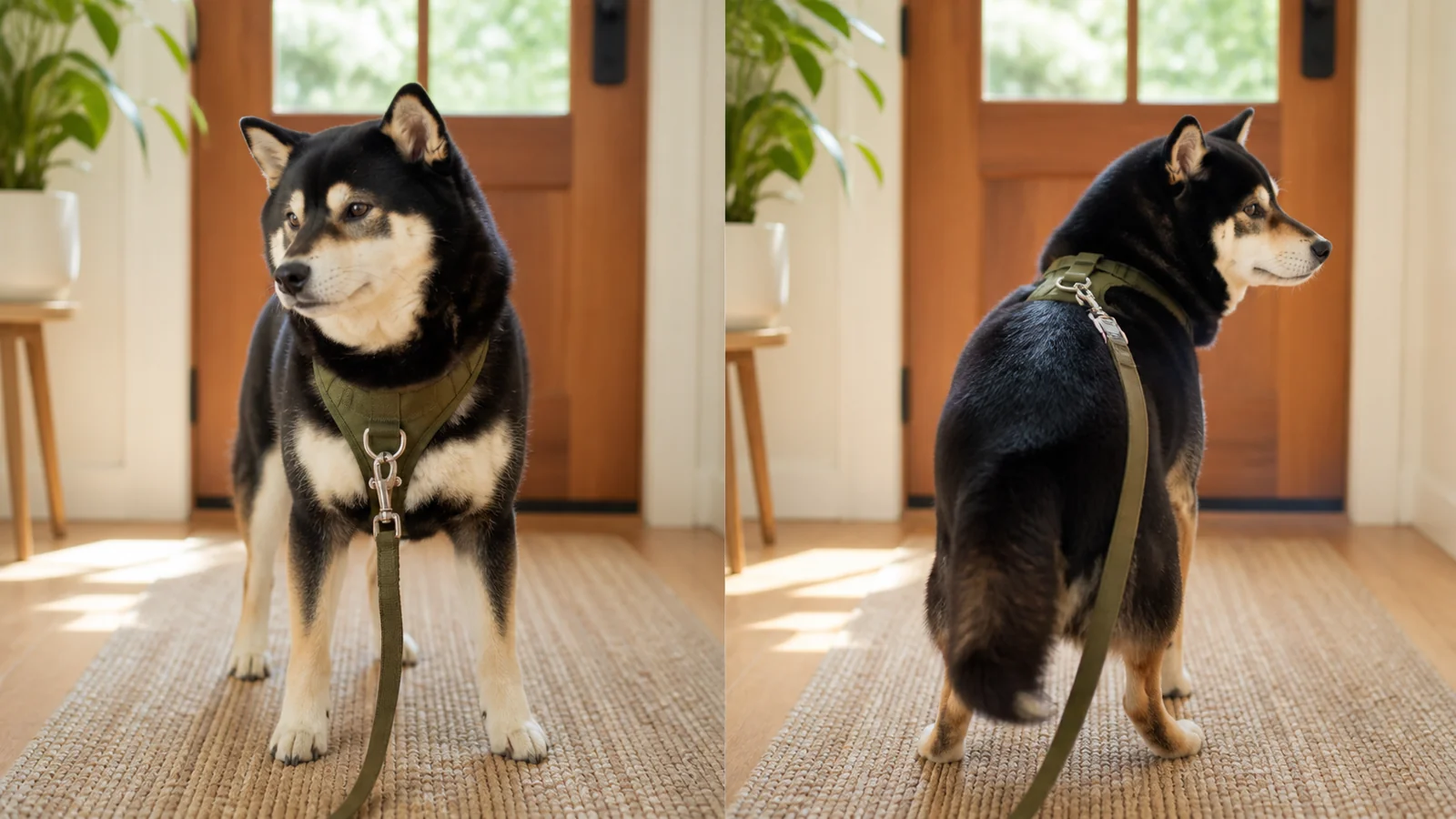
Front-clip and back-clip harnesses change where leash pressure sits on the dog's body. That can affect handling, but clip placement is not a complete training solution.
Start with the Dog Harnesses hub for the curated harness path or the broader Harnesses, Collars & Leashes pillar. Use this guide when the main question is whether front, back, or dual clips fit your dog and walking routine, and use the No-Pull Dog Harness Guide when pulling-management claims and training limits are the main concern. Use the Harness Fit Checklist after choosing a harness shape to check rubbing, rotation, and shoulder movement. For puppy sizing, use the Puppy Harness Size Guide before clip style becomes the main decision.
Quick read
TL;DR
- Back clips are simplest for relaxed walkers and everyday handling.
- Front clips may help some pulling management by changing the leash angle.
- A front clip is not a training replacement.
- Poor fit can make front clips twist the harness around the body.
- Dual-clip harnesses can be useful if the harness fits well.
- Choose fit first, clip style second.
Quick answer
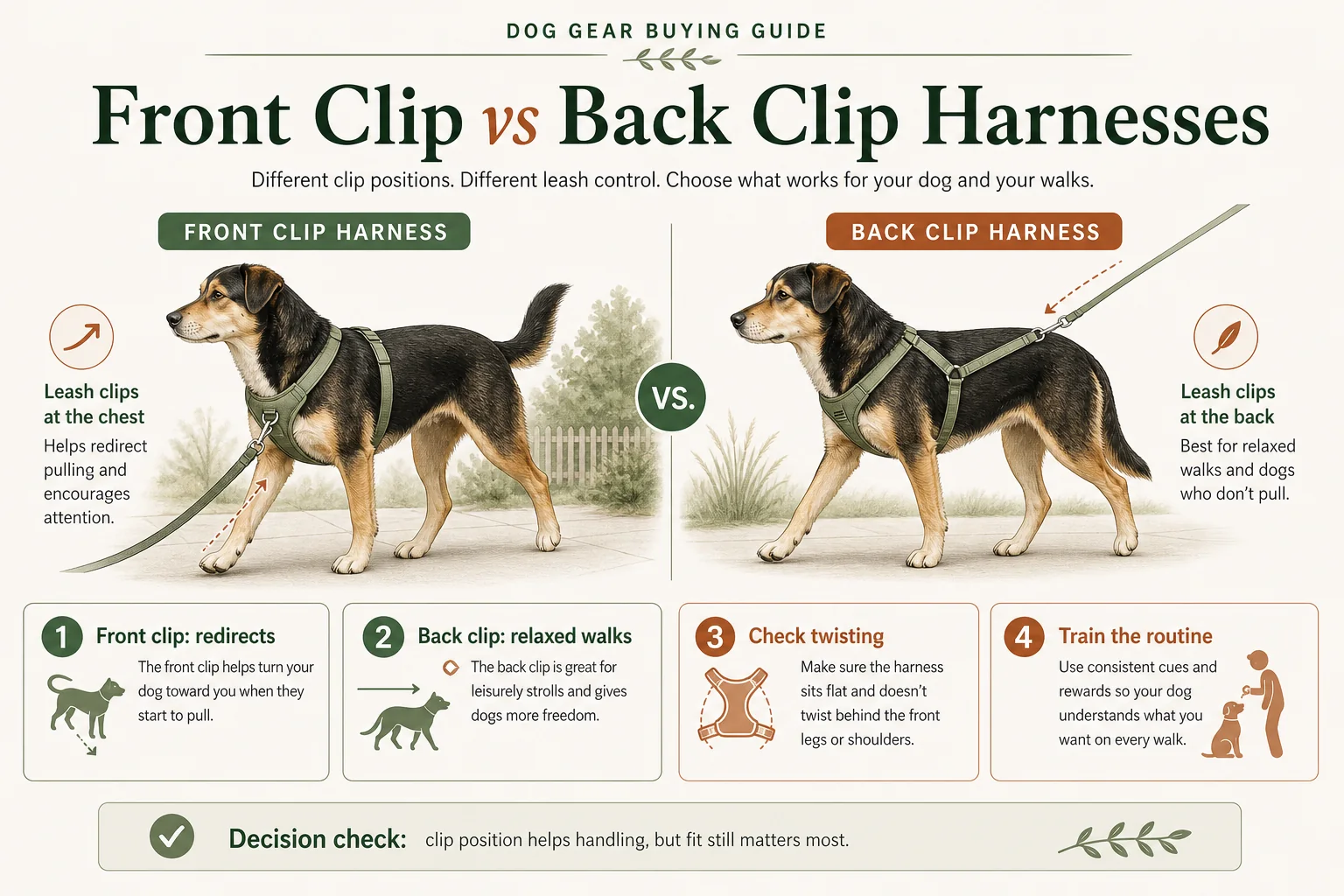
Choose a back-clip harness if your dog walks calmly and you want simple leash attachment. Consider a front-clip harness if you need extra handling help while working on loose-leash walking. Choose a dual-clip harness if both use cases matter and the harness stays centered.
If the harness rubs, rotates, or blocks movement, the clip style does not matter. Fix fit first.
Share & embed
Relaxed daily walker
Back-clip harness
- Look for
Simple, comfortable, easy to attach
- Avoid
Using it to manage strong pulling alone
Dog pulls forward
Front-clip harness
- Look for
Changes leash angle, can improve handling
- Avoid
Assuming it trains the dog automatically
Mixed situations
Dual-clip harness
- Look for
Back and front options, flexible setup
- Avoid
Extra hardware without good fit
Sensitive body shape
Fit-focused Y-front harness
- Look for
Better movement and adjustment potential
- Avoid
Choosing clip position before size and shape
Back-clip harnesses
Back clips attach the leash on the dog's back. They are easy to use and work well for many calm walkers. They keep leash pressure away from the neck and are simple for everyday routines.
The downside is leverage. Some strong pullers can lean into a back-clip harness more easily. That does not make back clips bad; it means they are not the right tool for every behavior.
Front-clip harnesses
Front clips attach at the chest. When the dog pulls, the leash angle may turn the body slightly, which can help some handlers regain control. This can be useful during training, but it does not teach polite walking by itself.
Front-clip harnesses need careful fit. If the chest attachment pulls the harness sideways, it can twist, rub, or interfere with movement.
Dual clips and training limits
Dual-clip harnesses include both front and back rings. They can be useful when one dog needs different handling in different environments. The extra ring is only useful if the harness fits and the hardware is not bulky.
Training still matters. Gear can make handling safer and calmer, but it cannot replace reinforcement, distance management, and consistent walking routines.
| Option | Best for | Key features | Caveat | Merchant |
|---|---|---|---|---|
Back-clip harness | Relaxed walkers | Simple attachment, easy daily use, less neck pressure | Can give pullers leverage | |
Front-clip harness | Some pulling management | Changes leash angle, can help handling | Can twist if fit is poor | |
Dual-clip harness | Mixed walking situations | Flexible front/back use | More hardware and more fit checks | |
Y-front harness | Movement-focused fit | Can preserve shoulder movement | Still needs body-specific sizing |
Category picks
These are category-level recommendations, not fixed single-product winners.
Common mistakes
✓ Better buying habits
- Choose clip style by walking behavior.
- Check whether the harness stays centered.
- Use front clips alongside training.
- Recheck armpit and shoulder movement.
- Choose dual clips only when both are useful.
× Mistakes to avoid
- Treating a front clip as a complete pulling fix.
- Keeping a harness that twists sideways.
- Choosing a back clip for a dog you cannot safely manage.
- Ignoring strap fit because the clip style seems right.
- Buying extra hardware that makes the harness bulky.
Related guides
Read Dog Harness vs Collar if the first decision is whether leash pressure should sit on the neck or body. Read Dog Collar vs Harness for Puppy and Puppy Harness Size Guide if the clip-style question is part of a puppy's first walking setup. Read Dog Harness Fit Guide before choosing size. Use Best Dog Harnesses for Everyday Walks for broader harness categories. Print the Harness Fit Checklist for the first fitting, and use the Dog Leash Length Guide if leash length changes the handling. Use the Dog Leash Materials Guide when grip, leash burn risk, weather, or clip hardware changes how the harness feels in use. Return to the Harnesses, Collars & Leashes pillar for the full framework.
Frequently asked questions
Is a front-clip harness better for pulling?
It may help some handlers manage pulling, but it does not train loose-leash walking by itself.
Is a back-clip harness bad?
No. Back clips work well for many relaxed walkers and simple daily routines.
Why does my front-clip harness twist?
Common reasons include poor fit, wrong size, body shape mismatch, or too much sideways leash pressure.
Are dual-clip harnesses worth it?
They can be useful if both clip points fit your routine and the harness is not bulky.
Which clip is safest?
The safest option is the one that fits securely, does not rub, and lets you manage the dog calmly.