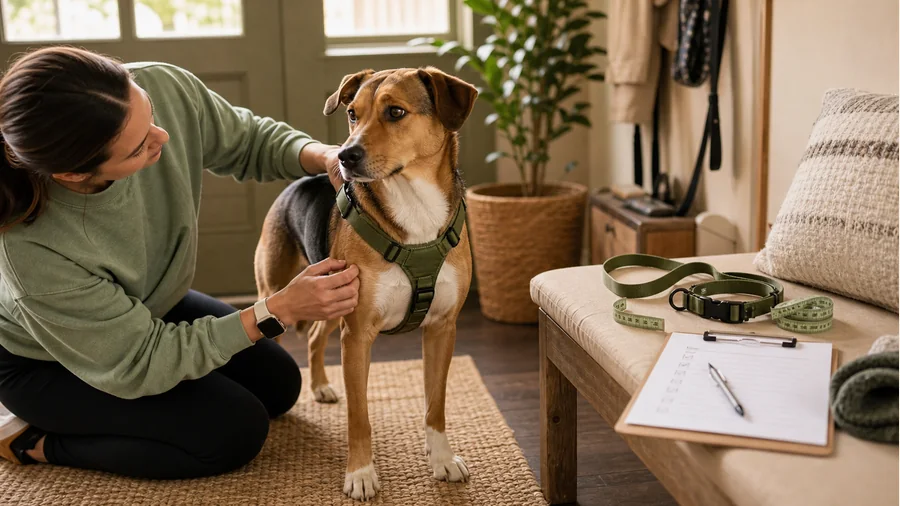
A harness can match the size chart and still rub, twist, or block movement. This printable checklist helps you check chest girth, strap position, armpit clearance, shoulder movement, hardware placement, and post-walk comfort before deciding to keep a harness.
Use it after reading the Dog Harness Fit Guide and before relying on a harness for daily walks.
Printable resource
Download the harness fit checklist
Use the PDF during the first indoor fitting and again after a short walk. It keeps the focus on fit, movement, rubbing, and whether the harness stays centered.
Quick fit flow
- Measure chest girth around the widest part of the rib cage.
- Compare that number with the current brand size chart.
- Fit the harness indoors while the dog stands naturally.
- Check armpit clearance, neck opening, buckles, and strap angle.
- Walk a few minutes and watch shoulder movement from the side.
- Recheck after the walk for red marks, flattened fur, rubbing, twisting, or stress.
What to check before keeping a harness
✓ Better buying habits
Better fit checks
- Measure chest girth before choosing a size.
- Keep straps away from the armpit area.
- Watch shoulder movement during a real walk.
- Check whether the harness rotates when the leash is attached.
- Match hardware weight to the dog's size.
- Recheck growing puppies and dogs with coat or weight changes.
× Mistakes to avoid
- Buying by weight alone.
- Ignoring rubbing because the size label looks right.
- Treating a front clip as a complete pulling solution.
- Keeping a harness that twists sideways under leash pressure.
- Leaving a wet or muddy harness on after walks.
- Using damaged stitching, buckles, sliders, or leash rings.
When to choose a different shape
Try a different harness shape if the straps sit too close to the front legs, the neck opening presses into the throat, the chest panel pulls sideways, or your dog changes their stride while wearing it. A different size does not always solve a shape mismatch.
Puppies and adolescent dogs need repeated checks because growth can change the fit quickly. Dogs with deep chests, narrow waists, thick coats, or sensitive skin may also need more trial fitting than a simple size chart suggests.
After measuring
Compare harness options with the checklist beside you
Use your chest-girth number and fit notes before opening listings. Start with adjustable harnesses, then compare clip style only after the basic shape works for your dog.
What Dogs Like may earn from qualifying purchases. Affiliate links do not change the buying checks in this resource.
Related guidance
For the full fit process, read the Dog Harness Fit Guide. If you are deciding whether walks should use a harness, collar, or both, read Dog Harness vs Collar. For a growing puppy, use Dog Collar vs Harness for Puppy, the Puppy Harness Size Guide, and the Puppy Walking Gear Checklist alongside this checklist because collar and harness fit can change quickly. For harness category choices, use Best Dog Harnesses for Everyday Walks. For clip style tradeoffs, compare Front Clip vs Back Clip Harnesses. For leash pairing, read the Dog Leash Length Guide and Dog Leash Materials Guide, then return to the Harnesses, Collars & Leashes pillar.