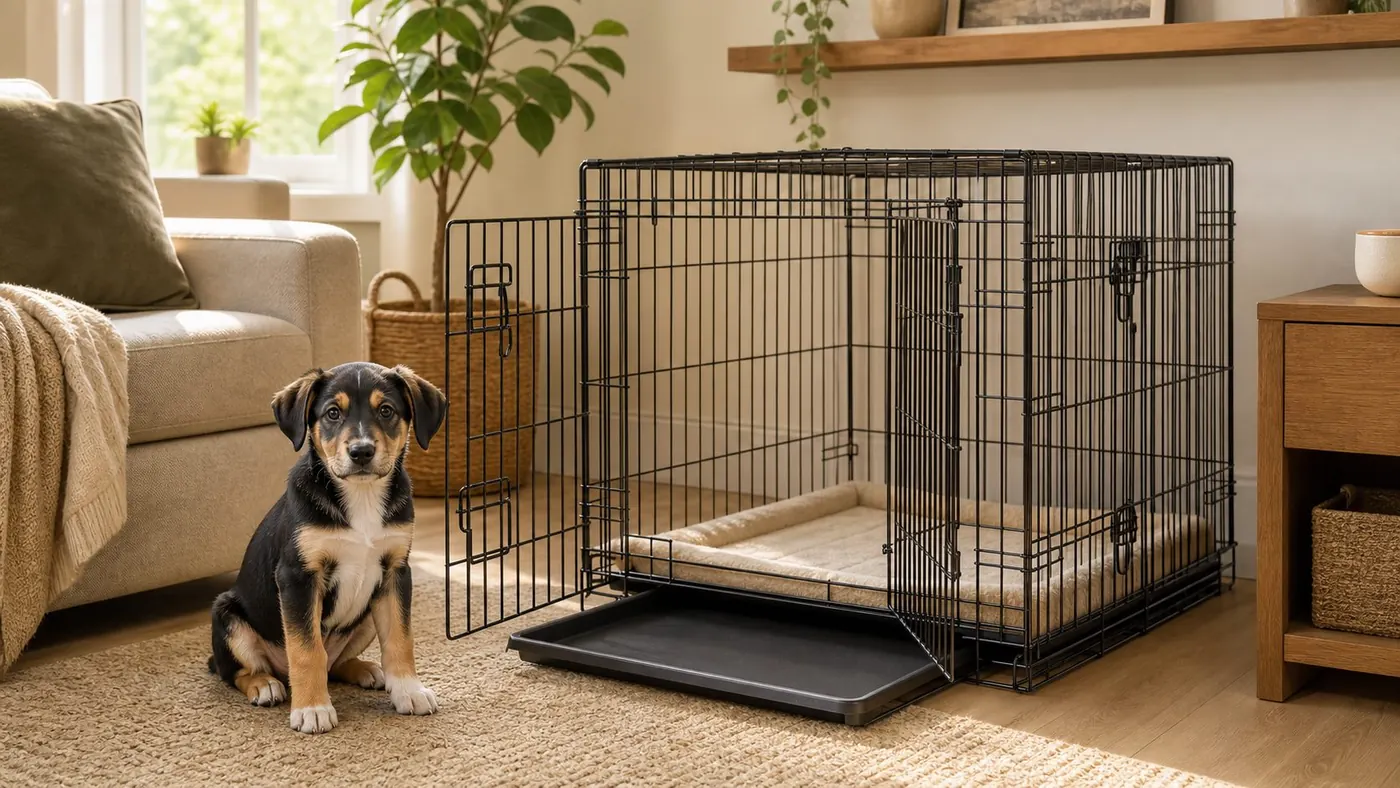
A puppy crate routine works best when it is built around the puppy's real needs: potty breaks, meals, play, short training, supervision, naps, and calm rest. This printable schedule gives you a daily framework without turning crate use into a rigid rule.
Use it beside the Dog Crate Setup Checklist after choosing a safe crate location and checking the crate's internal size.
Printable resource
Download the puppy crate training schedule
Print the PDF to plan morning, midday, afternoon, evening, bedtime, and overnight checks. The schedule is intentionally flexible: adjust it for age, bladder control, feeding routine, household schedule, and how your puppy responds.
How to use the schedule
Start with short, positive crate moments while you are home. Keep the crate open during early setup, reward voluntary entry, and build duration slowly. The schedule is a planning sheet, not a promise that every puppy will settle on the same timeline.
Use the printable to track:
- Potty breaks after waking, meals, play, and before bedtime.
- Short play or training sessions before rest.
- Calm crate practice when the puppy is already likely to settle.
- Supervised out-of-crate time for movement, chewing outlets, and social contact.
- Notes about whining, stress, accidents, or times that felt too difficult.
A flexible daily rhythm
Morning
Potty, meal, short play, calm crate practice
- Look for
Start the day with movement and a chance to eliminate
- Avoid
Putting a puppy straight into the crate without a potty break
Midday
Potty, food or enrichment, nap, supervision notes
- Look for
Track whether the puppy can settle after needs are met
- Avoid
Expecting long crate stretches before bladder control is ready
Afternoon
Training game, chew outlet, crate rest if calm
- Look for
Pair crate time with positive routines and realistic breaks
- Avoid
Using the crate to replace exercise or supervision
Evening
Potty, dinner, quiet play, bedtime setup
- Look for
Wind down before overnight rest
- Avoid
Adding exciting play right before expecting sleep
Overnight
Potty response plan and next-morning notes
- Look for
Listen for real bathroom needs in young puppies
- Avoid
Ignoring distress or assuming every sound is misbehavior
What this resource cannot do
It cannot tell you exactly how long your puppy should stay in a crate. Age, bladder control, health, prior crate experience, household schedule, and stress level all matter. If you need to leave a puppy longer than they can manage, use a safe longer-term confinement setup or arrange help rather than relying on a closed crate.
For step-by-step crate introduction, the AKC's crate training guide is a useful external reference. For a broader daily structure, use the AKC's puppy schedule guidance. The MSPCA's crate training guidance is also helpful for keeping crate practice gradual and positive.
✓ Better buying habits
Better routine habits
- Take the puppy out before planned crate rest.
- Pair crate practice with food, treats, safe chews, or calm enrichment.
- Build duration gradually instead of jumping to long sessions.
- Keep notes on stress, accidents, and what helped the puppy settle.
- Revisit crate size, bedding, and placement if the routine is not working.
× Mistakes to avoid
- Treating the crate as a punishment.
- Forcing the puppy inside.
- Expecting one universal schedule to work for every puppy.
- Ignoring panic, repeated escape attempts, or injury risk.
- Using a crate as a substitute for training, movement, or supervision.
After planning
Compare puppy crate setup options
Use the schedule with your crate measurements and setup notes. Divider crates and washable crate mats are common starting points for growing puppies, but still check internal dimensions, latch quality, mat thickness, and current listing details.
What Dogs Like may earn from qualifying purchases. Affiliate links do not change the training cautions or setup checks in this resource.
Optional training ideas
Add short training games around the routine
Brain Training for Dogs is an online course with force-free training ideas and mental-stimulation games that may help you add short engagement sessions around crate rest, potty breaks, and calm daily routines.
Use it as supplemental education, not as a substitute for safe crate introduction, veterinary care, professional behavior support, or direct supervision when a puppy is stressed, panicking, chewing, or trying to escape.
What Dogs Like may earn from qualifying purchases. Affiliate relationships do not change the checks or cautions in this resource.
Related guidance
For crate size and divider setup, read the Dog Crate Size Guide and use the Dog Crate Size Calculator. For buying and room setup, use the Dog Crate Setup Checklist and the Best Dog Crates for Puppies guide. If your schedule also includes first walks, pair it with Dog Collar vs Harness for Puppy and the Puppy Walking Gear Checklist. Return to the Dog Crates pillar for the full crate framework.