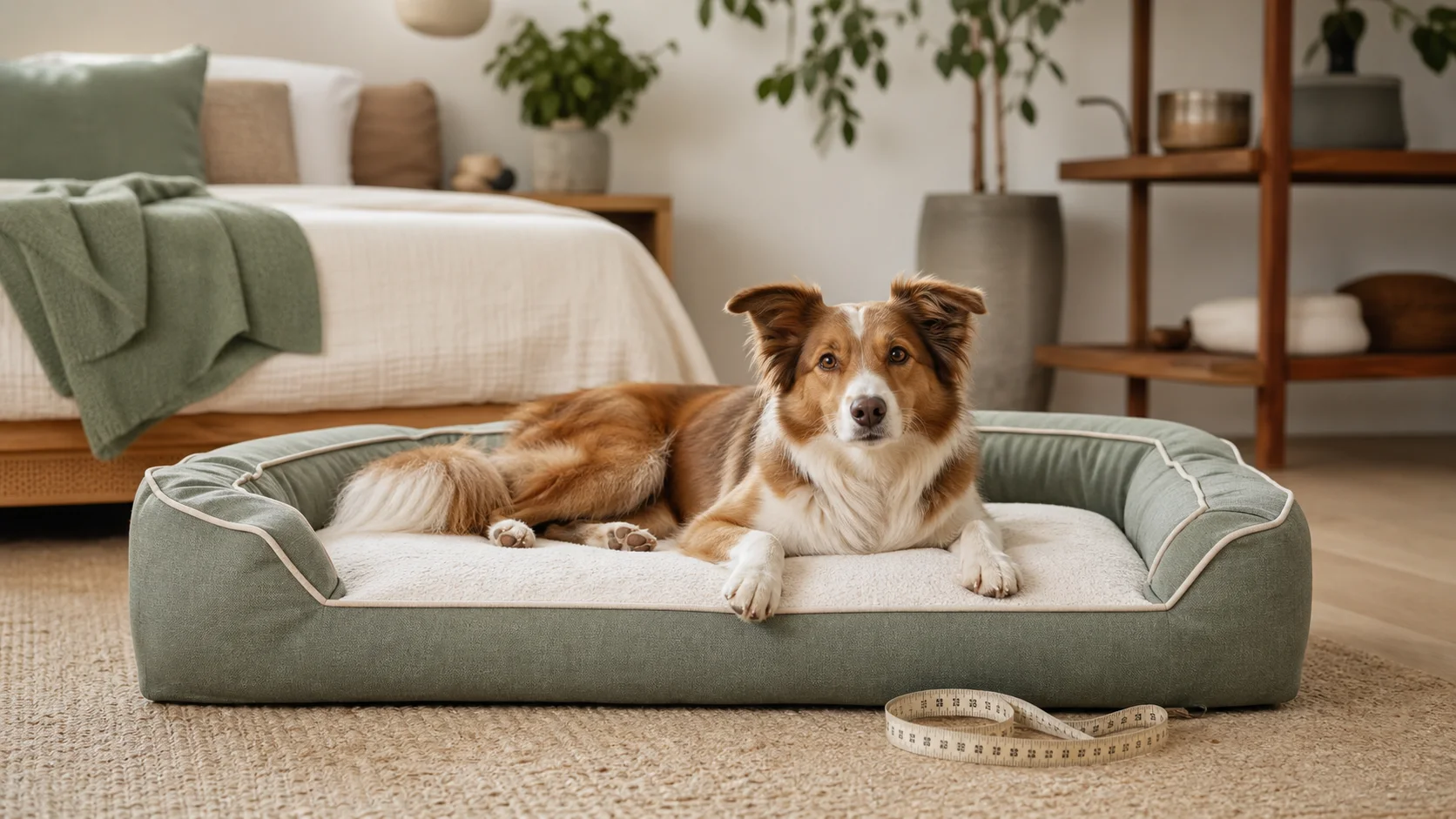
Dog bed sizing works best when you start with the space your dog actually uses while resting. A breed or weight chart can get you close, but it will not tell you whether your dog sprawls, curls, leans into an edge, or changes positions through the day.
Use this calculator to estimate a practical starting range for the bed's usable sleep area. It is especially helpful before comparing rectangular beds, orthopedic beds, washable beds, and bolsters.
Measure first · choose thoughtfully
Dog Bed Size Calculator
Enter your dog's relaxed length and width in inches. The result estimates a useful sleep surface range and flags when bolster dimensions need extra care.
Enter your dog's measurements to see a cautious starting range. Always compare the result with the brand's own size chart before buying.
How to measure for a dog bed
Measure your dog when they are relaxed, not standing stiffly for a photo. If your dog usually sleeps on their side, measure the full body space they use in that position. If they curl, measure the curled shape but still leave room for turning and shifting.
Use two simple measurements:
- Relaxed body length: the long space your dog uses while lying down.
- Relaxed body width: the widest body space in that same resting position.
- Sleep style: choose the option that matches what your dog does most often, not what looks neat in product photos.
How to read the result
The calculator gives a starting range, not a universal product size. Compare the result with the listing's usable sleep area. Rectangular beds are usually easiest to compare because the dog can use most of the surface. Bolster beds need extra checking because the inside area can be much smaller than the outside dimensions.
If your dog is older, heavy, stiff, or slow to get up, leave more room rather than less. A bed that barely fits the body may technically match a size chart but still make repositioning harder.
Before you buy
Compare the result with the bed's usable sleep area, not just the outside dimensions. Bolsters, raised sides, and furniture-style frames can reduce the space your dog actually uses. If you want to record bed, crate, collar, and harness numbers in one place, use the Dog Gear Measurement Kit. If the bed needs to fit a specific bedroom, living room, office, or crate-adjacent area, read the Dog Bed Placement Guide before buying. If the bed may go inside a crate, compare Dog Bed vs Crate Mat before choosing thickness or bolsters. If support and foam type are the main questions, read Orthopedic vs Memory Foam Dog Bed before comparing orthopedic labels. If material is the main choice, use the Dog Bed Materials Guide before comparing foam, fill, covers, and liners. If cleaning or accidents are a concern, read the Washable Dog Beds Guide, the Waterproof Dog Bed Guide, and print the Dog Bed Cleaning Schedule before choosing a cover and liner system.
✓ Better buying habits
- Measure a real resting position.
- Compare usable sleep area, not only outside dimensions.
- Leave extra room for dogs that sprawl or switch positions.
- Check removable covers and wash instructions before buying.
- Use inner dimensions when comparing bolsters.
× Mistakes to avoid
- Buying only by breed label.
- Choosing a round bed for a dog that usually sprawls.
- Assuming all large beds have the same sleep surface.
- Ignoring room placement and door clearance.
- Buying an expensive puppy bed before chewing habits are clear.
Best next step
If the result points toward a flat surface, compare rectangular dog bed options and read the full Dog Bed Size Guide. If your dog leans into edges or curls tightly, compare bolster dog beds and check inner dimensions carefully.