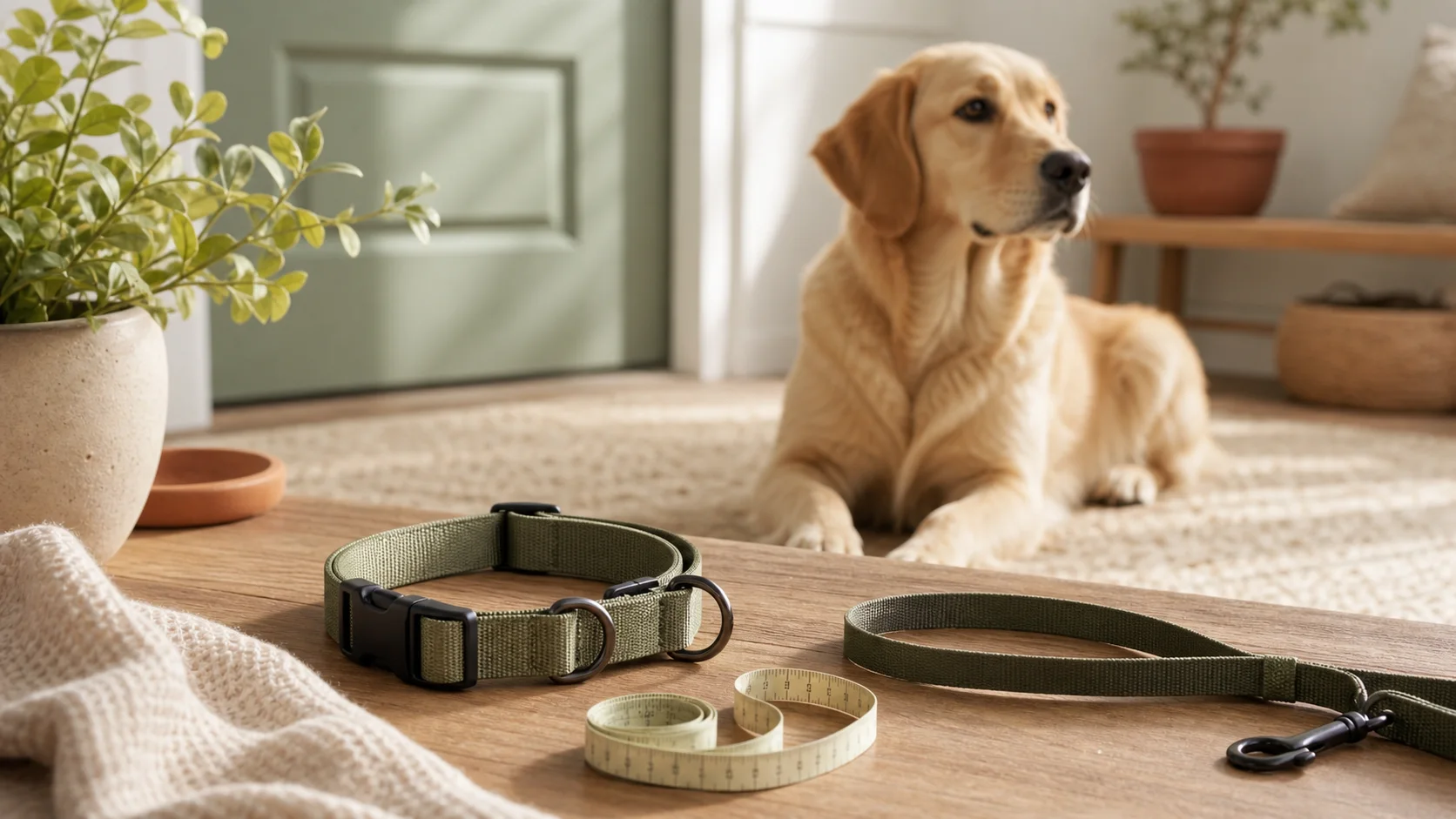
A collar should be secure enough for ID tags and comfortable enough for everyday wear. The right size depends on neck measurement, adjustment range, coat changes, hardware weight, and whether the collar is mainly for ID or leash attachment.
Use this calculator to turn a neck measurement into a practical starting range before comparing flat collars, reflective collars, puppy collars, or wider collars for larger dogs.
Measure first · choose thoughtfully
Dog Collar Size Calculator
Enter your dog's neck measurement in inches. The result estimates an adjustment range and gives hardware notes for the selected dog size.
Enter your dog's measurements to see a cautious starting range. Always compare the result with the brand's own size chart before buying.
How to measure for a dog collar
Use a soft tape around the part of the neck where the collar normally sits. Keep the tape snug but not tight. If you do not have a soft tape, use string, mark the length, and measure it against a ruler.
The calculator gives an adjustment range to compare. You still need to check the collar on the dog after it arrives, especially if your dog has a thick coat, narrow head, fast puppy growth, or recent weight changes.
How to read the result
Look for a collar size range that includes your dog's neck measurement comfortably. Small dogs usually need lighter hardware. Large dogs may need sturdier hardware, but heavy buckles can still be uncomfortable. Puppies need frequent checks because a collar that fit last week can become too tight quickly.
For many dogs, the collar's safest everyday role is ID. If your dog pulls, coughs, gags, or should avoid neck pressure, compare harnesses for walks and keep the collar for tags.
Before you buy
Avoid collars where your dog's neck measurement sits at the very end of the listed adjustment range. Use the Dog Collars hub for the complete collar path and the Martingale Collar Guide when narrow-head or backing-out risk makes a limited-slip design relevant. Recheck puppy collars often, and use Dog Collar vs Harness for Puppy plus the Puppy Walking Gear Checklist if you are deciding between a collar, harness, or both for early walks. If material, cleaning, reflective trim, or hardware is the main question, read the Dog Collar Materials Guide before choosing a collar. If you are measuring several items at once, use the Dog Gear Measurement Kit before comparing brand charts. If the collar is mainly for ID and the leash will attach to a harness, pair this with Dog Harness vs Collar, the Harness Fit Checklist, the Dog Leash Length Guide, and the Dog Leash Materials Guide.
✓ Better buying habits
- Measure the neck before choosing a size.
- Check the collar after grooming or coat changes.
- Match hardware weight to dog size.
- Use reflective options for low-light routines.
- Replace damaged buckles, tag rings, or stitching.
× Mistakes to avoid
- Buying by breed name alone.
- Leaving puppy collars unchecked during growth.
- Using bulky hardware on a small dog.
- Keeping a collar that rubs or slips over the head.
- Relying on a collar for strong leash pressure.
Best next step
For simple ID use, start with flat dog collar options. For early morning or evening walks, compare reflective dog collars. Then read the full Dog Collar Size Guide before choosing a final size.