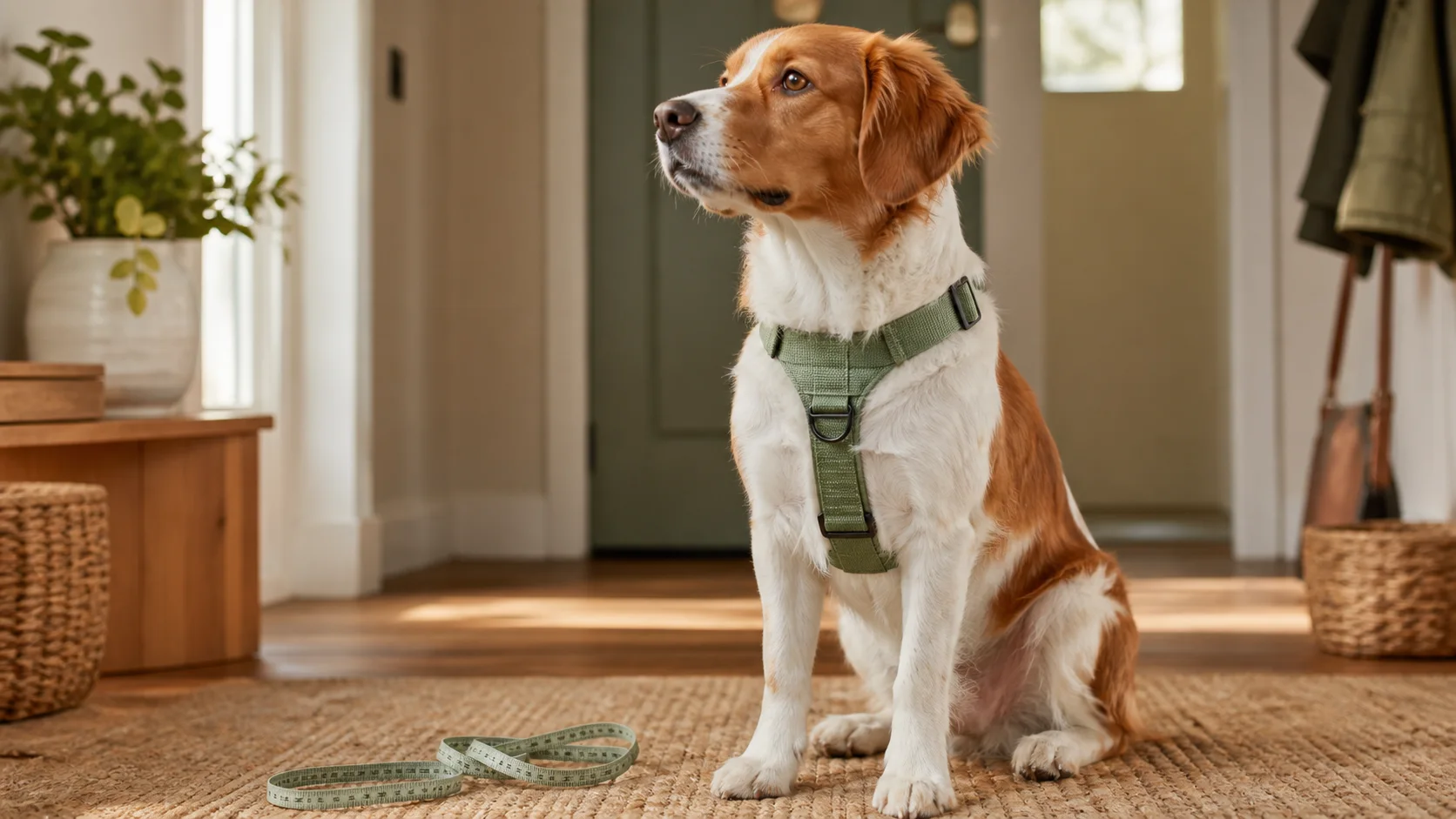
Harness fit starts with chest girth, but the final choice depends on strap position, shoulder movement, body shape, and how your dog walks. A harness can look secure in a listing and still rub behind the front legs, rotate around the body, or sit too high on the throat.
Use this calculator to choose a harness category to compare first. It is not a training plan and it does not replace a careful fit check after the harness arrives.
Measure first · choose thoughtfully
Dog Harness Fit Calculator
Enter your dog's chest girth in inches and choose the main walking need. The result suggests a cautious size range and harness category to compare first.
Enter your dog's measurements to see a cautious starting range. Always compare the result with the brand's own size chart before buying.
How to measure for a harness
Measure chest girth around the widest part of the rib cage, usually just behind the front legs. Your dog should stand normally. Keep the tape snug, not tight, and measure more than once if your dog wiggles.
Chest girth is the starting point. The final fit also depends on neck opening, strap angle, shoulder clearance, buckle placement, and whether the harness stays centered during movement.
How to read the result
The result suggests a category to compare first. Y-front harnesses are often a good starting point for everyday walking because they can allow natural shoulder movement when fitted well. Back-clip harnesses can be simple for relaxed walkers. Front-clip or dual-clip harnesses may help some handlers manage pulling, but they do not train loose-leash walking by themselves.
After the first short walk, check for red marks, flattened fur, shifting, twisting, or straps sitting too close to the armpits. If the harness moves badly or changes your dog's stride, try a different shape instead of forcing the size.
Before you buy
Do not buy by weight alone. A harness should avoid the armpits, stay centered, and allow natural shoulder movement. Use the Dog Harnesses hub for the full harness path. Front clips can help handling for some dogs, but they do not replace training; use the No-Pull Dog Harness Guide for realistic equipment limits. Vehicle restraint is a different job, covered in the Dog Seat Belt and Car Harness Guide. Use the Dog Gear Measurement Kit if you want to record chest girth, collar size, crate size, and bed measurements together. Print the Harness Fit Checklist before deciding whether a new harness fits well enough to keep. If you are comparing collar leash attachment versus a walking harness, read Dog Harness vs Collar. For growing puppies, use Dog Collar vs Harness for Puppy, the Puppy Harness Size Guide, and the Puppy Walking Gear Checklist. Use the Dog Leash Length Guide and Dog Leash Materials Guide when the leash also changes handling, grip, or hardware weight.
✓ Better buying habits
- Measure chest girth before shopping.
- Compare the brand's size chart, not only weight ranges.
- Check shoulder movement on a short walk.
- Keep straps away from the armpit area.
- Recheck fit after straps settle.
× Mistakes to avoid
- Buying by weight alone.
- Assuming front clips stop pulling by themselves.
- Keeping a harness that rotates around the body.
- Choosing bulky hardware for a small dog.
- Leaving a wet or muddy harness on after walks.
Best next step
For most everyday walks, start with adjustable Y-front harness options. If pulling management is the main issue, compare front-clip harnesses, read the full Dog Harness Fit Guide, and use the Dog Leash Length Guide if leash length is also part of the handling setup.