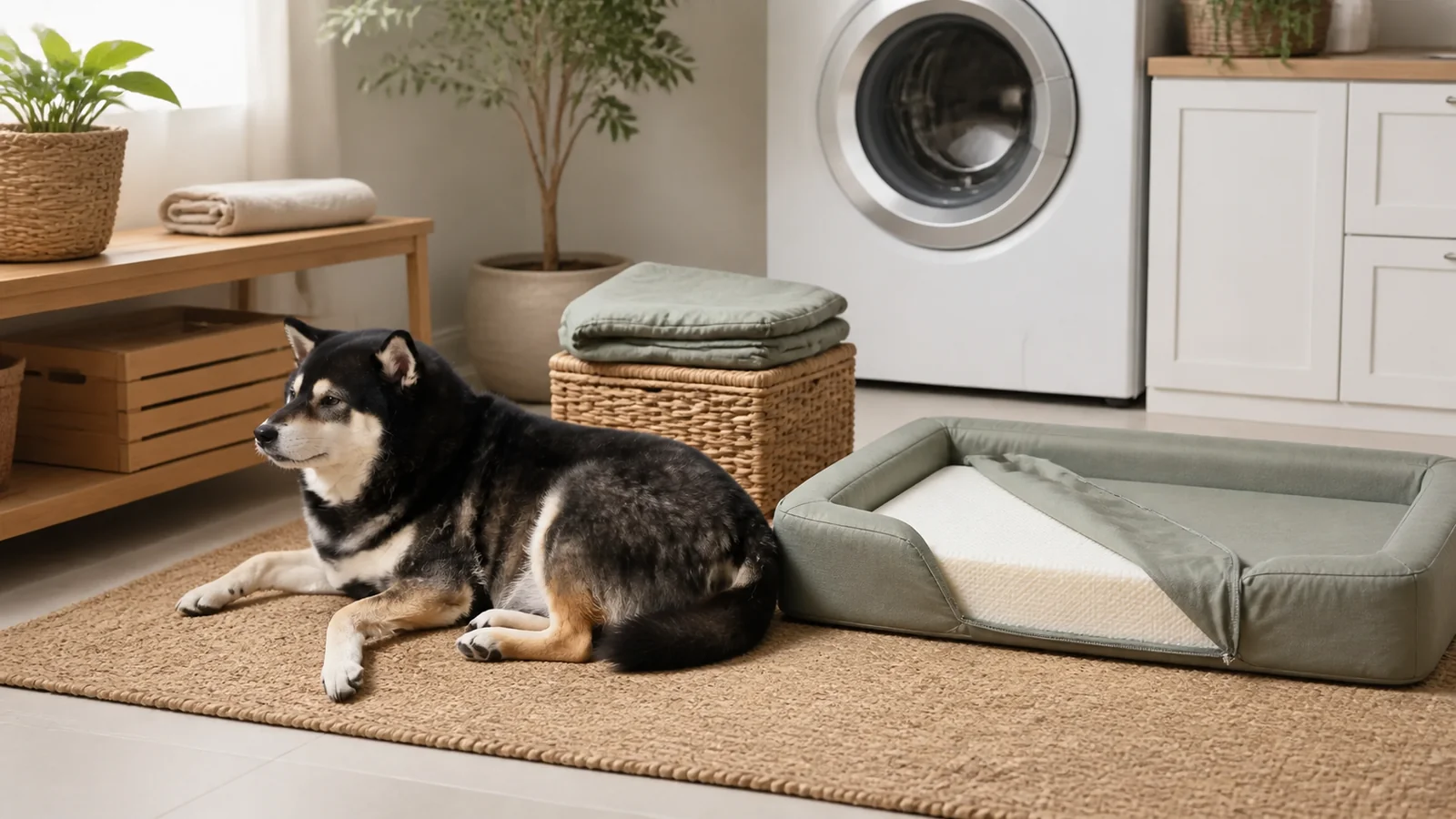
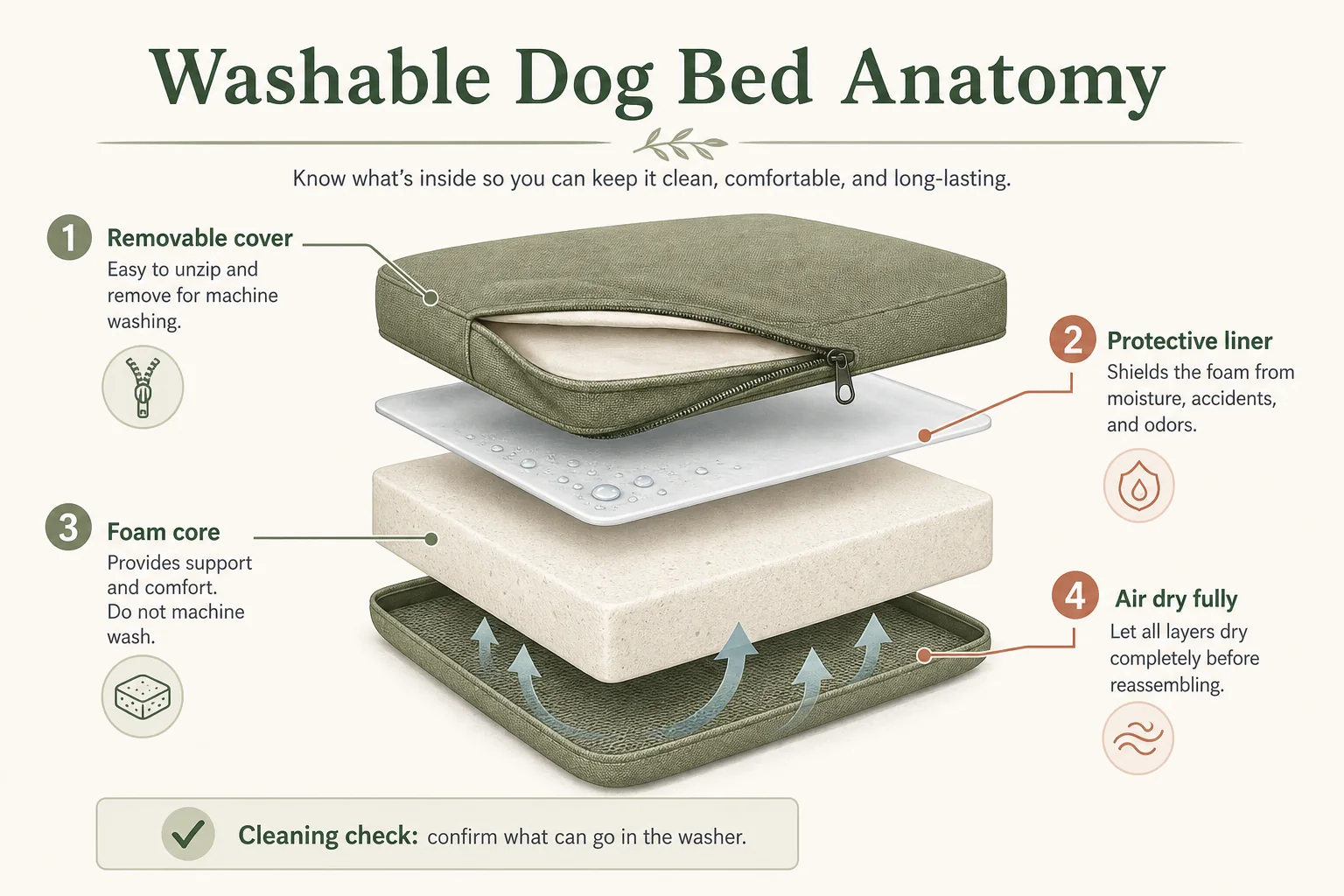
Washable dog beds are not all washable in the same way. A useful washable bed is a cleaning system: the cover needs to come off, the liner needs to protect the inner support, the foam or fill needs to stay dry, and the whole setup needs to dry before your dog uses it again.
Use the Dog Beds pillar for the broader bed framework. This guide focuses on cleanup: shedding, muddy paws, odor, accidents, cover design, liners, fabrics, and drying. Use the Waterproof Dog Bed Guide when the main question is liner coverage, seam leakage, zipper protection, or foam care. Use the Dog Bed Materials Guide when you need to compare plush, woven, foam, fill, and liner tradeoffs. If you want a printable care routine after choosing a bed, use the Dog Bed Cleaning Schedule. If the bed will sit in a tight room, use the Dog Bed Placement Guide to check cover-removal access before buying.
Quick read
TL;DR
- Best starting point: a bed with a removable machine-washable cover and a protected foam core.
- Whole-bed washable designs can work for small beds, but large beds usually need removable covers.
- A liner matters when accidents, drool, damp paws, or odor are likely.
- Drying time is part of cleaning. A cover that takes too long to dry may not fit your routine.
- Zippers are a weak point: check placement, size, and owner feedback.
- Do not ignore fabric texture: plush tops trap hair and warmth; tighter weaves may be easier to wipe.
Quick answer
For most medium and large dogs, choose a bed with a removable washable cover, a sturdy zipper, and an inner liner that protects foam from moisture. For small dogs, a fully machine-washable bed can be convenient if it fits your washer and dries reliably.
If accidents or odor are common, prioritize foam protection over decorative shape. If shedding is the main issue, look for covers that release hair in the wash and do not trap fur in deep seams.
Share & embed
Share & embed
Shedding and routine dirt
Removable-cover dog bed
- Look for
Cover comes off easily, fabric releases hair, clear wash instructions
- Avoid
Deep plush, weak zippers, covers that shrink
Puppies or accidents
Bed with liner or waterproof layer
- Look for
Foam protection, washable cover, simple construction
- Avoid
Unprotected foam, complicated bolsters
Small dogs
Fully washable small bed
- Look for
Whole bed may fit washer, simple cleanup
- Avoid
Large beds that cannot dry fully
Odor control
Washable cover plus protected core
- Look for
Cover rotation, quick drying, moisture barrier
- Avoid
Beds that trap dampness inside foam
What washable should mean
The word washable should tell you exactly which part goes in the washer. A removable cover is different from a fully washable bed. A water-resistant liner is different from a waterproof liner. A spot-clean-only bed is not the same as a machine-washable bed.
Before buying, look for:
- Whether the cover removes from the foam.
- Machine-wash temperature guidance.
- Drying instructions.
- Whether the zipper is covered or exposed.
- Whether the foam is protected from moisture.
- Whether replacement covers are available.
Start with the layer system
The strongest washable-bed listings make the layers easy to understand. Do not judge the bed only by the outside fabric.
| Option | Best for | Key features | Caveat | Merchant |
|---|
For dogs with stiffness, limping, pain, skin irritation, or sudden changes in sleep habits, treat bed choice as comfort support only and ask your veterinarian for advice. A washable bed can make cleanup easier, but it is not medical treatment.
Removable cover vs whole-bed washable
Removable covers are usually better for larger beds and orthopedic beds. The foam core stays out of the washer, while the cover handles fur, dirt, drool, and odor. The downside is that zippers, seams, and cover fit matter.
Whole-bed washable designs can be useful for small dogs, puppies, travel beds, or backup beds. The problem is drying. A thick bed that holds water can take too long to dry and may develop odor if it stays damp inside.
For a specific small-bed purchase, Best Dog Beds for Small Dogs compares a whole-bed-washable donut with a removable-cover foam bolster and explains the hidden inner-size tradeoff. If the bed has an attached hood, use Best Cave Dog Beds to check tube removal, hood seams, and complete drying.
Buying a replacement dog bed cover
When shopping for dog bed covers, start with what the replacement must fit. For an existing bed, measure the foam insert's length, width, thickness, corner shape, and whether bolsters are separate pieces. Compare those dimensions with the replacement cover's insert dimensions, not the finished bed's outer dimensions. A cover that stretches over the foam too tightly can compress the surface, distort the bolster, or stress the zipper; one that is too loose can wrinkle under the dog.
Prefer an exact manufacturer replacement when available. For a universal cover, check zipper length, opening position, seam construction, fabric feel, and the return policy before buying. If accidents are the reason for replacement, do not assume a new washable cover protects the core. Inspect the foam and add a correctly sized separate liner where appropriate; the Waterproof Dog Bed Guide explains the barrier, seam, and zipper checks. A spare cover can shorten downtime, but only if you can dry both the cover and any wet liner completely.
Foam protection matters
Foam is difficult to clean once moisture gets inside. A liner or protective inner cover can help with accidents, drool, or damp paws. Waterproof layers can be useful, but some feel noisy or trap heat. The best choice depends on whether moisture protection or quiet comfort matters more.
Fabric tradeoffs
Plush covers feel cozy but can hold hair and warmth. Canvas-like fabrics may be easier to wipe, but some dogs find them less soft. Microfiber and tighter weaves can be easier for routine cleaning. Sherpa-style surfaces can feel warm and nest-like but may hold debris.
If your dog overheats, choose breathable covers and avoid thick plush unless the bed is used in a cool room.
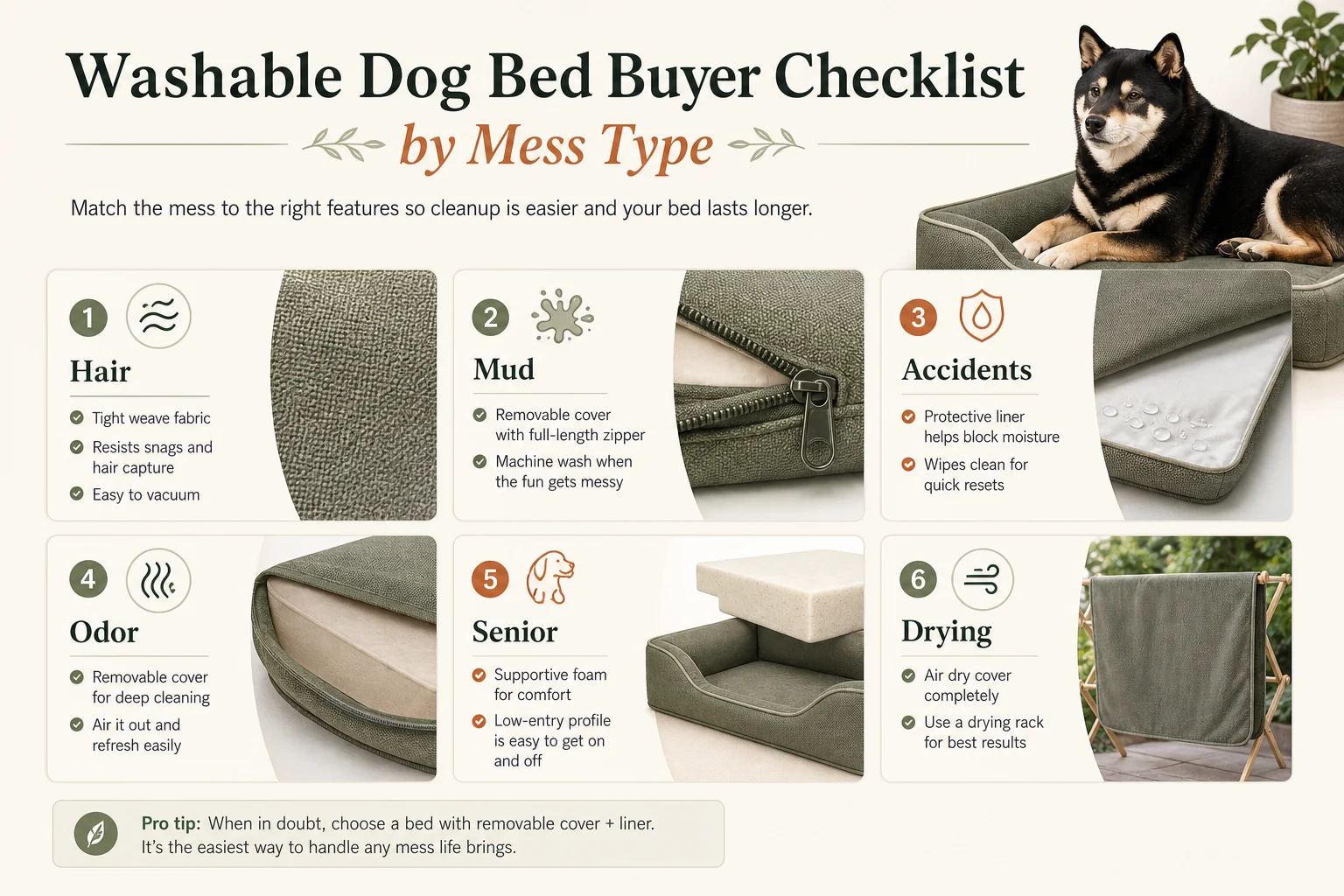
Match the bed to the mess
Different messes need different features. A muddy-paw dog does not need the same bed as a senior dog with occasional accidents, and a heavy shedder may care more about hair release than waterproofing.
Share & embed
| Option | Best for | Key features | Caveat | Merchant |
|---|
Material and label checks
Listings often use attractive fabric names without explaining care. Translate those names into practical checks:
- Plush, sherpa, and faux fur: cozy and warm, but often better for dogs that do not shed heavily or track in much dirt.
- Microsuede and microfiber: usually smoother than deep plush and may be easier to brush or vacuum.
- Canvas-like and tighter woven covers: often better for hair release, wiping, and everyday wear, but some dogs prefer a softer sleep surface.
- Waterproof or water-resistant liners: useful for accidents and damp paws, but check whether the liner is quiet, breathable enough for the room, and removable.
- Solid foam cores: usually better protected by removable covers and liners because foam is difficult to clean once soaked.
- Fiberfill beds: can be convenient for small whole-bed washable designs, but large thick filled beds may be harder to dry evenly.
If a listing mentions standards, foam certifications, or named textiles, treat that as a prompt to verify details on the current product page. Do not assume every size, color, or replacement cover uses the same construction.
Drying matters as much as washing
A washable bed can still be a bad fit if it takes too long to dry. Damp covers, liners, or padding can create lingering odor and make the bed unpleasant for the dog.
Before buying, check:
- Whether the cover can go in the dryer or must air dry.
- Whether the cover is thick enough to need a backup cover.
- Whether the bed has bulky bolsters that dry slowly.
- Whether the liner can be wiped separately.
- Whether the bed will fit your actual washer and drying space.
For frequent cleaning homes, a removable-cover bed plus a spare mat often works better than one large bed that is unavailable for a full day after every wash.
Washable bed types compared
| Option | Best for | Key features | Caveat | Merchant |
|---|---|---|---|---|
Removable-cover bed | Most medium and large dogs | Cover washes separately, protects main bed investment | Zipper and cover fit matter | See direct product examples below |
Whole-bed washable bed | Small dogs and backup beds | Simple cleaning, no cover removal | May be hard to dry in larger sizes | See direct product examples below |
Waterproof-liner bed | Accidents, drool, damp paws | Protects foam from moisture and odor | Some liners feel noisy or warm | See direct product examples below |
Washable crate mat | Crates and travel setups | Low profile, easy to rotate, often dries faster | Less support than a full bed | See direct product examples below |
Cleaning routine
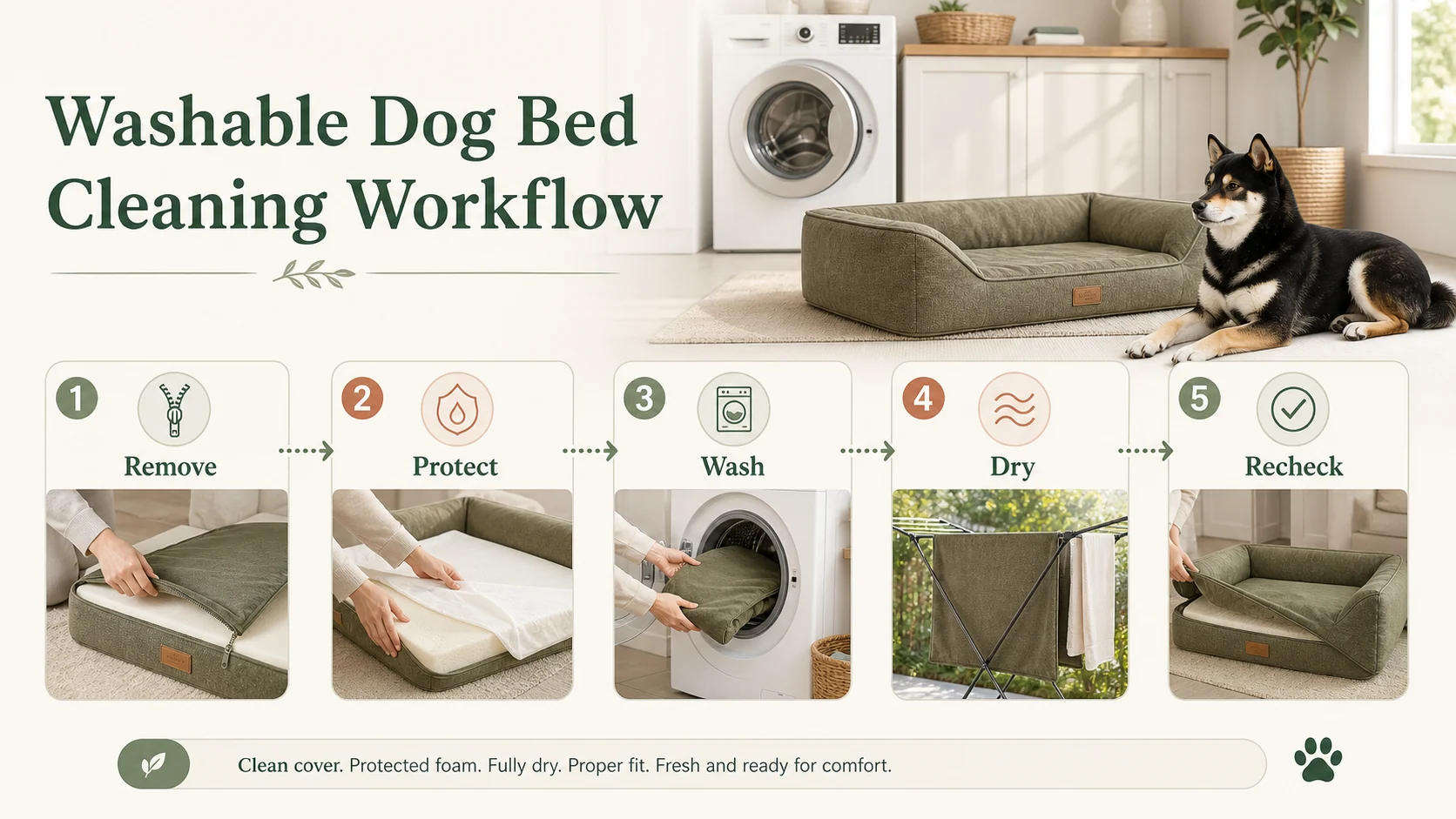
A practical routine is better than a bed that sounds impressive but is hard to maintain. For many homes, washing the cover every one to two weeks is reasonable. Wash more often for allergies, heavy shedding, muddy paws, accidents, or odor.
Keep one simple rule: do not let damp bedding sit. Dry covers fully before putting them back on foam. If you use a liner, wipe it down and make sure moisture is not trapped between layers.
Direct product CTAs
These are direct Amazon product CTAs for comparison, not fixed universal winners. What Dogs Like may earn from qualifying purchases. Affiliate links do not change the buying checks in this guide.
Category searches after measuring
Use these category searches after you know which washable system you need.
Direct product examples
Revisit the verified examples after checking the layers
What Dogs Like may earn from qualifying purchases. Affiliate links do not change the buying checks in this guide.
Common mistakes
✓ Better buying habits
- Check exactly which parts are machine washable.
- Prioritize removable covers for large foam beds.
- Look for foam liners when accidents or odor are likely.
- Read reviews about zipper durability and cover shrinkage.
- Confirm drying instructions before buying.
- Keep a backup cover or mat if washing is frequent.
× Mistakes to avoid
- Assuming washable means the whole bed can go in the washer.
- Buying a large thick bed that cannot dry fully.
- Ignoring foam protection for accident-prone dogs.
- Choosing deep plush when hair removal is the main problem.
- Forgetting that waterproof layers can feel warm or noisy.
- Waiting until odor is severe before washing covers.
Related guides
Read the Dog Bed Size Guide before choosing dimensions or use the Dog Bed Size Calculator if you still need a starting range. If support is also a priority, compare this with Best Orthopedic Dog Beds for Support, Orthopedic vs Memory Foam Dog Bed, and Best Dog Beds for Large Dogs. Use the Dog Bed Materials Guide for cover fabric, liner, foam, and fill choices. Use Dog Bed vs Crate Mat if cleanup needs overlap with crate bedding, low-profile mats, or door clearance. Use the Dog Bed Placement Guide to make sure the cover can come off where the bed will actually sit. Use the Dog Bed Cleaning Schedule to plan cover washes, liner checks, drying, and odor notes after setup. For the full category overview, return to the Dog Beds pillar. If your dog prefers raised sides, compare Bolster vs Flat Dog Beds before buying.
Frequently asked questions
Are washable dog beds really machine washable?
Some are, but not all in the same way. Many larger beds have machine-washable covers, while the foam core should stay out of the washer.
Is a removable cover better than a washable whole bed?
For medium and large beds, usually yes. It is easier to wash and dry the cover than the entire bed. Whole-bed washable options are often more practical for small beds.
Do waterproof liners stop odor?
They can help protect foam from moisture, which reduces lingering odor. The outer cover still needs regular washing.
How often should I wash a dog bed cover?
Every one to two weeks is a practical rhythm for many homes. Wash more often for shedding, allergies, mud, accidents, or odor.
Can dog bed foam go in the washing machine?
Usually no. Check the care label. Many foam cores can be damaged by machine washing and may not dry safely.
What fabric is easiest to clean?
Tighter woven covers are often easier to wipe and release hair better than deep plush. The best choice depends on comfort, warmth, and your dog's coat.
Is a waterproof liner always better?
Not always. A liner can protect foam from moisture, but some liners feel warm or noisy. Check owner feedback and make sure the outer cover is still easy to wash.
Should I choose foam or fiberfill for a washable bed?
Foam beds usually make more sense for medium, large, or support-focused beds when the foam is protected by a washable cover and liner. Fiberfill can be convenient for small whole-bed washable beds, but thick filled beds can be harder to dry evenly.
What should I check before clicking buy?
Check the removable cover, zipper path, liner language, foam or fill type, drying instructions, replacement-cover availability, size chart, and return terms.