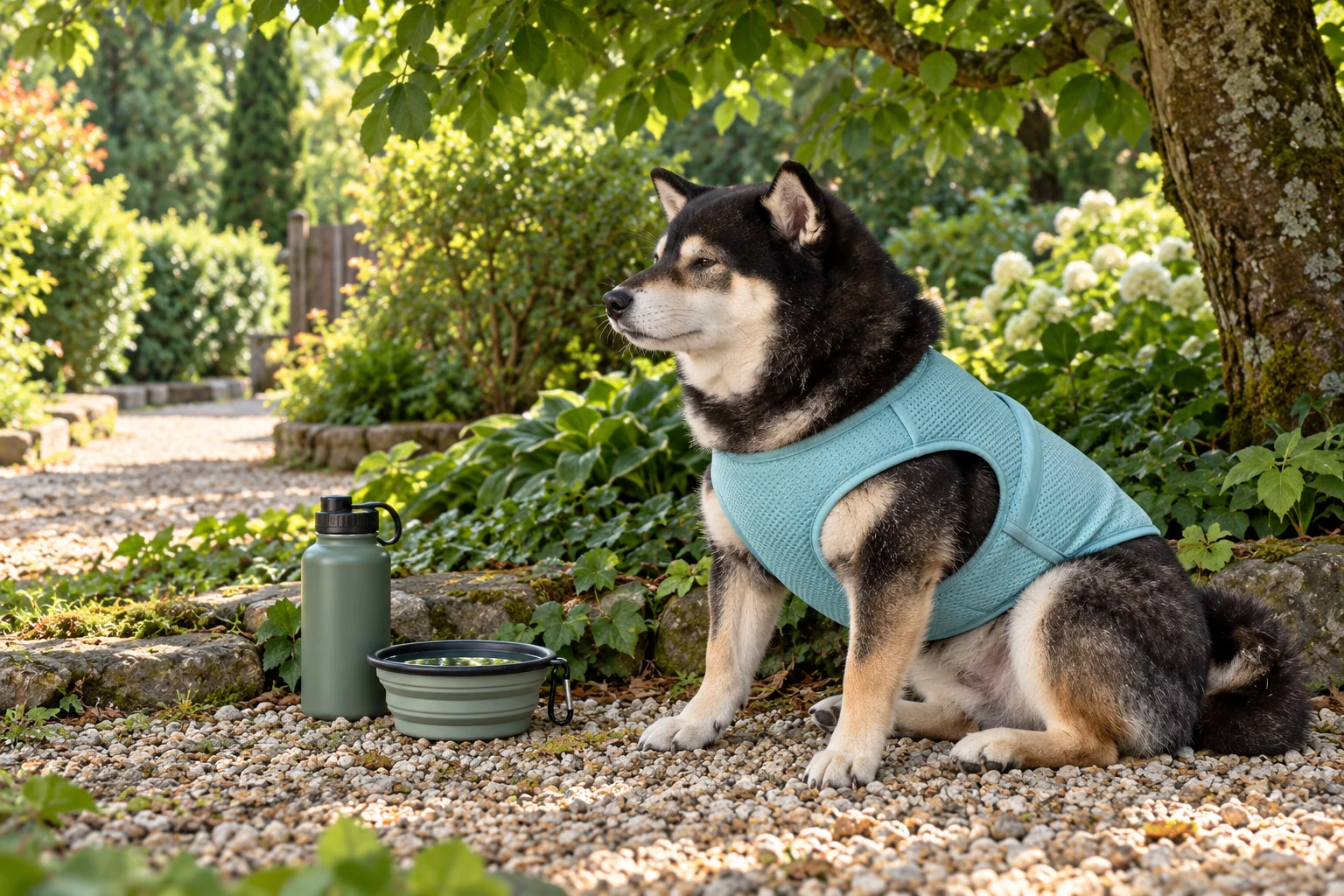
Choose cooling gear for dogs only after deciding when and where the dog can be outside comfortably. An evaporative vest needs water, suitable airflow and repeated checks. A vest that fits badly, dries unnoticed or is used to justify a hotter or longer walk can undermine the plan. For a dog resting at home, a cooling mat or elevated bed addresses a different decision.
Quick read
Choose the gear for the outing
- For a short, shaded walk, compare a water-activated vest that leaves the shoulders free and works with the dog's normal harness.
- In humid, still conditions, reduce expectations of evaporative cooling and reconsider the outing itself.
- Carry drinking water separately from water used to rewet the garment.
- Check the vest while it is wet, including its weight, strap position and the dog's normal walking pattern.
- Choose a cooler place and time first. No cooling product guarantees protection from heatstroke.
Start with the conditions, then choose a mechanism
An evaporative garment stores water in a material that releases it to the air. That process depends on the surrounding conditions. More humidity means less scope for evaporation; a damp-feeling vest alone cannot tell you how effectively the dog is cooling. The RSPCA's heatstroke guidance identifies humidity, inadequate airflow, lack of shade and exercise as relevant risks.
For the first trial, choose a familiar shaded loop close to home with several chances to turn back. You can shorten or cancel it easily. Save a remote hike for equipment you already know how to fit and manage.
| Cooling approach | Useful question | Practical burden | Buying limitation |
|---|---|---|---|
Evaporative vest | Can you keep it correctly wetted in suitable conditions? | Water supply, wet weight and regular checks | Humidity and airflow change what to expect |
Cooling neck accessory | Does the dog tolerate this small addition comfortably? | Neck fit, secure closure and frequent inspection | Small coverage is not equivalent to a full vest |
Pack-based garment | Can you prepare and replace the exact approved inserts? | Insert storage, weight and manufacturer instructions | Do not improvise frozen packs against the dog |
Cooling mat or cot | Does the dog need a resting place instead of wearable gear? | Shade, surface checks and freedom to move away | Does not solve exercise or vehicle heat |
No additional garment | Would moving the outing solve the problem more simply? | Change timing, location, pace or duration | A purchase cannot make every trip appropriate |
Rewetting adds handling work. If you are already managing children, several dogs or an unfamiliar trail, stopping to remove the vest may be awkward. Choose equipment you can inspect with the dog safely controlled, and keep the spare water bottle within reach.
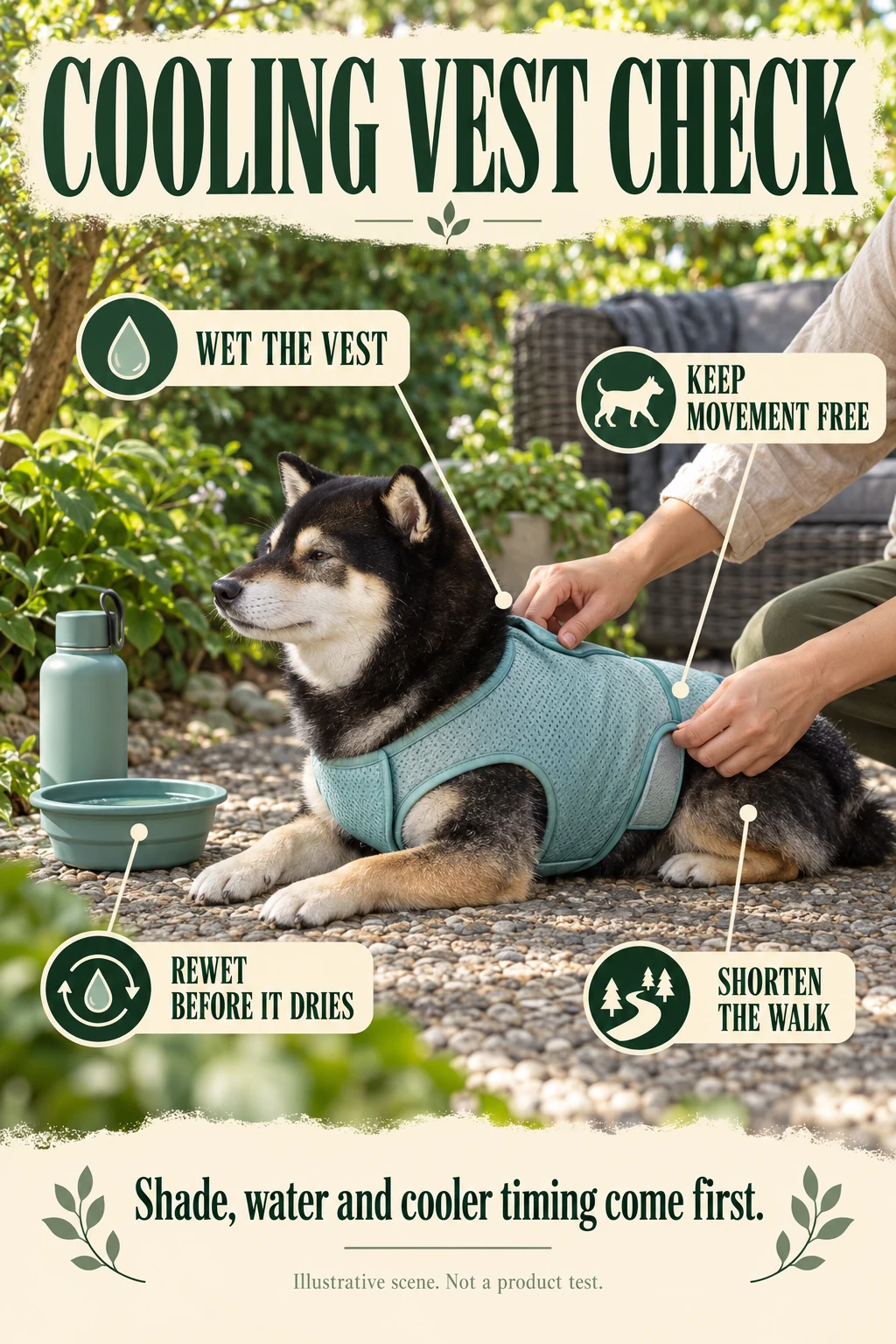
A four-part field check
Share & embed
Wet the garment according to its own instructions before putting it on. Check that water reaches the whole working area. Feel where the straps and seams sit once the material has absorbed water. Then watch the dog walk, turn, lower the head and sit. A vest can look tidy in a photograph while catching behind the front legs during movement.
During the outing, stop before the vest dries and use the manufacturer's rewetting method. Treat an unexpectedly dry garment as a reason to reassess how quickly your supplies are being used. If you cannot keep the system working, take the shorter route home or into a genuinely cooler environment. Do not continue just because the dog is still wearing it.
The RSPCA warns that cooling jackets requiring constant wetting can insulate a dog if used incorrectly. Keep the instructions with your packing notes until the process is familiar. A label saying “cooling” does not establish that every fabric can be used dry, frozen or underneath another layer.
Measure the dog and the complete harness setup
Record chest girth, neck circumference and the back coverage needed for the chosen garment. Measure the standing dog in a relaxed position with a flexible tape, then compare the chart for that model. A medium harness, sweater or another brand's vest may have different dimensions. A short-backed, broad-chested dog can need a different garment shape from a narrow dog with the same chest measurement.
Use the measurement kit to keep the numbers together. The harness-fit guide helps with the restraint underneath, but its fit advice does not replace the vest manufacturer's chart. Write down which part of the coat is the limiting dimension. If the neck fits only when the chest is loose, changing shape may be more useful than changing size again.
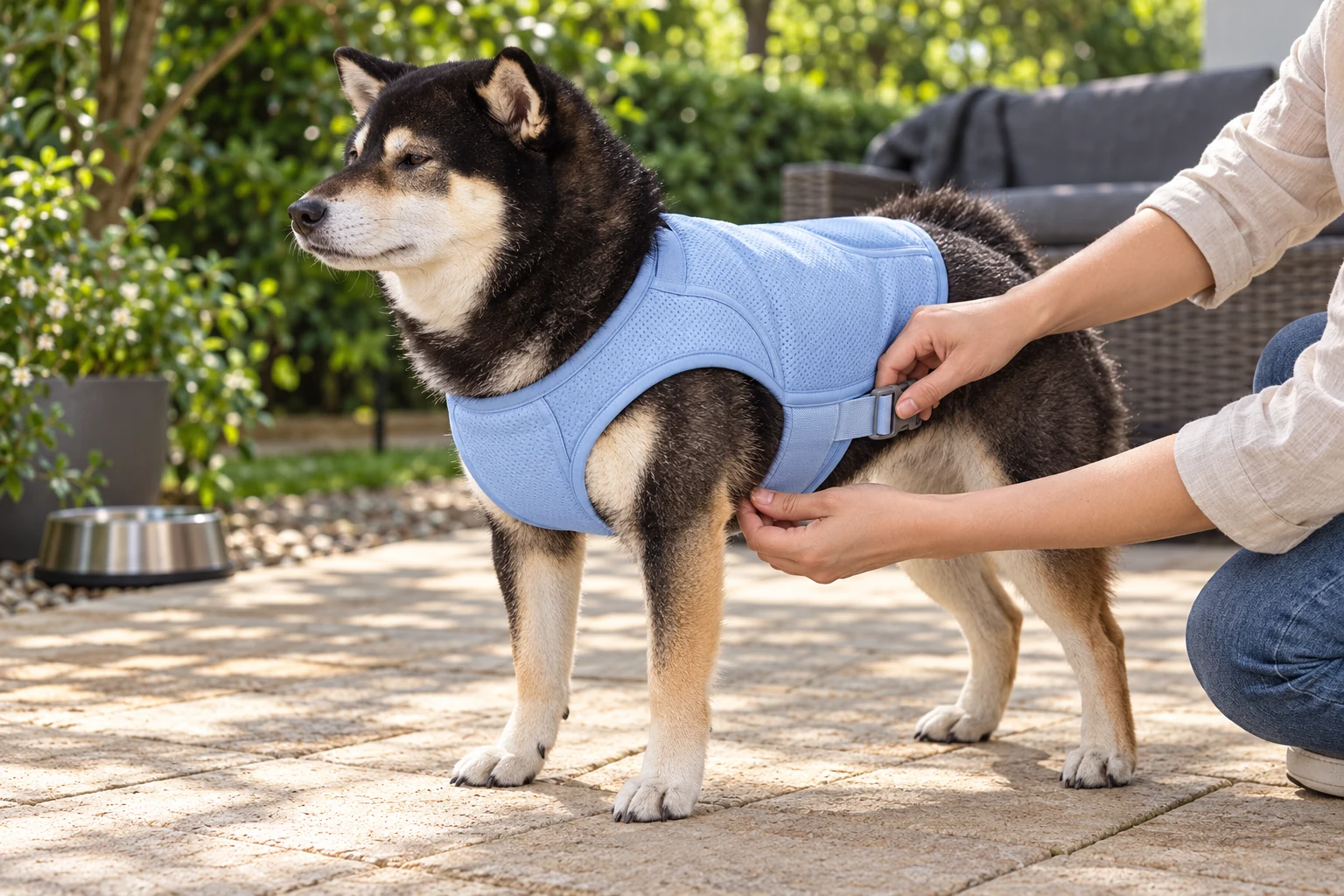
Try the vest with the exact harness and leash you will use. A back portal must line up with the harness ring without pulling the coat sideways. Check that a front clip, if used, remains accessible and that the line does not saw across the garment edge. Keep attaching the leash to an appropriate restraint; a vest is not a harness unless its manufacturer explicitly designs it for that job.
Allow time for the dog to become comfortable with the garment. Let the dog investigate it, practice a brief indoor fitting and remove it calmly. Wet fabric can feel different from the dry fitting, so make the first properly wetted trial brief too. A dog that freezes, repeatedly scratches at the seams or cannot walk normally needs a different setup, not a longer first session.
Two Amazon options to compare
These are research-based options with different access and fit features. We have not tested them on dogs. The linked color and size identify the exact catalog item pictured; choose your dog's size from the current chart, not from the example variant. As an Amazon Associate, What Dogs Like earns from qualifying purchases.
Ruffwear Swamp Cooler: compare coverage and harness access
The manufacturer's Swamp Cooler page describes a water-activated vest with side-release buckles and a back leash portal. Those features make it a sensible starting point when you want broad coverage and a garment that can go over a compatible harness. Check the shoulder openings and underside on the individual dog, especially if its proportions fall between the chart's ranges.
Check whether the portal lands above your harness ring once the wet vest settles. If it does not, do not force the clip through a strained opening or let the ring pull against the fabric. Bring the harness to the fitting and compare the two products together before deciding to keep the vest.
Kurgo Core Cooling Vest: compare the adjustable access opening
Kurgo's Core Cooling Vest instructions describe a two-way zippered access opening, adjustable sides and an evaporative construction. That makes it worth comparing when access to an existing harness is your main concern. Work the zipper with the dog standing and sitting; a theoretically convenient opening is less useful if it pushes the harness or coat out of position.
If a listing and the manufacturer's chart disagree, resolve the difference before choosing a size. Ask which model or revision the seller is supplying. Ordering a larger garment simply to avoid a return can leave extra wet fabric moving against the dog. Check the return terms so you can send it back if the fitting fails.
Build a water budget you can actually carry
Separate drinking water from garment water when you pack. You do not want to discover, at the farthest point of a loop, that rewetting has used the bottle reserved for the dog. There is no universal bottle count: route length, access to reliable water, weather, the garment and the dog's needs change the calculation. Start with a short trial and record what you used without treating that one outing as a fixed formula.
Pack a bowl that opens easily with one hand, a place for the damp vest on the journey home and a spare dry towel. Put refills where you can reach them without setting the dog's lead down. The gear-bag guide explains a clean-and-wet separation system; the camping checklist covers supplies that still belong with the handler.
Do not use untreated trail water just because it is convenient, and do not assume the dog can safely drink from the same source you use to wet equipment. Plan known drinking-water supplies before leaving. If you are uncertain about a destination's water, choose a shorter trip with enough carried water.
Inspect the dog as well as the fabric
A cool-feeling patch under a vest is not a reading of the dog's internal temperature. Avoid judging success by touch, a thermal image or the length of time another owner's dog stayed outside. Keep watching the individual dog throughout the outing, even when the garment remains wet.
The American Animal Hospital Association lists excessive panting, drooling, breathing difficulty, vomiting, weakness and stumbling among heatstroke warning signs. If these occur, stop activity, begin appropriate cooling and contact a veterinarian urgently. Buying another accessory or waiting for the vest to work is not an emergency plan.
Ask your veterinarian about outings and wearable gear if your dog has breathing, heart, skin or mobility concerns, or a previous heat-related episode. That conversation is especially relevant before travel to a hotter climate. The practical purchase decision may be whether to take the dog on that activity at all.
A short trial before you keep it
- Read the wetting, washing and use instructions before removing labels or packaging.
- Fit the dry garment, then the properly wetted garment, with the normal harness.
- Watch walking, turning, sitting and head-lowering in a cool, familiar setting.
- Practice opening the fasteners and rewetting while retaining secure leash control.
- Inspect the underside, straps and skin after removal. Stop use if there is rubbing or a concerning reaction.
- Wash and dry the garment as directed before storing it. Never leave it damp at the bottom of the bag between trips.
Keep a brief note of fit and handling problems. A coat that needs constant straightening or is too awkward to rewet is a poor match for your routine. Return-window checks should find those problems close to home.
Questions owners ask about wearable cooling
The FAQs address recurring questions from discussions about high humidity and cooling vests and vest use while running. These discussions reveal buying questions, not evidence that a product prevents heat illness.
Frequently asked questions
Do cooling vests work in high humidity?
Evaporative cooling has less scope when the surrounding air is already humid. Do not buy a soaked vest on the assumption that its effect will match a dry-climate outing. Choose cooler timing and a shorter route, and follow the product's own limitations. There is no single humidity cutoff that establishes a safe walk for every dog.
How often should I rewet a dog cooling vest?
Follow the manufacturer's instructions and check the garment throughout use. Drying depends on the material and conditions, so an advertised duration should not become your alarm interval. Rewet before a water-dependent garment dries, and shorten the outing if you cannot maintain it.
Can my dog wear a harness underneath?
Only if the vest and harness work together without restricting movement or distorting the fit. Check the portal against the exact attachment ring and inspect strap contact under the wet garment. Attach the leash to the appropriate harness or collar, not an unverified ring on the vest.
Is a cooling bandana enough instead of a vest?
A small neck accessory offers different coverage and fit. Choose it only within its instructions, check that the neck remains comfortable and keep it away from chewing. It cannot establish that a hotter outing is appropriate, and it is not a substitute for shade and drinking water.
Can I freeze an evaporative vest?
Do so only if the manufacturer specifically permits it. A garment intended to be soaked and wrung out is not automatically designed for frozen use. Check instructions for inserts separately and do not improvise ice packs against the dog.
Can a cooling vest stay on in the car or overnight?
Do not use it as heat protection in a parked car, and do not leave a water-dependent garment on a dog you cannot monitor. For rest, provide an appropriate cool environment and freedom to choose another surface. Remove and dry equipment according to its instructions after the outing.
What if my dog has a thick coat or an unusual body shape?
Use the individual dog's measurements and movement, not a breed photo or size label. Check neck fit, wet coverage, armpit clearance and harness access. If those cannot work together, try a different garment shape or use a simpler cooler-weather plan. Health-related questions belong with your veterinarian.
Is a cooling vest a reason to run farther in warm weather?
No. Establish an appropriate activity plan independently of the purchase. The hands-free leash guide covers running control and equipment, while heat and humidity can still make that activity unsuitable. Turn back early when conditions or the dog change.
Sources and related decisions
- Ruffwear Swamp Cooler specifications and fit guidance
- Kurgo Core Cooling Vest instructions and measurements
- RSPCA cooling-product use cautions
- RSPCA Australia heatstroke risk and prevention guidance
- AAHA heatstroke prevention and warning signs
Use the travel and outdoor hub for the wider trip plan. For resting surfaces compare cooling dog beds; for unavoidable warm or abrasive surfaces, read the boot-fit guide while keeping cooler routes and timing as the first choice.