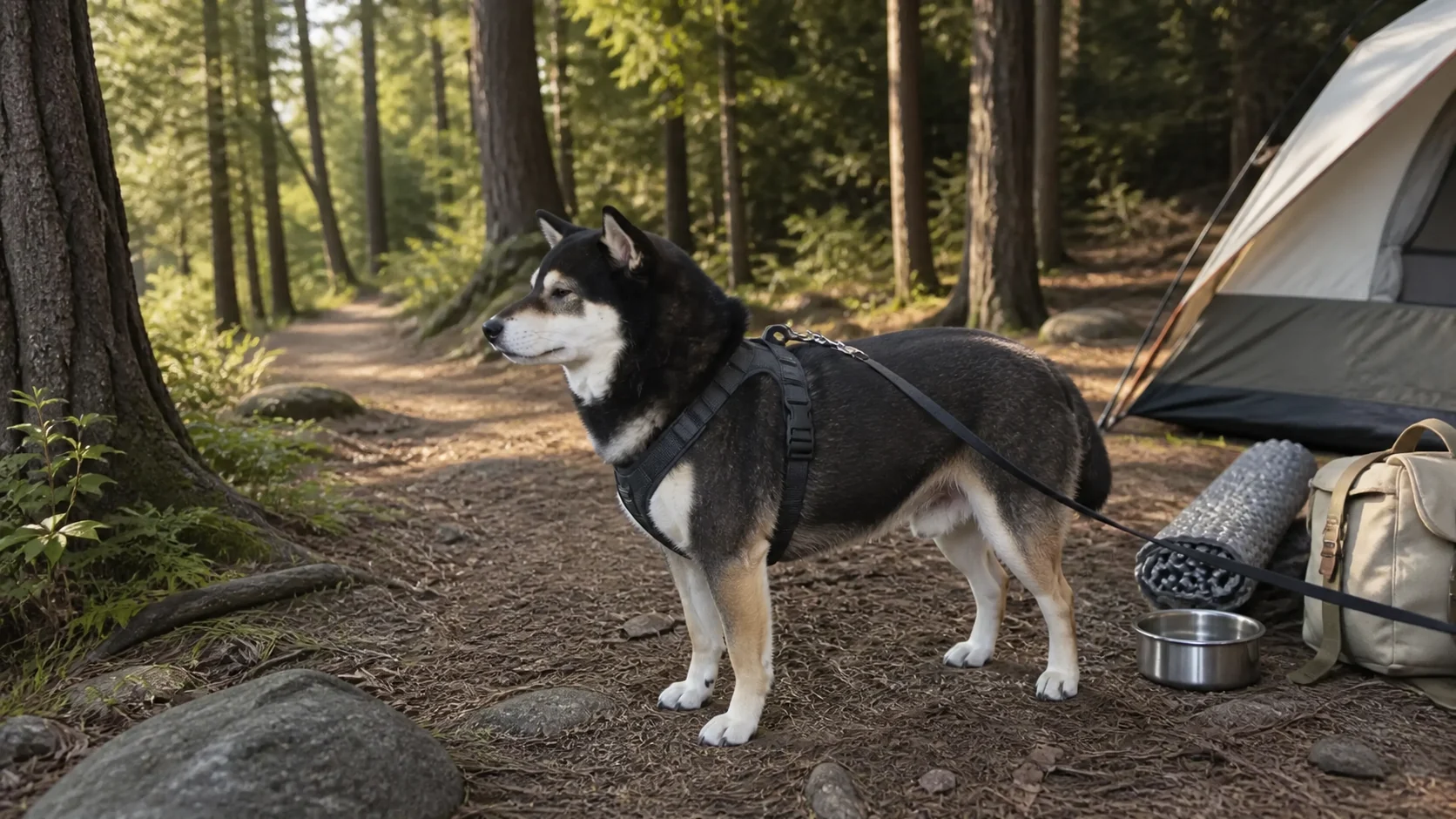
Travel gear works as a system. The dog has to enter the vehicle without an unsafe jump, ride in an appropriate restraint or crate, move under control at the destination, handle the surface and weather, and return to a stable rest area. A product that solves only the most photogenic moment can leave the harder transfer or emergency unplanned.
Quick read
Choose your path
- Getting into a tall vehicle: measure the opening and use Best Dog Ramps for SUVs.
- Containing a dog in the vehicle: compare Best Dog Crates for Car Travel and measure the cargo area.
- Choosing a restraint harness: use the Dog Seat Belt & Car Harness Guide.
- Walking a trail: choose control and grip with Best Dog Leashes for Hiking.
- Crossing warm pavement: fit and condition boots with Best Dog Boots for Hot Pavement.
- Kayaking or boating: plan flotation and recovery with Best Dog Life Jackets for Kayaking.
- Supporting weak back legs: start with veterinary guidance and Best Mobility Harnesses for Dogs.
- Reaching a high bed at home: compare measured Dog Steps for High Beds with a ramp or floor-level sleep setup.
Build the trip in order
Vehicle access
Dog jumps, hesitates, or needs assistance
- Look for
Ramp geometry, non-slip approach, calm training
- Avoid
Buying a ramp before measuring the opening
During the ride
Containment and crash risk
- Look for
Compatible crate or tested restraint category
- Avoid
Letting a dog roam the cabin
At the trail
Rules, passing, wildlife, footing
- Look for
Fixed leash, fitted harness, water, backup line
- Avoid
Retractable cord on a narrow path
At the water
Capsize and recovery
- Look for
Dog life jacket, human PFD, shore practice
- Avoid
Assuming swimming skill is enough
Heat and surfaces
Pavement, sand, exposed trail
- Look for
Cooler timing, shade, water, fitted boots if needed
- Avoid
Using boots to justify extreme heat
Vehicle access and secure travel
Measure the cargo sill, side-door geometry, crate footprint, hatch clearance, and the space needed to unfold a ramp. The SUV ramp guide compares folding and telescoping formats. Once inside, the dog still needs an appropriate travel setup; read the car-crate guide and seat-belt harness guide before treating an ordinary walking harness as vehicle restraint.
Plan unloading before loading. A roadside shoulder may not provide the same stable ramp run as the driveway. Keep the fixed leash attached to a fitted harness before opening the hatch, and prevent the dog from jumping around the ramp.
Trail control and paw protection
Check whether dogs are allowed, the maximum leash length, water access, wildlife alerts, temperature, shade, and turnaround points. A fixed hiking leash offers predictable distance; a long line belongs only in open permitted training space. The hiking leash guide covers close handles, locking clips, grip, and snag risk.
Paw protection starts with route choice. Avoid the hottest hours and favor grass and shade. If boots are appropriate for unavoidable warm or abrasive ground, measure each loaded paw and train indoors first with the hot-pavement boot guide.
Water safety and recovery
A dog on a kayak or boat needs a fitted canine flotation device even when the dog swims well. The person needs a human PFD, and the team needs a practiced recovery route. Use the kayak life-jacket guide to check neck gaps, shoulder movement, visibility, handle layout, and shallow-water introduction.
Rest, packing, and mobility
Use the dog adventure and camping gear checklist for water, bowls, sleep, first aid, waste, ID, weather, and site setup. Keep high-priority items organized with the dog gear bag guide. A clean, dry portable resting surface helps separate the dog from rough or damp ground.
For a dog with weak back legs, pain, or changed gait, veterinary assessment comes first. A rear sling or full-body harness may assist a prescribed transfer, while a ramp and non-slip path change the environment. The mobility-harness guide explains task matching and skin checks.
A pre-departure gate
Do not leave until every answer is yes:
- The destination allows dogs and the route matches the dog's current fitness.
- Vehicle access was practiced without jumping or unstable equipment.
- The travel crate or restraint is correctly fitted and installed.
- ID and microchip details are current.
- Water, bowl, food, medication, waste bags, towel, first aid, light, and backup leash are packed.
- Surface and weather forecasts allow a safe plan with shade and early turnaround.
- The emergency veterinary option and mobile-coverage limits are known.
Bottom line
The best outdoor kit is not the largest pile of gear. It is a verified chain from home to vehicle, trail or water, and back to rest. Start with the hardest transfer and the highest-consequence failure, then choose the smallest set of products that makes that system predictable.