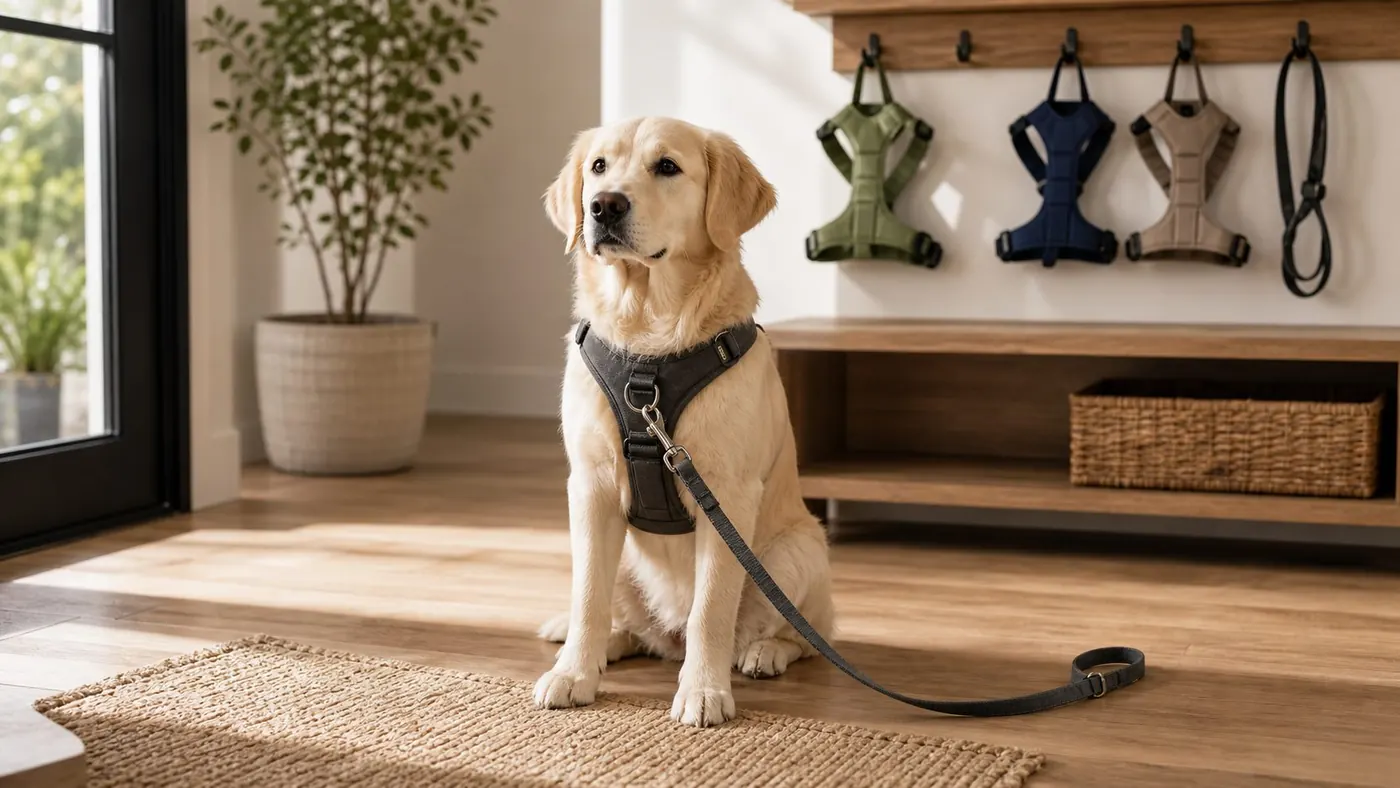
A dog harness is only useful when its shape fits the dog and its attachment point fits the job. Chest girth is the first measurement, but shoulder movement, neck opening, armpit clearance, strap stability, hardware weight, and the dog's tendency to back out all affect the decision.
This curated hub organizes the What Dogs Like harness guidance by question. Start with fit, then move to harness type, pulling management, puppy growth, or vehicle restraint. Return to the broader Harnesses, Collars & Leashes hub when the decision also involves collars or leash choice.
Quick read
Quick path
- Sizing or rubbing problem: use the Dog Harness Fit Guide and Harness Fit Checklist.
- Choosing a daily design: compare Everyday Dog Harnesses.
- Pulling management: read the No-Pull Dog Harness Guide and Front Clip vs Back Clip Harnesses.
- Backing out or flight risk: use Best Escape-Proof Dog Harnesses for rear-strap and controlled reverse checks.
- Growing puppy: use the Puppy Harness Size Guide.
- Car restraint: use the Dog Seat Belt and Car Harness Guide.
Share & embed
Start with fit
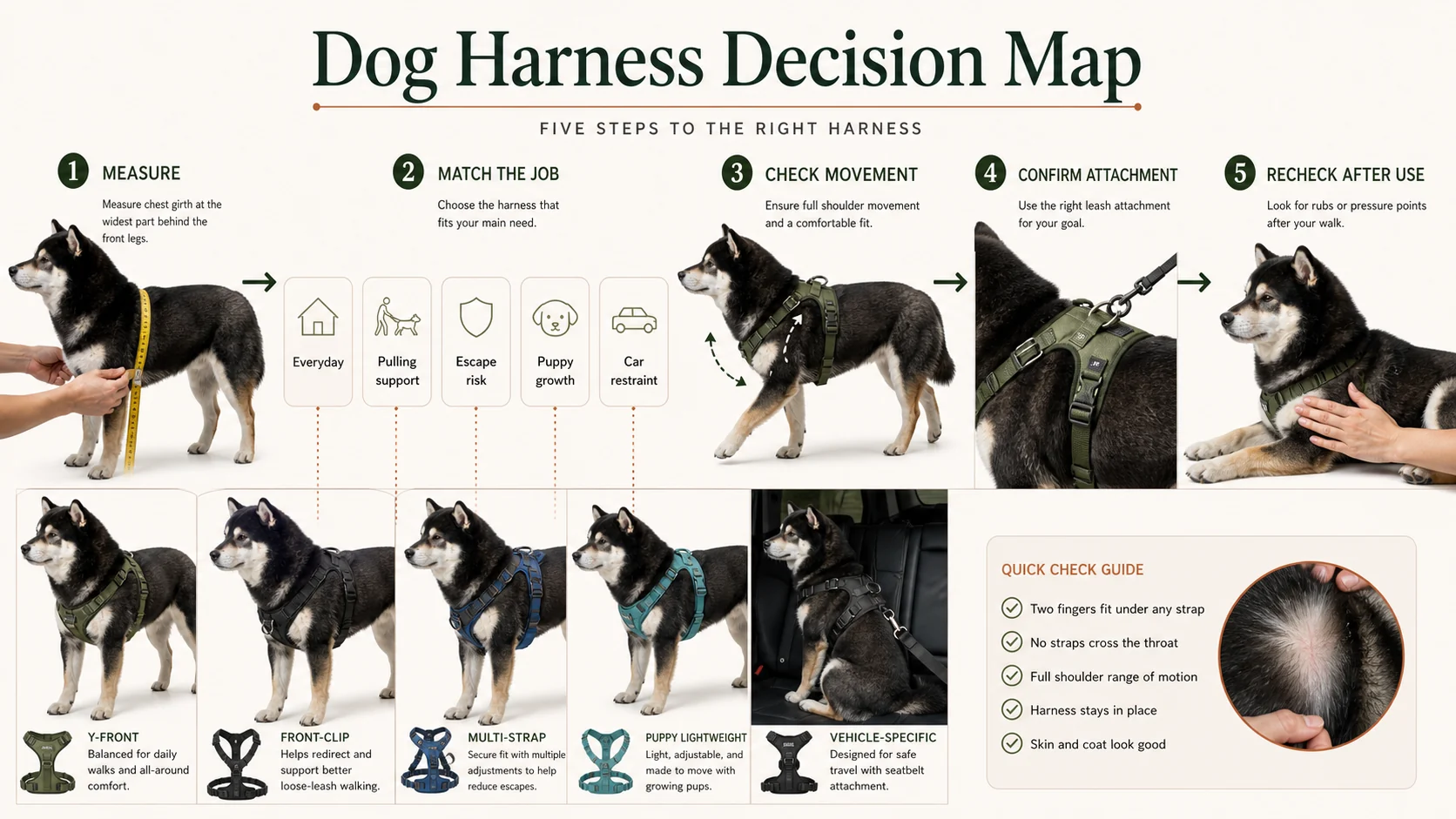
Measure chest girth around the widest part of the rib cage and compare that number with the current brand chart. Weight and breed labels are weak shortcuts because dogs at the same weight can have different neck openings, chest depth, and body length.
A harness should remain stable during a normal walk without rubbing behind the front legs or pressing across the throat. Watch the dog from the side and front. Check that straps do not block shoulder movement, buckles do not sit in sensitive areas, and the harness does not rotate when the leash changes direction.
Use the Dog Harness Fit Calculator for a cautious chest-girth comparison range, then verify the result against the actual product chart. Inspect the fit again after several walks because straps can settle or loosen.
Choose the harness job
Everyday neighborhood walks
Adjustable Y-front or well-shaped back-clip harness
- Look for
Chest fit, shoulder freedom, simple hardware, easy adjustment
- Avoid
Choosing only by weight or appearance
Pulling management
Front-clip or dual-clip harness plus training
- Look for
Stable front attachment, no throat pressure, normal movement
- Avoid
Expecting equipment to teach loose-leash walking by itself
Small or delicate dog
Lightweight harness with proportionate clips
- Look for
Low hardware weight, secure neck opening, armpit clearance
- Avoid
Bulky buckles and oversized leash clips
Escape-prone dog
Multi-point adjustable harness or safety setup
- Look for
Neck opening, waist strap, backup connector, calm fit practice
- Avoid
Assuming more straps make any harness escape-proof
Vehicle restraint
Purpose-built car harness and compatible tether
- Look for
Manufacturer instructions, seat position, crash-test evidence
- Avoid
Clipping a travel tether to an everyday collar
Harness type and leash attachment
Back-clip harnesses are simple for relaxed walkers. Front-clip harnesses change the leash angle and can improve handling for some dogs, but they are not a universal solution and do not replace training. Dual-clip harnesses provide both options when the fit remains stable.
Step-in designs may help dogs that dislike gear going over the head. Y-front designs often leave more space for forward shoulder movement, but the label alone does not guarantee good fit. Compare the actual strap path on the dog.
The Dog Harness vs Collar guide explains why many owners use a collar for identification and a harness for leash attachment. Sudden coughing, pain, limping, panic, or a major change in movement deserves veterinary or qualified professional guidance rather than another equipment experiment.
Puppy and growth checks
Puppies can outgrow a harness quickly. Recheck chest girth, neck opening, strap position, and buckle clearance regularly. A harness that was comfortable several weeks ago can begin rubbing or become loose enough to slip.
Use the Puppy Walking Gear Checklist to keep collar ID, harness fit, leash choice, first-walk routines, and growth checks together. The Dog Collar vs Harness for Puppy guide separates the role of each item.
Inspect after real use
Fit cannot be confirmed from a standing photo alone. After a normal walk, look for shifted straps, flattened coat, warm spots, redness, rubbing, or reluctance when the harness appears. Inspect stitching, buckles, adjustment sliders, D-rings, and any backup connector.
If the dog repeatedly backs out, freezes, panics, or is difficult to control safely, stop treating the issue as a shopping problem. Review fit and handling with a qualified trainer or behavior professional.
Continue by question
-
Best Mobility Harnesses for Dogs for rear slings, full-body support, weak back legs, transfers, skin checks, and veterinary-plan boundaries.
-
Dog Harness Fit Guide for measurement, strap placement, and movement checks.
-
Best Dog Harnesses for Everyday Walks for Y-front, back-clip, front-clip, step-in, padded, and lightweight categories.
-
No-Pull Dog Harness Guide for realistic pulling-management tradeoffs.
-
Best Escape-Proof Dog Harnesses for multi-strap fit, movement, and backup connections.
-
Front Clip vs Back Clip Harnesses for leash-angle differences.
-
Puppy Harness Size Guide for fast growth and first-walk fit.
-
Dog Seat Belt and Car Harness Guide for vehicle-specific restraint decisions.
-
Harness Fit Checklist for a printable post-purchase inspection.