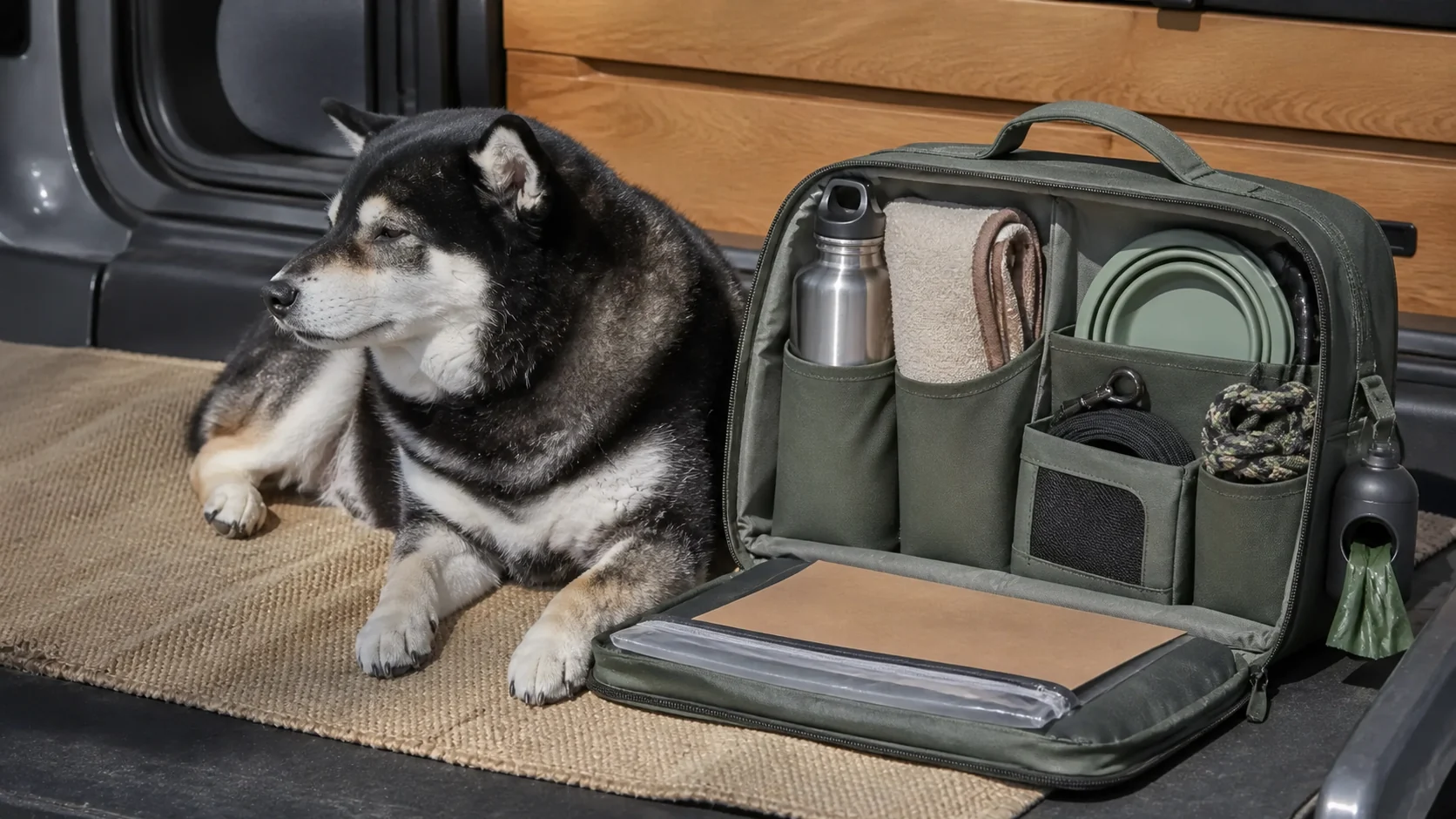
A useful dog gear bag is organized by urgency, not by product type. Water, waste bags, leash backups, cleanup supplies, and emergency information should be reachable without emptying the whole bag.
The right bag can be a tote, backpack, duffel, or small organizer. Compartments, washable materials, stable bottle storage, and a repeatable packing system matter more than a “pet travel” label.
Quick read
Quick answer
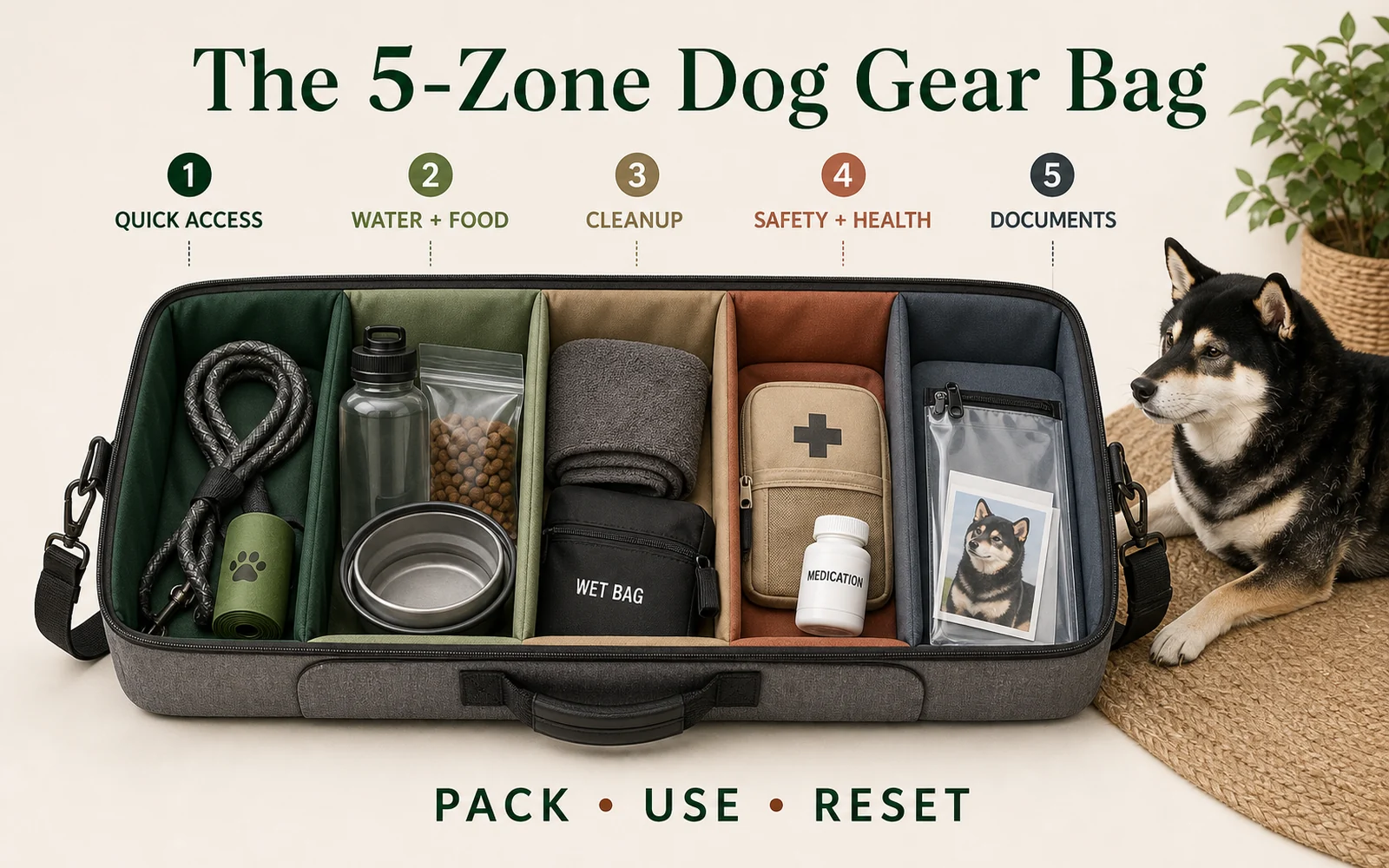
- Use five zones: quick access, water and food, cleanup, safety and health, and documents.
- Keep wet and dirty items separate from food, medication, and paperwork.
- Pack for the actual trip, then add a small delay buffer rather than carrying every item on every walk.
- Use a checklist fixed inside the bag so missing essentials are visible before leaving.
- Inspect and restock after each trip, especially water, waste bags, medication, and batteries.
What should be in a dog gear bag?
For most outings, begin with:
- water and a bowl;
- waste bags;
- spare fixed leash or connector;
- towel or cleaning cloth;
- treats or measured food when needed;
- dog-specific first-aid supplies;
- required medication;
- ID and emergency contacts; and
- a recent photo of the dog.
Long trips may add bedding, grooming tools, food containers, vaccination or reservation documents, and a travel crate or carrier. Ready.gov includes a traveling bag, crate or sturdy carrier, water, food, medication, first aid, sanitation supplies, backup identification gear, and familiar items in its pet preparedness guidance.
The five-zone packing system
Zone 1: Quick access
Top pocket or outer pouch
- Look for
Waste bags, leash backup, treats, light, keys
- Avoid
Items buried under bedding
Zone 2: Water and food
Upright washable compartment
- Look for
Sealed bottle, bowl, measured food
- Avoid
Leaks beside documents or medication
Zone 3: Cleanup
Separate waterproof pouch
- Look for
Towel, wipes, dirty-item bags, brush
- Avoid
Wet gear mixed with food
Zone 4: Safety and health
Clearly marked protected pouch
- Look for
First aid, medication, emergency contacts
- Avoid
Loose tablets or expired supplies
Zone 5: Documents
Flat waterproof sleeve
- Look for
Photo, records, booking details, instructions
- Avoid
Only storing documents on one phone
Share & embed
Build the bag from the outside in
Choose the emergency and frequently used items first, then assign the bag around them. This prevents a large duffel from filling with “maybe” items while the spare leash or water bowl remains hard to reach.
Use a simple access test. Put the packed bag in its real location—on your back, under a seat, or in the secured cargo area—and try to retrieve waste bags, water, the spare leash, the first-aid pouch, and the document sleeve one at a time. You should not need to remove bedding or balance open food containers to reach them.
Then perform a spill test without liquids: turn the closed bag gently onto each side. Bottles and food containers should stay in their compartments, medication should remain protected, and sharp tools should not shift against soft pouches. This test also reveals whether dividers are useful or merely decorative.
Finally, weigh and carry the completed bag for the distance you expect. A hands-free backpack that is uncomfortable when full is not better than a tote that stays in the vehicle. Remove duplicate convenience items before removing water, identification, medication, or required safety supplies.
Zone 1: Quick access
Place the items used during an ordinary stop where one hand can reach them. Waste bags, spare leash, treats, flashlight, and a small towel should not be below a large food container.
Keep car keys and human essentials in their own pocket so they do not fall out when dog supplies are removed.
Zone 2: Water and food
Use leak-resistant bottles and sealed food containers. Keep bowls clean and allow them to dry before repacking. For longer trips, divide meals into labeled portions instead of carrying an open bulk bag.
Zone 3: Cleanup
Use a washable or removable pouch for muddy cloths, used towels, damp harnesses, and sealed waste until it can be disposed of properly. A bright or distinct pouch prevents dirty items from being returned to the clean side by mistake.
Zone 4: Safety and health
Medication should remain in labeled packaging with current instructions. Keep emergency contacts and a dog-specific first-aid kit together. Review expiration dates and replace used items immediately.
First aid is for initial response, not a substitute for veterinary care. Know the nearest emergency clinic before a remote or unfamiliar trip.
Zone 5: Documents
Store a recent photo, veterinarian contact, medication list, reservation details, and any records required by the destination in a waterproof sleeve. Keep secure electronic copies as backup without relying on mobile signal.
Separate clean, wet, and medical items
The most important internal boundary is not between “food” and “travel.” It is between clean/dry supplies, wet/dirty returns, and protected health items.
Use a washable wet pouch that can be removed with one hand. It should hold a damp towel, muddy harness, or used cleaning cloth without touching the food zone. Empty it immediately after the trip; a sealed pouch is temporary containment, not long-term storage.
Medication belongs in labeled packaging with the dog’s name, instructions, and current quantity. Protect it from crushing, moisture, and temperature extremes. Some medications cannot safely remain in a hot or freezing vehicle, so follow the storage directions and veterinary guidance rather than treating the gear bag as permanent storage.
Keep a small human-readable card with the veterinarian, emergency clinic, medication list, allergies or important conditions, owner contact, and a backup contact. Do not put sensitive personal information on the outside of the bag. The recent dog photo should show current markings clearly and can be duplicated securely on a phone.
Bag styles compared
| Option | Best for | Key features | Caveat | Merchant |
|---|---|---|---|---|
Small crossbody or waist bag | Neighborhood walks | Fast access, light weight | Too small for water and larger safety supplies | Daily essentials only |
Structured tote | Car trips and organized stops | Wide opening, visible compartments | Less comfortable for long carrying | Good vehicle organizer |
Backpack | Hiking, public transport, hands-free use | Balanced carry, room for water and layers | Important items can sink to bottom | Use internal pouches |
Duffel | Long trips and multi-day stays | Large capacity, bedding and food space | Easy to overpack and hard to search | Add smaller labeled zones |
Vehicle crate or bin | Permanent car supplies | Stable storage, easy restocking | Must not become unsecured cargo | Secure separately from dog restraint |
How to choose the bag
Compare:
- washable fabric or removable liner;
- stable bottle pockets;
- zippers that can be used with one hand;
- a light-colored interior that makes small items visible;
- comfortable straps for the real carrying distance;
- a flat protected document sleeve;
- separate wet-item storage; and
- dimensions that fit the vehicle or storage location.
A dog-branded organizer is optional. A durable human travel bag can work just as well when the compartment layout is better.
Choose capacity by trip, not by dog size
A large dog does not always need the largest bag, and a small dog with medication or overnight supplies may need more organization. Start with the actual packing list, arrange the items on a table, and group them into the five zones before comparing bag dimensions.
Check the largest rigid item first: bottle, food container, first-aid pouch, or document sleeve. Then allow room for the soft items without compressing medication or forcing zippers. An overfilled bag is slow to search and more likely to spill when opened.
For longer trips, use modules instead of one huge bag. A core quick-access bag can remain identical for daily walks and car stops, while a labeled food module, bedding module, or outdoor module is added only when needed. The modular approach makes missing items easier to notice and prevents an emergency pouch from migrating to the bottom of a duffel.
Suggested module system
| Option | Best for | Key features | Caveat | Merchant |
|---|
Packing lists by trip
Everyday walk
Bring waste bags, water when conditions or distance require it, treats if part of the routine, and a small backup connector or leash. Keep the everyday harness and collar fit checks outside the bag so worn gear is noticed before leaving.
Car trip
Add water, bowl, towel, cleanup pouch, dog photo, medical contacts, and destination documents. Keep the bag separate from the approved crate, carrier, or harness system. Read Best Dog Crates for Car Travel before packing around a vehicle restraint.
Camping or hiking
Add extra water, measured food, paw supplies, tick tool, weather layer where appropriate, dog-specific first aid, and a route plan. Use the Dog Adventure Gear Checklist for the activity-level decisions.
Emergency kit
Keep a separate, regularly reviewed supply rather than assuming the daily bag covers evacuation needs. Include food, water, medication, sanitation supplies, backup identification gear, crate or carrier planning, records, and familiar items according to local emergency guidance.
Pack a delay buffer without overpacking
A delay buffer covers a later-than-planned return, spilled water, one extra cleanup, or an unexpected stop. It is not an excuse to carry every dog product you own. Add the items that become critical when time extends: water, required medication, measured food where relevant, waste bags, and weather protection.
The buffer should match the outing. A neighborhood walk and a remote drive have different consequences if delayed. For a remote or overnight trip, also record the nearest replacement source, emergency clinic, and a contact who can access the dog’s care information.
Avoid loose duplicates. Two spare leash connectors stored in different pockets are harder to inventory than one tested backup in the quick-access zone. If an item never gets used across several relevant trips, decide whether it is emergency-critical, activity-specific, or simply clutter.
Ten-minute reset after every trip
- remove all wet, dirty, and perishable items;
- wash and dry bowls and towels;
- refill waste bags and water;
- replace used first-aid supplies;
- check medication quantity and dates;
- inspect leash, harness, clips, and zippers;
- update documents when needed; and
- return every item to its assigned zone.
Direct Amazon dog travel-bag options
These bags are layout examples, not automatically complete emergency kits. Compare the compartment system with your five-zone packing list and remove included items that do not match your plan. Check current dimensions, materials, included accessories, seller, and return policy. What Dogs Like may earn from qualifying purchases.
Weekly and seasonal inventory checks
The after-trip reset handles visible use. A weekly check catches slow changes: low waste-bag supply, a leaking bottle seal, an almost-empty treat pouch, a discharged light, a stiff zipper, or a missing backup lead. If the bag is rarely used, check it before every outing instead.
At the change of season, remove gear that no longer matches conditions and inspect anything stored in the vehicle. Update the dog photo, contact card, medication list, reservations, and required records. Wash the empty bag according to its care instructions and let every part dry before repacking.
Use a paper or laminated checklist inside the main opening. Mark items that are permanent, items added on departure day, and items that must be removed on return. This catches refrigerated medication, fresh water, charged devices, and food that should not live in the bag.
Labeling that still works in a hurry
Use large, plain labels or colors that match the five zones. Avoid elaborate codes only one household member understands. A friend, sitter, or family member should be able to locate the leash backup, medical pouch, and contacts after a thirty-second explanation.
Place a short “return here” label on removable pouches. When multiple dogs have different medications, food, or harnesses, give each animal a clearly separate sub-pouch and verify names before departure. Shared cleanup supplies can remain in the common zone.
Related guides and tools
Use the Helpful Dog Tools before buying size-sensitive gear, the Dog Adventure Gear Checklist for outdoor trips, and the Dog Gear Measurement Kit to record bed, crate, collar, and harness dimensions. For water trips, add the fit and recovery checks from Best Dog Life Jackets for Kayaking; for warm parking lots and trailheads, use Dog Boots for Hot Pavement only within a safer heat plan.
Frequently asked questions
What should I put in a dog travel bag?
Pack water, bowl, food as needed, waste bags, towel, spare leash, first-aid supplies, medication, emergency contacts, identification information, and destination-specific documents.
Is a dog gear backpack better than a tote?
A backpack is better for hands-free carrying; a structured tote is often easier to organize in a car. Choose based on carrying distance and access needs.
How do I stop the bag from becoming cluttered?
Assign every item to one of five zones, keep a checklist inside the bag, and perform a short clean-and-restock reset after every trip.
Should medication stay in the dog gear bag?
Only when storage conditions are appropriate and it remains in labeled packaging. Check quantity, instructions, and expiration dates before each trip.
Can the bag be attached to a travel crate?
Do not attach it to a restraint system unless the manufacturer explicitly allows it. Secure it separately so it does not block ventilation or become loose cargo.