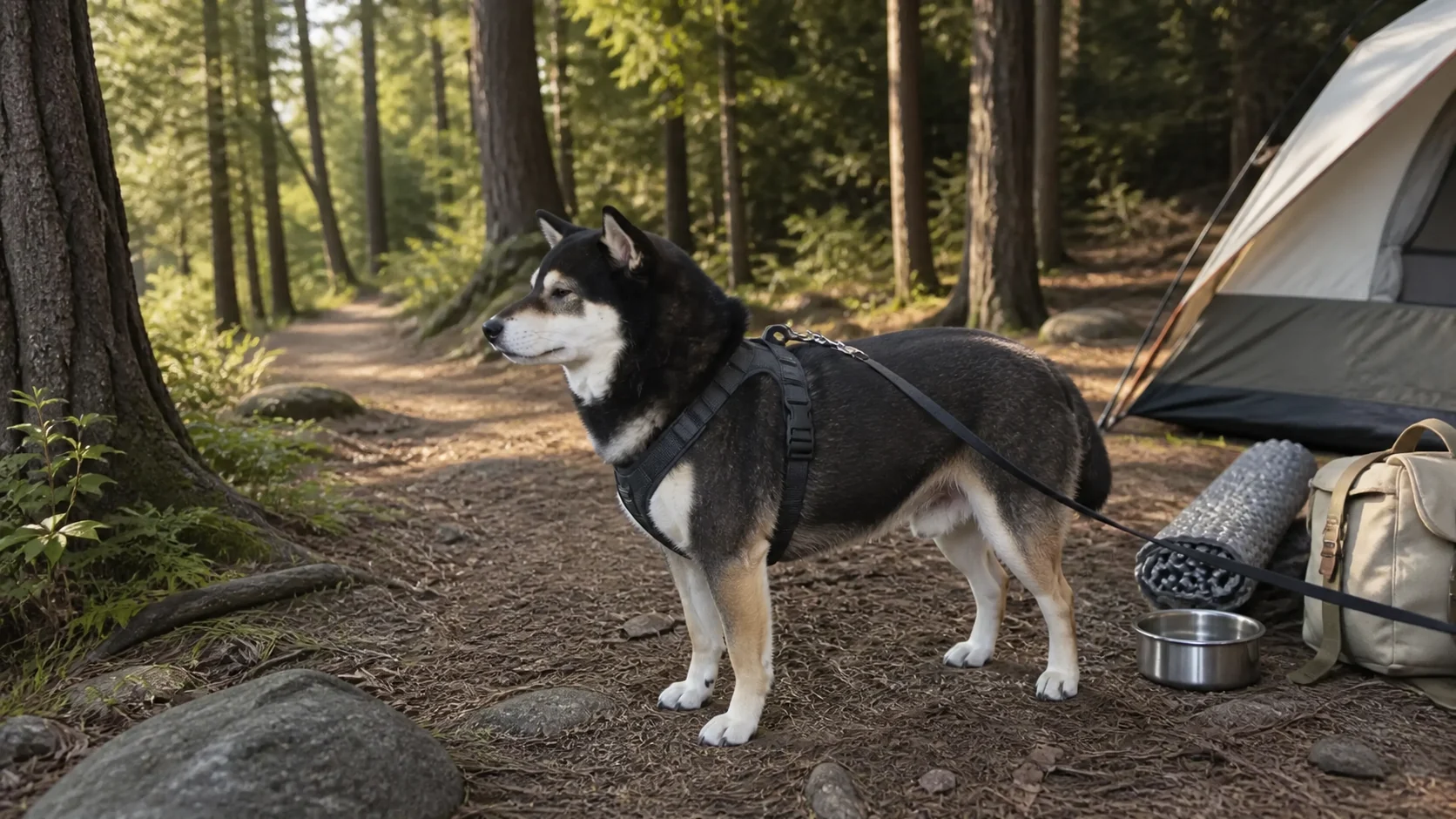
Good dog adventure gear starts with water, identification, predictable leash control, a realistic route, and a plan for heat, paws, rest, and cleanup. Specialized packs and accessories come later.
This checklist covers camping and hiking first, then shows how the system changes for beach, boating, and biking trips. It does not assume every dog is suited to every activity.
Quick read
Quick answer
- Pack first: water, bowl, food, leash, fitted harness or collar, ID, waste bags, towel, first-aid supplies, and required medications.
- Check destination rules before buying gear. Pet access and leash limits vary by park, trail, campground, and beach.
- Match the trip to the dog’s fitness, age, behavior, paws, and weather tolerance.
- Use a simple fixed leash where rules require close control; a long line is not suitable for every trail or campsite.
- Never leave a dog unattended in a hot vehicle.
- Test new gear near home before depending on it outdoors.
Essential dog camping and hiking gear
The National Park Service camping guidance recommends checking pet access, bringing food, water, bowls, leash or tether equipment where permitted, identification, first-aid supplies, waste bags, and towels. Its hiking guidance also emphasizes trail rules, fitness, veterinary preparation, leash control, water breaks, and overheating awareness.
Short maintained trail
Everyday hiking setup
- Look for
Water, bowl, fixed leash, fitted harness, ID, waste bags
- Avoid
Adding weight or complexity before testing basics
Campsite stay
Camp management kit
- Look for
Rule-compliant leash or tether, rest mat, towel, light, food storage
- Avoid
Leaving dog unattended or tying to prohibited objects
Hot or exposed route
Heat-first plan
- Look for
Early timing, extra water, shade breaks, shorter turnaround
- Avoid
Relying on a cooling product to make unsafe weather safe
Longer remote route
Expanded safety kit
- Look for
Route plan, first aid, spare lead, extra water and food, emergency carry plan
- Avoid
Going beyond dog or handler fitness
Share & embed
Plan the route before the gear
Start with a route the dog can comfortably complete on an ordinary day, then add a margin for weather, elevation, rough surfaces, navigation errors, and slower return travel. Distance alone is misleading: an exposed two-mile climb can be harder than a longer shaded walk on level ground.
Write down five route facts:
- where dogs are permitted and which leash rule applies;
- surface, elevation, shade, and reliable water availability;
- turnaround points before the destination;
- the nearest vehicle access and veterinary help; and
- the forecast for the whole outing, including the return window.
Share the route and expected return time with someone who is not on the trip. Download or carry the map rather than assuming mobile signal. For a first visit, choose a route with several easy exit points and avoid combining new terrain, new gear, and the dog’s longest distance on the same day.
The return is part of the workload. Turn around while the dog still looks capable, not when the planned viewpoint is reached at any cost.
Core packing checklist
Control and identification
- secure collar with readable ID;
- well-fitted harness appropriate to the route;
- fixed leash that meets local rules;
- spare leash or connector;
- current microchip registration; and
- recent photo of the dog.
Use the Dog Harness Fit Guide and Dog Leash Length Guide before experimenting with a new system outdoors.
Water and food
- more water than the normal walk requires;
- a clean collapsible or rigid bowl;
- normal food measured for the trip;
- light snacks for longer activity; and
- a sealed food container.
Do not rely on unknown streams, ponds, or shared campground bowls. Plan water according to weather, route length, dog size, and exertion, and turn around early when the dog is not coping comfortably.
Offer water during planned breaks and whenever pace, weather, or panting changes. A dog that gulps after a long delay did not receive the same opportunity as a dog offered smaller breaks throughout the route. Keep the bowl clean and avoid communal sources that can be contaminated.
There is no single water formula that safely covers every dog and trip. Body size, diet, temperature, humidity, coat, health, fitness, speed, and water carried in food all change the need. Carry more than the expected amount and include a reserve for delays. If water is running low, shorten the route early rather than rationing toward a distant destination.
Rest and weather
- washable travel mat or blanket;
- towel for mud, rain, sand, or cold water;
- shade plan;
- weather-appropriate layer if the individual dog needs one; and
- dry sleep area away from sharp objects and traffic.
Watch the dog rather than assuming a product solves the weather. Heavy panting, excessive drooling, vomiting, weakness, or difficulty continuing require prompt action and may require urgent veterinary help.
Paw and first-aid supplies
- dog-specific first-aid kit;
- tick-removal tool;
- paw-cleaning cloth;
- booties only if the dog has been acclimated to them;
- any prescribed medication; and
- veterinarian and emergency-clinic contact details.
Check paws during breaks for cuts, heat, ice, grit, burrs, or irritation. Foot protection should be fitted and practiced before the trip.
Run a hand over the path surface before relying on appearance alone, especially on dark pavement, sun-exposed rock, sand, or metal ramps. Stop periodically to inspect between toes and around nails. A small gait change can be easier to notice when the dog walks slowly past you on a loose leash.
Boots are not a last-minute fix. They need correct sizing, nail clearance, secure closures, and gradual practice on safe surfaces. Check for rubbing above the paw and for grit trapped inside. Carry a spare if the route genuinely depends on foot protection.
Cleanup and organization
- more waste bags than expected;
- sealable dirty-item bag;
- towel;
- brush or comb when coat type requires it; and
- a dog gear bag organized by urgency.
Optional gear by activity
| Option | Best for | Key features | Caveat | Merchant |
|---|
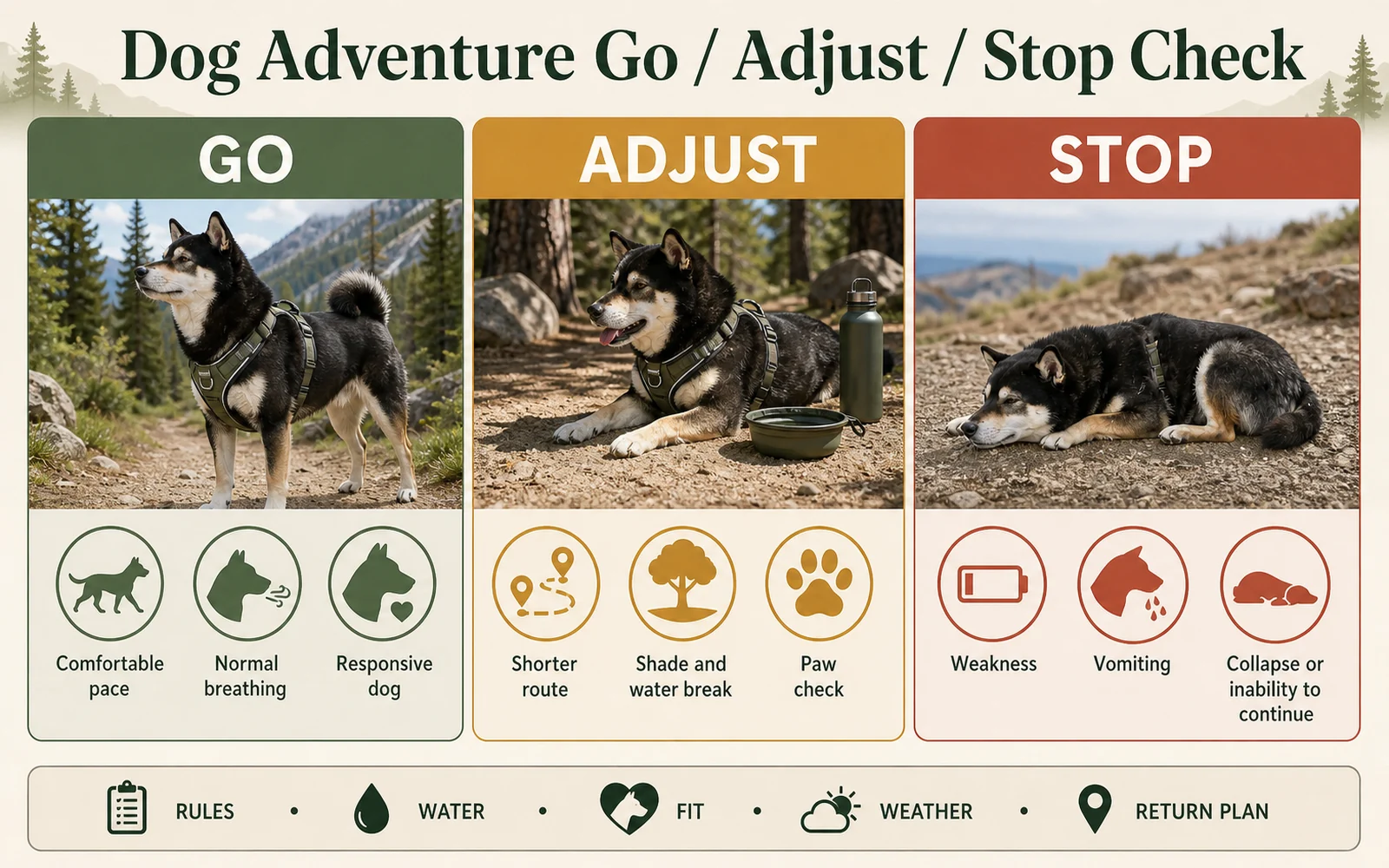
Use the go, adjust, stop field check
Go
Continue when the dog moves at a familiar comfortable pace, breathes normally for the effort and weather, responds to cues, accepts water, and recovers during breaks. “Go” is permission to continue monitoring, not a guarantee that the rest of the route will remain suitable.
Adjust
Shorten the route, slow down, find shade, offer water, and check paws when the dog lags, seeks shade, pants more than expected, repeatedly stops, becomes less responsive, or shows mild rubbing. An early adjustment often prevents a manageable problem from becoming an emergency.
Stop
Stop the activity for weakness, vomiting, collapse, inability to continue, breathing difficulty, disorientation, uncontrolled bleeding, or other serious change. Move to safety without forcing further exertion and seek urgent veterinary guidance. Know how you would carry or assist the dog before entering a route where vehicle access is limited.
What belongs in a dog gear backpack?
A dog pack can carry light, balanced items for a healthy and conditioned dog, but it is optional. Fit the pack without blocking shoulder movement, balance both sides, and begin empty on short routes.
The handler should carry essential water, first aid, medication, documents, and anything that cannot safely be lost if the dog’s pack comes off. Ask a veterinarian before adding weight when age, joints, breathing, recovery, or health conditions are relevant.
Campsite tether and long-line limits
Some campgrounds allow a stake or tether; others restrict tie-outs or prohibit attachment to trees. A long line can create entanglement around people, tent stakes, vegetation, and other dogs. Use only what the destination permits and supervise continuously.
A fixed leash is usually easier to manage in busy areas. Keep food and scented items secured according to local wildlife rules rather than storing them beside the dog’s bed.
Build a calm campsite routine
On arrival, walk the site before setting up the dog’s rest area. Remove sharp debris, find shade, identify vehicle movement and neighboring dogs, and note where food must be stored. Put the bed or mat where the dog can settle near you without blocking a path.
Use the same bowl, mat, and short settling cue practiced at home. Offer a quiet decompression period before exploring the campground. Continuous barking, scanning, pacing, or inability to rest may mean the environment is too stimulating; more equipment will not necessarily make the stay comfortable.
At night, keep identification on the dog, store a light within immediate reach, and secure leash hardware before opening a tent or vehicle door. Never leave the dog tethered outside while people sleep or leave the site.
Direct Amazon adventure-gear options
These are focused comparison products, not a complete safety plan. Fit and practice matter more than adding equipment, and first-aid supplies do not replace veterinary care. Check the current listing, size or contents, seller, instructions, and return policy. What Dogs Like may earn from qualifying purchases.
Before-you-go test
Run a short practice close to home:
- fit the harness, collar, pack, or flotation device;
- walk with the packed bag;
- offer water from the trip bowl;
- practice settling on the travel mat;
- inspect rubbing points and paws;
- repack wet and dirty items; and
- confirm the dog can remain calm around the expected environment.
A seven-day gear test before a bigger trip
Introduce only one major item at a time. On day one, inspect and fit it indoors. On days two and three, use it during a short familiar outing. Later in the week, combine the harness, bowl, rest mat, and packed handler bag on a slightly longer but still local route.
After each test, check the dog’s armpits, chest, belly, paws, and coat for rubbing or trapped debris. Check the gear for strap movement, loosened buckles, leaks, bent clips, or items that were difficult to reach. Repack the bag while the experience is fresh.
Cancel or simplify the planned trip if the local test reveals stress, soreness, poor recovery, unreliable recall around distractions, or equipment that cannot be fitted consistently. A successful practice is calm and repeatable, not merely completed.
Post-trip recovery and review
Offer water and a quiet, temperature-appropriate rest area. Inspect paws and skin, remove ticks or debris appropriately, dry damp coats and gear, and return to the dog’s normal feeding and medication routine unless a veterinarian has advised otherwise.
Note what was unused, what ran short, and what was buried when needed. Update the next packing list instead of automatically adding more gear. Contact a veterinarian if lameness, unusual fatigue, vomiting, appetite change, breathing changes, or pain continues after the activity.
Related guides
Start with the Dog Travel & Outdoor Gear hub and the Harnesses, Collars & Leashes hub. For the exact activity, compare a fixed Hiking Dog Leash, fit Dog Boots for Hot Pavement only after changing the heat plan, and use a Dog Life Jacket for Kayaking around boats and open water. Compare GPS Dog Collars for remote versus cellular coverage and add Cooling Dog Beds as a comfort layer rather than heat protection. Organize everything with the Dog Gear Bag Guide.
Frequently asked questions
What dog gear do I need for camping?
Begin with water, bowl, food, fixed leash, fitted harness or collar, ID, waste bags, towel, first-aid supplies, medication, and a clean rest surface. Add activity-specific gear only after checking campground rules.
Should a dog wear a backpack while hiking?
A pack is optional. It should fit without restricting movement, remain balanced, and start empty on short practice walks. Essential supplies should stay with the handler.
How much water should I bring for my dog?
There is no universal amount. Plan for dog size, heat, humidity, route, exertion, and delays, carry extra, offer frequent breaks, and turn back if the dog is not coping comfortably.
Can I use a long line at a campsite?
Only where local rules allow it and when it can be supervised without entangling people, wildlife, vegetation, or equipment.
What extra gear is needed for boating?
Use a properly fitted dog flotation device with a secure lift handle, practice boarding and retrieval, provide shade and drinking water, and supervise continuously.