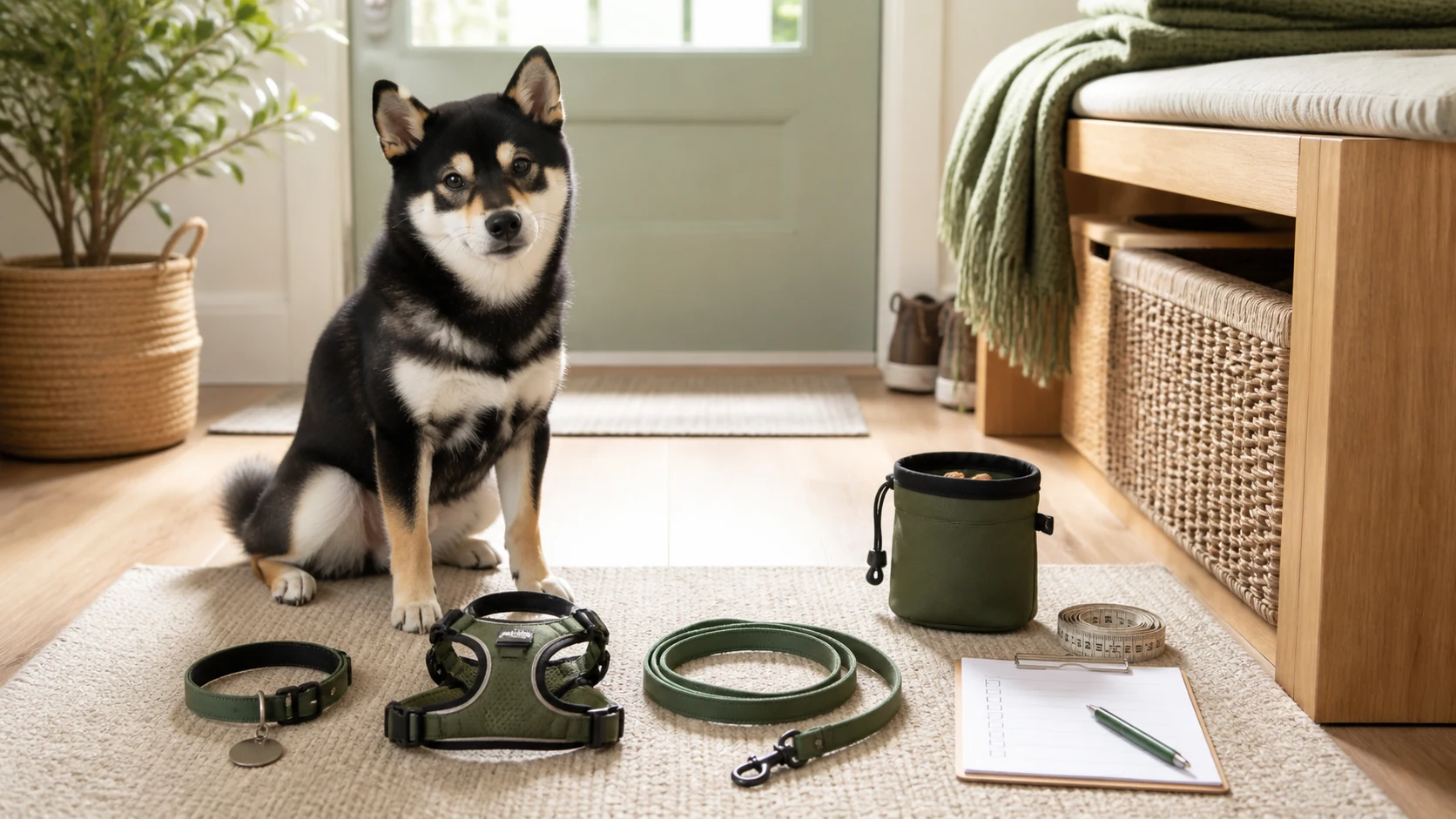
Puppy walking gear should stay simple: a light collar for ID, a comfortable harness for many leash walks, a predictable leash, and frequent growth checks. This printable checklist helps you slow down the first setup before buying too much gear or keeping something that rubs, slips, or feels too heavy.
Use it with Dog Collar vs Harness for Puppy, the Puppy Harness Size Guide, Best Leash for Puppy, the Dog Collar Size Calculator, and the Dog Harness Fit Calculator.
Printable resource
Download the puppy walking gear checklist
Print the PDF before the first collar, harness, and leash setup. It covers ID tags, neck measurement, chest girth, leash length, hardware weight, indoor fitting, short-walk checks, and growth rechecks.
What the checklist covers
Collar ID setup
Flat puppy collar
- Look for
Neck measurement, light buckle, tag ring, readable ID
- Avoid
Using a collar as the only control point for pulling
Harness walking setup
Lightweight harness
- Look for
Chest girth, armpit clearance, shoulder movement, centered leash ring
- Avoid
Keeping a harness that twists, rubs, or blocks movement
Leash choice
Short predictable leash
- Look for
Comfortable handle, small enough clip, simple length, good stitching
- Avoid
Retractable length or heavy clips for early walks
Growth routine
Weekly recheck
- Look for
Neck fit, chest girth, coat changes, strap adjustment, behavior notes
- Avoid
Assuming last week's fit is still safe
First-walk review
Short calm practice
- Look for
Treats, potty timing, low-distraction route, post-walk rub check
- Avoid
Expecting gear to train loose-leash walking by itself
Use it before buying
Start by measuring the puppy's neck and chest girth in inches. Collar and harness size labels are not universal, and puppy growth makes a weak fit decision worse over time. Write the measurements on the PDF, then compare current brand charts before ordering.
Check:
- Neck measurement for a flat collar.
- Chest girth for a harness.
- Collar width and hardware weight.
- Harness strap placement and armpit clearance.
- Leash clip weight and length.
- Whether the puppy can move naturally indoors before going outside.
- Whether any rubbing, coughing, gagging, freezing, or escape behavior appears.
For broader fit instructions, read the Dog Collar Size Guide, Puppy Harness Size Guide, and Dog Harness Fit Guide. For leash setup, pair this with Best Leash for Puppy, Dog Leash Length Guide, and Dog Leash Materials Guide.
Keep the first walks small
The checklist is not a training plan. It helps you catch gear problems while first walks are still short and easy to adjust. Choose calm routes, avoid overloading the puppy, and use rewards or food games to keep gear introduction positive.
Commercial comparison points
These are direct Amazon product CTAs for comparison, not fixed universal winners. What Dogs Like may earn from qualifying purchases. Affiliate links do not change the buying checks in this resource: measure first, compare current brand size charts, inspect fit after short use, and keep the first setup simple.
After measuring
Compare simple leash and training add-ons
Once collar and harness fit are clear, keep the walk setup predictable. A simple leash and small treat pouch are usually easier to manage than heavy clips, retractable length, or novelty gear.
What Dogs Like may earn from qualifying purchases. Affiliate links do not change the fit checks in this resource.
Related guidance
Use Dog Collar vs Harness for Puppy, the Puppy Harness Size Guide, and Best Leash for Puppy as the main companion guides for this PDF. Use the curated Dog Leashes hub when length, material, traffic handling, and later long-line practice need to be compared together. Use the Harness Fit Checklist after the first short walk if the harness is the main walking attachment. Use Collars and Leashes for Everyday Walks for the full basic walking setup, and return to the Harnesses, Collars & Leashes pillar for broader gear decisions.
If you are planning the whole puppy routine, pair this with Best Dog Crates for Puppies and the Puppy Crate Training Schedule.