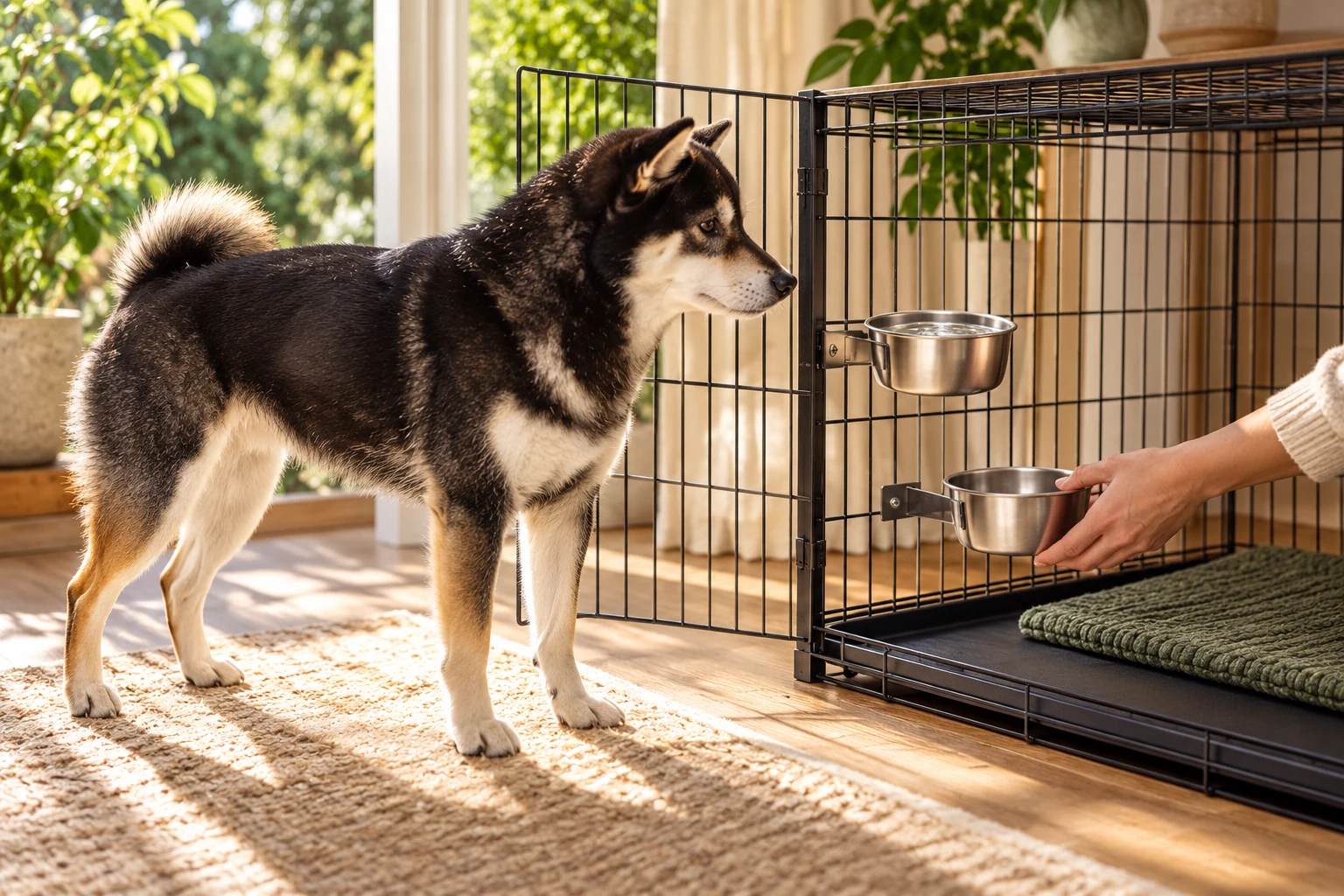
A dog crate water bowl needs to stay securely attached, allow comfortable drinking and come out easily for washing. Start with the crate's construction and the dog's available space. A large capacity or a “no-spill” label does not establish that the mount fits or that the dog can use it.
For many wire-crate setups, a removable bowl in a compatible bracket is a useful format to compare. A bottle, hanging cup and floor bowl each have different handling requirements. Watch the dog use the complete setup before relying on it, and keep access to drinking water separate from attempts to prevent accidents.
Quick read
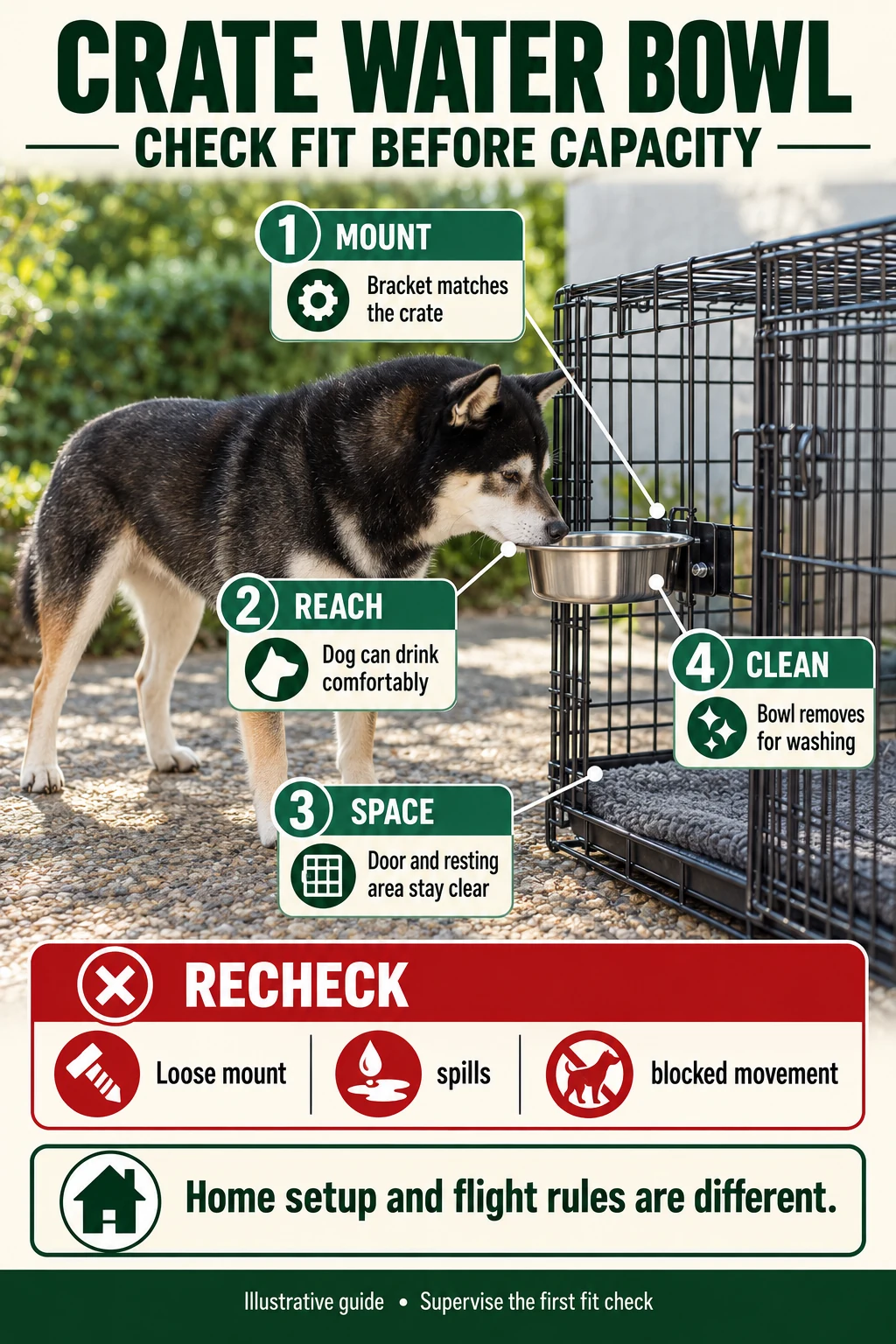
The four fit checks
- Confirm that the bracket is intended for the crate's bars or other mounting surface.
- Check that your dog can reach the water comfortably without pressing against hardware.
- Leave the doorway, turning space and dry resting area clear.
- Choose a bowl you can remove, clean and refit without struggling with the crate.
- Reassess spills or poor drinking access; do not assume removing water is the solution.
Water access comes before the accessory
The RSPCA's dog-diet guidance recommends constant access to clean drinking water and veterinary advice when drinking habits change. A crate accessory should support that access. It is not a reason to extend confinement or leave a dog without appropriate care and breaks.
If water spills, work on the container, mounting position and overall arrangement. Consider whether a larger pen or another suitable setup would be easier to manage. Ask your veterinarian about an individual drinking or medical concern rather than following a universal internet rule about how many hours a puppy can go without water.
For the crate itself, start with the Dog Crates hub. Use the puppy schedule as a flexible routine framework, not permission to postpone care because a bowl holds enough for longer.
Share & embed
Compare the container formats
“Dog crate waterer” can describe several quite different products. Establish what the listing actually contains: a bowl, a bowl plus bracket, a bottle, replacement mounting hardware or a multi-pack. Photos sometimes show more than one component even when the selected variation supplies only one.
| Format | Useful comparison point | What to inspect |
|---|---|---|
| Bowl in a fixed bracket | Bowl removes while the mounting hardware stays attached | Retention, removal force, bracket projection and bar compatibility |
| Twist-lock cup | Cup turns out of its mounting base | Lock engagement, clearance to rotate and access for washing |
| Hanging bowl | Hooks or supports hold an open container | Whether the dog can lift it off, plus any specified securing parts |
| Floor bowl | Simple access without attaching hardware | Movement, tipping, doorway obstruction and the space it occupies |
| Drinking bottle | Dispenses through a nozzle or valve | Whether the dog actually drinks enough from it, flow, leaks and cleaning access |
Use these as formats to inspect, not a guarantee that one prevents every spill. A dog can push, paw or dislodge equipment differently from the demonstration in a listing. A bottle that remains full may indicate that it has not been used; it does not prove that the dog needed no water.
Match the bracket to the crate
Look at the area where you intend to mount the bowl. Record whether the bars run vertically, horizontally or both, and whether the attachment can sit as the instructions show. Check the space between bars and the clearance around the door and divider.
A bracket designed to clamp onto wire does not automatically attach safely to a plastic shell, furniture panel or soft mesh. Do not drill, cut or improvise a mounting point unless the equipment maker provides that arrangement. Look for a compatible alternative when the crate construction and bracket do not match.
Before introducing the dog, fit the bracket to the empty crate using its instructions. Check that components are complete, the fastener is seated correctly and the bowl locks into its intended position. Inspect for sharp damage and exposed hardware where the dog could make contact.
Make sure normal use of the door will not strike the bowl. A door-mounted container can also change position as the door swings; check the entire movement, including filling and cleaning. A fixed side-wall position may avoid that conflict when the product and crate permit it.
Choose reach and capacity together
There is no single mounting height for every dog. Watch the individual dog approach and drink without stretching awkwardly or pressing the neck, face or collar area against the crate. If the position cannot be adjusted to work comfortably, choose another setup.
Capacity is a container specification, not a personalized hydration target. A one-quart bowl is larger than a 20-ounce cup, but neither size tells you how long it will meet one dog's needs. Fill level, usable opening, access, monitoring and refilling all matter.
Look at the bowl's full footprint inside the crate. A deep or wide bowl can occupy more space than expected, particularly in a small crate with a divider. Compare the dog's remaining standing, turning and lying space with the bowl and intended mat installed. The crate size guide explains why measurements should describe usable room.
Avoid filling to a level that makes every small movement spill over the rim. If the dog cannot obtain water without recurring soaking or obstruction, change the equipment or arrangement. A towel repeatedly covering the problem does not address an unsuitable mount.
Two mounted options to compare
The following options illustrate two different removal systems. They have not been tested by What Dogs Like. Neither is a universal fit, a promise of spill prevention or a flight-approved accessory. We may earn from qualifying Amazon purchases.
The MidWest manufacturer page explains the removable bowl and bracket design. The Lixit option's identity, material and attachment description were checked against its linked Amazon listing. Choose from the construction and fit you can confirm, rather than adopting a general health claim about raised feeding.
Do a supervised first-use check
Start with the dog outside the crate while you install and inspect the container. Then observe a short, calm introduction with you present. The point is to find access and handling problems before the equipment becomes part of the routine.
- Confirm that the empty bowl seats or locks correctly.
- Add water and check the mount for movement or leaks.
- Watch the dog approach and drink voluntarily.
- Check that the dog can enter, turn and lie down without bumping the container.
- Open and close the door through its normal travel.
- Remove, wash and refit the bowl yourself.
If the dog paws at the cup, lifts it out or avoids it, do not interpret that as a successful check because the bracket stayed on the wire. Reconsider the position or format. Stop using damaged equipment or a mount that loosens during ordinary use.
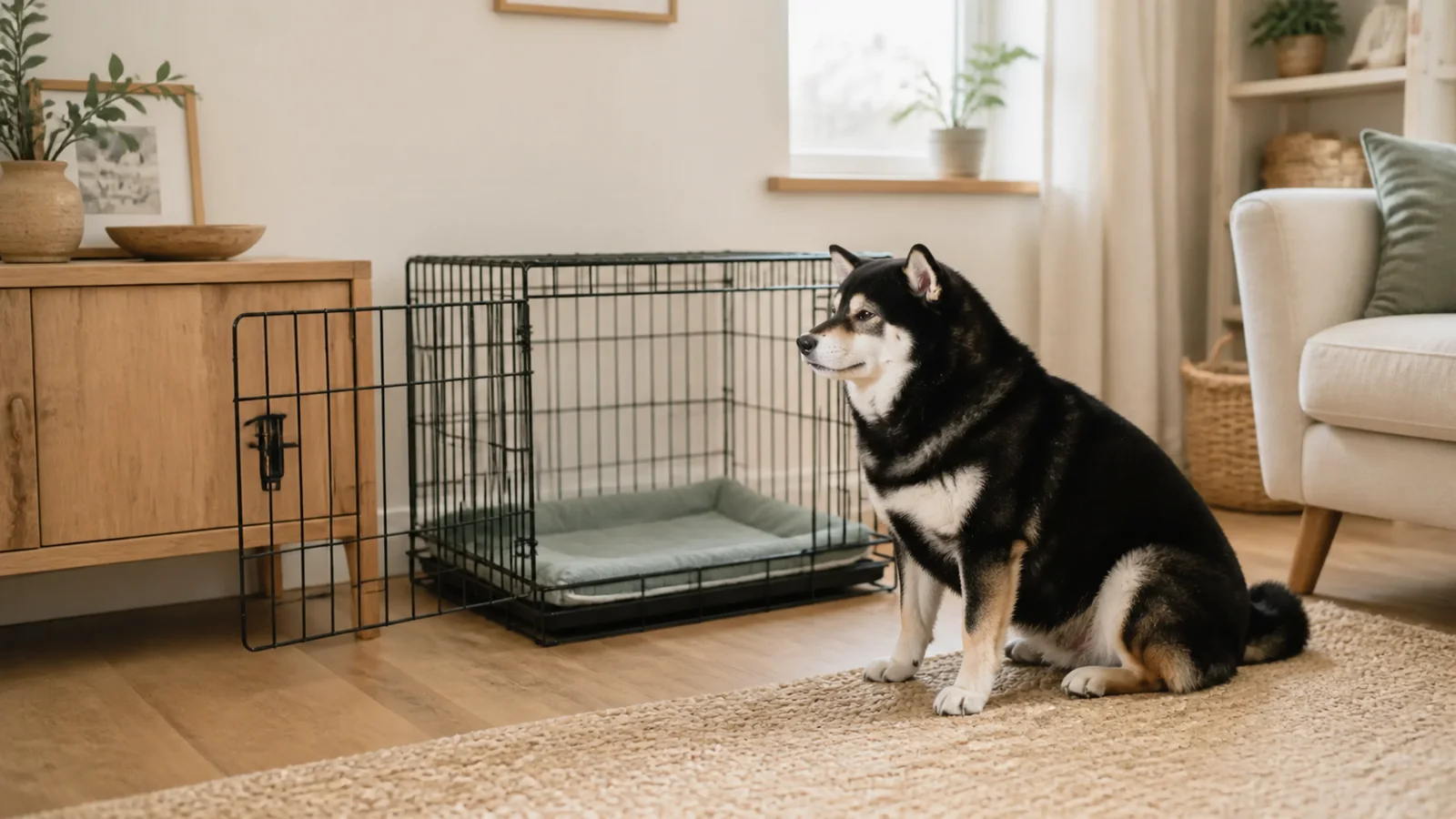
Keep an ordinary water source available during introduction. You need to establish that the dog uses the new arrangement; the purchase alone does not prove access. Continue checking the setup after moving the crate, changing the divider or replacing the mat.
Cleaning should be easy enough to repeat
Choose the product partly by the cleaning task. Can you remove the bowl without tools? Can you reach the surfaces around the bracket? Does a twist-lock cup have space to rotate once everything else is installed?
The FDA's pet-food handling guidance recommends washing food bowls with soap and hot water after use. CDC guidance on pet supplies says to follow item instructions and use the dishwasher only when the item is labeled suitable. AVMA handling advice also includes frequent cleaning of water bowls.
Clean the bracket and surrounding crate area as well as the cup when needed. Rinse away soap and refit the parts correctly. Check for damage during washing, including a cracked cup, bent holder or deteriorating attachment. Replace the appropriate part rather than securing damaged pieces with whatever is nearby.
Keep the resting surface dry. If spills have reached the pan underneath the mat, remove the bedding and check the base. Use the crate mats guide for drying and usable-height decisions, and the replacement tray guide when the base itself is damaged.
Home use and flight requirements are separate
Do not transfer a home setup into a flight kennel without checking the operator's current requirements. Alaska Air Cargo, for example, specifies food and water dishes clipped inside the door as part of its preparation rules. Other services may have their own instructions.
Our air-travel crate guide explains the container and operator checks. A bowl bought for a home crate is not automatically accepted for the journey, and a drinking bottle is not a substitute for whatever open-container arrangement the relevant rules require.
For an ordinary road trip, follow the vehicle restraint maker's accessory instructions. Do not add a protruding holder to a crash-tested system and assume the original evidence covers the modified interior.
Frequently asked questions
Which dog crate water bowl is best?
Choose a container the dog can use comfortably, with a compatible secure mount and a cleaning method you can repeat. The best format depends on the crate, available room and the dog's supervised use. The two options above are comparison points, not a universal ranking.
Should I remove water to stop my puppy having accidents?
Do not use bowl shopping to impose a blanket water-restriction routine. The RSPCA guidance linked above recommends access to clean water. Ask your veterinarian about individual needs, and arrange suitable breaks and care. This overnight-water discussion informs the question, not the health advice.
What if my dog tips every bowl over?
Check whether the bowl seats properly, whether the dog can lift it out and whether the location encourages contact during movement. Try a suitable alternative while supervised or change the confinement arrangement. A discussion about dumping crate water illustrates the problem; its replies are not evidence that withholding water is appropriate.
Can I use a hamster-style bottle instead?
Do not assume the dog will drink adequately from a nozzle. Verify that the product is intended for the animal and observe actual use, flow and cleaning. If you cannot establish reliable access, use a suitable open bowl or another arrangement and ask your veterinarian about any concern.
Is a stainless bowl automatically better than plastic?
Material is one part of the choice. Compare damage, the surface you can keep clean, the removal system and how the dog uses it. Follow care instructions and do not treat either material as chew-proof or hygienic without cleaning.
Can I use one bowl for food and water?
A product may be designed for either use, but water access must remain available when you use a bowl for food. Separate containers can simplify the routine. Wash food bowls after use and avoid leaving food residue in the drinking container.
Does this bowl make it appropriate to crate my dog for longer?
No. Water equipment does not replace care, breaks, exercise or a suitable confinement arrangement. Reassess the routine when the dog is distressed, cannot drink comfortably or is left with wet bedding.
Can I use these mounted bowls for air travel?
Only if the exact attachment and preparation are accepted by the operator. Check the current flight requirements and the container maker's instructions. The product cards here do not establish airline compliance.
Related setup checks
Use the crate setup checklist after adding accessories. For living-room furniture crates, the furniture guide covers internal space, cleaning access and ventilation.
Sources and linked product identities were checked on October 25, 2026. Community discussions inform reader questions only. Mr. Smoky is a visual reference; no personal drinking habits, measurements, product ownership or testing experience are claimed.