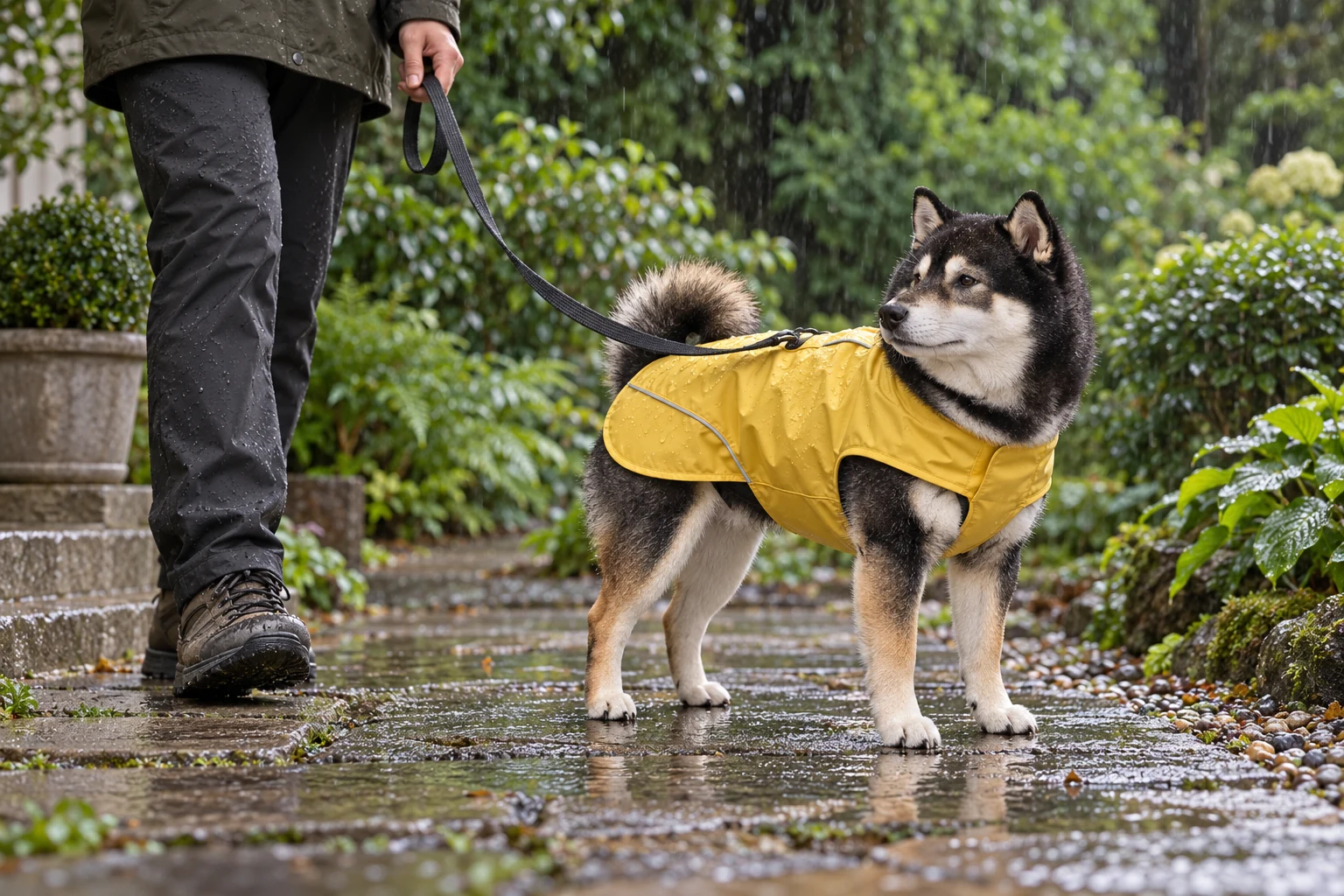
The best rain gear for a dog covers the areas you need to keep drier while allowing normal walking, turning, sitting and toileting. For mild wet weather, start with a lightweight rain shell that works with the dog's usual harness. Choose more belly or leg coverage only when splash and mud justify the extra fitting, dressing and cleaning work.
Quick read
Choose by the problem you want to solve
- For rain on the back and sides, compare a simple non-insulated shell.
- For a muddy underside, inspect the belly panel and toileting clearance before ordering a larger coat.
- For cold as well as rain, choose appropriate insulation using the cold-weather gear guide.
- Check the leash connection with the actual harness. A hole in the coat does not make the coat a restraint.
- Keep the ears and eyes clear, introduce the garment gradually and remove it when the outing is over.
Decide whether you need a shell, more coverage or a shorter walk
A dog that comes home with a wet back has a different problem from a low-bodied dog whose chest collects muddy spray. Before shopping, look at where the wetness and dirt actually accumulate. That helps you compare garment patterns instead of choosing by a product photograph of another breed.
The PDSA's coat guidance distinguishes a simple waterproof rain layer from a coat with insulation. It also emphasizes freedom of movement and normal toileting. Our starting recommendation for mild rain is to solve coverage and fit without adding warmth the dog does not need. A fleece lining can be useful in the right conditions, but it should be an intentional choice.
| Format | Best starting use | What to inspect | Main tradeoff |
|---|---|---|---|
Lightweight shell | Rain on back and sides during ordinary walks | Neck opening, chest closure and harness portal | Legs and parts of belly remain exposed |
Shell with wider belly panel | Splash-prone chest or muddy underside | Panel length, fastening position and toileting space | More fabric can rub or collect dirt if misplaced |
Legged overall | Repeated mud and wet-leg cleanup where the dog tolerates it | Cuff fit, stride, dressing access and drying | More measurements and handling are needed |
Insulated waterproof coat | Cold plus wet conditions for a dog needing warmth | Lining, heat buildup, harness fit and drying | Too much warmth for some mild-weather outings |
No coat or brief toilet trip | Dog remains comfortable or strongly dislikes clothing | Weather, route and a towel ready at home | Accept some wet fur and adjust the outing |
If rain is part of a thunderstorm, strong wind or flooding, buying a better jacket is not the next decision. Choose shelter and postpone the longer outing. A shell cannot change slippery footing, poor driver visibility or a flooded route. For ordinary rain, a familiar loop with a sheltered turn-back point gives you room to learn whether the garment helps.
Measure back length, chest and neck
Measure the relaxed standing dog before comparing sizes. Record back length using the brand's stated landmarks, chest girth behind the front legs and neck circumference. Keep both inches and centimeters so you do not have to convert while ordering. The dog-gear measurement kit keeps these notes beside the harness measurements.
Chest and back dimensions can disagree. A stocky, short-backed dog may fit a chest range but have too much fabric behind the tail. A deep-chested, narrow-waisted dog may need a pattern that closes securely without gathering a large loose panel underneath. A longer “large” coat will not automatically solve either problem.
Compare the chart's body measurements with any separate garment dimensions. A finished coat includes room to move and may have adjustable coverage, so those numbers are not interchangeable. If the seller's chart differs from the brand's chart, identify the model and revision before buying. Ask whether the difference is a typo, an older pattern or a measurement taken from a different place.
When a dog falls between sizes, follow the instructions for that exact model. Check all the relevant dimensions and ask the seller or manufacturer when needed. A review saying a coat “runs big” may describe a dog with very different proportions. Keep a return route for the fitting that photographs and charts cannot settle.
Use the walk, turn, sit and toilet check
Share & embed
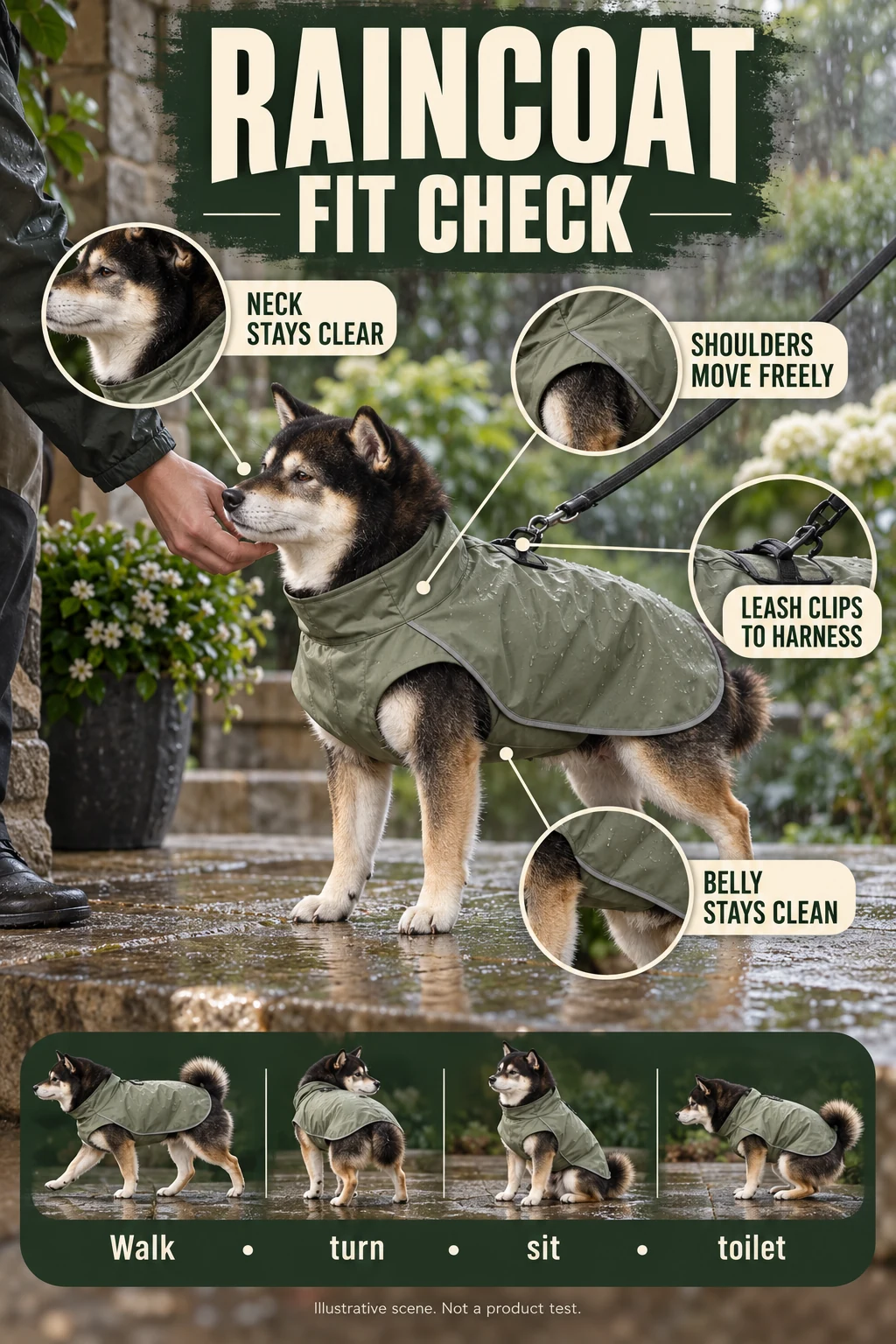
Start the fitting indoors on a non-slip surface. Fasten the coat as directed and let the dog take a few ordinary steps. Watch the front edge while each foreleg travels back. A seam that touches the elbow when standing may move into the armpit during a longer stride. Check the rear edge while the dog turns both ways, sits and lowers its head.
The belly panel should cover the intended splash area without fouling urine or restricting a squat. This deserves a separate check on the individual dog; it is not settled by the package saying “unisex.” Leg loops and cuffs need the manufacturer's adjustment, with no dangling length to snag. Remove the garment if the dog repeatedly bites at it, rubs against furniture or changes its movement.
The American Kennel Club's raincoat guide recommends measuring the dog and introducing the coat gradually with positive reinforcement. Let the dog investigate the garment, reward brief comfortable fittings and take it off before frustration builds. A short dry-weather practice avoids combining an unfamiliar noise, wet fabric and heavy rain on the first attempt.
Fit the harness and raincoat together
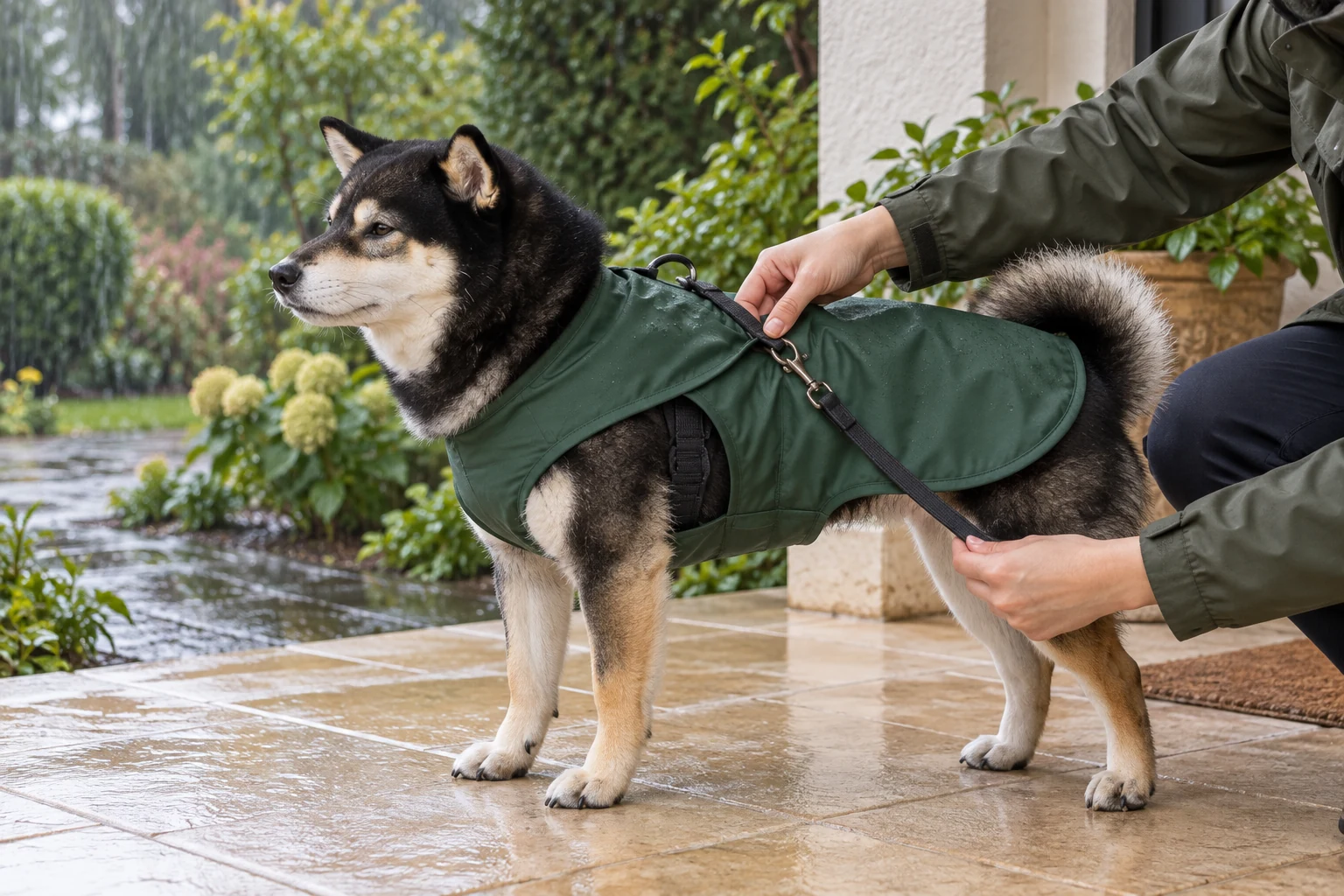
Keep the leash attached to the correct harness or collar connection. A raincoat's light loop, decorative ring or fabric opening should not become the attachment point unless its manufacturer explicitly designs it as a restraint. Put the normal harness on for the coat fitting and locate the connection with your fingers before clipping through the portal.
Check the connection at walking tension. The clip needs room to swivel and close without catching the coat edge. If the portal pulls the jacket sideways or presses the ring into the dog's back, the combination needs changing. A front-clip harness introduces another route for the line; confirm it remains usable without wrapping fabric around the chest attachment.
Wearing a harness over a shell may seem simpler, but it also changes the surface under the straps. Follow both manufacturers' instructions and recheck adjustment and slipping. The harness-fit guide covers the underlying restraint. Do not loosen a secure harness merely to accommodate a bulky coat that does not suit the system.
For night walks, inspect which reflective sections remain visible after dressing the dog. A reflective leash or separate light can complement the coat, but it cannot guarantee that a driver has seen you. The reflective-gear guide explains how to compare the different visibility options without crowding the dog's neck and chest with accessories.
Two Amazon raincoats worth comparing
These options illustrate different coverage and adjustment features. We have not tested either on dogs. Each link identifies the exact pictured catalog variant; use current measurements to choose your dog's size. What Dogs Like earns from qualifying purchases as an Amazon Associate.
Ruffwear Sun Shower: start with a lightweight shell
The Sun Shower manufacturer page describes a waterproof, windproof shell with side-release buckles, a back leash portal, extended coverage and optional leg loops. Compare it when you want a simple shell over a compatible harness. Its vest shape leaves the legs free, which simplifies dressing but also leaves the lower legs exposed to splash.
Check whether a vest-style shell covers the area you care about. If your main problem is mud on the belly and legs, inspect the underside photographs and fitting information before ordering. A bigger size can create a new fit problem without adding protection in the right place.
Hurtta Monsoon Coat II ECO: compare the belly panel and neckline
Hurtta's Monsoon Coat II ECO page describes an adjustable raincoat with a protective neckline and broad belly flap. It is worth comparing when the underside and neck opening matter as much as back coverage. Check the exact II ECO model: older Monsoon listings and photographs may represent a different version.
Check how the fastener lands on your dog's waist and whether the panel remains centered when the dog turns. A wider panel is useful only when it stays in the intended position. Read the manufacturer's technical guidance for wear inspection and compatibility with other equipment.
Waterproofing claims need construction details
Read the description of the shell, seams, openings and care. Water-resistant fabric, waterproof fabric and a fully sealed garment are different claims. A wet dog after a walk might reflect an exposed belly, water entering a collar or moisture retained inside, rather than a hole through the back panel. Check where the wetness begins before deciding the coat has failed.
Look for clear care instructions and access to replacement or repair advice. An elaborate coat that cannot be dried before the next walk may suit your household less well than a simpler shell. If the dog walks several times a day, consider where you will hang the garment open and how long you have between outings. You can prepare that space before buying anything.
Avoid assuming that a high waterproof figure tells you how comfortable the dog will be. That number does not measure fit, shoulder freedom, quietness or the compatibility of your harness. Manufacturer specifications help compare the material; the home fitting determines whether the whole system works for your dog.
Build a simple wet-weather routine
Keep the leash, coat and an absorbent towel together near the exit. Fasten the harness first if that is the approved combination, check the portal connection and make sure the dog can toilet before setting off on a longer route. Use the same dressing order each time so a missing fastening is easier to notice.
After the walk, remove the coat somewhere the dog can stand securely. Check the underside for grit, trapped hair and folded fabric, then dry the dog as appropriate. Open closures and hang the garment so the inside can dry too. A shell that looks dry on the outside can still have a damp folded belly panel.
Follow the care label and check before applying a household waterproofing spray or fabric softener. Ruffwear's current instructions specify cold gentle washing, mild detergent and hanging the Sun Shower to dry. Other products may differ. Keep hook-and-loop closures, buckles and zippers clear of hair, and inspect seams and attachment points before the next wet walk.
For muddy trips, separate the coat from clean food and documents in your gear bag. At a campsite, plan a sheltered drying place using the camping and hiking checklist. A damp coat left overnight in a sealed travel bag is an avoidable handling problem.
Check the coat before the return window closes
Try the garment in a clean indoor space while keeping packaging and tags intact as the seller requires. Confirm that your hands can manage the closures, particularly with limited dexterity or cold fingers. A buckle hidden beneath a wet dog is less convenient than it looks in a close-up listing photograph.
Repeat the movement check with the leash attached, then take a brief outing within the seller's return conditions. Record specific problems: a neck opening sliding forward, a belly panel catching urine, a back hem lifting in wind or a clip dragging the coat sideways. Those observations tell you whether to adjust, change size, change pattern or stop using the garment.
Choose a coat that stays comfortable through the whole walk. Extra coverage in one standing pose is little use if the fabric shifts or catches when the dog moves. When the dog remains unhappy in clothing, shorter walks, sheltered toilet breaks and a good drying routine may be more practical.
Questions owners ask about dog rain gear
The questions below include concerns from exact discussions about raincoat sizing and different garment shapes and full belly coverage. Community experiences help identify fit problems; they do not prove waterproofing or suitability for your dog.
Frequently asked questions
Does every dog need a raincoat?
No. Decide from the dog's comfort, coat, conditions and tolerance of clothing. Some owners mainly want less water and mud to dry afterward. A shell is useful only if the dog can move normally and is comfortable wearing it. Health-related concerns should be discussed with your veterinarian.
Should I choose a rain shell or an insulated coat?
Choose a shell when rain coverage is the main job in otherwise mild conditions. Add insulation only when the dog and conditions call for warmth. The cold-weather gear guide covers that separate choice. A warm lining can be an unnecessary burden on a mild, active walk.
What if my dog's chest fits one size and back fits another?
Check the exact model's adjustment range and instructions, then ask the manufacturer if those measurements conflict. Do not automatically size up. A different pattern may fit better than a longer version of the same coat. Verify shoulder movement, tail clearance and the underside during the fitting.
How do I keep the belly dry without blocking toileting?
Compare the actual belly-panel length and fastening position on your dog. Coverage must leave room for the dog's normal posture and anatomy. Watch a supervised toilet break and inspect afterward. More fabric is not automatically better if it shifts into the urine path or bunches between the legs.
Can the raincoat go over a harness?
Yes, when the coat and harness are compatible and fitted as directed. Check that the portal lines up with the correct ring, the clip closes freely and the coat stays centered under normal leash tension. Keep the leash attached to the restraint rather than a decorative coat loop.
Are hoods necessary on dog raincoats?
A hood is not a requirement for a useful rain shell. Keep the eyes, ears and normal head movement clear, and follow the manufacturer's fitting guidance. If the dog repeatedly shakes it off or cannot see comfortably, choose a different design. A hood does not establish protection from ear disease.
Can a raincoat keep the dog completely dry?
Expect some exposed areas, particularly paws, lower legs and parts of the head. Check the garment's actual coverage and openings rather than interpreting “waterproof” as total enclosure. Keep a towel ready and check the underside after the walk.
Can I leave a damp raincoat on indoors to dry?
Remove it after the outing, check the dog and dry the garment separately according to its label. Leaving wet fabric on the dog is unnecessary, and an insulated coat can be too warm indoors. Open the belly panel and closures so the inside has a chance to dry before storage.
Sources and related gear
- PDSA coat types, measurements and movement guidance
- AKC raincoat fitting and gradual introduction
- Ruffwear Sun Shower construction, sizing and care
- Hurtta Monsoon Coat II ECO specifications
- Hurtta Monsoon Coat II ECO technical guidance
Use the travel and outdoor gear hub for the complete trip. For everyday handling, compare collars and leashes and leash materials that suit your grip and cleaning routine.