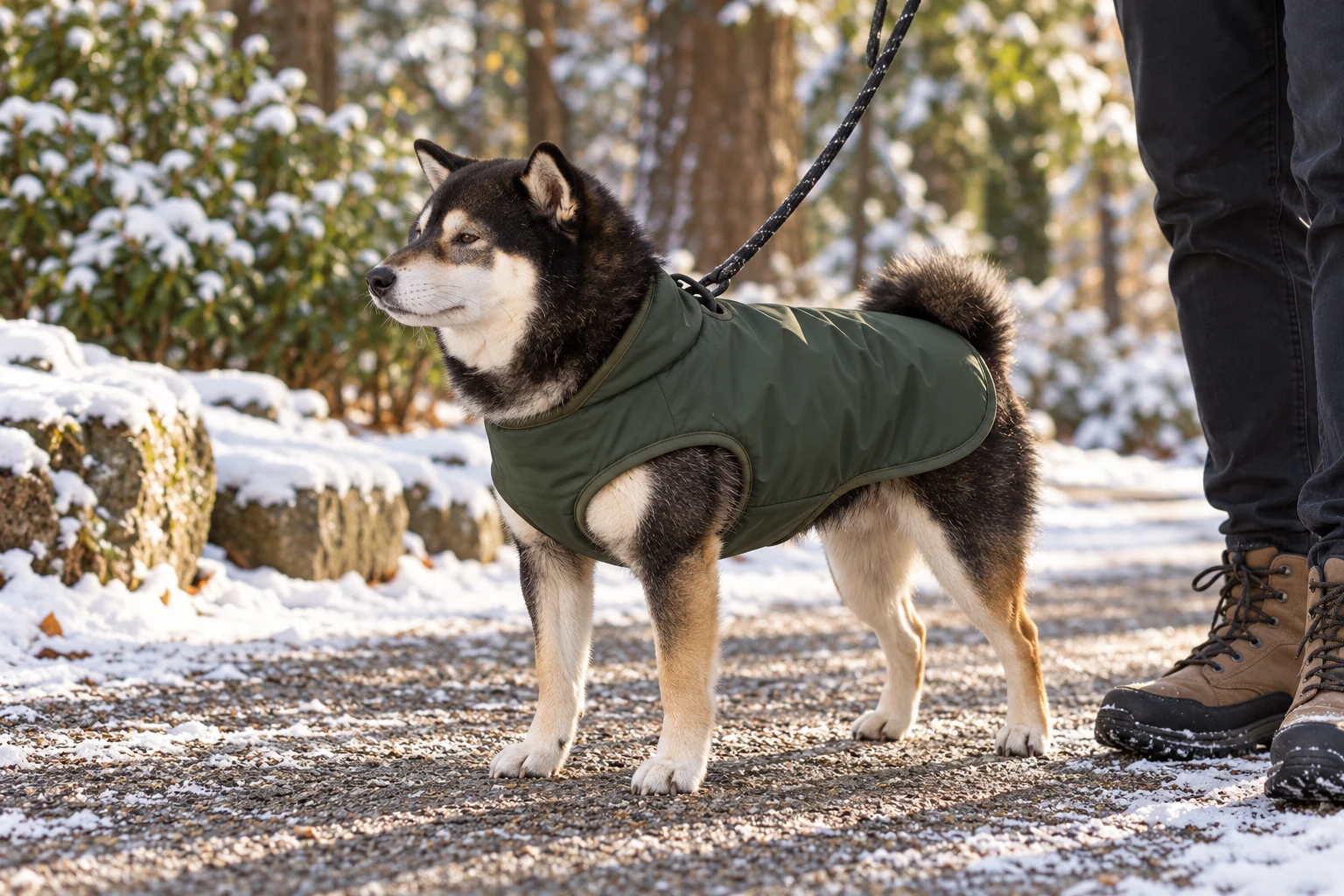
Choose cold-weather dog gear for the walk ahead. Wet snow and wind demand different protection from dry, sheltered weather, and a short toilet trip differs from a walk with long sniffing stops. A winter coat should fit the chest and back, allow normal movement and work with the leash connection. Check paws and visibility separately. If the route is icy or the dog needs to go indoors, change the outing before adding more insulation.
Quick read
Start with the winter walking problem
- Short-haired, small, older or medically vulnerable dogs may need an individual winter plan and extra protection.
- Compare insulation and weather protection separately. A warm fleece is not automatically a rain shell.
- Measure chest, neck and back using the exact manufacturer's method; do not choose by breed or weight alone.
- Try the coat with the harness, visibility gear and normal toileting movement before going outside.
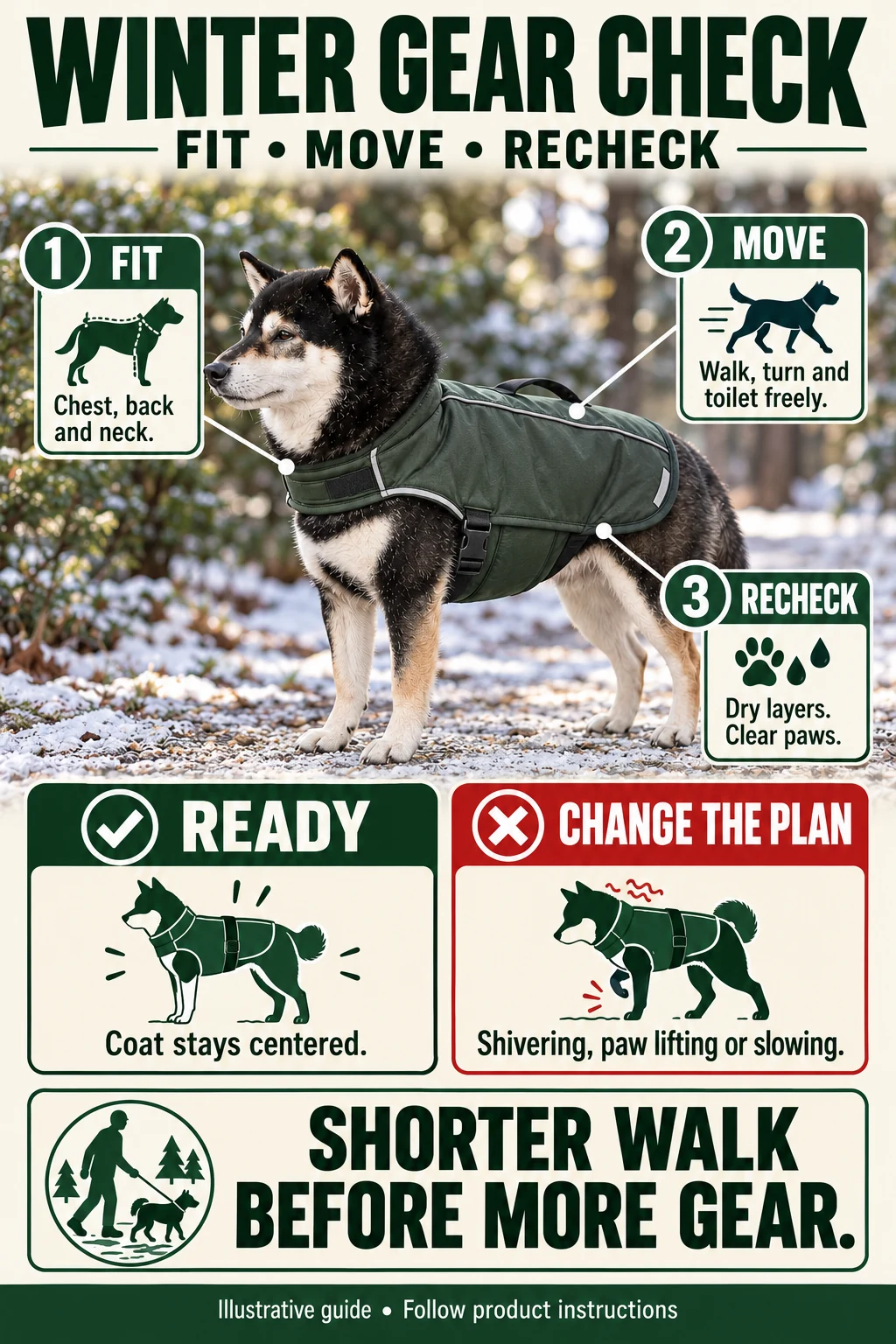
- If the dog shivers, repeatedly lifts paws, slows or appears uncomfortable, shorten the outing and reassess indoors.
Match the layer to the weather
AAHA's cold-weather guidance explains that cold tolerance differs, particularly for small, older and short-coated pets, and recommends well-fitting clothing when appropriate. It also advises shorter outings in severe cold. Your dog's needs and the day's conditions should determine the plan.
A dog that stays comfortable on a dry sheltered walk may need a different arrangement in wind-driven sleet. Likewise, a coat suitable for slow sniffing may be too much during sustained activity. Plan for the least comfortable part of the outing, including waiting at a crossing, turning into wind or returning with damp clothing.
| Conditions | First buying question | Useful category | Main tradeoff | Check before leaving |
|---|---|---|---|---|
Cool and dry | Does this dog need extra warmth? | Light insulating layer if appropriate | Too much insulation can be uncomfortable during activity | Movement, comfort and a short first outing |
Cold wind or wet snow | Does the coat combine warmth with weather protection? | Insulated weatherproof coat | Bulk, fit and slower drying | Chest coverage, shell instructions and harness access |
Mild rain without a warmth need | Can the dog stay dry without extra insulation? | Uninsulated rain shell | Less warmth at stops | Coverage, ventilation and shoulder movement |
Salted or icy pavement | Can the route be changed first? | Suitable paw protection and a shorter cleared route | Boot fit and handler footing still matter | Paw condition, gait and cleaning supplies |
Short winter daylight | Can both dog and handler be located? | Reflective coverage and a suitable light | Coat can hide existing trim or LEDs | Full setup from front, rear and sides |
Use the rain gear guide when dryness is the main problem. A heavy coat may be unnecessary for a dog that remains comfortable without clothing on the planned short outing.
Measure the dog, then the complete setup
Record three measurements with the dog standing naturally: the widest chest circumference, the neck where the garment sits, and the back length using that brand's starting and ending points. A size named “large” can fit very differently across brands. Do not transfer the size from a walking harness or an older coat without checking.
Back coverage and chest fit can conflict on a long-backed or broad-chested dog. A longer size may cover the back but leave a loose neckline, while a smaller size may fit the chest and stop too early. Look for a suitable cut or adjustable design if tightening the straps leaves either area poorly fitted.
Make a note of the dog's usual harness attachment. A coat with a back portal does not automatically accommodate a front-clip leash. A decorative opening may be too far forward or small for your clip. Compare the actual path from the harness ring through the garment before choosing a model.
Our Dog Gear Measurement Kit helps keep those notes together. Use the Dog Harness Fit Guide for the restraint itself, then recheck the clothing around it.
Share & embed
Fit test: walk, turn, sit and toilet
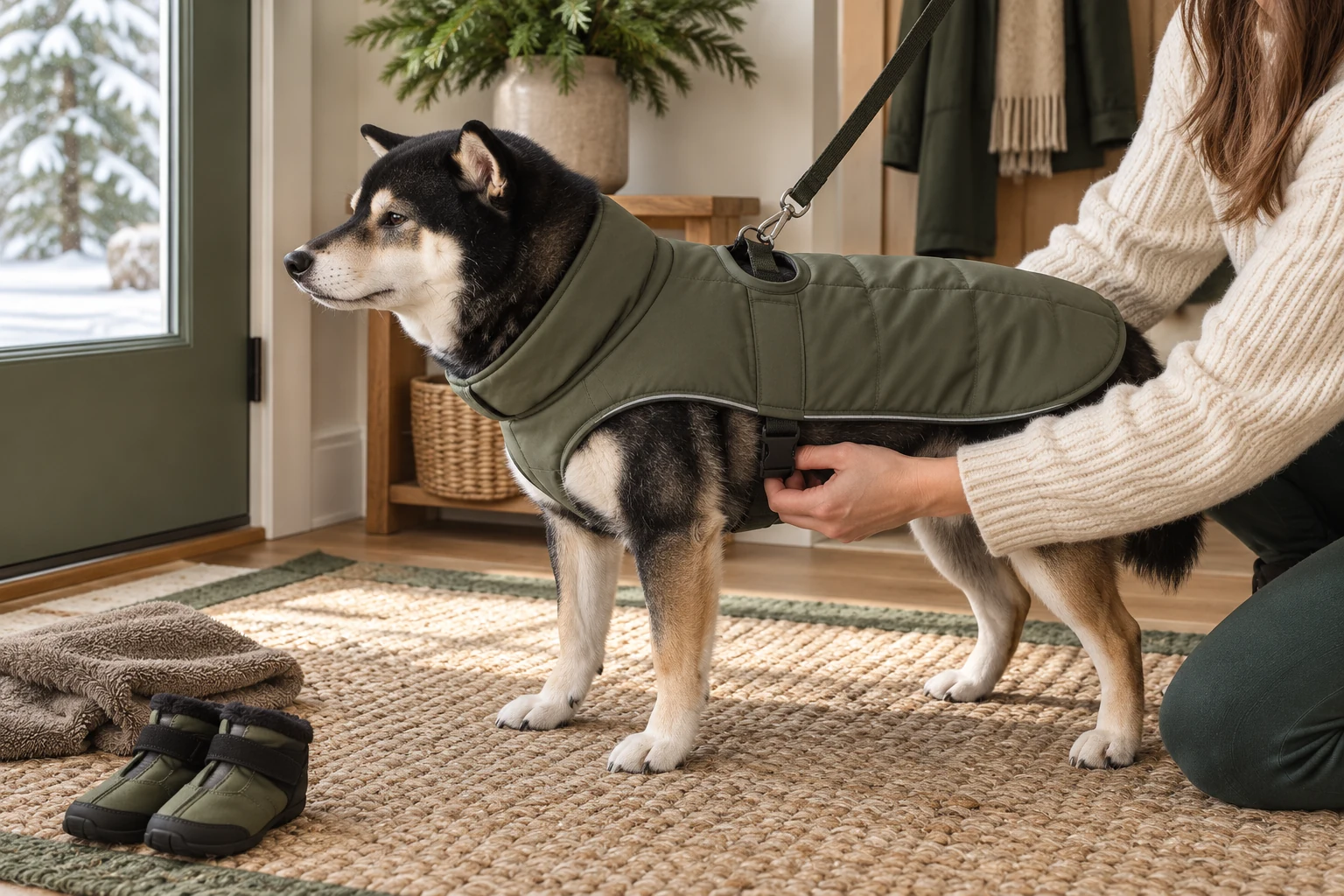
First try the coat indoors without rushing toward the door. Open the fastenings fully and introduce the garment gradually. If the dog avoids it or becomes still, make the session shorter and easier. Forcing a long walk in unfamiliar clothing makes it harder to tell whether the problem is fit, weather or discomfort with the garment.
Once fastened, ask for a few ordinary steps, a turn in each direction and a sit. Look for the front edge pressing into the throat, a chest panel gathering behind the elbows, or a strap rubbing the armpit. The coat should remain centered instead of rotating when the dog turns its head.
Check the underside carefully. Belly coverage must leave the dog's toileting area clear; otherwise fabric can become wet and uncomfortable early in the walk. Leg loops should follow the manufacturer's instructions and remain comfortable during sitting and movement. If the dog cannot tolerate a particular retention system, compare another design rather than relying on a partly fastened coat.
Recheck at the end of a short first outing. A garment can look fine in the hall and migrate during sniffing, trotting or brushing against your leg. Look beneath the coat for dampness, bunching and rubbing. Save the packaging and keep the trial clean while you establish whether the cut suits the dog.
Two Amazon winter coats to compare by fit
Compare the vest-style coat's coverage with the parka's adjustment points. We have not tested their warmth ourselves. The linked colors and sizes are specific examples, so measure your dog and select the correct variant before ordering.
Ruffwear Vert: weather protection with an over-harness portal
Ruffwear's Vert product information describes an insulated, waterproof and windproof design with extended coverage, leg loops and a leash portal for use over most harnesses. Compare that cut and portal with your dog's body measurements and walking harness.
Hurtta Expedition Parka: adjustable back, neckline and collar
Hurtta America's Expedition Parka information lists adjustment at the back, neckline and collar, including cuts for different body shapes. Check harness access on the exact size you select. The original Expedition Parka and Expedition Parka II are different products, so use the instructions belonging to your listing.
Boots: choose for the surface, then check the gait
Check body coverage and paw protection independently when shopping for dog snow gear. Boots may help separate paws from particular surfaces, provided the dog can move normally in a suitable fit. You still need to avoid unsafe ice and inspect paws.
VCA's cold-weather paw guidance discusses snow, ice and paw care, including checking a paw when a dog limps or lifts it. Treat that behavior as a reason to stop and check, rather than as evidence that a tighter boot is needed.
Measure each weight-bearing paw using the chosen boot maker's method. Front and rear paws may need different sizes. Check dewclaw clearance, closure position, the upper edge and sole flexibility. A boot should not spin, expose a paw during walking or leave the dog repeatedly tripping.
Practice briefly indoors and then on a short familiar route. Do not debut four unfamiliar boots at the far end of a long snowy walk. Carry a way to return promptly if a boot is lost or the dog cannot walk comfortably. The dog boot fit guide explains useful measurement and rubbing checks, but a summer boot's materials are not automatically appropriate for winter conditions.
Paw balm is a different category again. Follow the product and veterinary instructions, check ingredients relevant to your dog, and do not treat a coating as insulation or proof against sharp ice. Cleaning paws after the walk still matters.
Small dogs, large dogs and different body shapes
A small-dog winter setup often needs careful attention to belly clearance, heavy hardware and the distance between a short leg and the coat's lower edge. A coat can fit the chest yet drag through slush. A long-haired small dog may have quite different needs from a similarly sized short-coated dog.
For a large dog, look at shoulder freedom, the amount of fabric under a deep chest and how easy the fastenings are to reach. A high nominal size does not tell you whether the coat accommodates a broad neck or long torso. Check that the handler can fasten the garment without leaning awkwardly over an uncomfortable dog.
For puppies, remeasure frequently rather than buying a loose coat to cover an entire season. Excess fabric can shift, cover the toileting area or interfere with the harness. For an older dog or one with pain, weakness or a change in cold tolerance, discuss the walking plan with a veterinarian; clothing is only one part of comfort and mobility.
Pack a winter return routine
Put a dry towel, paw-cleaning supplies, waste bags and a spare light beside the walking gear. After returning, remove wet clothing and check the chest, belly, paws and areas beneath straps. Wipe off slush and road residue as appropriate, and dry equipment according to its care label before storing it.
AAHA's winter walking guidance recommends checking between toes and watching for cold-related discomfort such as shivering, paw lifting and reduced energy. Those are useful turnaround signals, not a checklist to push through. If signs are severe, unusual or persist after returning indoors, seek veterinary advice promptly.
Check your own footwear and gloves too. You need enough grip and dexterity to hold the lead, operate a clip and clear a paw without dropping control. A hands-free lead is not a cure for slippery footing; use the hands-free leash guide to assess when a hand-held arrangement is more manageable.
Keep the kit organized in a dog gear bag and check reflective dog gear with the winter coat on. A light hidden beneath the new layer is easy to miss at the door.
Winter gear questions
Owners ask about coat and harness compatibility and keeping winter boots usable in snow. Those discussions raise useful fit questions, but their anecdotes do not establish safety or product performance. Check the manufacturer's instructions and seek veterinary advice about your dog's individual needs.
Frequently asked questions
Does every dog need a winter coat?
No single answer fits every dog and outing. Coat type, size, age, health, wetness, wind and activity matter. Start with a short, suitable route, observe comfort and ask your veterinarian about dogs with medical concerns or changing cold tolerance. Avoid choosing by breed stereotype alone.
What temperature means my dog needs a coat?
There is no universal number we can responsibly apply to every dog. A damp, windy outing differs from dry sheltered weather at the same temperature. A manufacturer's warmth range describes its product positioning; it does not prescribe a safe exposure time for your dog.
Should the harness go over or under the coat?
Follow the instructions for both items. A compatible portal may allow the harness underneath. Wearing a harness over a coat changes its fit and may let compressible fabric shift under load. Recheck the complete arrangement, and do not clip to a garment loop unless it is explicitly designed as restraint hardware.
Can I use a raincoat as a winter coat?
An uninsulated rain shell may solve wetness without providing much warmth. An insulated winter coat can be unnecessary in mild rain. Compare weather protection and insulation separately, then choose the lightest arrangement that suits the dog's needs and planned outing.
Do dogs need boots whenever there is snow?
Not automatically. Consider the actual surface, paw condition, exposure and whether a suitable boot allows normal gait. Change the route or shorten the walk if conditions are poor. Stop to inspect limping, repeated paw lifting, ice buildup or a displaced boot instead of continuing toward a distance target.
Why do my dog's boots fall off?
Possible causes include the wrong size, mismatched front and rear paw widths, an unsuitable boot shape or closure placement. Recheck the manufacturer's fitting method and the gait. Tightening until the boot stays on can create a new problem; compare a better-fitting design when the intended adjustment does not work.
Should I size up a dog coat to add a sweater?
Do not automatically size up. Extra fabric can shift or interfere with movement. If layering is appropriate, check the manufacturer's advice and measure and test the actual layers together. A coat that fits alone may need a different cut rather than simply a larger label.
What if the coat rubs behind the front legs?
Remove it and inspect the area. Check chest-panel placement, strap position, fabric bunching and whether the dog can move the shoulder normally. Do not rely on a longer walk to soften a rubbing edge. Persistent irritation or pain needs veterinary advice.
Can a warm coat make a long winter outing safe?
A coat does not remove cold exposure, icy footing or paw hazards. Plan a short initial route with easy return points, then reassess the dog and weather. Turn back when comfort changes. More insulation is not a reason to continue through shivering, repeated paw lifting or unusual slowing.
Plan the rest of the trip
Use the Dog Travel & Outdoor Gear hub for the journey, not just the clothing. The camping and hiking checklist covers water, control, rest and destination rules. Keep winter clothing separate from vehicle-restraint decisions: use a suitable car crate or follow the exact instructions for a vehicle harness system.