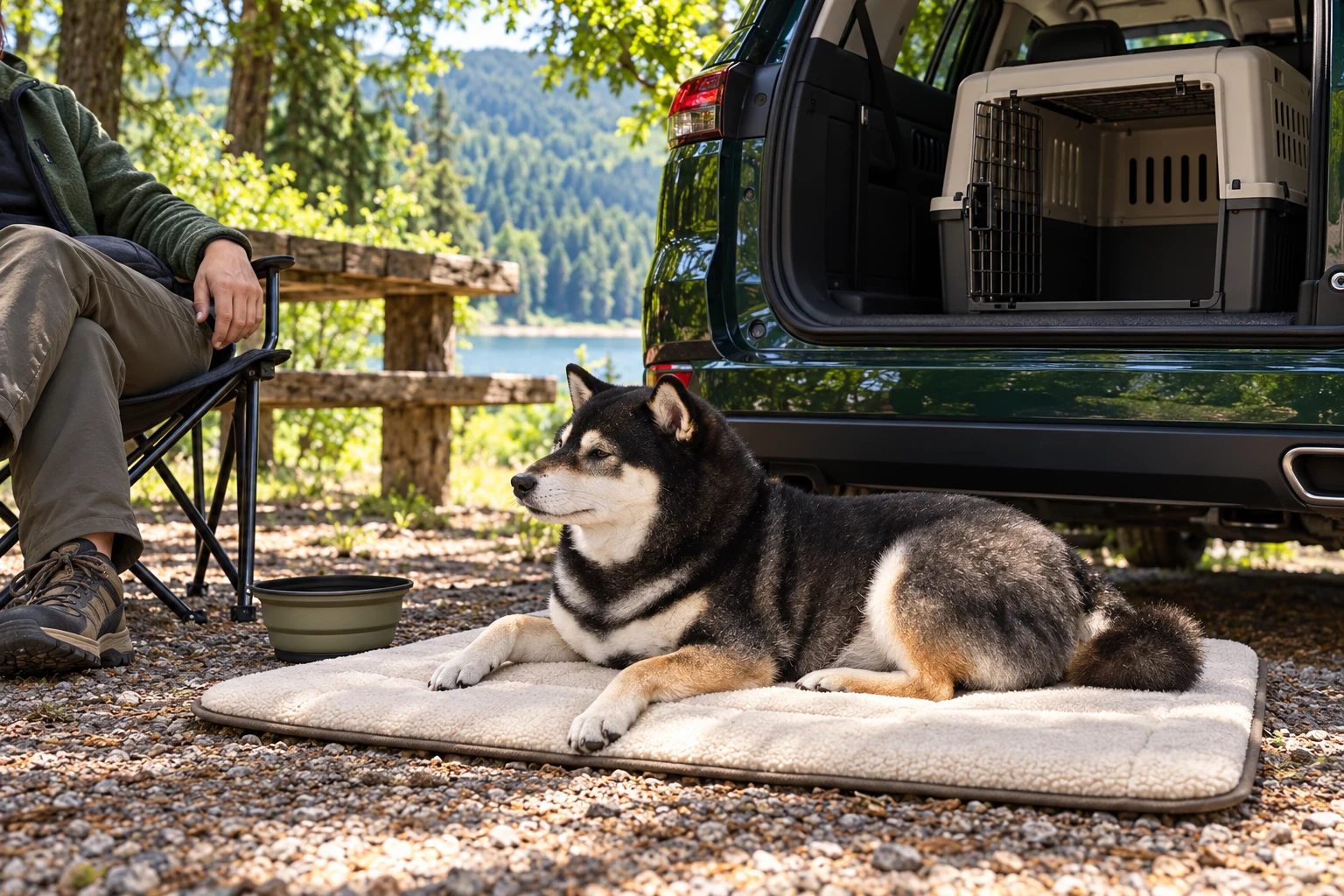
Choose a dog bed for the car after choosing the vehicle restraint. An ordinary mat or bolstered bed provides a resting surface; it does not protect a loose dog in a crash. For travel, use a suitable carrier, crate or vehicle harness according to its instructions, and add bedding only when the restraint manufacturer permits that exact arrangement. A separate packable mat can be useful at supervised stops and at your destination.
Quick read
Match the bed to its actual job
- For the moving vehicle, start with a properly selected and installed restraint system.
- Check whether that system allows extra bedding. Keep the original pad when that is the approved configuration.
- Measure usable space after adding any permitted pad, including headroom and door clearance.
- Treat ordinary beds, seat covers and most boosters as comfort products unless exact-model safety evidence establishes more.
- Carry a separate travel mat for rest stops so you can leave the vehicle installation in place.
A car bed, booster and carrier are different purchases
The phrase “dog car bed” covers several products with different jobs. A soft basket may attach to a seat only to stop the basket sliding during normal use. A short clip inside it may limit wandering without being a crash-tested restraint. A closed carrier can have a tested installation, but only for the specific model, size, pet and connection method covered by its instructions.
The RSPCA's vehicle-restraint guidance recommends careful selection of crash-tested equipment and warns that a walking harness may not be suitable for vehicle restraint. Choose that system before buying bedding to go with it. Begin with the car-crate guide or vehicle harness guide if you have not chosen one yet.
| Product category | Primary job | What to verify | What it does not establish |
|---|---|---|---|
Ordinary mat or bolster bed | Comfort at home, stops or destination | Usable surface, drying and packability | Crash protection or permission to alter a restraint |
Seat cover or hammock | Protect upholstery and collect dirt | Compatibility with the installed restraint and belt access | Protection for an unrestrained dog |
Booster or open basket | Positioning and an elevated resting area | Exact-model test evidence, installation and any harness requirement | Safety merely because it has straps or a clip |
Closed vehicle carrier | Containment within its stated travel system | Pet fit, exact model, instructions and required vehicle connection | Permission to travel with the lid removed or add universal accessories |
Travel crate with permitted pad | Containment and a compatible resting surface | Crate installation plus allowed pad thickness and dimensions | That any crate, anchor or mattress combination is suitable |
A soft bed may suit a hotel room while being unsuitable under a vehicle harness. Keep those uses separate in your shopping notes. If a listing makes a safety claim, ask what was tested and how the item was installed. A photograph of a comfortable dog or a row of customer reviews cannot answer that question.
Check the complete installation before ordering bedding
Share & embed
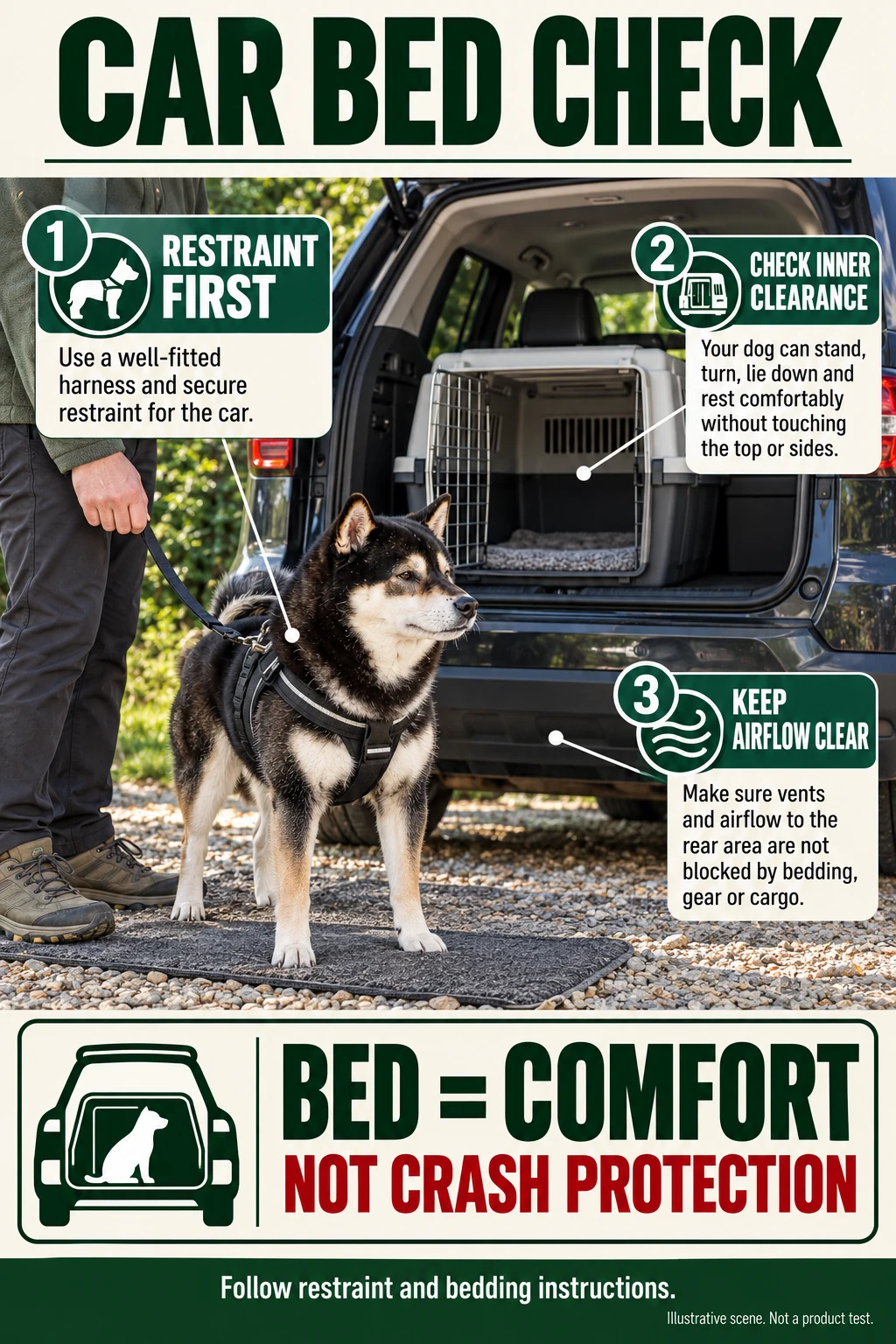
Read the restraint's bedding and accessory rules before taking measurements. Some systems include a shaped liner or pad as part of the intended configuration. Replacing it with a thick orthopedic bed can change the available space and the dog's position. If the instructions do not address an extra mat, ask the manufacturer before adding one.
For a crate, measure the usable internal floor with the door closed and the original pad in place. Check corners, raised lips and wheel-well-shaped intrusions. Then account for the thickness of any permitted replacement. A thick bed reduces headroom even when its length and width seem correct. Compare the loaded surface as well as the uncompressed measurement; soft foam can bunch at the door or around the dog.
For a harness system, follow its specified seat position and belt routing. Check whether a seat cover or comfort layer is allowed and whether it interferes with the connection, buckle or the dog's resting position. Do not create space by lengthening the connection beyond the instructions. The Center for Pet Safety's extension-tether advisory warns that extra movement can undermine a restraint's crash-protection claims.
Measure the dog with the permitted pad in place
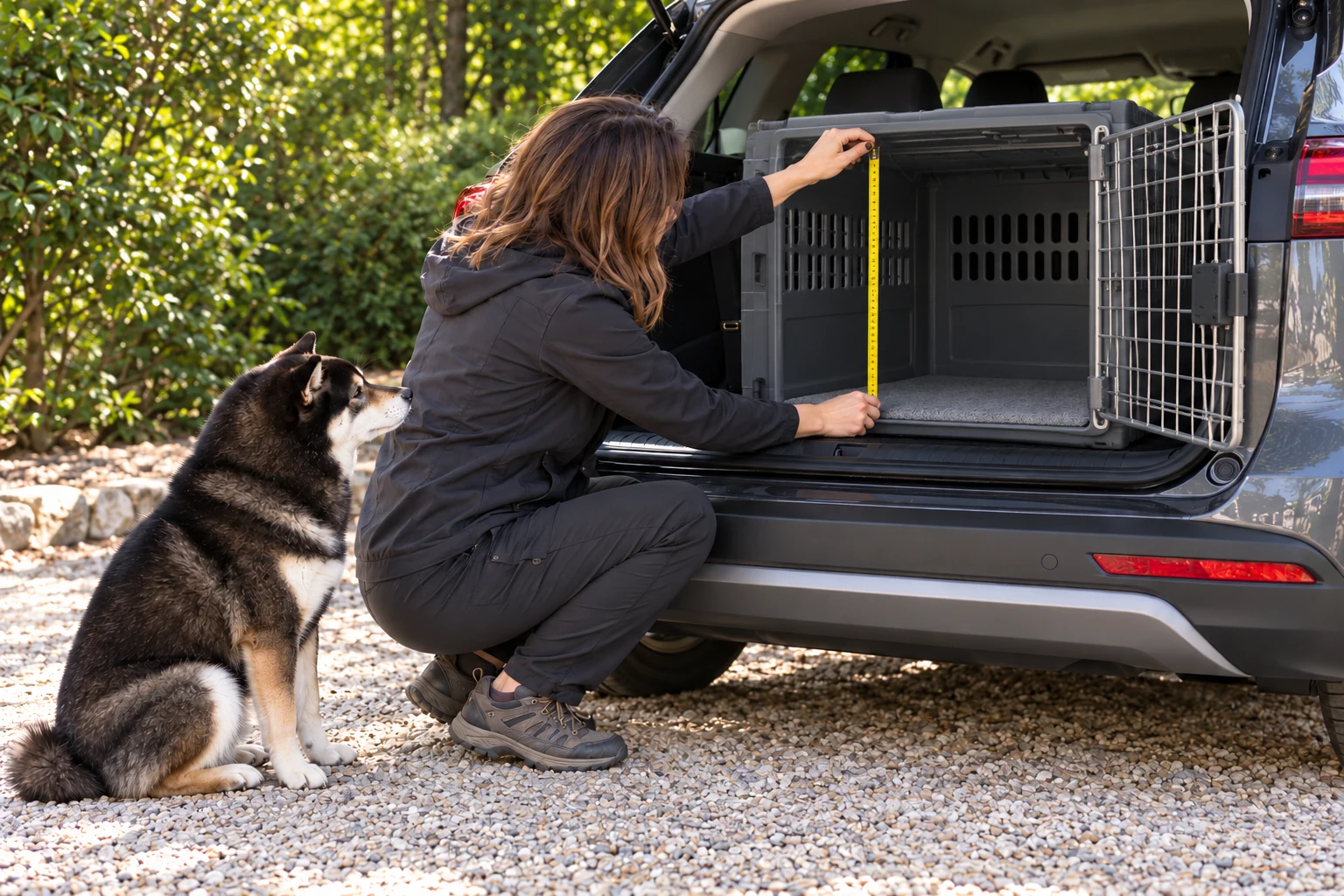
Record the dog's standing height, body length and relaxed lying dimensions using the measurement kit. Compare those numbers with the restraint's individual fit guidance. A dog that fits a bed while curled tightly may still have too little room to turn or rest normally in the closed carrier. Conversely, a very large crate is not automatically the right vehicle-restraint choice; stay within the tested product's sizing and installation requirements.
Watch the dog enter and exit without a jump onto an unstable pad. Low bolsters can make the entrance easier, while thick raised edges may reduce the usable floor. If an older dog needs help getting into the vehicle, solve access separately using a suitable SUV ramp and an appropriate mobility plan. A plush car bed does not correct painful or unsafe transfers.
Keep air openings and the door mechanism clear. Loose blankets can migrate toward vents, and a large bolster can sit against mesh. Check the setup after the dog has turned around, not only while the bed is empty. Leave access to the latch for unloading and keep bags, coolers and spare bedding secured separately from the pet system.
Two Amazon options for two different jobs
The products below are not interchangeable. One is a packable comfort bed; the other is a specific small-pet carrier that also becomes an open bed when travel is over. We have not tested either on dogs. As an Amazon Associate, What Dogs Like earns from qualifying purchases.
Kurgo Loft Wander: a separate destination and rest-stop mat
The Kurgo Loft Wander manufacturer page describes a roll-up bed with a water-resistant ripstop top, waterproof bottom and carry handle. It is worth comparing when you want a familiar place to settle after unloading. The pictured Large variant needs a substantial floor area, so measure the intended resting spot and the rolled storage space.
Carry this mat separately when the restraint manufacturer has not approved it inside the travel system. You can set it on a dry, stable surface during a supervised break, then pack it away before moving again. That keeps the vehicle arrangement consistent and prevents each stop becoming another improvised installation.
Sleepypod Mobile Pet Bed: a small-pet carrier with its own bedding
The current Center for Pet Safety record lists the Sleepypod Mobile Pet Bed with a 15-pound test dog and an August 2024 test. The manufacturer limits this model to pets up to 15 pounds, subject to fit. That does not make it suitable for every dog under that weight, or establish that a different Sleepypod model has the same limits.
Read the Mobile Pet Bed manual before fitting it to the vehicle. It specifies the rear-seat installation, fully closed zippers and its belt-routing hardware. The included short safety tether is for preventing an escape when the carrier is opened; the manual says not to use that tether during car travel. Sleepypod also cautions against non-Sleepypod accessories. Keep this carrier's approved components together instead of adding the Kurgo mat or a generic cushion.
Keep the rear travel area usable
Choose the restraint location using its instructions and your vehicle's manual. The Canadian Veterinary Medical Association's transport guidance recommends securing pets in the rear area of the passenger compartment to reduce airbag exposure. A raised console bed or a cushion on the driver's lap does not become an appropriate travel position because it makes the dog easier to reach.
If you are considering a cargo-area crate, verify the connections as well as the crate. The Center for Pet Safety's cargo-anchor advisory notes that cargo anchors and platforms may not be strength-rated for crash forces. Ask the vehicle and restraint manufacturers about the complete arrangement; do not attach straps to a convenient luggage hook simply because it is close to the bed.
Plan what happens at a roadside stop. Keep the leash accessible, establish secure control before opening the travel enclosure and choose a place away from traffic. Set the comfort mat down only once you have a suitable area and the dog is safely controlled. A rear hatch is a loading point, not a substitute for an enclosed campsite or a safe place to leave the dog unattended.
Manage temperature and cleaning separately
Thick fleece and deep bolsters change the resting surface, but they do not control the vehicle's temperature. Follow the restraint's ventilation instructions and keep the cabin comfortable. Do not leave a dog alone in a parked vehicle with a “cooling” or “warming” bed as the heat or cold plan. The RSPCA's travel guidance specifically warns against unattended car stays, including in mild weather.
After a wet walk, use a towel before loading when practical and check the original bedding after unloading. Separate washable covers from foam, liners and structural components. For the Kurgo mat, follow its cold gentle washing and hanging-dry instructions. For a carrier, use its own part-by-part care guide. A removable plush liner does not mean the assembled carrier belongs in a washing machine.
A spare approved liner can help with accidents, but it must match the exact system. Keep a sealed wet bag in the gear bag and dry damp components fully before reassembling them. If the dog has damaged a zipper, mesh panel or restraint component, resolve that defect before the next trip instead of concealing it under fresh bedding.
Practice before the long drive
Let the dog become familiar with its travel system at home. Where the manufacturer permits open-bed use, that can be part of the introduction; close the carrier only when the dog is comfortable with the preceding step. Practice loading and brief stationary sessions with supervision, then progress gradually. Keep the equipment and attachment method consistent.
If the dog continues to drool, vomit, panic or resist travel, speak with your veterinarian and a suitably qualified trainer as appropriate. A thicker bed may not address the cause. Do not loosen a restraint or remove a carrier lid while driving to manage distress. Stop safely first, then decide whether to continue the trip.
Before the return window closes, check the bed's usable surface, complete restraint fit, loading process and cleaning instructions. Photograph the arrangement for your own reference while parked. Record which model and size you bought, which pad is permitted and where the installation manual is stored. Keep those notes with the travel kit for the next journey.
Questions owners ask about car beds
These questions include concerns raised in exact discussions about a car bed for a 55-pound dog and choosing a crate, bed or harness for a puppy. Community anecdotes identify comfort and setup questions, not proof of crash performance.
Frequently asked questions
Is a dog car bed a safety restraint?
An ordinary bed is a comfort product. Evaluate any safety claim for the exact model, pet size and complete installation. A sewn-in clip, non-slip bottom or seat attachment does not by itself establish crash protection. Choose the restraint before deciding which bedding it permits.
Can I put my dog's normal bed inside the travel crate?
Only when the crate manufacturer permits that bed or pad arrangement. Check thickness, floor size, door operation, ventilation and the dog's remaining space. Keep the original pad if an alternative has not been approved. The crate-mat guide covers bedding choices outside these model-specific travel limits.
Will a bolster stop my dog sliding in the car?
A raised edge may change the comfort surface, but it does not establish restraint performance. First check the permitted installation and dog fit. If the dog remains uncomfortable, assess the surface and travel behavior without lengthening the connection or adding unapproved padding.
Can my small dog travel in an open booster or console bed?
Do not choose an open or elevated position from appearance alone. This guide does not recommend console beds. Use a suitable rear-position restraint and verify the exact instructions. A closed carrier that has a tested vehicle configuration must be used in that configuration during travel.
Does the Sleepypod dome stay on while driving?
Yes. The Mobile Pet Bed's vehicle instructions require the carrier to be zipped fully closed and installed as directed. Open-bed use is a separate use outside vehicle travel. Its short safety tether is not the restraint to use while driving.
Can I add another cushion to the Sleepypod?
Use only accessories and bedding the manufacturer approves for the exact model. The current Sleepypod page cautions against non-Sleepypod accessories. Extra universal padding can change fit and the intended arrangement, so do not combine the two product options in this guide.
What should I check for a large dog?
Start with an appropriate vehicle crate or harness and its size range, then check the permitted resting surface. Measure the dog, available space, entrance and loading route. A larger bed cannot compensate for an unsuitable restraint or an unverified cargo anchor.
Can the travel bed keep my dog comfortable in a parked car?
It cannot provide safe climate control or justify leaving the dog alone. Use supervised stops and an appropriate environment, and take the dog with you when leaving the vehicle. Choose a separate mat for the destination so comfort does not depend on staying in the car.
Sources and related planning
- RSPCA Australia: vehicle restraint and climate guidance
- Canadian Veterinary Medical Association: transport of dogs and cats
- Center for Pet Safety: Sleepypod Mobile Pet Bed record
- Center for Pet Safety: extension-tether advisory
- Center for Pet Safety: cargo connections
- Sleepypod Mobile Pet Bed model information
- Sleepypod Mobile Pet Bed instructions
- Kurgo Loft Wander dimensions and care
Use the Dog Beds hub for resting-surface decisions and the Travel & Outdoor hub for the complete journey. The camping checklist covers what you need once the dog has left the vehicle.