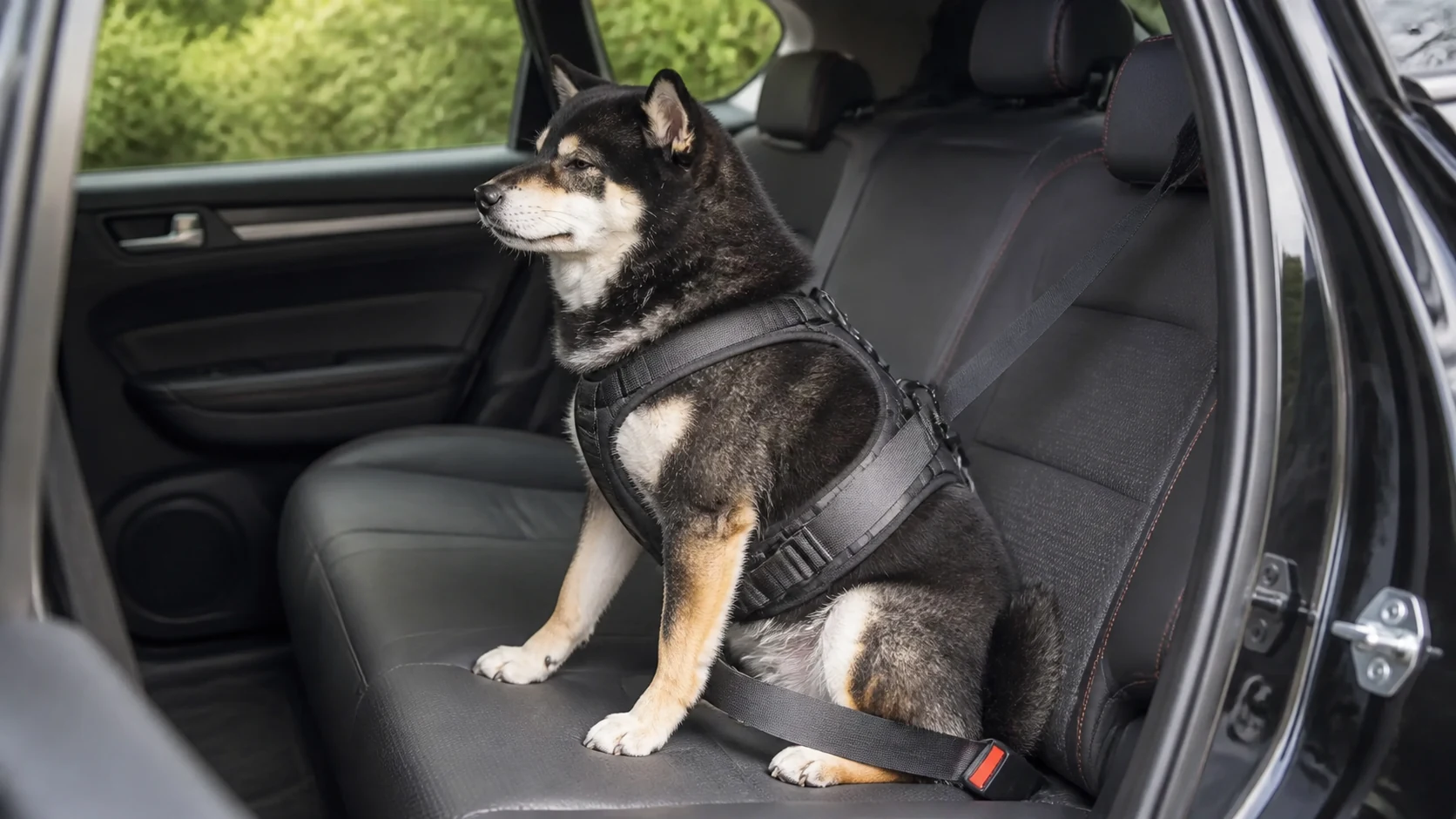
"Dog seat belt" can describe very different products: a short tether clipped to a harness, a strap that plugs into a vehicle buckle, or a purpose-built car harness that works with the vehicle belt. These options should not be treated as equivalent.
For crash protection, start with current independent evidence and the manufacturer's exact vehicle instructions. A walking harness, collar, booster-seat strap, or generic extension tether is not automatically a crash restraint.
Use the Dog Harnesses hub for everyday harness guidance. This page focuses specifically on vehicle restraint.
Quick read
Quick answer
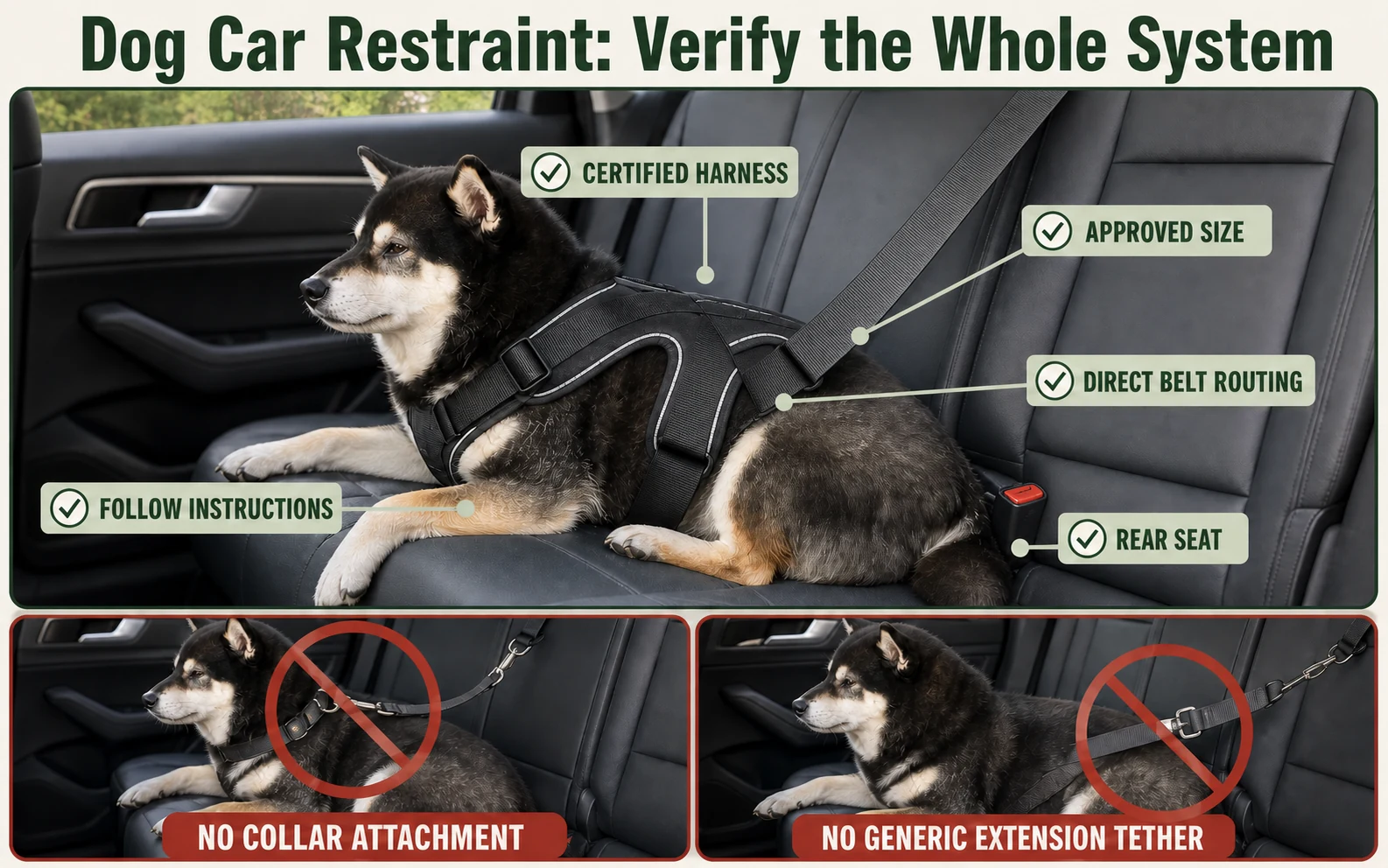
- Prefer a purpose-built car safety harness with current, size-specific independent certification evidence.
- Check the current Center for Pet Safety certified list before buying; product names and approved sizes can change.
- Follow the exact seat-belt routing instructions and use the rear seat when the manufacturer specifies it.
- Never attach a vehicle restraint to a collar. Sudden force should not be concentrated on the neck.
- Treat extension tethers cautiously: they can allow excessive movement and may negate a harness system's tested configuration.
Share & embed
Start with evidence, not the phrase crash tested
A product can be described as crash tested without saying what test was used, which sizes were evaluated, what passed, or whether the evidence is public. Look for an independent certification that names the exact product and approved sizes.
The Center for Pet Safety certified product list is a useful current reference for car harnesses, carriers, and travel crates. Recheck it when buying because certifications and product lines can change.
Current independent certification exists
Purpose-built certified car harness
- Look for
Exact model, approved size, public evidence, instructions
- Avoid
Assuming every product from the brand is certified
Dog is below the harness weight range
Certified carrier or other approved setup
- Look for
Current size limits, vehicle position, anchoring instructions
- Avoid
Putting a very small dog into an oversized harness
Only a generic buckle tether is available
Do not assume crash protection
- Look for
Connection points, movement range, manufacturer evidence
- Avoid
Clipping it to a collar or calling it certified
Dog rides in a booster seat
Check the complete restraint system
- Look for
Carrier or harness evidence, seat attachment, pet connection
- Avoid
Using the booster's collar clip as crash protection
Large dog does not fit certified options
Review current CPS guidance and vehicle-specific alternatives
- Look for
Approved size, travel crate fit, anchor method
- Avoid
Improvising with cargo straps or walking gear
Car harness versus walking harness
An everyday walking harness is designed around comfort, leash control, and repeated movement. A car safety harness must also manage forces and body movement during sudden deceleration. That requires different construction, webbing paths, hardware, and connection instructions.
Some certified car harnesses can also be used for walking, but that does not mean every walking harness can be used for crash protection. Treat these as separate jobs and follow the manufacturer documentation for each.
Use the Dog Harness Fit Guide for chest measurement and movement checks. Vehicle fit also needs the exact car-harness size chart and routing instructions.
Why the collar is not the attachment point
Do not clip a vehicle tether to a collar. In a sudden stop, force would be concentrated around the neck. Use only the connection point and restraint system specified by the car-harness or carrier manufacturer.
Remove hanging tags or loose accessories when the manufacturer instructs you to do so. Keep the restraint clear of paws, legs, and buckles that the dog can step on or release.
Extension tethers and buckle straps
Generic dog seat-belt straps are easy to find, but convenience is not proof of crash performance. Extra tether length allows more forward movement before restraint. Buckle compatibility also varies by vehicle.
The Center for Pet Safety publishes an extension tether advisory and warns that add-on extension tethers can undermine the tested performance of a harness system. Use only the components and routing described for the certified configuration.
Fit and acclimation
Measure chest girth and body shape according to the car-harness chart. Some systems have minimum dog weights or different fits for deep-chested dogs. Do not size up simply because the harness looks substantial.
Introduce the harness outside the vehicle first. Let the dog wear it briefly, reward calm handling, and practice connection while the vehicle is parked. Build trip duration gradually.
If the dog panics, chews the restraint, becomes carsick, or shows pain, stop and seek veterinary or qualified behavior guidance. A stronger tether does not address fear, nausea, or distress.
Vehicle position and setup
Use the rear passenger seat when the product instructions call for it. Keep the dog away from active front airbags. Route the vehicle belt exactly as shown and confirm that the buckle is fully engaged.
Before driving, check that the dog can sit or lie in the intended position without stepping through the belt path. After the first short trip, inspect strap position, skin contact, hardware, and whether the dog can reach or chew any component.
Direct product CTA
This Amazon product is a focused comparison point because the exact Sleepypod Clickit Sport line and sizes can be checked against current Center for Pet Safety records. Certification status, naming, and approved size range should still be rechecked immediately before purchase.
What Dogs Like may earn from qualifying purchases. Affiliate links do not change the independent-evidence and manufacturer-instruction checks in this guide.
Pre-drive checklist
✓ Better buying habits
Check before travel
- Confirm the exact model and size on the current certification list.
- Measure the dog using the manufacturer's method.
- Use only the specified harness components.
- Route the vehicle belt exactly as instructed.
- Position the dog in the specified rear-seat location.
- Reinspect the system after each trip and after cleaning.
Avoid these shortcuts
- Clipping a tether to a collar.
- Treating a walking harness as crash protection.
- Mixing in an extension tether not used in certification.
- Assuming "crash tested" means independently certified.
- Buying a size outside the approved dog range.
- Letting the dog ride loose while the restraint remains unused.
× Mistakes to avoid
Related guidance
Vehicle restraint begins only after a controlled entry. For tall cargo areas and dogs that should not jump, use the measurement and slope checks in Best Dog Ramps for SUVs, then continue through the Dog Travel & Outdoor Gear hub.
Use the Dog Harnesses hub and Dog Harness Fit Guide for body fit. Compare Dog Harness vs Collar for everyday leash attachment, and use the Harness Fit Checklist for post-wear rubbing and movement checks. For a current evidence-led crate route, read Best Dog Crates for Car Travel. For broader crate terminology, use Dog Kennel vs Dog Crate and Wire vs Plastic Dog Crates while remembering that ordinary home products are not automatically vehicle-certified.
Frequently asked questions
Is a dog seat belt the same as a car harness?
No. "Dog seat belt" may mean a generic tether, while a car harness is worn on the body and may be part of a tested restraint system. Check the exact product and evidence.
Can I attach a dog seat belt to a collar?
No. Vehicle restraint should not concentrate sudden force on the neck. Follow the car-harness or carrier manufacturer's specified connection method.
Does crash tested mean certified?
Not necessarily. Look for an independent certification record naming the exact product and approved sizes, plus public test evidence where available.
Can a dog wear the car harness for walks?
Some models are designed for both jobs. Follow the manufacturer's instructions and check movement, rubbing, and leash attachment before walking.