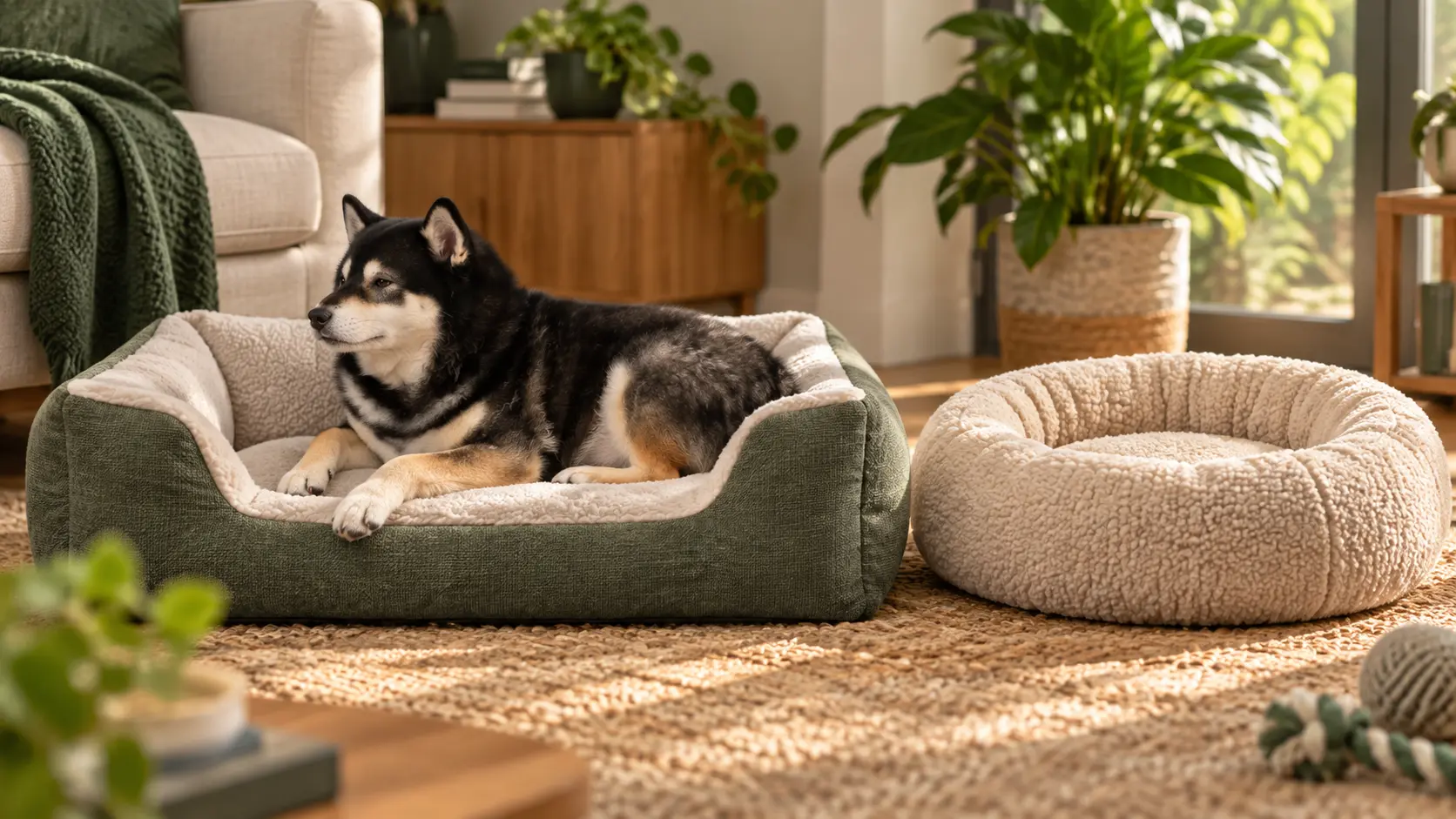
The best dog bed for a small dog is not necessarily the smallest bed on a product page. A 23-inch donut can have a much smaller usable inner circle once its plush rim is counted; a 26-inch rectangular bolster bed can also leave limited room between the sides. A tiny dog that curls tightly may love that close fit. A small dog that sleeps stretched out, changes position often, or struggles to step over a high edge may need a more open bed in a larger labeled size.
Use this guide to make a purchase decision from your dog's actual posture, room, cleaning routine, and mobility. We compare a plush round nest and a structured low-entry foam bed as two different constructions—not as universal winners. We did not perform hands-on product tests. The Mr. Smoky visuals are illustrative.
Quick read
Quick answer
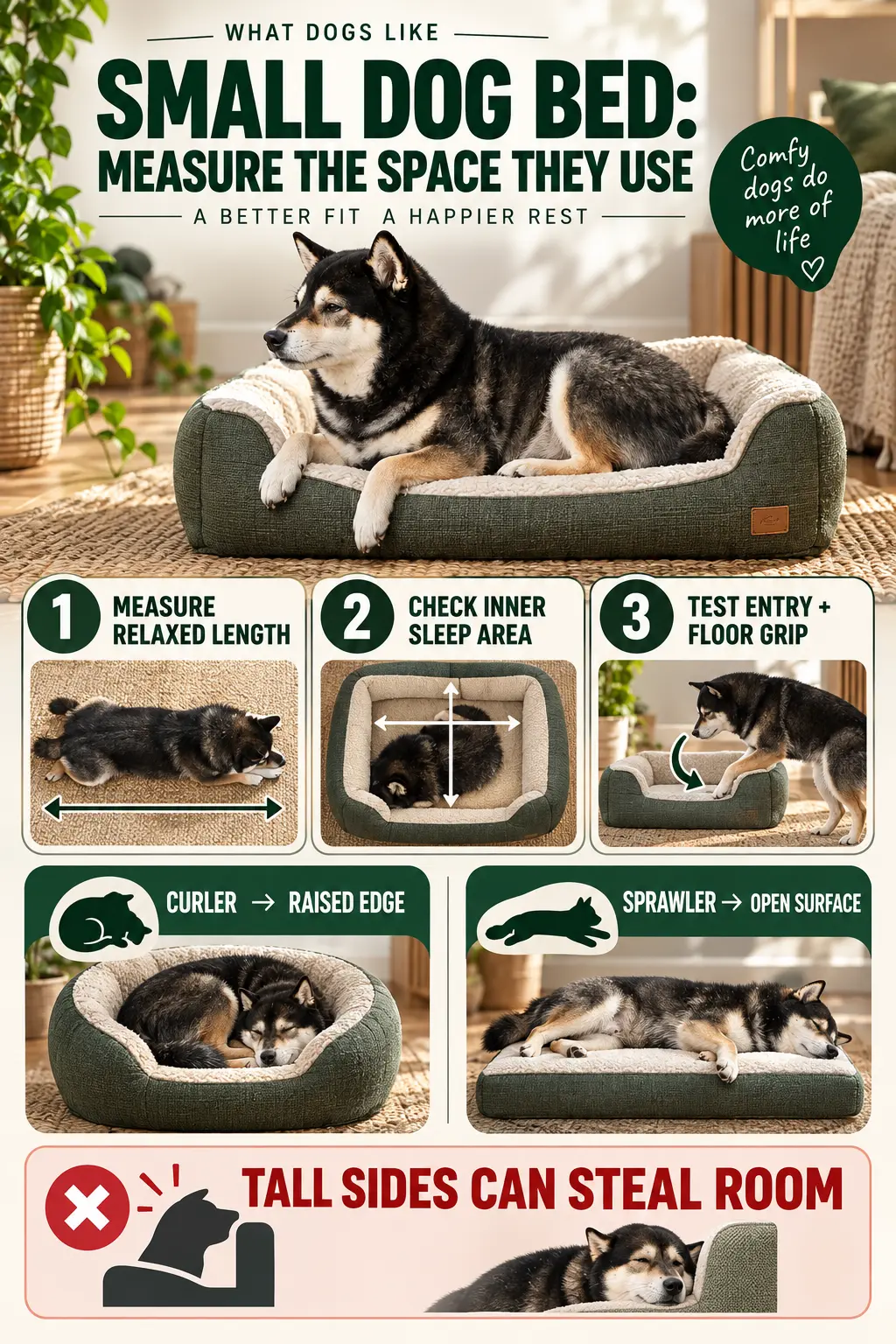
- Curler who leans on an edge: compare a round nest or bolster, but measure the inner sleeping space.
- Sprawler or frequent position-changer: start with an open rectangular surface; do not size down to a tight donut.
- Low-entry need: check the front lip and floor grip before cushion thickness or style.
- Messy paws or frequent washing: decide whether a whole-bed wash or removable cover fits your washer and drying time.
- Chewing or swallowing fabric: stop shopping by the word “calming”; manage the ingestion risk first.
Share & embed
Start with posture, not breed or weight
Watch your dog rest in a familiar, quiet spot for several days. Record the longest relaxed position rather than the most compact curled position. A dog may curl in the morning and sprawl after play, or press its back against furniture but extend both front legs. The AKC's dog-bed selection guidance also treats size and individual preference as meaningful, which is more useful than a one-size-fits-all “toy breed” label.
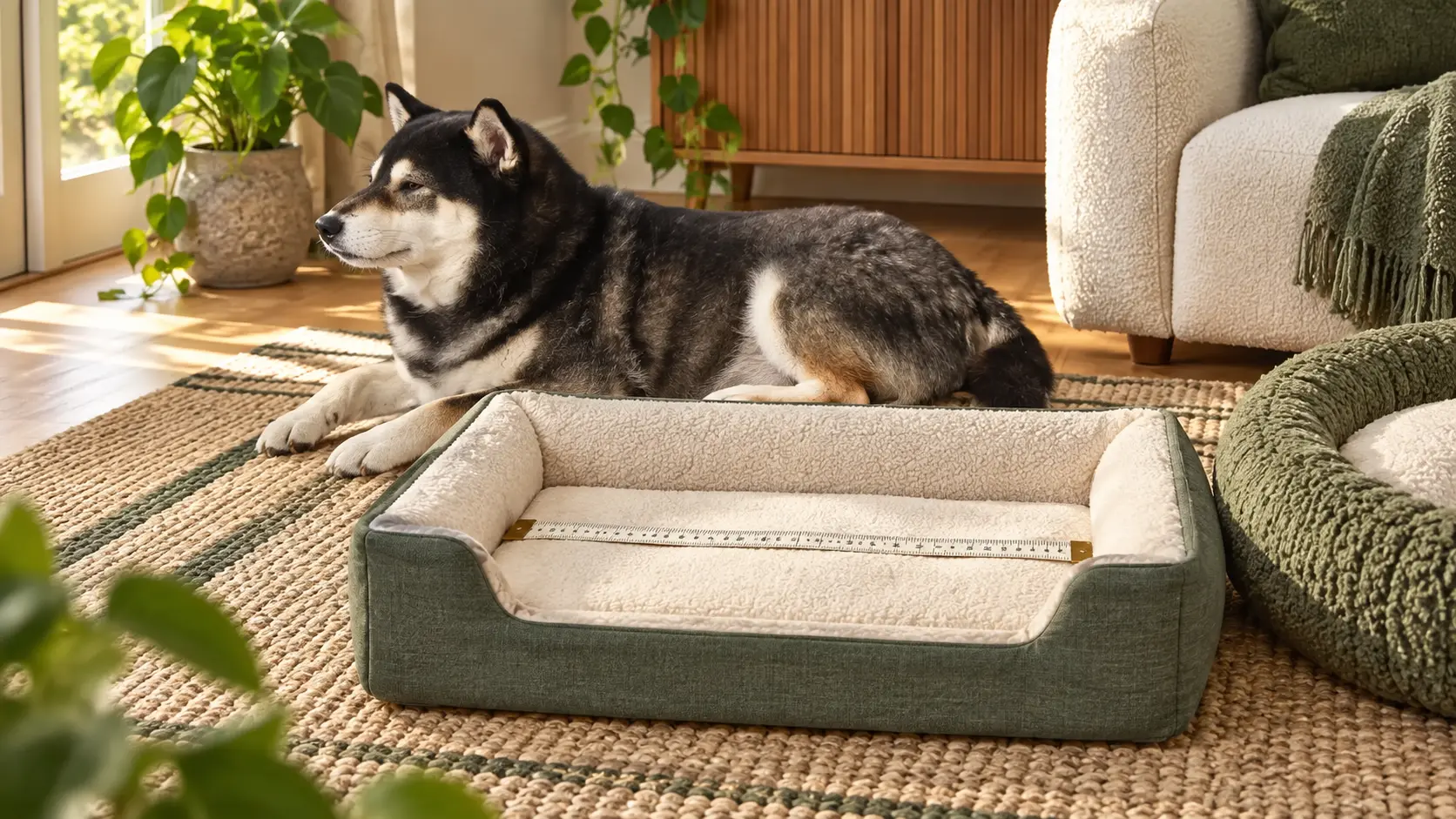
Measure from the nose or shoulder to the farthest part of the resting body as appropriate for the posture, and measure width across the relaxed dog. Add space for turning and paws. Then compare these with the interior dimensions of a bolster, donut, or cave. If a seller supplies only outside diameter, ask for the inner surface or treat the size as uncertain. For a flat pad, the sleeping area is close to the listed surface; for a thick raised rim, it can be much less. The Dog Bed Size Guide provides a complete method for irregular bed shapes.
Weight guidance is a rough capacity check, not a sleep-position measurement. A long, low dog and a compact dog can weigh the same and need different footprints. A puppy's bed may also need replacement as the dog grows. If a bed is for a crate, measure the crate pan and door separately; the Dog Crate Mats Guide explains why a living-room nest should not automatically be used inside a crate.
Dog curls tightly and leans
Round donut or modest bolster
- Look for
Interior diameter, rim height, stable fill
- Avoid
Oversized rim that steals all the sleep space
Dog sprawls or sleeps on side
Open rectangular or flat foam bed
- Look for
Usable length and width, easy turn
- Avoid
A small round bed chosen by weight alone
Dog is older or stiff
Low-entry supportive bed
- Look for
Front lip, grip, stable support, easy position change
- Avoid
Deep nest or high step-over edge
Dog runs warm
Open breathable surface
- Look for
Room temperature, cover texture, freedom to move
- Avoid
Heavy shag positioned in a hot corner
Frequent accidents or muddy paws
Washable protected construction
- Look for
Whole-bed versus cover-only cleaning, full drying
- Avoid
Unprotected fill or foam that stays damp
Compare the bed constructions that matter
Round donut or nest
A donut gives a continuous raised edge for a dog that curls and rests its head or back against a rim. Plush fill can feel cozy, but it is not the same construction as a firm foam mattress. It can shift, flatten, trap heat, or require a large washer and a thorough dry. The word “calming” describes a product's positioning, not a clinical treatment for anxiety. If your dog shows separation distress, fear, or changes in sleep behavior, investigate the cause rather than expecting a bed shape to solve it.
The Best Friends by Sheri 23-inch shag donut is a useful construction example: the manufacturer says the small bed is washed and dried whole. That can be convenient only if your machine can handle it and the center dries fully. Check the current Amazon listing for the exact taupe small variant before purchase. If the dog sleeps stretched, compare its inner circle with a rectangular option rather than trusting the 23-inch outer diameter.
Rectangular bolster with low entrance
This shape gives a back or side to lean against while leaving a lower approach at the front. A foam base can provide a more stable, open support surface than a loose fiber nest, though actual foam feel varies. Measure the inner rectangle; a six-inch outer bolster height does not imply six inches of useful support or easy entry. As a concrete example, the Casper dog bed size information distinguishes outer size from inner sleep area. Check the current size chart and variant for the exact listing. For a dog with stiffness, compare this with an even flatter bed in Best Dog Beds for Senior Dogs.
Flat mat or low foam bed
An open surface maximizes room for changing posture and has no raised wall to climb. It may be easier to place under a table or beside the human bed without blocking a walkway. The tradeoff is less edge contact for a dog that likes leaning. A washable cover and protected core can make it practical for small dogs with accidents. For very small dogs, a whole-bed washable mat can be simple; for thicker foam, a removable cover is generally easier. Use Washable Dog Beds for the difference between those care systems.
Hooded cave
A cave or burrow bed suits a dog that voluntarily pushes under blankets, but its roof makes entry, ventilation, and inner area more important. A small dog is not automatically a cave dog. If the dog prefers open views, runs warm, or chews soft fabric, choose an open bed. Our Cave Dog Beds Guide explains hood mechanics, exit checks, and how to distinguish a supported opening from a draped blanket.
| Type | Best match | Usable-space risk | Cleaning question | Avoid when |
|---|---|---|---|---|
Round plush donut | Compact curler that enjoys a rim | Outer diameter hides smaller center | Can the entire small bed wash and dry? | Dog sprawls, overheats, or swallows fabric |
Low-entry foam bolster | Leaner needing an open front | Sides reduce inner rectangle | Does cover come off; is core protected? | Front lip remains too high or dog digs foam |
Flat washable bed | Sprawler, easy-entry need, practical room fit | Usually simpler to measure | Whole pad versus removable cover | Dog strongly wants a surrounding edge |
Hooded cave | Voluntary burrower in a cool room | Hood and rim reduce accessible area | Can hood and cover dry fully? | Dog avoids enclosed spaces or chews material |
Entry, grip, and placement are part of fit
Small dogs can still find a soft high rim awkward, especially with short legs, stiffness, or a slippery floor. Test the front edge height with a temporary cushion or rolled towel, then watch a normal entry and exit without pulling or lifting the dog. A bed that slides on laminate may be rejected even when the cushion is comfortable. Check the base's grip on your floor; a nonslip claim is not a substitute for observing movement.
Put the bed where the dog already chooses to rest, away from door swings and main foot traffic. A cold draft, heating vent, direct sun, or exposed hallway can make the location less appealing. The Dog Bed Placement Guide provides a room-level checklist. If the dog moves between sunny tile and a plush bed, leave a choice rather than forcing one surface.
Support without orthopedic exaggeration
“Orthopedic” is used broadly in pet-bed marketing and is not, by itself, a verified medical outcome. The practical questions are whether the dog can lie without bottoming out, change position, rise without struggle, and rest on a stable surface. A small dog may not compress a very firm large-dog foam bed enough to find it comfortable; a very fluffy nest may collapse around a dog that needs easier movement. Check construction, foam thickness or fill, and return terms, then observe the dog's actual use.
If your small dog has persistent stiffness, pain, limping, or reluctance to get up, ask a veterinarian rather than diagnosing from the bed. A supportive, low-entry bed can be part of a comfort plan, but it is not treatment. Compare the more detailed access and support choices in Best Dog Beds for Senior Dogs. For a dog that curls without mobility issues, a soft nest may be a preference; do not turn that preference into a medical claim.
Cleaning and temperature: the ownership test
Decide how you will clean the exact construction before you buy. A small plush bed may fit the washer, but check load capacity and manufacturer instructions. A removable cover is only easy if the zipper opens wide enough and the fill goes back without a lengthy struggle. A protected foam core matters for accidents because washing the outer fabric does not undo moisture that reached the inner material. AKC's bed-cleaning guidance notes that care varies by material, size, and instructions; follow the label rather than a generic hot-wash rule.
High-pile shag can hold warmth and collect hair. For a dog that seeks tile or pants while resting indoors, offer a cooler, more open surface and review the room temperature. A “self-warming” or “calming” listing is not automatically a good match in a warm room. If your dog prefers a cave during cold months but sprawls in summer, seasonal choice may be more useful than one bed marketed for every condition.
A Reddit question from a small dachshund owner shows the real tension between appearance, softness, and washable construction. Another owner question about fully removable bolster covers points to a listing detail easily missed. These discussions identify shopping questions, not proof that a named bed performs well; our answer is to check the exact cover and laundering instructions, inner size, and your dog's posture.
Two exact Amazon comparison points
The cards below compare different bed architectures. They are not hands-on rankings. The exact Amazon ASIN and product image were checked; current size, color, care, seller, availability, and returns can change. As an Amazon Associate, What Dogs Like earns from qualifying purchases.
If neither option matches your dog's normal posture, do not choose one merely because these cards exist. A basic flat washable pad may serve a sprawler or a dog with access needs better. For a dog that actively burrows, a cave bed is a distinct decision; for destructive chewing, see Best Chew-Proof Dog Beds and address fabric ingestion risk before selecting a soft bed.
A practical trial after delivery
Unpack and assemble the bed according to its instructions. Measure the actual inner surface, not just the label. Check seams, zippers, foam cover, fill distribution, odor, and whether the bed slides. Set it beside the familiar sleeping place in a calm room. Let the dog investigate voluntarily. Watch at least one normal rest cycle: entry, turning, preferred posture, repositioning, rising, and exit. The dog does not have to use it immediately, but repeated avoidance, slipping, or being cramped is meaningful.
Keep packaging and check the return policy before washing or removing tags. Return terms may limit used beds. If the dog accepts the bed, complete one full clean-and-dry cycle soon enough to learn whether it fits your routine. A bed that is technically washable but takes too long to dry may become impractical after the first accident.
Frequently asked questions
What size bed does a 10-pound dog need?
Weight alone cannot answer it. Measure the dog's longest relaxed sleep posture and compare it with the inner bed area. A compact curler may fit a smaller nest than a long-bodied 10-pound sprawler. Leave room to turn and change position.
Is a 23-inch donut bed really 23 inches of sleeping space?
No. That is typically the outer diameter, including the raised rim. Request or check the inner diameter. The exact Sheri small variant is a useful example of why outside and usable dimensions must be separated.
Do small dogs need orthopedic dog beds?
Not automatically. A supportive stable surface, easy entry, and correct size matter more than the word “orthopedic.” Persistent pain or mobility difficulty warrants veterinary input; a bed is comfort equipment, not a diagnosis or treatment.
Are donut beds good for dogs with anxiety?
Some dogs may prefer a close raised edge, but a donut bed is not a treatment for separation anxiety or fear. Observe whether your dog voluntarily rests there. Address behavioral or medical concerns separately with qualified help.
Is a fully washable bed better than a removable cover?
For a small light bed that fits your washer and dries fully, whole-bed washing can be convenient. For thicker foam or frequent accidents, a removable cover plus protected core is often easier. Read the exact care instructions and test the full routine.
What if my small dog sleeps on the floor instead?
Consider temperature, bed location, unstable backing, too-soft fill, or an awkward edge. Offer the bed beside the preferred floor spot and leave an alternative. Do not force use. The dog's repeated choice of a cooler or firmer surface is more useful than a marketing label when deciding whether to change the bed or its location.
Can I put a small plush bed inside a crate?
Only if it fits without blocking the door or ventilation, the manufacturer permits that use, and the dog will not chew or swallow the material. A low-profile crate mat is often easier to fit and inspect. Crate use changes the safety and fit decision.
Which is better for a dachshund: round nest or rectangle?
Measure the dog's full stretched length, watch whether they curl or sprawl, and check entry height. A long-bodied dog can outgrow the inner circle of a small donut despite a low weight. A rectangle offers more length; a nest offers an edge. Preference decides only after fit is adequate.
Should I buy a cave bed for every small dog?
No. Buy one only if the dog already seeks covered spaces and can enter and leave easily. A hood can add warmth and reduce visibility, which some dogs dislike. Start with the Cave Dog Beds Guide if burrowing is the observed behavior.
Bottom line
Choose a small-dog bed from the usable inner area, normal posture, entry, floor grip, and cleaning system. A compact curler may like a washable donut; a sprawler or stiff dog may do better on an open low-entry foam bed. The most useful purchase is the one your dog can enter, use, and leave comfortably—and that you can actually keep clean.