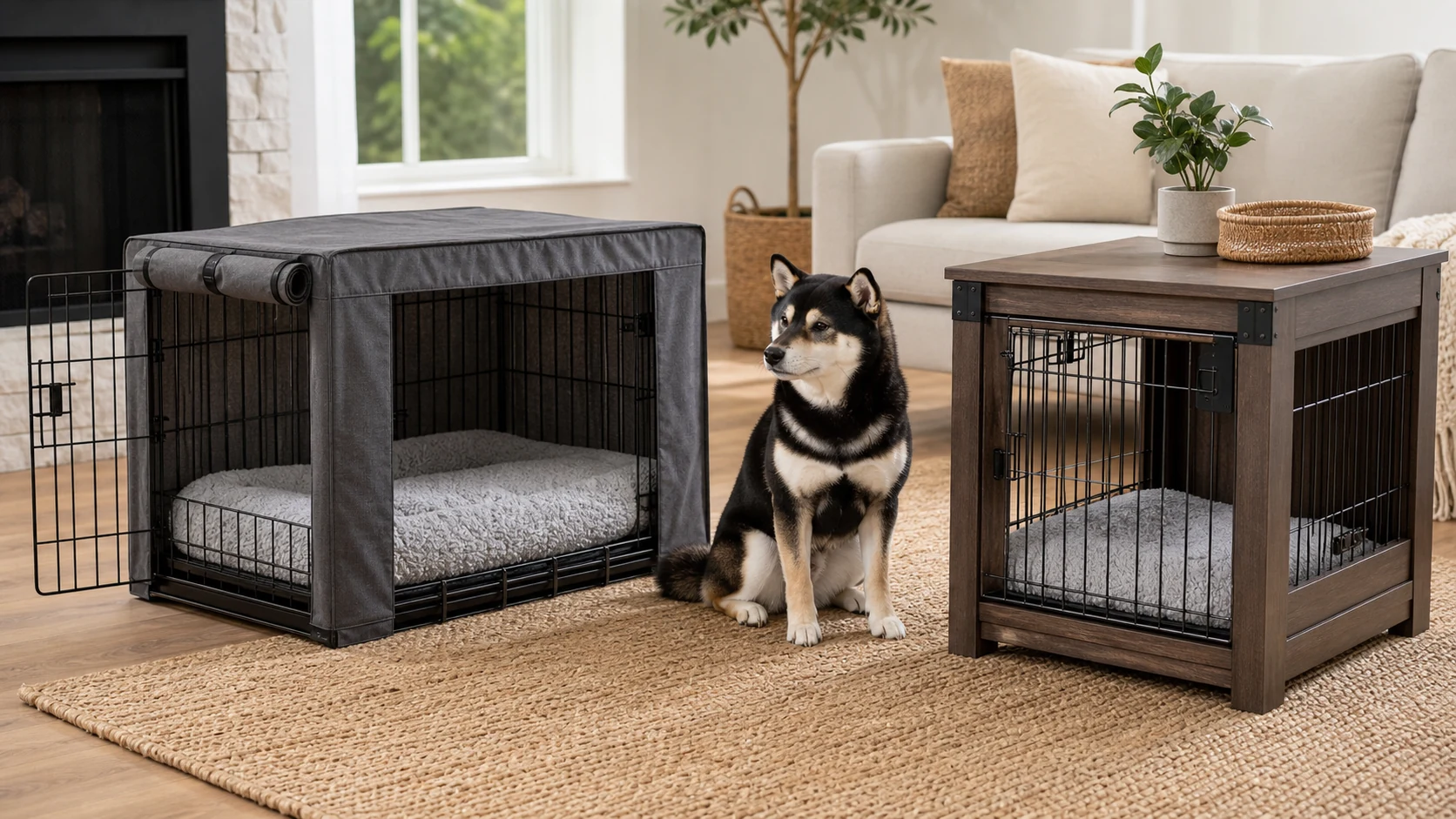
A dog crate cover is usually the lower-commitment way to make a wire crate feel calmer or less visually busy. A furniture crate is usually the more permanent room-design choice. The safer decision depends less on looks and more on interior size, airflow, door access, cleaning, chewing risk, and whether your dog already rests calmly in a crate.
Start with the Dog Crates pillar for the full buying framework. Use the Dog Crate Size Guide or Dog Crate Size Calculator before comparing either option. If you already know you want a decorative crate, read the Dog Crate Furniture Guide after this comparison.
Quick read
Quick answer
- Choose a crate cover when you already have a well-fitting wire crate and only need more visual calm, a softer room look, or adjustable shade.
- Choose a furniture crate when your dog is already crate-comfortable and the crate will stay in a visible living room, bedroom, or office.
- Avoid both options if your dog chews fabric or wood, claws exits, panics, overheats, or needs close supervision.
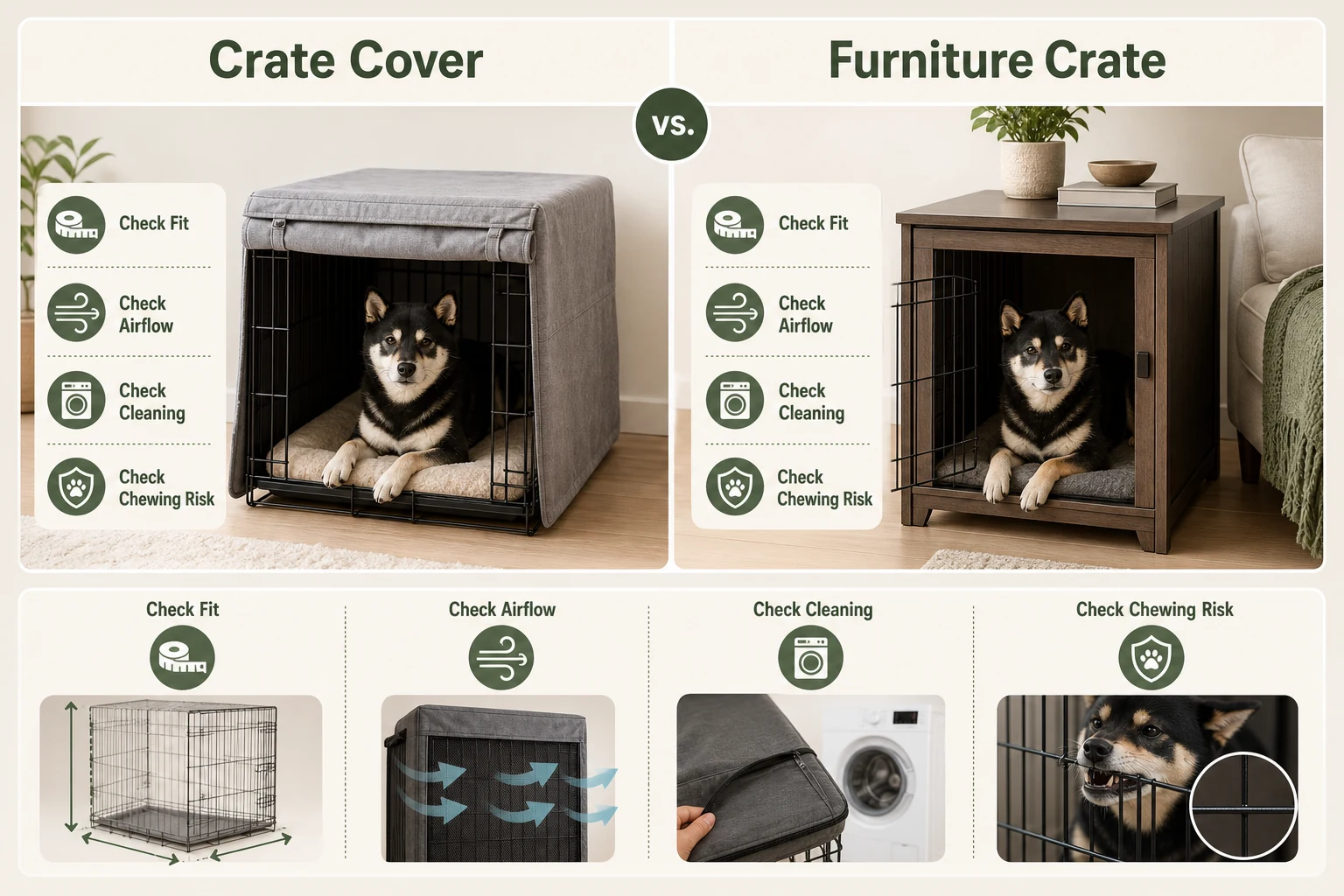
- Check airflow first: any cover or enclosed furniture panel can make a crate warmer or darker.
- Cleaning access matters: removable covers are easier to wash; furniture crates need tray and corner access.
Share & embed
Crate cover vs furniture crate at a glance
| Decision point | Crate cover | Furniture crate |
|---|---|---|
| Best use case | Improving the feel of an existing wire crate | Making a crate blend into a visible room |
| Commitment | Lower; easier to remove or replace | Higher; usually heavier and more permanent |
| Airflow control | Adjustable if panels roll up | Depends on bars, slats, side openings, and back panel |
| Cleaning | Cover can usually be removed; crate tray still accessible | Check tray removal, floor seams, corners, and wood-like surfaces |
| Chewing risk | Fabric edges, ties, and seams can attract chewing | Wood-style panels, corners, and trim can become bite points |
| Door access | Must match single, double, or side-door crate layout | Must match room traffic and door swing |
| Size risk | Cover must match exterior crate dimensions | Interior dimensions may be smaller than exterior furniture dimensions |
| Cost | Usually less expensive | Usually more expensive |
When a crate cover makes more sense
A crate cover makes sense when the underlying wire crate already fits your dog and works well in daily use. The cover is then an add-on, not a replacement for a better crate. It can reduce visual clutter in a bedroom or living room, soften the look of a black wire crate, and let you adjust light and visibility by rolling up panels.
Before buying a cover, check:
- Exterior crate length, width, and height.
- Whether your crate has one door, two doors, or a side door.
- Which panels need to stay open for airflow.
- Whether the cover can be washed or wiped clean.
- Whether ties, straps, zippers, or fabric edges are reachable from inside.
If your dog pulls fabric through the bars, chews blankets, or paws at crate walls, a cover can become a problem. Start with partial coverage or a supervised trial instead of fully covering the crate and assuming it will feel calmer.
When a furniture crate makes more sense
A furniture crate can make sense when the crate is a permanent part of a living room, bedroom, or office and your dog is already relaxed with crate rest. These crates can act like an end table, nightstand, or low console, but they still need to work first as dog gear.
Check the boring details before the finish:
- Interior length, width, and height, not only exterior furniture dimensions.
- Door opening size and swing direction.
- Ventilation on multiple sides.
- Tray access or wipe-clean floor access.
- Latch position and whether it can be bumped from outside.
- Top-surface limits for lamps, plants, drinks, or books.
- Whether the crate can be moved for cleaning behind and underneath it.
Use the Dog Crate Furniture Guide for the deeper furniture-crate buying checklist.
Airflow and temperature
Airflow is the biggest shared risk. A cover can block airflow if every panel is closed. A furniture crate can restrict airflow if it has decorative solid sides, a solid back, or a deep enclosed corner placement.
Use a cautious setup:
- Leave at least one broad side open or well ventilated.
- Avoid placing the crate directly against heat vents, radiators, fireplaces, or intense sun.
- Do not use thick bedding that blocks lower airflow.
- Recheck the temperature inside the crate after normal household use.
- Watch whether your dog pants, avoids the crate, shifts restlessly, or presses toward the opening.
If heat, breathing, illness, pain, or sudden behavior changes are part of the situation, treat gear changes as secondary and contact a veterinarian or qualified professional.
Visibility and calm
Some dogs rest better with less visual stimulation. Others become more worried when visibility drops. A cover gives you more flexibility because you can roll up panels, cover only the back and sides, or remove it entirely. A furniture crate is less adjustable once assembled and placed.
For a new setup, avoid going from full visibility to a fully covered or enclosed crate overnight. Try short calm periods first, keep the door open during early introduction, and inspect your dog's response after use.
Cleaning access
Crate covers usually win on cleaning because they can be removed from the crate. The tradeoff is that fabric can collect hair, odor, mud, and drool. Furniture crates can look cleaner in a room, but corners, seams, base panels, and heavy frames can make accident cleanup slower.
Before buying either option, ask:
- Can I remove the cover or tray without moving the entire setup?
- Can I reach back corners?
- Will a crate mat still fit without blocking the door?
- Can wet fabric or bedding dry fully?
- Can the crate be pulled away from the wall?
Use the Dog Crate Mats Guide before adding thick mats, washable pads, or waterproof liners.
Chewing, scratching, and escape behavior
Neither option is a behavior fix. Fabric covers and decorative furniture panels can add new surfaces to chew, scratch, or pull. If your dog bends bars, claws doors, chews trim, panics, or tries to force out, prioritize safety and professional support over a better-looking crate.
A plain wire crate with clear visibility and easy inspection may be more practical while you work on routine, supervision, and crate comfort. For puppies, use the Puppy Crate Training Schedule and keep the setup easy to clean.
Room placement
A cover can help a crate look less harsh in a shared room without changing the crate footprint. A furniture crate changes both the footprint and the way people use the room because it may become a table surface.
Avoid:
- Door swings into walkways.
- Drawer or cabinet conflicts.
- Plants, drinks, candles, or heavy decor on top of a crate where movement could knock them down.
- Tight corners that block airflow or cleaning.
- Slippery floor placement where the crate shifts when the dog enters.
For everyday room setup, read Best Dog Crates for Home Setup and use the Dog Crate Setup Checklist before buying.
Commercial comparison points
What Dogs Like may earn from qualifying purchases. Affiliate links do not change the checks in this guide: measure first, compare current listing details, inspect airflow and cleaning access, and avoid unsupported behavior promises.
Quick decision path
- Measure the dog and the crate area.
- If the wire crate already works, try a cover first.
- If the crate needs to function as visible furniture, compare furniture crates.
- Keep airflow and cleaning access ahead of appearance.
- Inspect fit, chewing risk, and comfort after real use.
Related guides
Use the Dog Crate Furniture Guide for a deeper furniture-crate checklist. Use the Dog Crate Size Guide or Dog Crate Size Calculator before choosing a size. Use Best Dog Crates for Home Setup for placement, latches, room flow, and daily cleaning access. Compare Wire vs Plastic Dog Crates and Soft Dog Crates vs Wire Dog Crates if you are still choosing the base crate type. For ambiguous listings, read Dog Kennel vs Dog Crate. Return to the Dog Crates pillar for the full crate framework.
Frequently asked questions
Is a dog crate cover better than a furniture crate?
Often, yes, if you already have a correctly sized wire crate that works. A cover is easier to remove, wash, adjust, and replace. A furniture crate makes more sense when room appearance matters and your dog is already calm with crate rest.
Do crate covers reduce barking or anxiety?
A cover may reduce visual stimulation for some dogs, but it is not a behavior solution. If barking, panic, separation distress, or escape behavior is present, use professional support and avoid relying on a cover or furniture crate to solve the problem.
Can I cover all sides of a dog crate?
Avoid treating full coverage as the default. Keep airflow, visibility checks, and temperature in mind. Many setups work better with the back and some side coverage while the door side or a broad panel stays open.
Is dog crate furniture safe?
It can be appropriate for some crate-comfortable dogs, but safety depends on size, ventilation, latches, chewing risk, cleaning access, and placement. Do not buy based only on exterior furniture dimensions or room style.
Which is better for puppies?
A simple wire crate with divider access is usually more practical for puppies because growth, accidents, chewing, and cleaning needs change quickly. Decorative furniture crates are usually better considered later, after routine and chewing risk are more predictable.