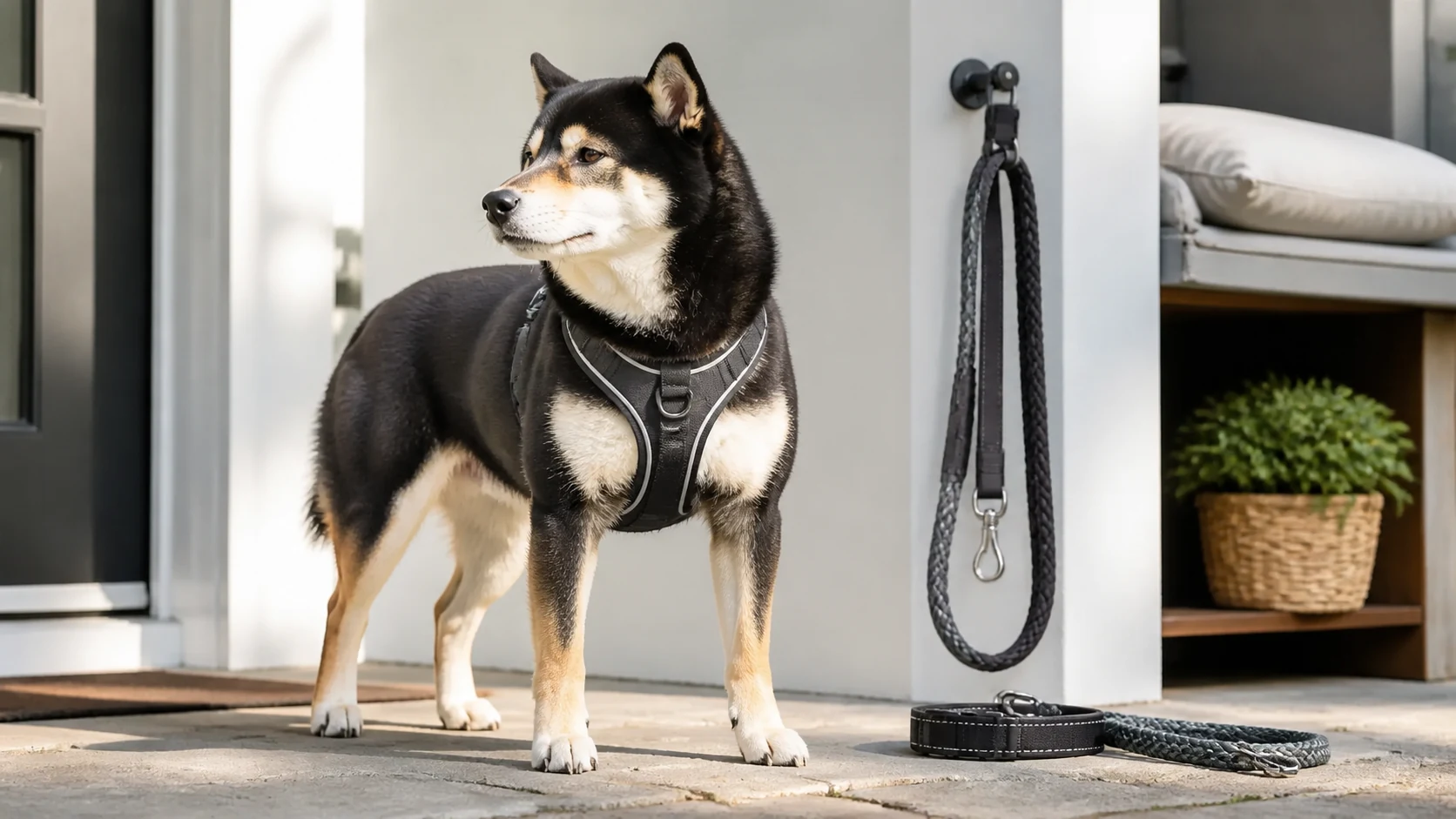
A harness is usually better for attaching the leash when neck pressure, pulling, small-dog anatomy, or gear slipping is a concern. A flat collar is usually better for ID tags and calm short handling, not as the default answer for every leash situation. Many dogs use both: a collar for ID and a well-fitted harness for walks.
Start with the Harnesses, Collars & Leashes pillar for the full walking gear framework. Use the Dog Harness Fit Guide, Dog Collar Size Guide, and Dog Collar Materials Guide before buying, then confirm the first fit with the Harness Fit Checklist. If the decision is specifically for a growing puppy, use Dog Collar vs Harness for Puppy as the puppy-focused version of this comparison.
Quick read
Quick answer
- Use a harness for most leash walks when you want leash pressure away from the neck and better body-based fit checks.
- Use a flat collar for ID tags and calm everyday wear, as long as it is not too tight, too loose, or rubbing.
- Do not expect gear to fix pulling. Front clips, back clips, collars, and harnesses all still need training and handling.
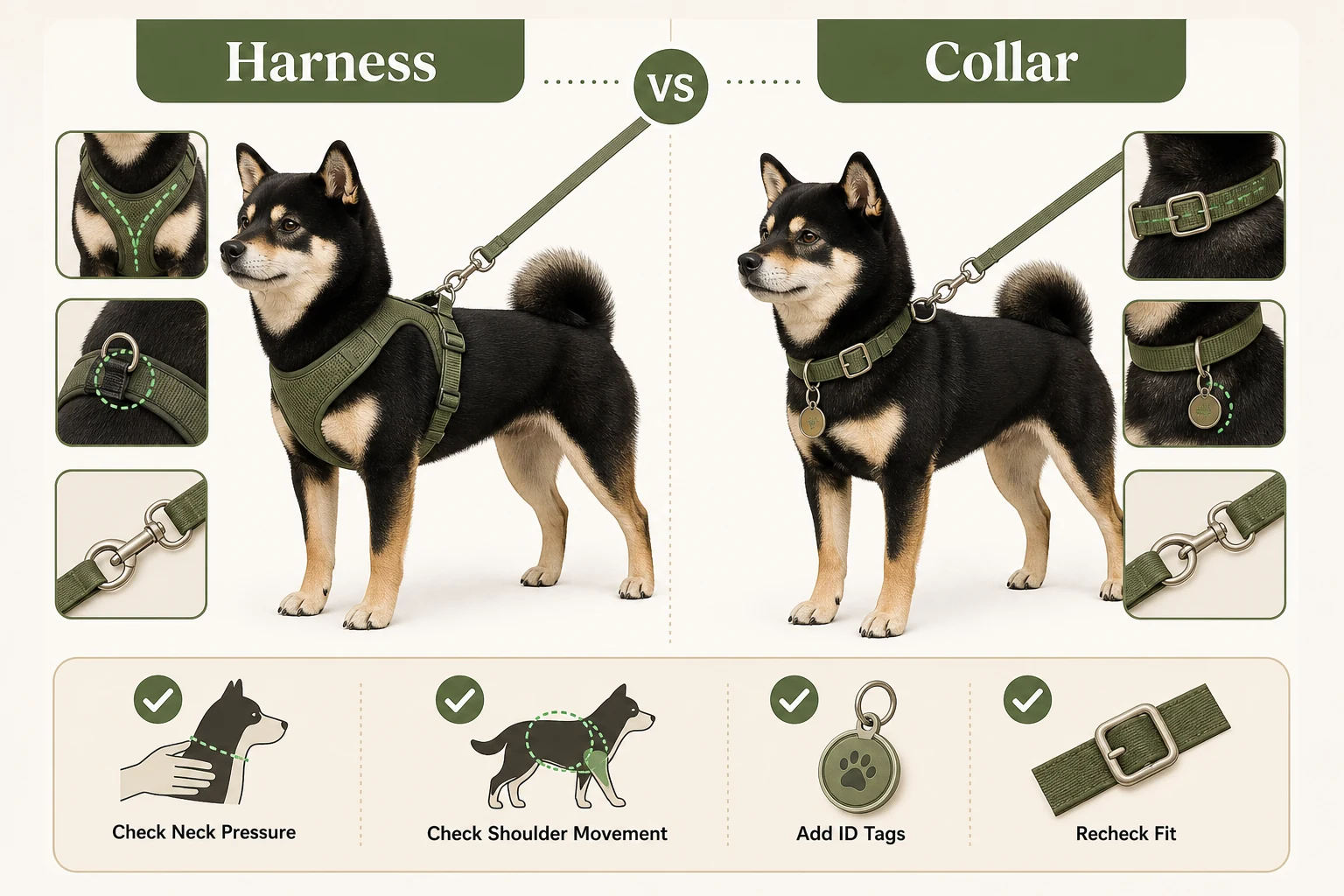
- Check shoulder movement: a harness should not sit in the armpits or restrict the front legs.
- Recheck fit after use: rubbing, slipping, coughing, gagging, bunched straps, or avoidance are all reasons to reassess.
Share & embed
Harness vs collar at a glance
| Decision point | Harness | Collar |
|---|---|---|
| Best role | Leash attachment for most daily walks | ID tags and calm short handling |
| Pressure area | Chest and body, depending on fit | Neck |
| Fit risk | Armpit rubbing, shoulder restriction, slipping | Too tight, too loose, throat pressure, rubbing |
| Pulling management | Front clip can change leash angle for some dogs | Can concentrate pressure on the neck |
| ID tags | Some harnesses have tag loops, but collar is simpler | Strong default for ID tags |
| Puppy growth | Needs frequent chest girth rechecks | Needs frequent neck rechecks |
| Best first check | Chest girth and strap position | Neck measurement and two-finger fit |
When a harness makes more sense
A harness makes more sense when leash pressure on the neck is a concern, when the dog pulls, when the dog is small or delicate, or when you want a walking setup that can be checked around chest girth and strap position. A good harness should sit behind the front legs without rubbing and allow natural shoulder movement.
Before choosing, check:
- Chest girth in inches.
- Whether the front strap clears the shoulder.
- Whether the belly strap sits behind the armpits.
- Whether the dog can step, turn, and sit naturally.
- Whether the harness slips sideways when the leash changes angle.
- Whether a front clip, back clip, or dual clip matches the walk.
Use the Dog Harness Fit Calculator for a cautious starting range, then read Front Clip vs Back Clip Harnesses if clip placement is the main question.
When a collar makes more sense
A flat collar is still useful. It is simple, familiar, and practical for ID tags. It can also work for calm dogs on short controlled walks when there is no pulling, coughing, gagging, or neck sensitivity. The collar should sit snugly enough that it does not slide over the head, but loose enough for normal breathing and comfort.
Before choosing, check:
- Neck measurement in inches.
- Adjustment range, not just size label.
- Collar width relative to the dog's neck.
- Buckle and hardware weight.
- Whether tags hang safely and do not irritate the dog.
- Whether the collar rubs after normal wear.
Use the Dog Collar Size Calculator, Dog Collar Size Guide, and Dog Collar Materials Guide before comparing brand size charts.
Pulling, training, and behavior limits
No harness or collar is a training plan by itself. A front-clip harness may change the leash angle for some dogs, and a back-clip harness may feel more stable for relaxed walkers, but neither guarantees better leash manners. A collar may feel simpler, but it can put pressure on the neck when a dog lunges or pulls.
If your dog panics, lunges strongly, slips gear, coughs, gags, or becomes hard to control, use professional training or behavior support. Gear should make handling safer and clearer; it should not be used to force a behavior outcome.
Neck pressure and small dogs
Neck pressure deserves extra caution with small dogs, puppies, seniors, and dogs with known throat, spine, eye, or respiratory concerns. Do not treat this article as veterinary advice. If pain, coughing, breathing changes, limping, or sudden behavior changes are present, ask a veterinarian before changing gear as the main solution.
For many small dogs, a lightweight harness for leash attachment plus a simple ID collar is a more forgiving everyday setup than clipping the leash to the collar.
Shoulder movement and harness shape
Harness shape matters more than marketing language. Y-front harnesses often leave the shoulders clearer than broad straight-front designs, but every dog is shaped differently. Watch the dog move after adjusting the harness, not only while standing still.
Look for:
- Straps that stay out of the armpits.
- No front strap cutting across the shoulder joint.
- No twisting, bunching, or sideways slide.
- No rubbing after a short walk.
- Enough adjustment range for seasonal coat changes or puppy growth.
Print the Harness Fit Checklist before deciding whether a new harness fits well enough to keep.
Commercial comparison points
What Dogs Like may earn from qualifying purchases. Affiliate links do not change the buying checks in this guide: measure first, compare current brand size charts, inspect fit after a short walk, and avoid gear claims that promise behavior fixes.
Related guides
Use the Dog Harness Fit Guide and Harness Fit Checklist before keeping a new harness. Use the Dog Collar Size Guide, Dog Collar Size Calculator, and Dog Collar Materials Guide before choosing a collar. Use Dog Collar vs Harness for Puppy when growth checks, early leash practice, and puppy ID setup are the main questions. For leash pairing, start with the curated Dog Leashes hub, then read Collars and Leashes for Everyday Walks, Dog Leash Length Guide, and Dog Leash Materials Guide. If the main question is clip position, compare Front Clip vs Back Clip Harnesses. Return to the Harnesses, Collars & Leashes pillar for the full walking gear framework.
Frequently asked questions
Is a harness better than a collar?
For leash attachment, often yes, especially when neck pressure, pulling, small-dog fit, or slipping is a concern. For ID tags, a flat collar is still simpler.
Should a dog wear both a collar and a harness?
Many dogs do. The collar carries ID tags, while the harness handles leash attachment during walks. Make sure neither item rubs or interferes with the other.
Can a collar hurt a dog that pulls?
Leash pressure on a collar can concentrate force on the neck. If your dog pulls, coughs, gags, or lunges, reassess the setup and use professional support where needed.
Does a harness stop pulling?
No. A harness can change leash handling and pressure distribution, but it does not replace training, supervision, and appropriate walking practice.