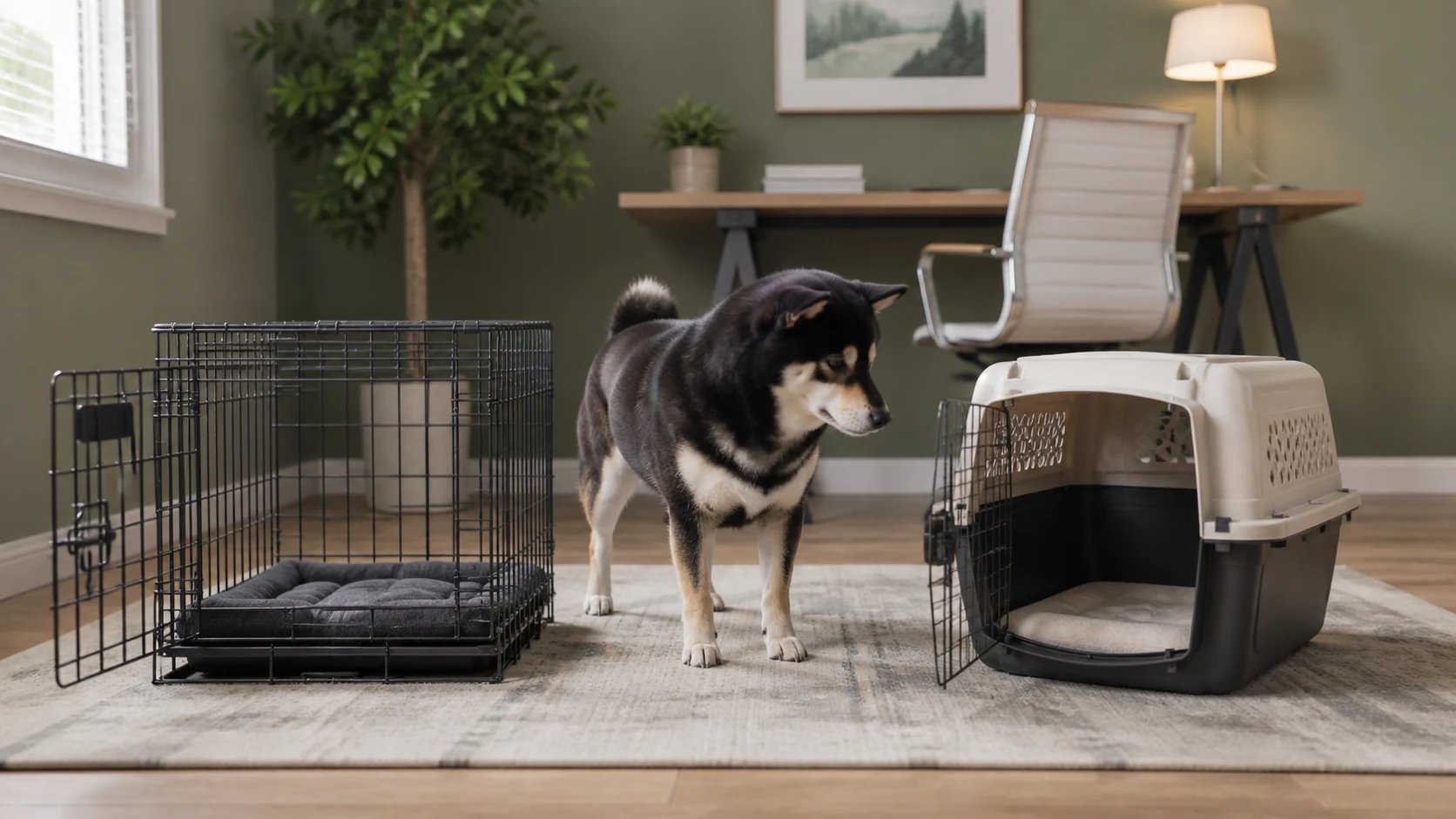
A small dog does not automatically need the smallest crate on the shelf. The crate should allow normal standing, turning, and resting while keeping doors, latches, mats, and bowls proportionate to the dog. Toy-breed labels and weight ranges are starting points, not reliable substitutes for measurements.
Start with the Dog Crates hub, use the Dog Crate Size Guide, and run the Dog Crate Size Calculator for a cautious internal-dimension range.
Quick read
Quick answer
- Measure the individual dog, even for toy and small breeds.
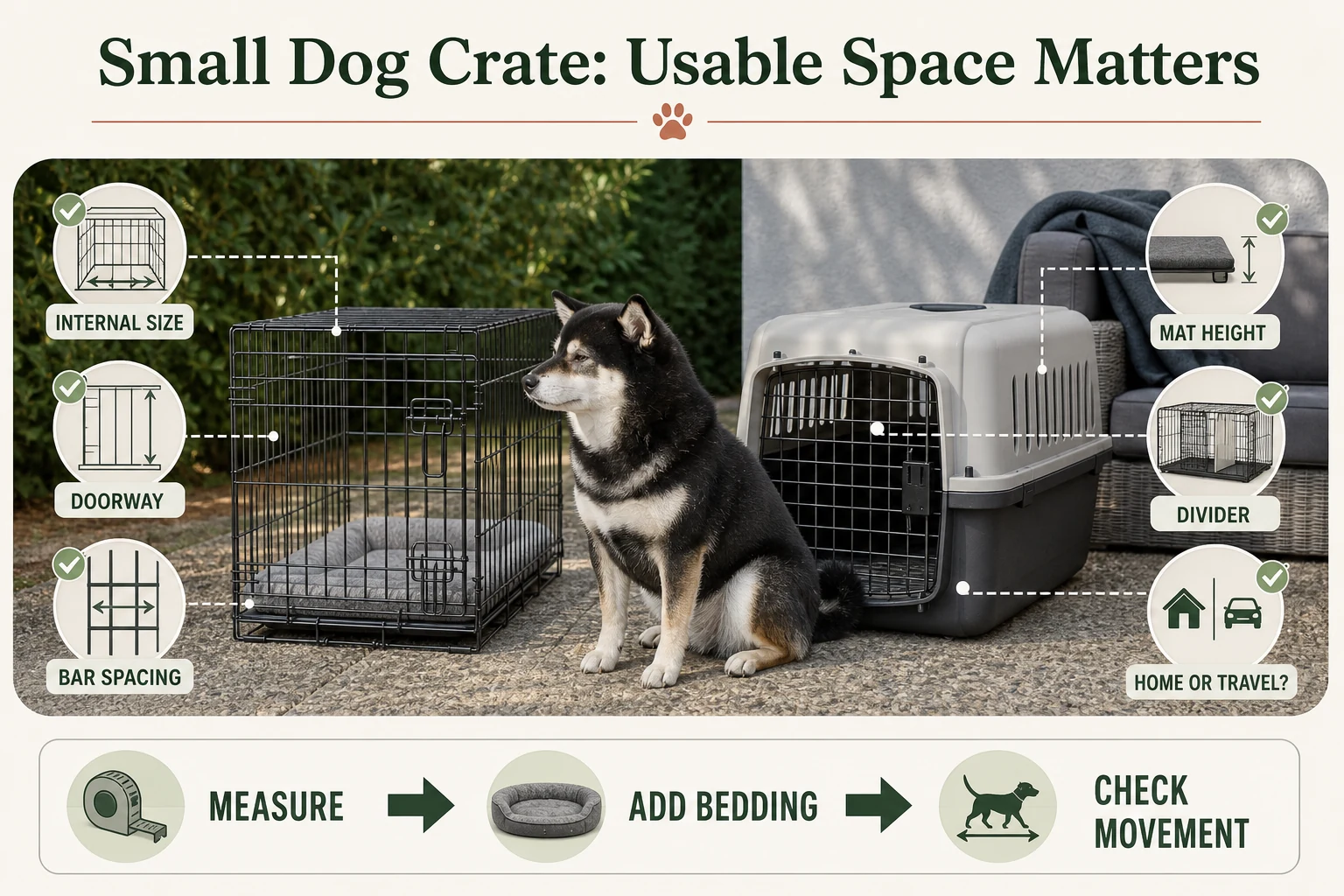
- Check internal height after adding the mat; plush bedding can consume a large share of a small crate.
- Choose light but secure hardware and a doorway the dog can enter without crouching or catching a shoulder.
- Use a divider for growing puppies only when it is stable and correctly positioned.
- Separate home and vehicle decisions: a convenient small home crate is not automatically a crash-protective carrier.
Share & embed
Measure more than weight
Measure body length from the nose to the base of the tail and standing height from the floor to the top of the head or ears in a natural posture. Compare these measurements with internal crate dimensions and allow enough room for normal movement.
Two dogs at the same weight can have very different proportions. A long-backed small dog, a square-bodied terrier, and a fine-boned toy breed may need different interior shapes even if the listing places them in the same range.
Common small-crate problems
Small adult dog at home
Well-sized wire or plastic crate
- Look for
Internal space, doorway, secure latch, washable base
- Avoid
Choosing the smallest labeled option
Growing puppy
Crate with stable divider
- Look for
Adult size, divider security, tray cleaning, routine plan
- Avoid
Replacing measurement with breed estimate
Dog prefers more enclosure
Plastic kennel or partially covered wire crate
- Look for
Ventilation, door opening, gradual introduction
- Avoid
Blocking airflow with a heavy cover
Dog sleeps on thick plush bedding
Taller crate or low-profile mat
- Look for
Standing height, door clearance, washability
- Avoid
Ignoring the height lost to the bed
Car or airline use
Purpose-built carrier for the exact trip
- Look for
Vehicle or airline rules, current instructions, secure placement
- Avoid
Assuming any plastic kennel fits every travel use
Wire versus plastic for small dogs
Wire crates provide visibility, airflow, folding storage, and divider options. Check bar spacing for a very small puppy and make sure paws, tags, or jaw cannot become trapped. Remove collars when crate safety requires it.
Plastic kennels provide more visual enclosure and often have a contained lower shell. A top-loading door can make calm access easier for some very small dogs, but it should not be used to force a frightened dog into the carrier.
Use Wire vs Plastic Dog Crates for a detailed comparison and Soft vs Wire Dog Crates if portability is the main question. Soft crates suit only calm, crate-comfortable dogs in appropriate supervised settings.
Door access and hardware scale
The dog should enter without hitting the top frame, catching the hips, or making a sharp turn immediately inside. Check where the latch sits relative to the dog's face and whether it can be operated without reaching awkwardly over the dog.
Hardware that is appropriate for a large crate can be bulky on a small enclosure. At the same time, lightweight does not mean flimsy. Inspect latch travel, hinge points, wire ends, plastic seams, handle attachment, and door alignment.
Bedding can change the whole fit
A three-inch bed is a small part of a large crate but a significant reduction in a compact crate. Check standing height, door clearance, and the dog's ability to turn after the mat is installed.
For puppies and accident-prone dogs, a low-profile washable mat may be easier than a deep plush bed. The Dog Crate Mats Guide compares thickness, non-slip backing, washable construction, chewing risk, and support. Remove damaged bedding if fill or foam becomes accessible.
Puppy growth and dividers
A crate sized for adult dimensions can be adapted with a secure divider while a puppy grows. The divider should attach firmly and leave no gaps where a small puppy could become trapped. Reposition it before the puppy becomes cramped.
Use Best Dog Crates for Puppies and print the Puppy Crate Training Schedule for a gradual, positive routine. Do not force a puppy into the crate or use it as a substitute for supervision, potty breaks, play, or training.
Home placement
Small crates fit into narrow spaces, which can tempt owners to place them under tables, behind doors, beside heaters, or in isolated corners. Choose a calm location near normal household life with airflow, stable flooring, and safe access.
Make sure the door does not open into a walkway and that drawers or furniture cannot trap it. Use the Dog Crate Setup Checklist before final placement.
Direct product CTAs
These direct Amazon options are comparison points, not universal winners. Verify the exact interior, dog fit, doorway, materials, setup instructions, and return policy.
What Dogs Like may earn from qualifying purchases. Affiliate links do not change the sizing, doorway, bedding, and setup checks in this guide.
Common mistakes
✓ Better buying habits
- Measure length and standing height.
- Compare internal dimensions and doorway size.
- Check bar spacing and latch placement.
- Add the intended mat before confirming fit.
- Reposition puppy dividers as growth changes.
- Keep the crate near normal household life.
× Mistakes to avoid
- Buying the smallest crate because the dog is light.
- Relying only on toy-breed labels.
- Filling the interior with an oversized plush bed.
- Placing the crate behind a swinging door or near direct heat.
- Forcing a dog through a top opening.
- Treating a home crate as proven vehicle protection.
Related guidance
Return to the Dog Crates hub for the full category. Use Dog Crate Mats Guide for bedding, Best Dog Crates for Home for room setup, and Dog Kennel vs Dog Crate when listings mix crate, kennel, carrier, and dog cage terminology.
Frequently asked questions
What size crate does a small dog need?
Measure the dog's body length and standing height, then compare with internal dimensions. Weight and breed labels alone are not enough.
Is a 24-inch crate right for every small dog?
No. It may suit some small dogs, but long-backed, tall, or very compact dogs can need different interior proportions.
Is wire or plastic better for a small dog?
Wire offers visibility, airflow, and divider options. Plastic offers more enclosure and a contained lower shell. The dog's comfort, behavior, home setup, and travel needs decide the better fit.
Can bedding make a small crate too short?
Yes. Thick bedding can remove a meaningful share of usable height. Check the dog standing and turning with the actual mat installed.