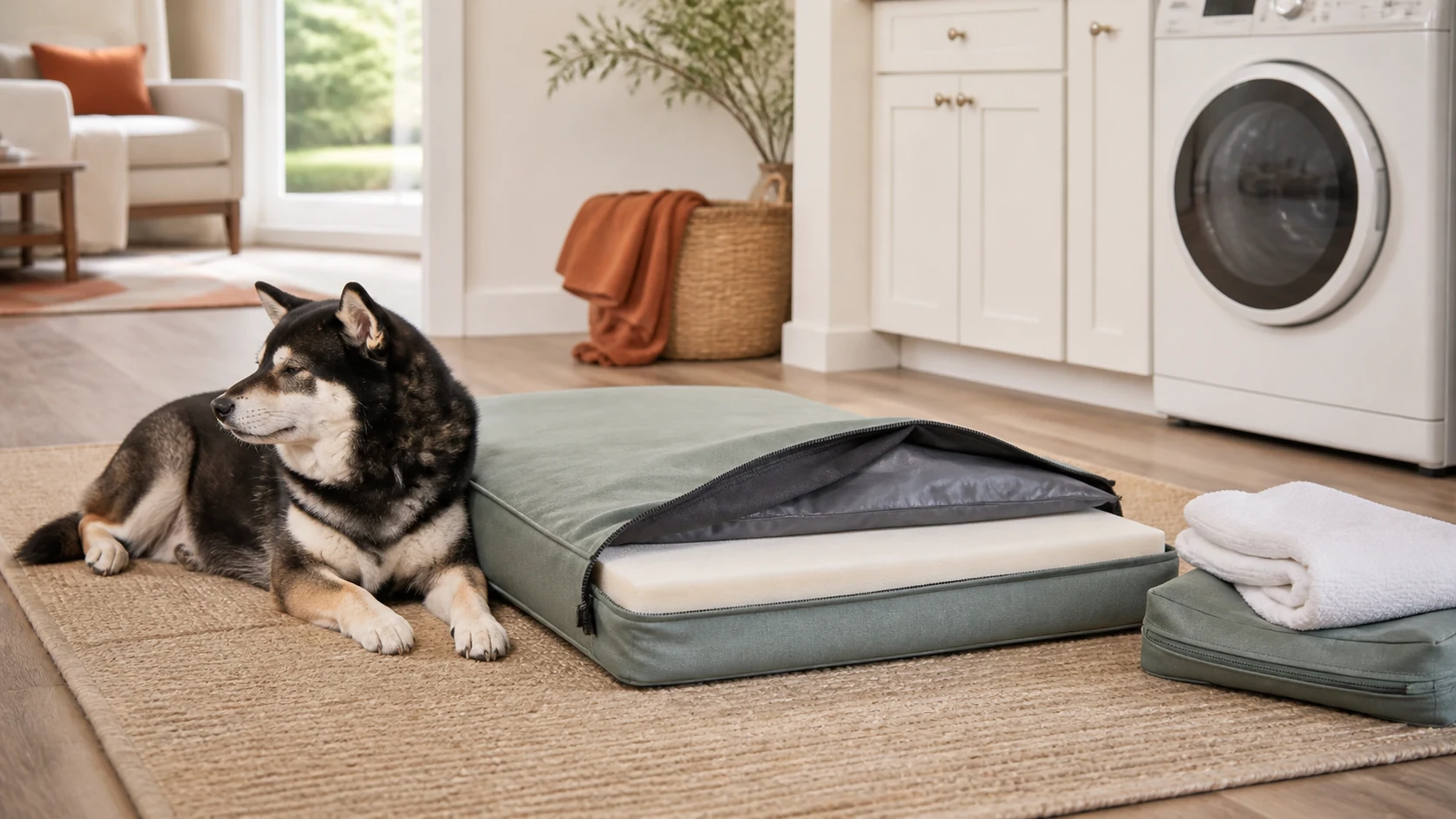
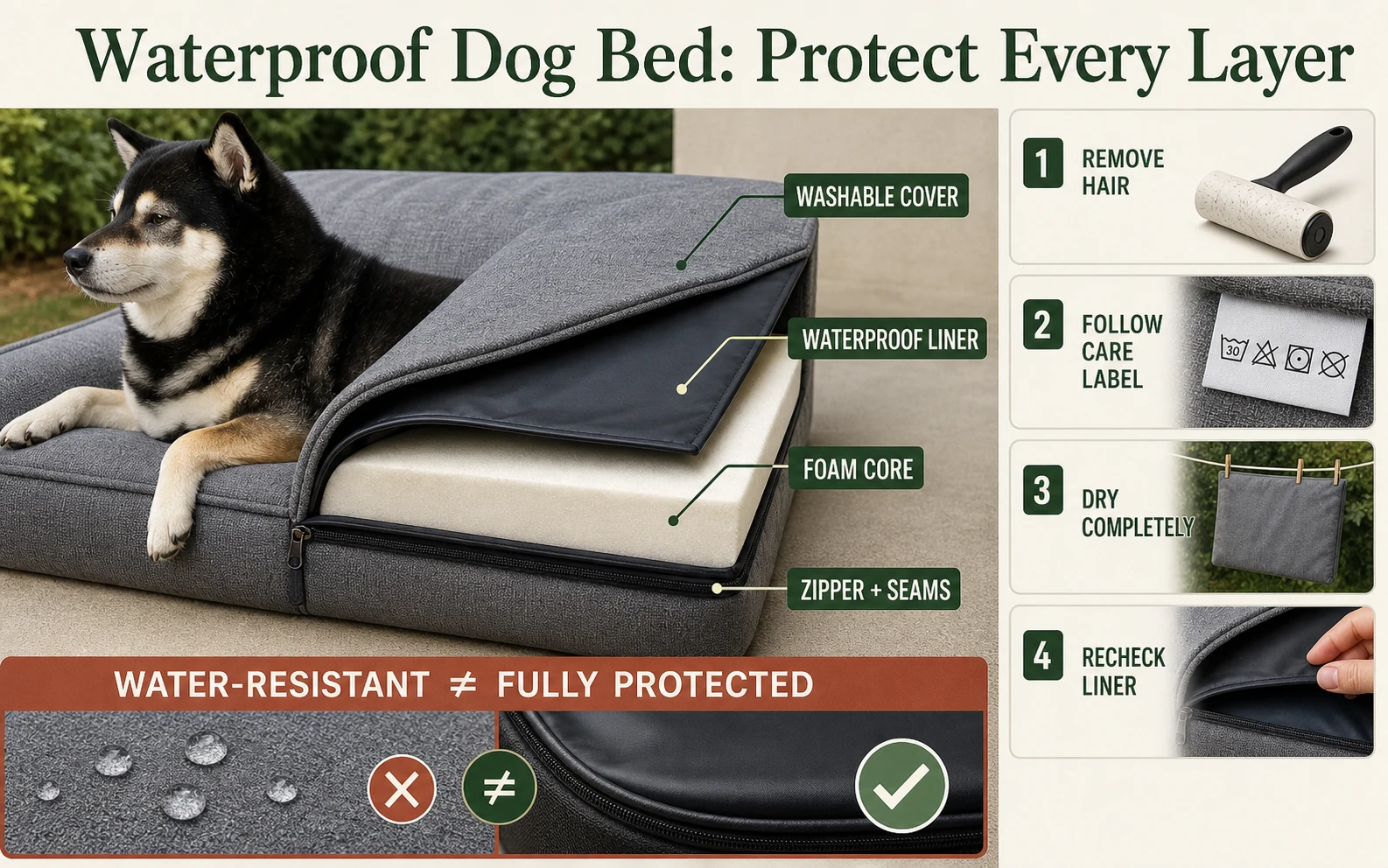
A waterproof dog bed is usually a system rather than one fabric. The outer cover handles fur, dirt, claws, and daily contact. A separate liner protects foam or fill from urine, drool, wet coats, and cleaning moisture. Seams and zipper openings are often the weak points.
Start with the Dog Beds hub, compare materials in the Dog Bed Materials Guide, and use the Washable Dog Beds Guide for cover and laundry decisions.
Quick read
Quick answer
- Prefer a removable washable outer cover plus a separate protective liner around the foam.
- Read waterproof wording carefully: water-resistant, waterproof fabric, and a fully protected insert are not the same.
- Inspect seams and zippers because liquid can bypass the main fabric.
- Dry every layer completely before reassembly to reduce trapped moisture and odor.
- Recurring accidents, skin issues, or sudden behavior changes need veterinary guidance, not only a more sealed bed.
Share & embed
Waterproof, water-resistant, or washable
These terms describe different jobs:
- Washable cover: can be removed or cleaned according to the care label.
- Water-resistant surface: slows moisture but may not stop prolonged soaking.
- Waterproof fabric: the material may block liquid while seams or zippers still leak.
- Waterproof liner: a separate barrier around the foam or fill.
- Fully washable bed: the complete bed may enter a machine, subject to size and care instructions.
Do not assume one claim includes all the others. Read what component is protected and how it must be cleaned.
Choose the protection layer
Occasional wet paws or drool
Washable cover with water-resistant surface
- Look for
Fast removal, normal laundry, quick drying
- Avoid
Assuming resistance protects foam from a full accident
Puppy or incontinence accidents
Separate waterproof liner plus washable cover
- Look for
Full foam coverage, protected zipper, spare cover
- Avoid
Waiting until odor reaches the foam
Outdoor or muddy routine
Tough easy-clean cover and liner
- Look for
Hair release, abrasion, wipe-down, complete drying
- Avoid
Choosing a slick surface the dog avoids
Senior or stiff dog
Low-entry supportive bed with protected foam
- Look for
Usable surface, foam support, liner flexibility, access
- Avoid
Letting a noisy stiff liner reduce comfort
Crate use
Low-profile waterproof crate mat
- Look for
Internal fit, door clearance, non-slip base, washability
- Avoid
Using a full bed that blocks usable height
Outer cover
The outer cover should be comfortable enough that the dog uses the bed and practical enough that the owner can maintain it. Check fabric feel, hair release, zipper length, cover-removal direction, and whether the cover can be replaced separately.
A very tight cover can be difficult to reinstall after washing. A loose cover can bunch under the dog. Long hidden zippers and clearly shaped foam sections usually simplify reassembly, but construction varies.
Use the Dog Bed Cleaning Schedule to track cover washing, liner checks, foam inspection, odor, shedding, and muddy-paw routines.
Waterproof liner
A separate liner protects the expensive part of many beds: the foam. It should cover the full insert, including edges, and close without leaving a large exposed section. Check whether the liner itself can be wiped, hand washed, or machine washed.
Liners can be noisy, stiff, warm, or prone to cracking. A flexible liner that stays intact through cover changes is more useful than a thin barrier that tears at the zipper or corners.
If a bed has multiple foam or bolster pieces, confirm whether every piece has protection. Some listings protect the base but not the bolsters.
Seams, zippers, and hidden weak points
Liquid follows gravity and pressure. A waterproof top panel can still leak through stitched seams, piping, zipper gaps, or an uncovered underside. Inspect these areas after an accident rather than assuming the barrier worked.
Zipper shields and overlapping flaps can reduce exposure. They still need to open easily enough that the cover can be removed without tearing the liner.
Cleaning and complete drying
Remove loose hair before washing because it can clog machines and remain trapped in seams. Follow the manufacturer's care label for water temperature, detergent, drying method, and whether the liner should be machine washed.
Do not reassemble a damp cover around foam. Trapped moisture can create odor and make it difficult to tell whether a later smell comes from a new accident or incomplete drying. Air out the foam if the manufacturer allows it, but do not soak foam unless the instructions explicitly permit it.
Keep a spare cover when accidents or wet routines are frequent. That allows the bed to stay protected while the primary cover dries fully.
Comfort and medical limits
A waterproof liner can change heat, sound, and flexibility. Watch whether the dog avoids the bed, shifts constantly, or chooses the floor. The best protection system is not useful if it makes the surface uncomfortable.
Repeated urination, new incontinence, excessive licking, skin irritation, pain, or sudden restlessness deserves veterinary guidance. A waterproof bed helps with cleanup but does not diagnose or treat the cause.
Direct product CTAs
These direct Amazon products are comparison points for different waterproof-bed constructions. Check the current listing, exact size, liner wording, cover care, replacement parts, and return policy.
What Dogs Like may earn from qualifying purchases. Affiliate links do not change the liner, seam, drying, and care-label checks in this guide.
Common mistakes
✓ Better buying habits
- Confirm which layer is actually waterproof.
- Choose a removable cover and inspect the liner separately.
- Check seams, zipper openings, corners, and underside.
- Keep every layer dry before reassembly.
- Measure the usable sleep area, not only outside dimensions.
- Follow the current care label for each component.
× Mistakes to avoid
- Treating water-resistant and waterproof as identical.
- Assuming waterproof fabric means waterproof seams.
- Leaving wet foam sealed inside a liner.
- Using bleach, heat, or soaking without care-label approval.
- Ignoring cracks or pinholes in an old liner.
- Treating repeated accidents as only a bedding problem.
Related guidance
Return to the Dog Beds hub for the full category. Use the Dog Bed Size Guide and Dog Bed Size Calculator before choosing a size. Compare Best Orthopedic Dog Beds, Orthopedic vs Memory Foam Dog Bed, and Dog Bed Placement Guide when support, heat, access, or room fit also matter.
Frequently asked questions
Is a waterproof dog bed fully washable?
Not necessarily. The cover may be washable while the liner is wipe-clean and the foam cannot be soaked. Follow the care instructions for each layer.
Is water-resistant the same as waterproof?
No. Water-resistant fabric may slow moisture without stopping a prolonged accident. Seams and zippers can also leak even when the main fabric is waterproof.
Does a waterproof liner make a bed hot?
Some liners can reduce breathability or feel warm and noisy. Check how the dog uses the bed and compare cover fabric, liner flexibility, and room temperature.
What should I do if urine reaches the foam?
Follow the manufacturer's foam-care instructions. Do not soak or heat-dry foam unless the label permits it, and make sure every layer is completely dry before reassembly.