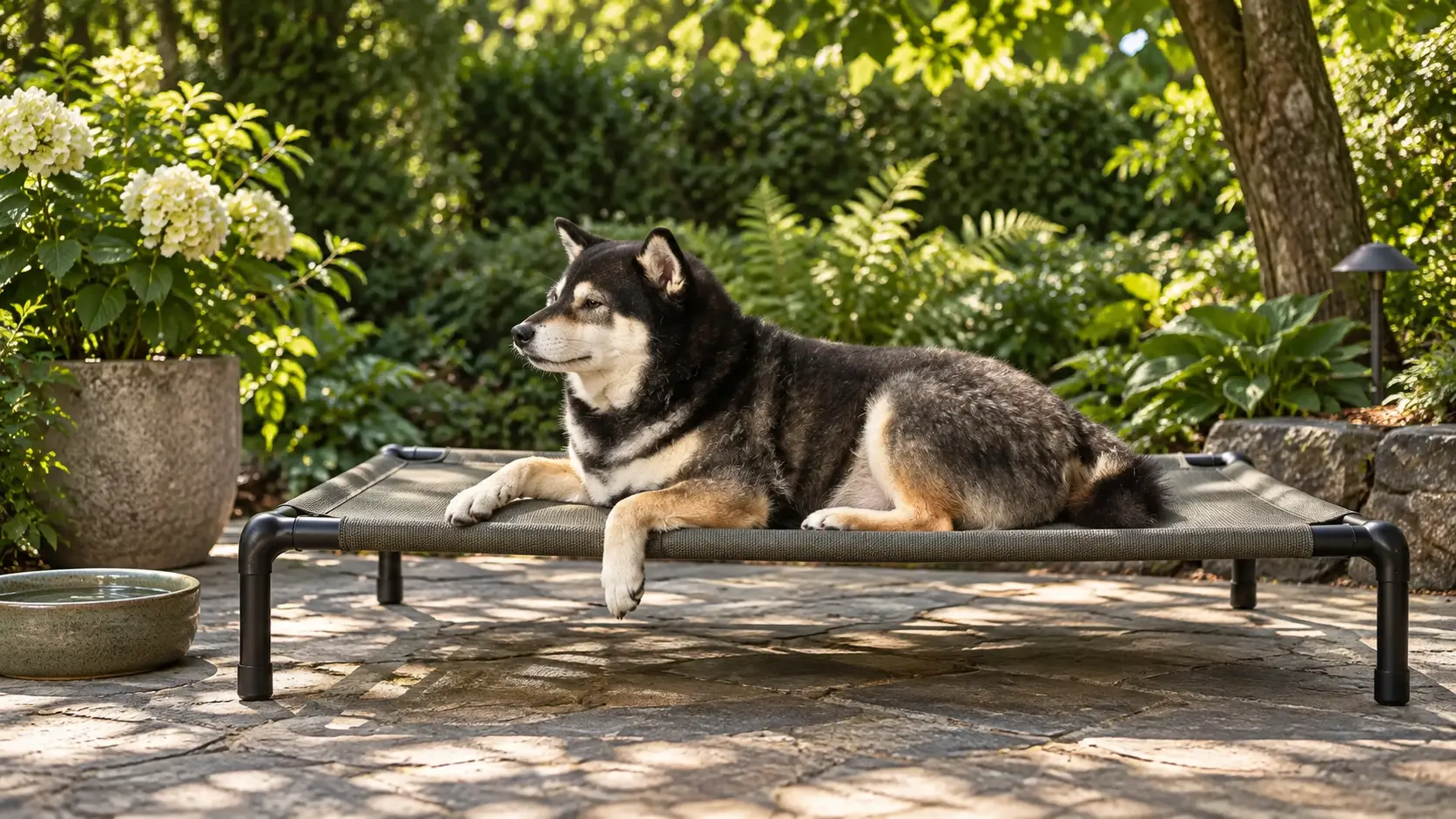
An outdoor dog bed has a tougher job than a living-room bed. It may sit on damp decking, grit, grass, hot paving, or a covered porch; it may need to dry between uses; and it must still be comfortable enough that your dog chooses it. The right purchase depends less on a “waterproof” badge than on where the bed will live, how long it will stay outside, and whether the dog can enter, rest, and leave safely.
Our starting choice for a shaded patio or campsite is a stable elevated mesh cot: it lifts the sleep surface above damp ground, allows air underneath, and is usually easier to rinse than thick foam. For a sheltered porch or indoor-outdoor transition, a removable-cover pad can be softer and easier for a dog that dislikes raised surfaces. Neither is a heat-safety device. AAHA's heatstroke-prevention guidance puts shade, fresh water, ventilation, cooler activity times, and early response to symptoms ahead of any cooling accessory.
Quick read
Quick answer
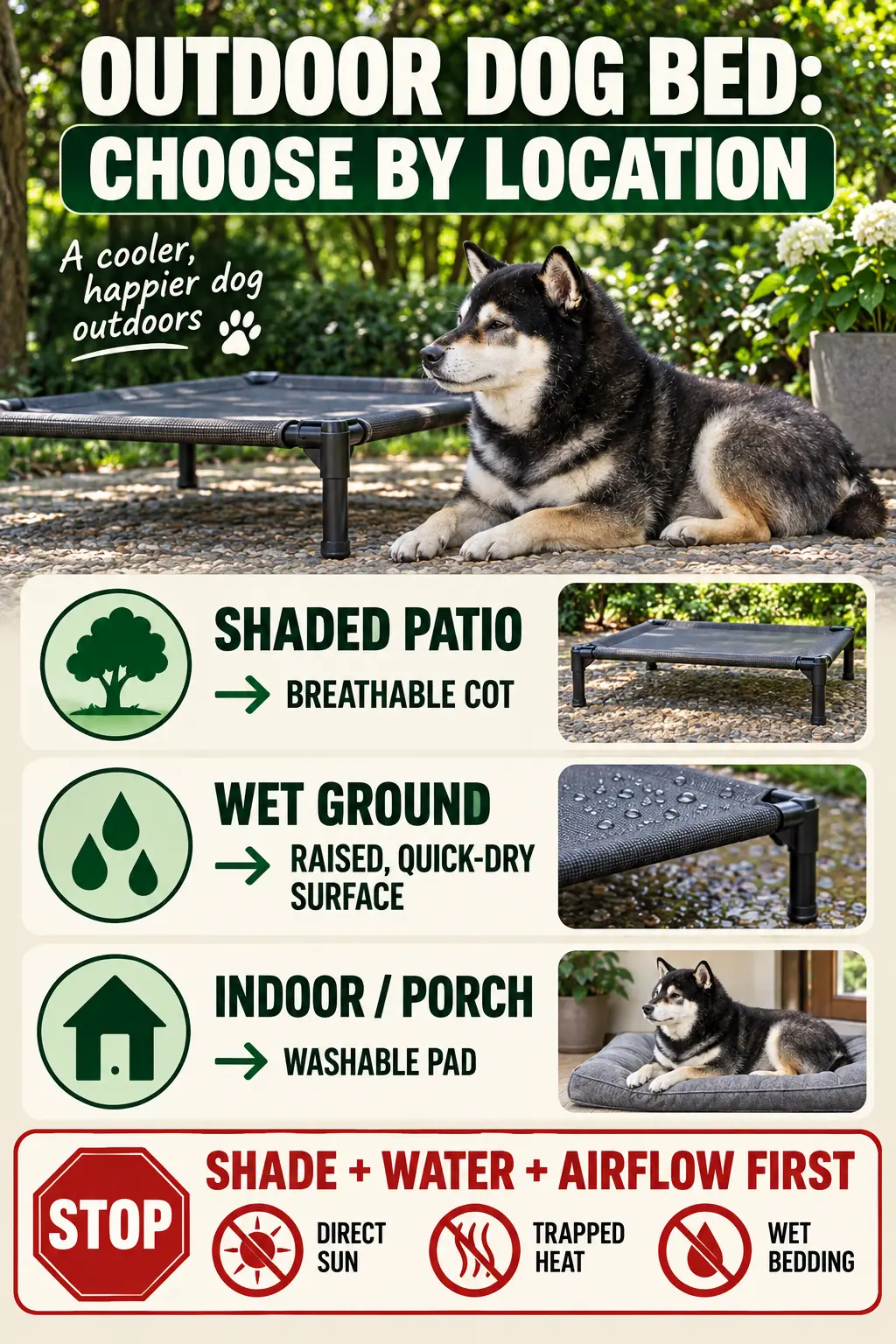
- Shaded, ventilated patio: compare a mesh cot with a stable frame and washable or replaceable sling.
- Wet ground or muddy campsite: elevation and drainage beat a thick cushion that stays damp.
- Covered porch or indoor use: a washable flat pad can be more comfortable for dogs that reject a cot.
- Senior or mobility-limited dog: prioritize low step-on height, non-slip feet, and a calm entry route.
- Direct sun or dangerous heat: change the environment or bring the dog inside; no outdoor bed makes it safe.
Share & embed
Decide where the bed will actually live
“Outdoor” describes several different environments. On a permanently covered porch, the main problem may be washing muddy paw marks. In a garden, it may be damp grass and insects. At a campsite, portability and pack size matter. On an exposed deck, changing shade, hot boards, wind, and rain are the deciding factors. Write down the real location before comparing listings.
Shaded patio with moving air
Breathable elevated cot
- Look for
Air under the sling and a surface that can often be rinsed
- Avoid
Frame rocking, hot decking, moving shade, and loose corners
Wet grass or occasional rain
Raised quick-dry cot
- Look for
Separation from damp ground and drainage
- Avoid
Fabric still needs to dry; metal and joints still need inspection
Covered porch or mudroom
Washable pad or low cot
- Look for
Softer entry or simpler laundry routine
- Avoid
Unprotected foam, slow drying, and slippery backing
Camping or travel
Portable cot or compact washable mat
- Look for
Pack size, setup, and cleaning on the road
- Avoid
Stability on uneven ground and dog acceptance
For a permanent outdoor location, confirm whether the manufacturer actually permits outdoor storage. “Water-resistant” is not the same as weatherproof. A mesh sling may shed light moisture while screws, plastic feet, seams, or a fabric edge still deteriorate. If the bed stays out, inspect it after rain and before the dog uses it again. A foam bed with a weather-resistant outer cover may still absorb moisture through seams or a zipper; our Waterproof Dog Bed Guide explains why a protected core matters.
Compare the three useful constructions
Elevated mesh cots
An elevated cot is a tensioned fabric panel on a frame. Its advantage is an open air gap and less direct contact with wet or gritty ground. K&H describes its all-season cot as an indoor/outdoor raised surface with a breathable center; that is a manufacturer design description, not evidence that it can prevent overheating. The dog still needs shade, water, and an exit route. The underside needs room for air to move; pushing the cot into a tight corner or draping thick blankets across it changes the mechanism.
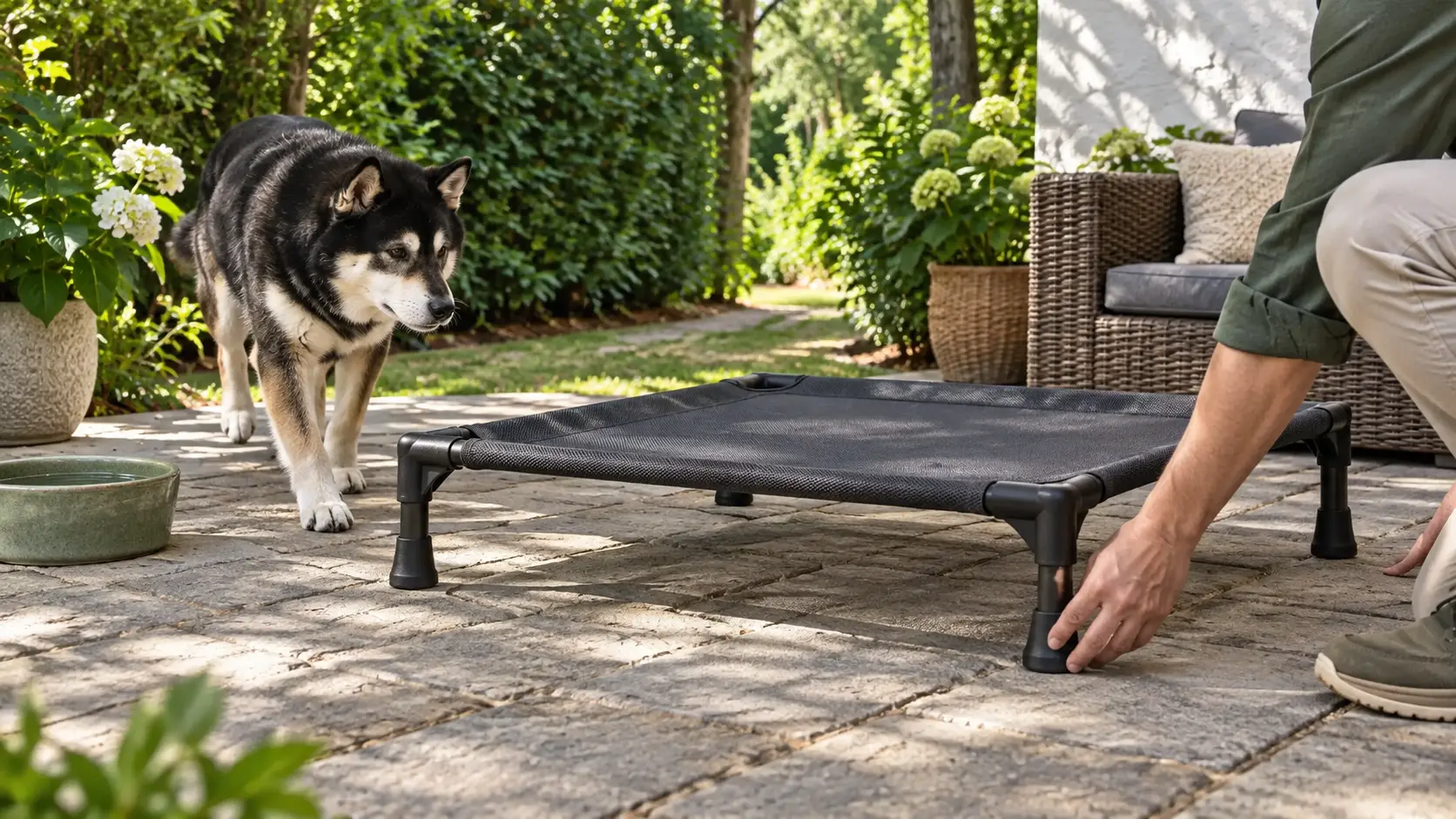
For purchase, compare usable sling dimensions, assembled outer dimensions, step-on height, frame joints, foot grip, and whether the cover is replaceable. A size label or dog-weight range does not tell you if a long dog can sprawl without resting a leg on the hard frame. Tension matters too: too much sag can make rising harder, while a taut but wobbly frame can feel unsafe. Assemble the exact unit on level ground and press all four corners before introducing the dog.
Washable pads and low mats
A low pad avoids climbing onto a frame and may suit small, senior, or hesitant dogs. It can also fit a covered porch or mudroom where you can bring it inside to dry. Check whether the whole mat is washable or only its cover, whether the inner fill has a barrier, and whether the instructions allow outdoor use. A plush top collects grit and holds moisture longer than a close weave; a thin pad may be easy to launder but offer little cushioning on hard stone. See Washable Dog Beds for the cover/liner/foam cleaning workflow.
Outdoor-style upholstered beds
These may resemble an indoor bolster bed in a more wipeable fabric. They can work in a roofed, dry area, but the failure points are still seams, zipper openings, bottom panels, and the foam core. Do not leave a padded bed wet simply because the exterior wipes clean. If you need a cushioned bed outside for a dog with mobility or pressure concerns, choose a sheltered location, a protected core, and a routine for bringing it in after use. Compare support and low-entry alternatives in Best Dog Beds for Senior Dogs.
| Construction | Good match | Main strength | Main tradeoff | Check on listing |
|---|---|---|---|---|
Raised mesh cot | Shaded patio, damp ground, camp rest station | Air gap and easy rinse | Step height and exposed frame edges | Sling dimensions, feet, frame, replacement cover |
Low washable mat | Covered porch, mudroom, cot-averse dog | Easy entry and familiar flat feel | Dampness and thinner support | Whole-bed or cover-only wash, drying, backing |
Upholstered outdoor bed | Sheltered dry spot needing cushioning | Softer sleep surface | Core and seams can trap water | Liner, zipper position, storage instructions |
Fit is a body-position question
Measure your dog in the relaxed posture you most often see outdoors. Some dogs curl in a shaded corner; others stretch fully after a walk. Add room for turning and for the paws and tail, then compare that measurement with the inside sleep surface, not the frame's external footprint. The Dog Bed Size Guide offers a more detailed measuring method. A cot should permit a natural rise and turn without the dog stepping on hard tubing. A bolster or pillow bed should not consume the space that looked generous in the product photo.
Entry height deserves a separate test. A raised cot may be low for one dog and awkward for another. Set a temporary platform at the proposed height and observe whether the dog steps on, steps off, and changes direction willingly. Do not pull the dog onto it. If a dog is stiff, recovering from injury, or repeatedly slips, a low open bed may be the better outdoor option. Foot traction and the path from the door matter as much as the bed itself.
The site and weather checks most listings skip
Stand at dog height where the bed will be used at the warmest planned hour, not only at setup. Shade moves. Paving and walls radiate heat. A garden fence can block the breeze even where the human seat feels airy. Touch or measure the surface before use, but do not reduce safety to a single temperature reading. Watch the dog and the whole environment. AAHA describes heat-warning signs and prevention; suspected heat illness calls for immediate veterinary help, not a different bed.
After rain, shake or rinse dirt from the sling, inspect seams and hardware, and let every part dry. Lift low mats to check the underside and floor. For a storage spot, keep the bed clean and dry so trapped moisture does not become a mildew problem. A Reddit outdoor-bed question raises exactly that practical concern; the post is a question source, not evidence that a particular brand prevents mildew. Our recommendation is to select inspectable materials and a storage routine you will actually follow.
On uneven camp ground, test all feet and the bed's tendency to slide before the dog gets on. Keep it away from fire rings, cooking equipment, traffic, and tent lines. If your dog digs, mouths, or pulls at sling corners, observe that behavior on the chosen construction before leaving the bed unattended. A “chew-resistant” label does not make torn fabric safe to swallow; see Best Chew-Proof Dog Beds for a behavior-first comparison.
Two exact Amazon comparison points
These are decision examples, not hands-on rankings. We use exact previously checked Amazon ASIN/image pairs. Follow the current listing for size, color, care, availability, seller, and returns; do not buy by the picture alone. As an Amazon Associate, What Dogs Like earns from qualifying purchases.
Neither card promises that the particular dog will use the bed. The best-value purchase is the one that fits the dog and location and can be maintained. If both cots are too high or too firm, buy a lower washable option rather than trying to force a cot preference. For hot-weather mechanism differences, the Cooling Dog Beds Guide compares cots with water-core and gel mats without overstating heat protection.
A seven-step pre-purchase and setup trial
- Choose the intended site and check sun, weather, drainage, traffic, and escape route at the time of day the dog will rest there.
- Measure the dog's usual outdoor resting posture and compare it with the usable sling or pad area.
- Verify the product's outdoor-use, washing, drying, and storage instructions for the exact variant.
- Assemble or lay the bed on the intended surface; check rock, sliding, sharp edges, exposed fasteners, and pressure on each corner.
- Add fresh water, deep shade, and a familiar alternative resting place; allow voluntary exploration in mild conditions.
- Observe entry, turning, lying down, rising, and leaving. If the dog hesitates or slips, change the setup or type of bed.
- After the first wet or muddy use, complete the full clean-and-dry routine before deciding it is practical for everyday use.
Do not treat a bed as a substitute for supervision outdoors. Dogs can become too hot, cold, wet, stressed, or interested in chewing the product. The bed is one part of a rest station, not permission to leave a dog outside longer than conditions allow.
Frequently asked questions
Is an elevated dog bed better for outdoors than a cushion?
Often for damp ground and shaded ventilation, because it separates the dog from the surface and can dry faster. A low cushion may be better for a dog that dislikes elevation or needs easy entry, provided it stays sheltered and you can wash and dry it. Compare the specific location and dog, not the category name.
Can an outdoor dog bed stay outside all year?
Only if the manufacturer permits that use and the actual weather and maintenance routine support it. Even a weather-resistant cover may hide wet seams, loose hardware, or mildew. Inspect and dry the bed regularly; bring padded beds in when needed.
Is an outdoor dog bed waterproof?
The word may refer to only one layer. Mesh can drain without being a waterproof cushion; a coated cover can resist splashes while seams or zippers leak. Verify the exact construction, care instructions, and whether the core remains protected after washing.
What is the best dog bed for a rainy patio?
First provide a genuinely sheltered resting area. For occasional wet ground, a raised quick-dry cot is usually easier to manage than absorbent foam. If rain reaches the dog or bed repeatedly, solve the shelter problem rather than relying on a product claim.
Does a raised cot keep a dog safe in hot weather?
No. Airflow may improve comfort in shade, but it cannot neutralize direct sun, high ambient heat, poor ventilation, or individual medical risk. Follow AAHA's prevention guidance and bring the dog inside when conditions are unsafe.
What if my dog refuses the cot?
Try it on stable level ground in mild weather next to the familiar bed and reward voluntary exploration. Never pull the dog onto a rocking frame. A lower pad may simply be a better match. One Reddit question about a deck bed reflects the real challenge of making an outdoor rest spot appealing; that discussion is not evidence that any product works for every dog.
How do I stop an outdoor bed from smelling musty?
Remove dirt, wash as directed, dry all layers completely, and check the underside and storage area. If a foam core has become wet or a cover repeatedly traps moisture, change the construction or location. Fragrance does not fix damp material.
Can I put a blanket on a mesh cot?
You can offer a compatible washable layer if the dog needs softness and the manufacturer allows it, but a thick blanket blocks some airflow and can stay wet. Check that it does not bunch, slide, or create chewable loose edges. Reassess whether a low pad is the more appropriate purchase.
Is a cot safe on a sloped deck or uneven campsite?
Do not assume so. The four legs need stable contact, the frame must not rock, and the dog needs a safe approach and exit. If the surface is not level or the feet slide, move the rest station or choose another construction.
Bottom line
For shaded patios and damp ground, start with a stable, washable elevated cot. For a sheltered porch and dogs needing easy entry, compare a protected washable low pad. In either case, measure the usable surface, check the full clean-and-dry workflow, give the dog a choice, and keep shade, water, ventilation, and supervision above the bed itself.