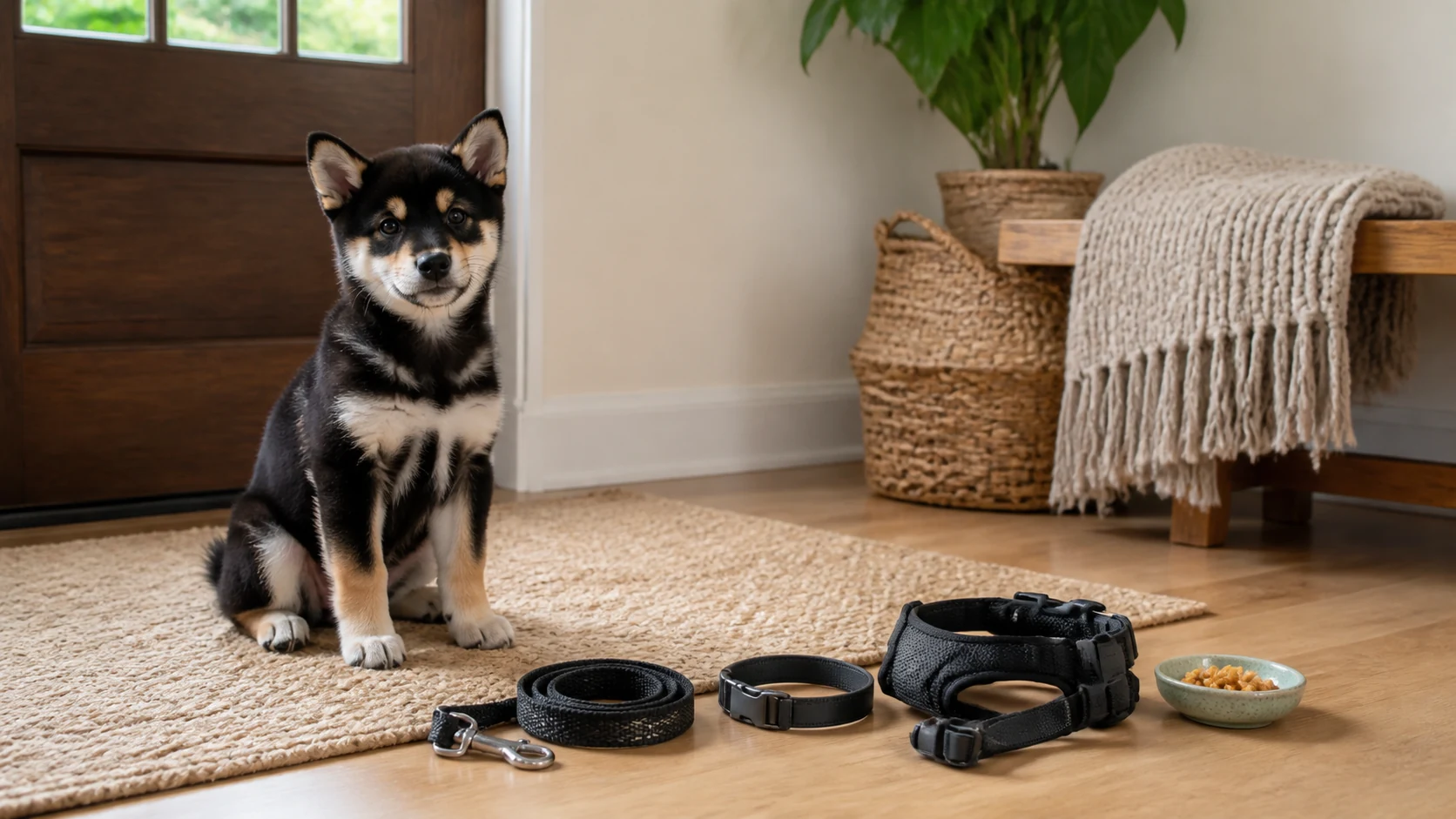
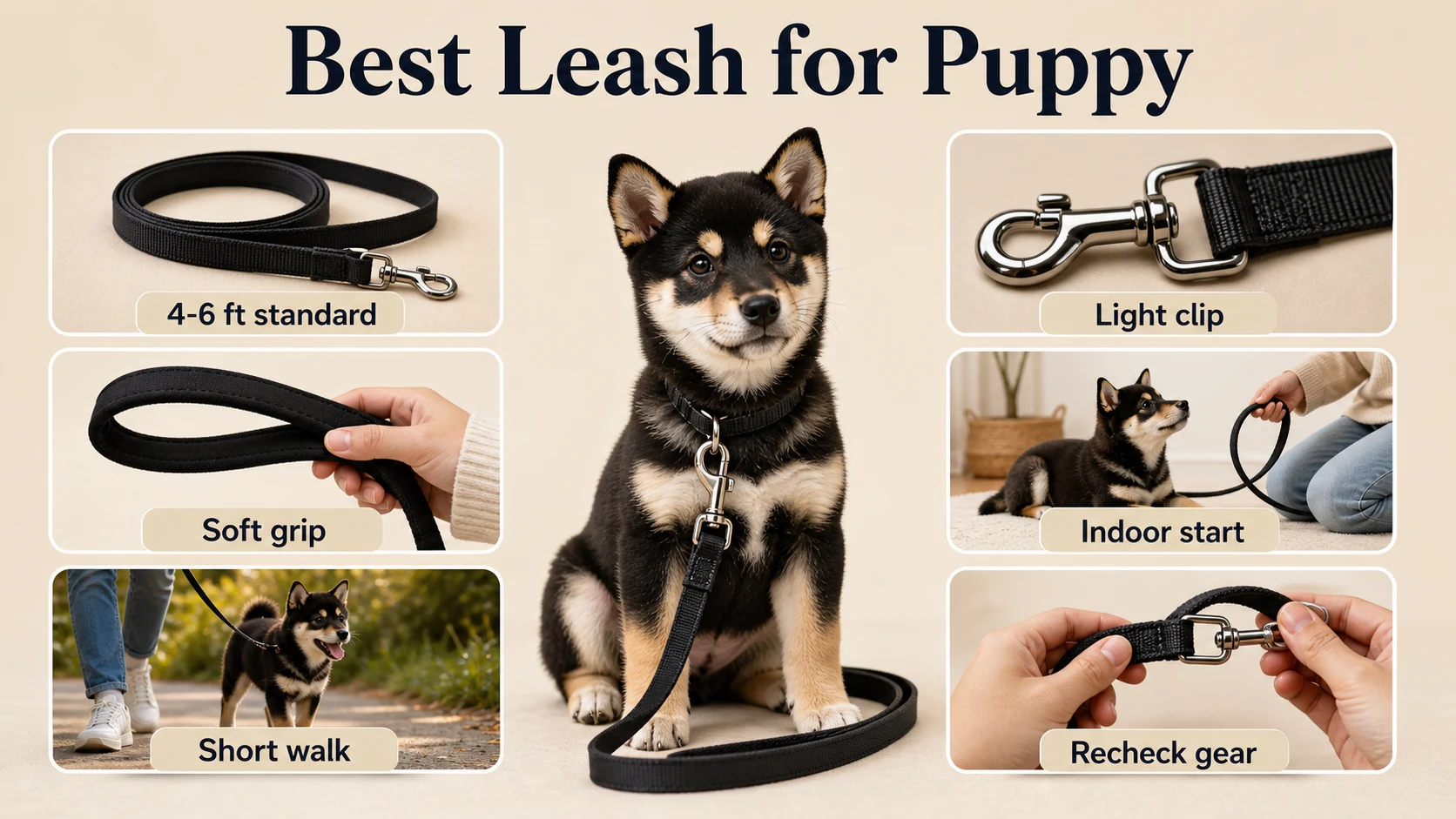
The best leash for a puppy is usually a simple, lightweight standard leash that is easy to hold and predictable for short practice sessions. For many puppies, start with a 4-6 foot leash, a clip that is not too heavy for the collar or harness, and enough grip that the handler can keep gentle control without wrapping the leash around a hand.
Use this guide with Dog Collar vs Harness for Puppy, Puppy Harness Size Guide, the Dog Leash Length Guide, the Dog Leash Materials Guide, and the printable Puppy Walking Gear Checklist. Return to the Harnesses, Collars & Leashes pillar for the full walking gear framework.
Quick read
Quick answer
- Start with a standard leash, not a retractable leash. A fixed length is easier for puppies to understand.
- Use 4-6 ft for early walks. Four feet helps close handling; six feet gives more normal movement.
- Keep the clip light. Oversized metal clips can pull on a small collar or harness.
- Choose a comfortable grip. A soft or padded handle can help the handler stay calm and consistent.
- Practice indoors first. Let the puppy learn leash movement before adding outdoor distractions.
- Recheck after walks. Inspect the leash, clip, collar, harness, and puppy behavior after short use.
Share & embed
Puppy leash choices at a glance
| Leash choice | Best use | Main check |
|---|---|---|
| 4-foot standard leash | Close handling, traffic edges, first doorway practice | Do not keep the whole walk tense or restrictive |
| 6-foot standard leash | Most everyday puppy walks | Keep slack manageable and avoid heavy clips |
| 5-foot lightweight leash | Small puppies, short early walks, simple handling | Check width, clip weight, and handle comfort |
| Long line | Later open-space recall practice | Use only with space, attention, and a well-fitted harness |
| Retractable leash | Not the first default for leash training | Variable tension can encourage pulling and reduce control |
Why a standard leash is the first comparison
A standard leash gives the puppy one predictable boundary. The length does not change every time the puppy moves, the handle is simple, and the handler can practice turns, stops, treats, and calm doorway exits without managing a bulky retractable case.
For a young puppy, simplicity matters more than features. A leash with too much length, too much hardware, or a confusing spring-loaded mechanism can make the first walking routine harder than it needs to be.
Four feet vs six feet for puppies
A 4-foot leash can help around front doors, parking lots, stairs, tight sidewalks, and short handling moments. It keeps the puppy close enough that you can prevent tangles and guide direction changes.
A 6-foot leash is often the better everyday default because it gives the puppy room to move naturally while still staying close enough for sidewalks and crossings. It also supports sniffing breaks, which matter for a walk that feels calm rather than constant pressure.
Choose by routine:
- Use 4 feet if the route is crowded, tight, or traffic-heavy.
- Use 6 feet if the route is a normal sidewalk or quiet neighborhood.
- Use 5 feet if a product line offers a lightweight puppy-friendly middle ground.
- Save long lines for open-space practice after basic leash handling is steadier.
Clip weight and leash width
A heavy clip can drag on a small puppy's harness or collar. That matters because puppies are still learning what gear feels like. If the clip bounces, pulls the attachment point sideways, or makes the puppy scratch at the gear, the leash may be too bulky even if the length is right.
Check:
- Clip weight relative to puppy size.
- Whether the clip turns freely.
- Whether the gate closes cleanly.
- Leash width and edge feel.
- Handle size for the person walking the puppy.
- Reflective stitching for low-light routines.
Small puppies usually need lighter hardware than adult dogs. Larger puppies may still need sturdy hardware, but the leash should not be chosen by adult weight predictions alone.
Material and grip
Nylon is the simplest starting material for many puppy leashes because it is light, common, washable, and easy to compare. A padded or soft handle can be helpful if the puppy changes direction suddenly, but padding does not fix poor leash handling.
Rope leashes can feel substantial, but they may be more than a small puppy needs and can be harder on hands if they slide quickly. Leather can feel good over time, but it needs care and is rarely the easiest first puppy leash. Coated webbing can wipe clean after mud or rain, but some versions feel stiff.
Use the Dog Leash Materials Guide if material, cleaning, grip, or weather is the main buying question.
Indoor start before outdoor walks
Before the first real walk, clip the leash on indoors for a short calm session. Let the puppy notice the leash, move a few steps, turn with you, and get rewarded for staying near you.
Do not drag the puppy with the leash. The goal is a positive association and basic movement, not a finished walking skill. Puppies are not born understanding leash pressure, direction changes, doorways, sidewalks, or passing distractions.
First short walks
Keep the first walks short enough that you can observe fit and behavior. Watch whether the leash clip twists the harness, whether the puppy chews the leash, whether the leash tangles under the legs, and whether the puppy can sniff and check in without constant tension.
After the walk, inspect:
- Leash stitching and clip.
- Harness or collar attachment point.
- Neck, chest, and armpit areas.
- Whether the puppy tried to back out of gear.
- Whether the leash length made the walk easier or more chaotic.
If the puppy coughs, gags, limps, panics, repeatedly escapes gear, or shows sudden behavior changes, stop treating the leash as the fix. Ask a veterinarian about health or pain concerns, and use a qualified trainer or behavior professional for serious fear, handling, or walking issues.
Commercial comparison points
These direct Amazon product CTAs are comparison starting points, not universal winners. What Dogs Like may earn from qualifying purchases. Affiliate links do not change the buying checks in this guide: start with length and clip weight, compare current listing details, and inspect the leash after normal use.
Direct product examples
Revisit the lightweight fixed-leash examples
What Dogs Like may earn from qualifying purchases. Affiliate links do not change the leash checks in this guide.
Common mistakes
✓ Better buying habits
Better puppy leash habits
- Start with a fixed-length leash.
- Choose 4-6 ft based on the walking environment.
- Match clip weight to the puppy, not the adult size guess.
- Practice indoors before outdoor distractions.
- Keep first walks short and easy to observe.
- Pair leash choice with a well-fitted collar or harness.
- Inspect stitching, clip closure, and gear fit after use.
× Mistakes to avoid
- Starting with a retractable leash as the default.
- Buying a heavy leash because the puppy will grow.
- Letting a long line drag near traffic or crowds.
- Wrapping the leash around your hand.
- Using leash tension to pull a hesitant puppy forward.
- Ignoring chewing, panic, coughing, gagging, or escape attempts.
- Treating leash choice as a substitute for patient training.
Related guides
Read Dog Collar vs Harness for Puppy before deciding where the leash should attach. Use Puppy Harness Size Guide, the Dog Harness Fit Guide, and the Dog Harness Fit Calculator if the leash will attach to a harness. Use the Dog Collar Size Guide and Dog Collar Size Calculator if collar ID setup is still being sized.
Use the curated Dog Leashes hub when the first-leash decision also involves traffic length, material, grip, or later long-line practice. For detailed leash decisions, read Dog Leash Length Guide and Dog Leash Materials Guide. For full daily setup, use Collars and Leashes for Everyday Walks and the printable Puppy Walking Gear Checklist. If the puppy is also starting a crate routine, pair walks with Best Dog Crates for Puppies and the Puppy Crate Training Schedule.
Helpful authority resources
The AKC puppy leash training guide recommends introducing leash basics early, using a harness or collar carefully, and choosing a lightweight 6-foot leash rather than a retractable leash for early training. The AKC dog leash overview explains standard flat leashes, traffic handles, long lines, retractable leashes, and the importance of sturdy clips. The RSPCA leash-equipment guidance emphasizes comfortable, correctly adjusted gear, suitable leash size, and caution with retractable or bungee leashes. ASPCApro's leash-handling guide is useful for kind handling, slack leash checks, and giving dogs chances to sniff without constant pressure.
Frequently asked questions
What leash length is best for a puppy?
For many puppies, a 4-6 foot standard leash is the best starting range. Four feet helps close handling; six feet gives more natural movement.
Should I use a retractable leash for a puppy?
Usually not as the first default. A fixed-length leash is easier for early practice because the puppy gets a more predictable boundary and the handler has simpler control.
Should a puppy leash attach to a collar or harness?
That depends on fit, puppy size, walking behavior, and ID needs. Many puppies use a collar for ID and a harness for leash attachment during walks.
Is a rope leash good for a puppy?
It can be more leash than a small puppy needs. Check weight, grip, clip size, and whether the rope can slide quickly through your hand.
What leash material is easiest for puppies?
Light nylon is a practical starting point for many puppies because it is common, washable, and available in narrow widths and simple fixed lengths.
What should I check after the first walk?
Check the leash clip, stitching, handle, collar or harness attachment point, and whether the puppy had rubbing, coughing, gagging, panic, chewing, or escape attempts.