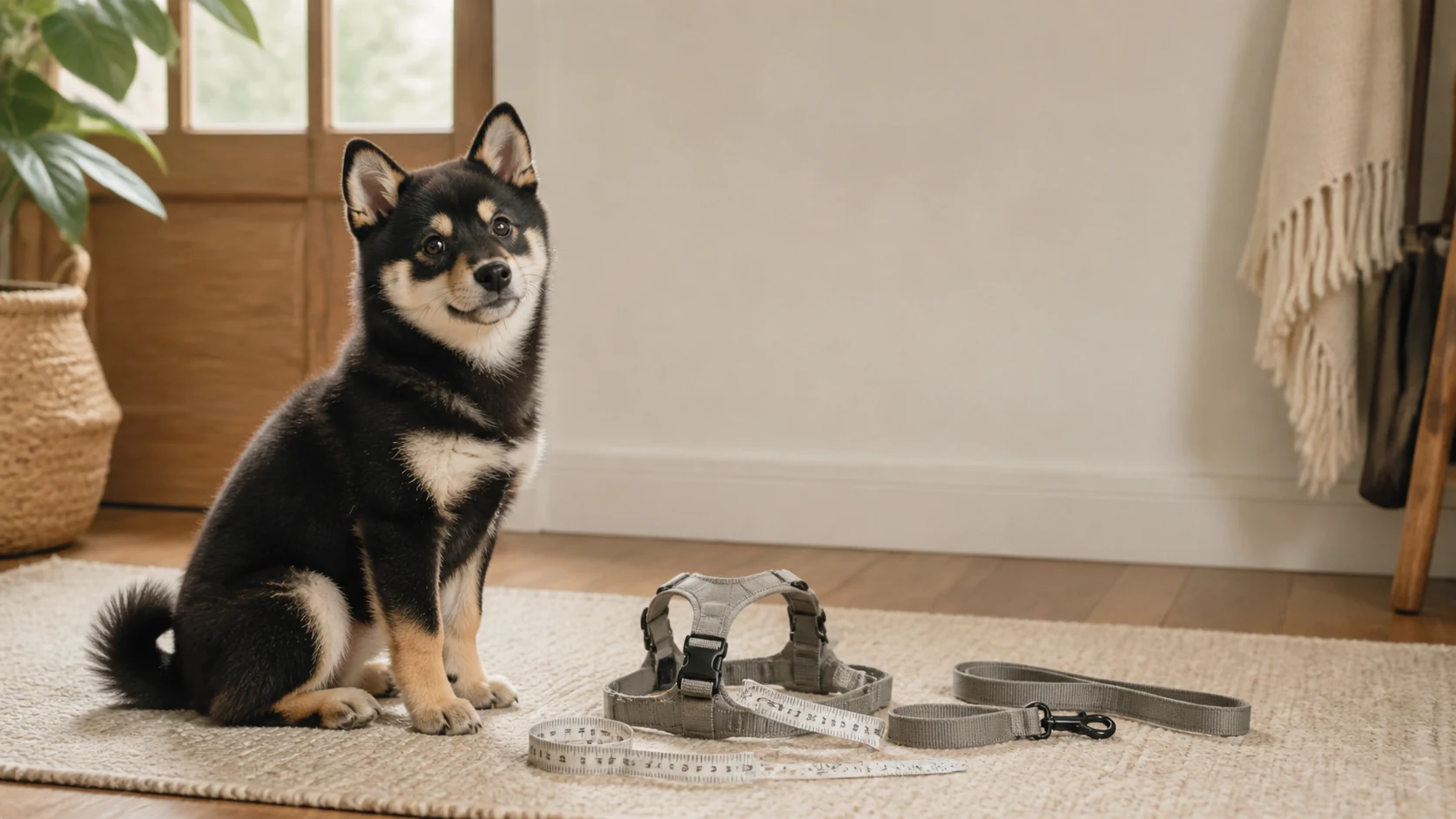
A puppy harness should be chosen from measurements, not breed guesses or expected adult size. Start with chest girth around the widest part of the rib cage, compare the brand's current size chart, fit the harness indoors, take one short easy walk, then inspect for rubbing, twisting, and tight spots.
Use this guide with the Dog Collar vs Harness for Puppy, Best Leash for Puppy, Dog Harness Fit Guide, Dog Harness Fit Calculator, and printable Puppy Walking Gear Checklist. Return to the Harnesses, Collars & Leashes pillar for the full walking gear framework.
Quick read
Quick answer
- Measure chest girth first. Use the widest part of the rib cage, usually just behind the front legs.
- Check the neck opening too. Over-head harnesses must clear the head and sit away from the throat.
- Avoid buying by weight alone. Puppy shape, coat, and growth stage can change fit.
- Leave adjustment room, not looseness. The harness should be snug enough to stay centered but not pinch.
- Recheck fit often. Growing puppies can need strap changes weekly.
- Stop and reassess if coughing, gagging, limping, panic, escape attempts, or rubbing appears.
Share & embed
Puppy harness sizing at a glance
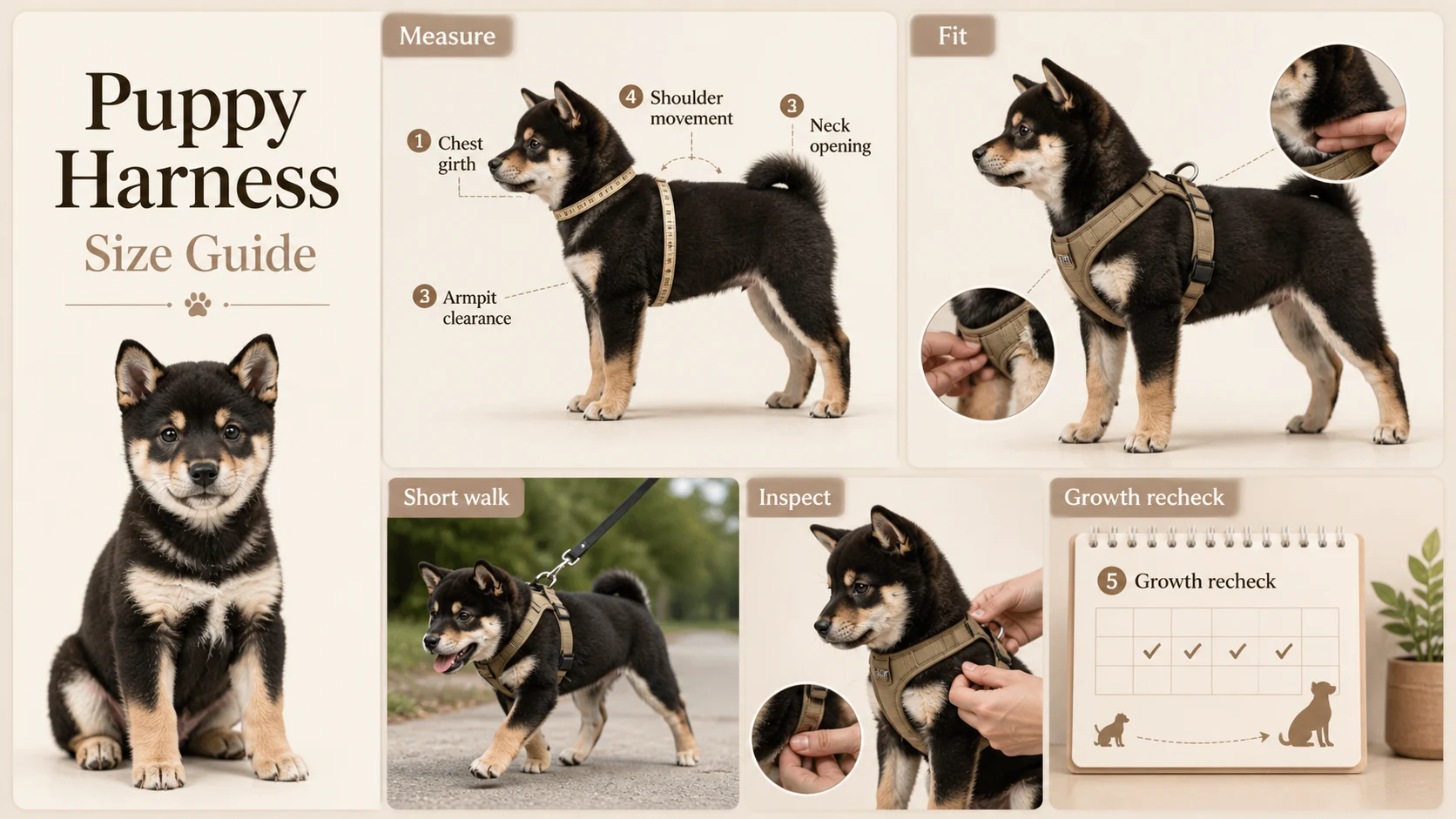
| Check | What to do | Why it matters |
|---|---|---|
| Chest girth | Measure around the widest part of the rib cage in inches | Most harness charts use chest girth as the main sizing number |
| Neck opening | Check over-head clearance or front opening style | Prevents pressure near the throat and avoids stressful handling |
| Armpit clearance | Confirm straps do not sit directly behind the front legs | Reduces rubbing during normal puppy movement |
| Shoulder movement | Watch the puppy walk from the side | The harness should not block the front legs or change gait |
| Adjustment room | Choose a range that gives strap room without sagging | Puppies grow quickly, but loose harnesses can twist or slip |
| Post-walk check | Inspect fur, skin, buckle spots, and strap edges | Early rub marks are easier to solve before they become a pattern |
How to measure chest girth
Use a soft measuring tape and measure around the puppy's rib cage at the widest point. Keep the tape flat against the coat, level around the body, and snug without compressing fur or skin.
Write the number down in inches, then compare it with the brand's size chart. If the puppy is between sizes, do not automatically size up. Compare neck opening, strap adjustability, body shape, and return policy. A too-large harness can shift, twist, or let a puppy back out.
Neck opening and over-head fit
Some puppy harnesses go over the head. Others are step-in designs. Over-head styles need enough neck opening to pass on calmly and sit away from the throat. Step-in styles reduce over-head handling for some puppies, but they still need enough chest security to avoid slipping.
Check:
- Does the harness go on without forcing the puppy's head or legs?
- Does any strap press across the throat?
- Does the chest panel sit on the chest, not high on the neck?
- Do buckles land away from the armpits?
- Can you clip the leash without the harness twisting?
Between sizes
Being between sizes is common with puppies. Use the brand chart as a starting point, then think about body shape and growth speed.
Choose the smaller size only if the puppy is comfortably inside the adjustment range now and still has strap room. Choose the larger size only if it can be adjusted securely today without sagging, gapping, or sliding toward the armpits.
Do not keep a harness just because the puppy will "grow into it." A loose harness can create escape risk and poor leash handling during the weeks when the puppy is learning the routine.
First indoor fit
Fit the harness indoors before using it outside. Let the puppy sniff it, put it on calmly, adjust straps, and watch a few simple movements.
Look for:
- Natural standing posture.
- Normal shoulder movement.
- No strap cutting into the armpits.
- No buckle pressing into the ribs.
- No chest panel riding up toward the throat.
- No twisting when the leash is attached.
- Enough snugness that the harness stays centered.
If the puppy freezes, bites at the harness, scratches hard, or tries to escape, slow down. The issue may be fit, handling, harness style, or the puppy's comfort with new gear.
First short walk check
The first walk should be short and easy. This is not the time to judge training progress. It is a fit inspection under normal movement.
After the walk, check:
- Fur behind the front legs.
- Skin under strap edges.
- Chest panel position.
- Buckle pressure points.
- Whether the leash ring pulled the harness sideways.
- Whether the puppy tried to back out.
If there is rubbing, coughing, gagging, limping, panic, or repeated escape behavior, stop using that setup until you reassess the size, shape, and leash handling. Ask a veterinarian about pain, coughing, injury, or sudden movement changes. Use a qualified trainer or behavior professional for fear, panic, escape patterns, or strong pulling.
Growth rechecks
Puppies can outgrow gear quickly. Recheck straps often during growth, after grooming, after coat changes, and after any change in walking behavior.
A simple rhythm:
- Measure chest girth.
- Check neck opening.
- Fit indoors.
- Take a short walk.
- Inspect armpits, chest, shoulders, and buckle points.
- Record whether the harness still has adjustment room.
If you are buying early puppy gear, pair this with the Dog Collar Size Guide and Dog Collar Size Calculator so the collar and harness are checked separately.
Commercial comparison points
These direct Amazon product CTAs are comparison starting points, not universal winners. What Dogs Like may earn from qualifying purchases. Affiliate links do not change the buying checks in this guide: measure first, compare the current brand size chart, inspect fit after short use, and avoid treating gear as a training or behavior solution.
Common mistakes
✓ Better buying habits
Better puppy harness habits
- Measure chest girth before opening product listings.
- Compare the current brand chart, not only the size name.
- Fit indoors before the first walk.
- Keep early walks short enough to inspect gear calmly.
- Recheck weekly during fast growth.
- Use a collar separately for ID tags when needed.
- Ask for professional help when fear, pain, or escape behavior is more than a fit issue.
× Mistakes to avoid
- Buying by breed, weight, or expected adult size only.
- Keeping a harness that slides into the armpits.
- Assuming a puppy will safely grow into loose gear.
- Treating front clips as a replacement for leash practice.
- Ignoring coughing, gagging, limping, panic, or rub marks.
- Choosing heavy hardware for a small puppy.
- Leaving wet or muddy harnesses on after walks.
Related guides
Read Dog Collar vs Harness for Puppy if you are deciding whether the first setup needs a collar, harness, or both. Use the broader Dog Harness Fit Guide, Dog Harness Fit Calculator, and printable Harness Fit Checklist for post-purchase inspection.
For the walking setup around the harness, read Best Leash for Puppy, Collars and Leashes for Everyday Walks, Dog Leash Length Guide, Dog Leash Materials Guide, and Front Clip vs Back Clip Harnesses. If you are comparing adult harness categories, use Best Dog Harnesses for Everyday Walks and Dog Harness vs Collar.
For puppy routines beyond walks, pair this with Best Dog Crates for Puppies, the Puppy Crate Training Schedule, and the printable Puppy Walking Gear Checklist.
Helpful authority resources
The AKC harness guide emphasizes choosing harness type and fit carefully. The AKC collar-vs-harness overview is useful context for comparing leash attachment and ID use. The RSPCA leash-equipment guidance keeps the focus on suitable, comfortable, correctly adjusted walking gear. ASPCApro's leash-handling guide is useful for handling context without relying on gear pressure alone.
Frequently asked questions
What measurement matters most for a puppy harness?
Chest girth is usually the main measurement. Measure around the widest part of the rib cage in inches, then compare the brand's current size chart.
Should I size up because my puppy is growing?
Only if the larger size can be adjusted securely today. A loose harness can twist, rub, or let a puppy back out before they grow into it.
How tight should a puppy harness be?
It should sit snugly enough to stay centered without pinching, pressing into the throat, blocking shoulder movement, or rubbing behind the front legs.
How often should I recheck puppy harness fit?
During fast growth, check at least weekly and after grooming, coat changes, visible growth, or changes in walking behavior.
Is a front-clip harness better for puppies?
It can help some handlers manage leash angle, but it is not automatically better and does not replace calm practice or professional support for serious pulling or fear.
What should I do if the puppy panics in the harness?
Stop using that setup for the moment, slow down the introduction, reassess size and harness shape, and get qualified help if panic, escape attempts, pain, or fear continues.