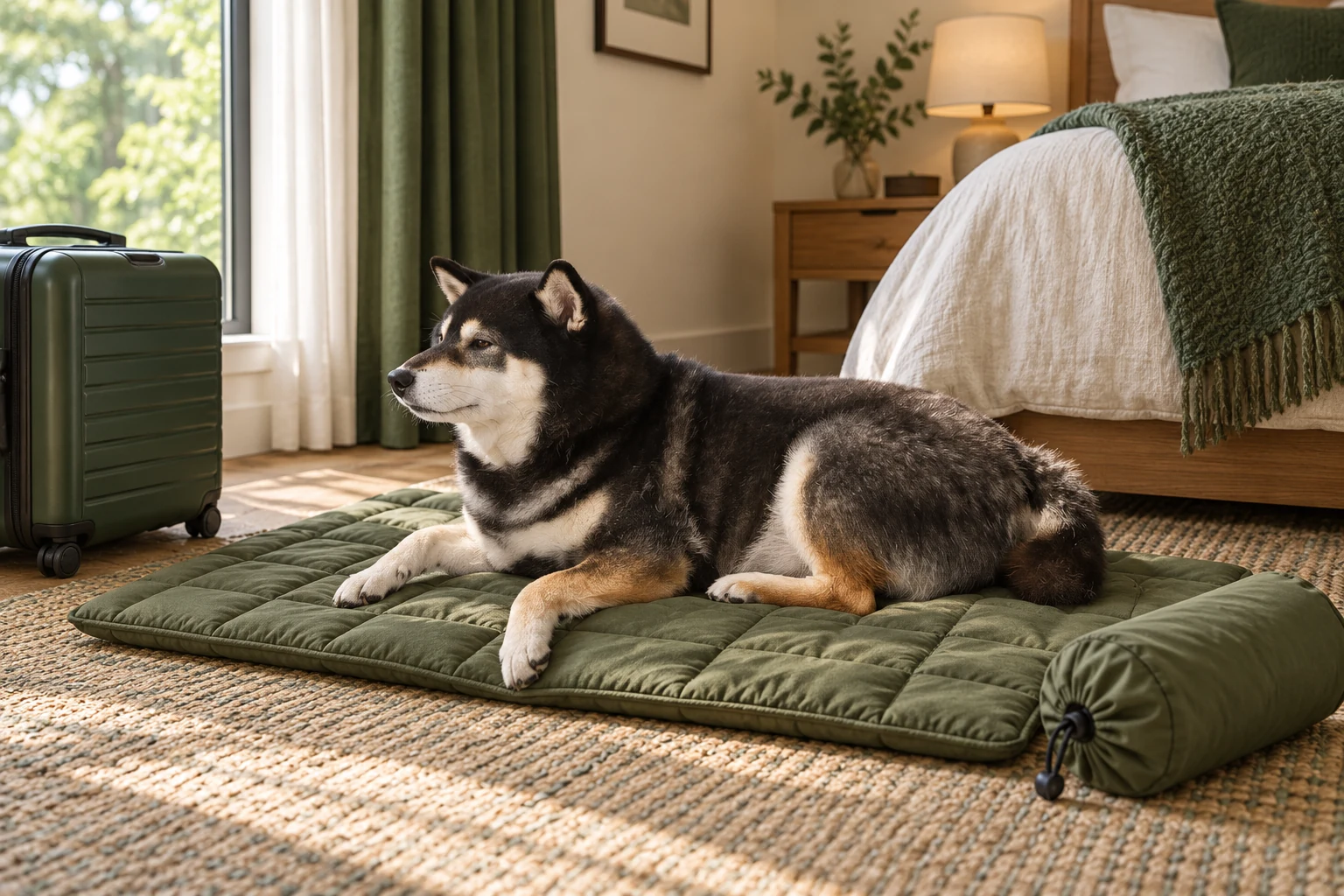
A travel dog bed has to give your dog enough resting space and fit the luggage you can carry. For a car trip and hotel stay, a padded roll-up bed can be worth the extra bulk. If you will carry it far from the car, packed size and weight need more attention. Decide how the bed will travel before choosing a fabric or brand.
Quick read
Choose a bed for the journey
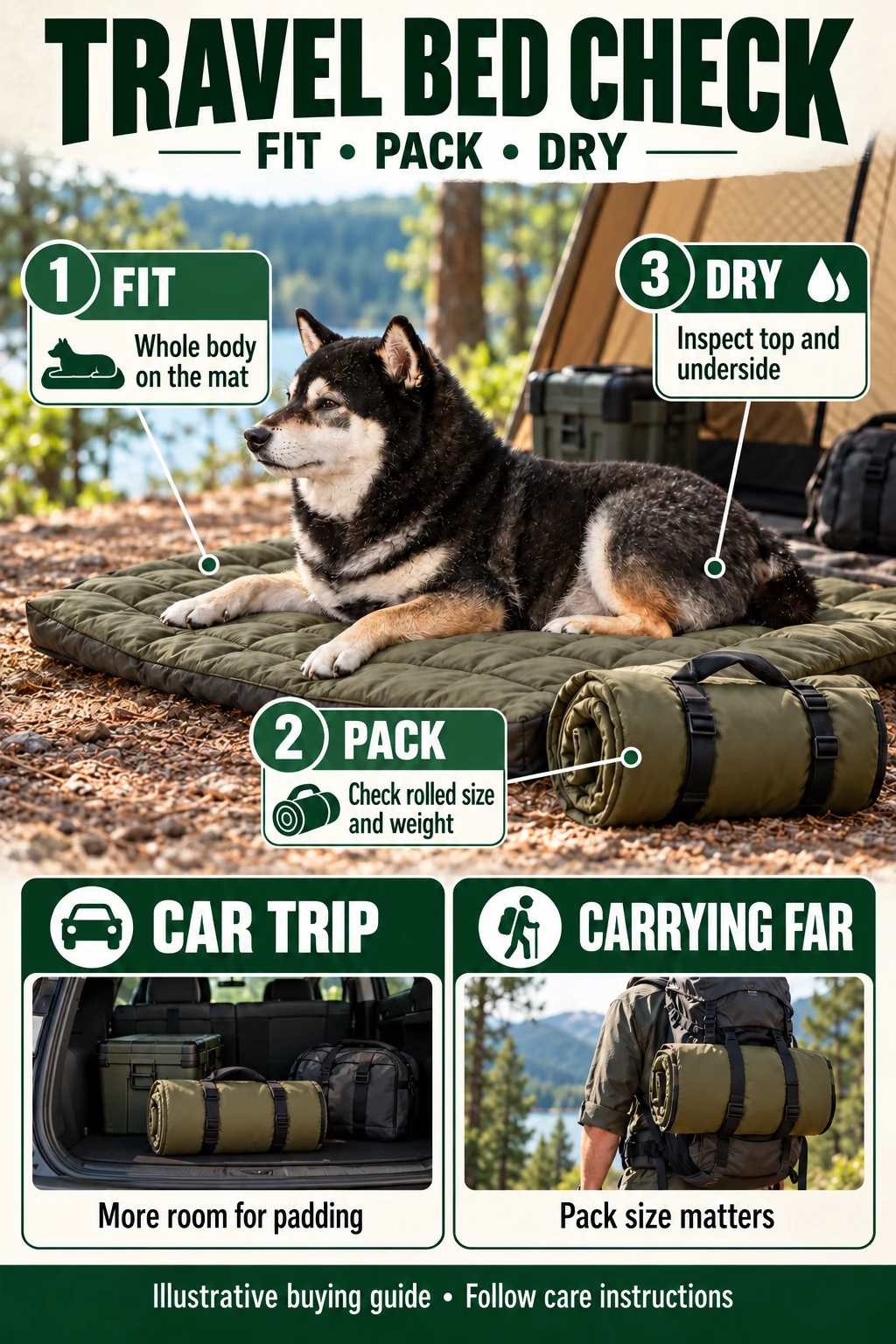
- Measure your dog resting naturally, then compare the usable open surface.
- Check the packed dimensions with the stuff sack, straps or handle included.
- For hotel floors, compare padding and grip. For damp campsites, inspect the underside and seam construction.
- Confirm whether you can wash the whole bed, remove a cover or only spot-clean it.
- A travel bed is a resting surface. Vehicle restraint and crate compatibility need separate checks.
Decide how far you will carry it
You may be happy carrying a thick bed through a hotel lobby and regret the same choice halfway along a trail. Include it in a realistic packing trial with water, food, bowls and your own supplies.
Check the weight of the selected size. A family description such as “lightweight” may refer to a smaller variant, and a product weight may exclude its sack. If the listing is unclear, ask the maker before ordering. For a walking trip, you need both a weight you can carry and a shape that attaches securely without swinging or obstructing access to essential supplies.
For car camping, measure the actual space available once the restraint system and luggage are installed. The bed should be accessible at stops without unloading everything. Secure it with the other luggage while driving; do not leave a large rolled bundle loose beside the dog.
| Trip | Useful starting point | Main advantage | Tradeoff | Check before buying |
|---|---|---|---|---|
Hotel or rental stay | Washable padded roll-up bed | Defined resting surface with room for cushioning | Bulkier than a thin mat | Floor grip, open size and drying space |
Car camping | Roll-up pad or compact mattress | Easy to transport without carrying far | Damp ground and dirty packing | Underside, carry straps and cleaning method |
Long carrying distance | Compact pad with verified packed weight | Less space and load in the bag | Reduced cushioning or insulation | Full carry weight and suitability for the dog's needs |
Visiting friends or a cafe | Small folding or rolling mat | Quick setup and easy transport | May be too thin for a full night | Grip, comfort on a hard floor and permission to use it |
Dog needs substantial support | Suitable support bed transported by car | Can preserve an established rest arrangement | Larger packed volume | Veterinary needs, access and room layout |
For a bed that will stay outside at home, start with the outdoor dog bed guide. This guide concentrates on carrying, packing and sleeping away from home, including indoor floors where a patio cot may be inconvenient.
Measure open space and packed space separately
Watch your dog in the posture used for a longer rest. A compact curl during an alert moment can underestimate the surface needed for side sleeping. Measure the relaxed outline and compare it with the bed's usable surface, allowing room to change position. The Dog Bed Size Guide and size calculator help organize that first comparison.
An oval travel bed can have less usable corner space than a rectangle with similar headline measurements. Quilted edges, a rolled lip or a partially filled outer section can also reduce the area that feels comfortable. If your dog stretches its legs beyond the edge at home, compare that resting footprint with the real mat shape.
For the packed bed, record length and diameter or the maker's folded dimensions. Tape a rectangle on the floor or use a bag of similar dimensions to check whether the bundle fits your luggage. Leave room to pack it yourself after use; a factory-compressed roll may be difficult to reproduce beside a tent or in a hotel room.
Share & embed
Padding: test the surface the dog will sleep on
A mat may feel soft in your hands while compressing almost flat beneath the dog's shoulder or hip. Before a trip, let the dog rest on it over a floor similar to the destination. Watch whether the dog settles and changes position comfortably. Offer another suitable resting place too, so you can see which surface the dog chooses.
Do not interpret preference as proof of orthopedic support. If pain or mobility changes affect sleep, ask a veterinarian about the bedding requirement and compare supportive beds before choosing a thin mat solely for convenience. You may need to carry a larger bed or change the trip's sleeping arrangement.
Cold-ground use needs its own evidence. Quilting, a waterproof underside and a thick-looking photograph do not establish a tested insulation value or safe overnight conditions. If a maker supplies a thermal rating, check the method and exact model. Without that evidence, do not assume a summer travel mat is enough for a cold campsite. The dog's condition, shelter and weather plan still govern the outing.
Underside, dampness and floor grip
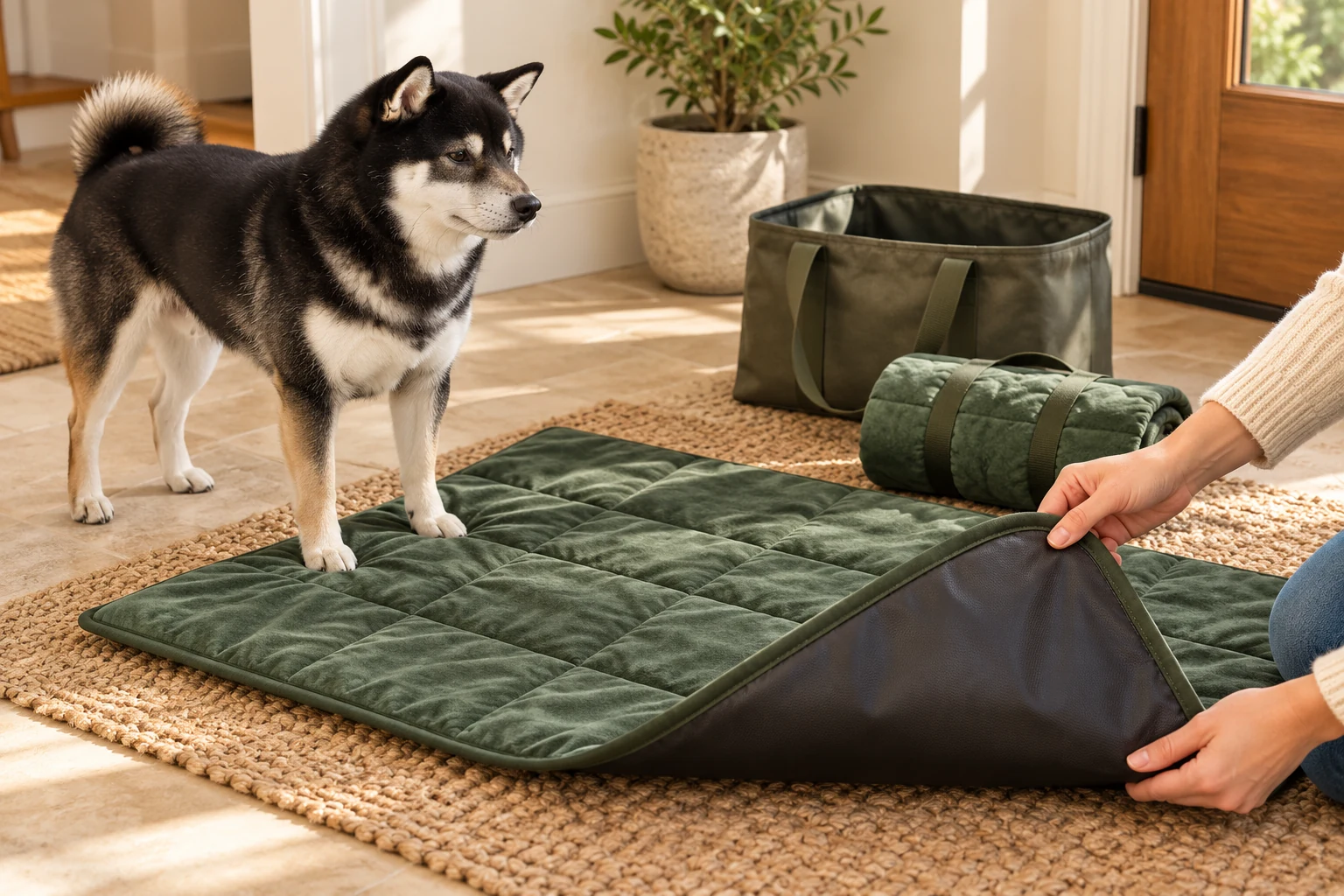
Check whether water protection applies to the top, underside or complete construction. A water-resistant top may shed a brief splash while allowing moisture through during longer exposure. A waterproof underside does not stop water entering from above, and a stitched edge may need separate care.
Choose a dry, level rest site first. Keep the mat away from puddles, tent-wall condensation and runoff paths. Lift it during breaks to check the surface underneath, and inspect both sides before moving it from a campsite into a room. A thin barrier can separate a bed from a dirty floor, but it must lie flat and must not turn the setup into a sliding layer.
On hotel tile or laminate, check the bed's movement when the dog steps on, turns and rises. A nonslip description is worth inspecting on the actual floor. Avoid putting a mat across a doorway or narrow path where people have to step over the dog. For placement principles, see where to put a dog bed.
Two exact Amazon options to compare
These are concrete examples of two packing formats. We have not tested them ourselves. Match the dimensions and construction to the trip before comparing the current listing, seller and return terms.
| Exact example | Open dimensions stated by maker | Packed dimensions stated by maker | Decision to make |
|---|---|---|---|
Chuckit! Travel Pillow Bed | 39 by 30 inches, oval; approximately 3 inches thick | A stuff sack is included; a reliable packed measurement is not established here | Check the oval sleep area, then request packed size and carry weight |
Kurgo Loft Wander, Large | 48 by 36 by 3 inches | 17 by 9.5 inches rolled | Check whether the larger open surface and rolled bundle both fit the trip |
These dimensions come from the manufacturers. Kurgo's Medium has a smaller stated open surface of 36 by 27 by 2 inches and a 12.5 by 8-inch roll. The card below links to Large. Confirm the selected variant on the listing, and ask for current packed weight if you will carry it any distance. We do not have a verified weight comparison for these two examples.
Chuckit! Travel Pillow Bed: a stuffed, quilted option
Petmate's Chuckit! Travel Pillow Bed information describes a quilted bed with a poly-suede top, ripstop underside, stuff sack and machine-washable construction. The maker calls it water-resistant. Compare the oval surface with your dog's stretched outline and confirm that you can dry the whole bed between travel days.
Kurgo Loft Wander: a roll-up bed with a dedicated underside
Kurgo's Loft Wander Bed page distinguishes a water-resistant ripstop top from a waterproof Rufftex underside and describes a rolling format with a carrying handle. Its care instructions call for gentle washing and hanging to dry. The linked example is Large in Chili Red. Use the dimensions for that exact variant when comparing it with your luggage and dog.
Washability matters more on a moving itinerary
Work backward from the next clean sleeping place. If the whole bed needs washing after one muddy day, will you have a suitable machine and enough drying time before the next night? A wipeable underside can simplify dirt removal, but the top and filling still need the care printed on the product label.
Pack a separate bag for temporarily containing a dirty or damp bed. Open it and dry the bed promptly when facilities allow; do not make a sealed wet roll its normal storage arrangement. A spare washable layer may help with light surface dirt if the maker allows it, provided it stays flat and does not make the bed slippery.
Before leaving home, wash or clean the bed as directed and practice repacking it. Check whether fill clumps, a cover becomes difficult to refit or a carry strap distorts the sleeping surface. The Dog Bed Cleaning Schedule gives you a place to record care and inspection tasks.
Hotels, rented rooms and campsite setup
Confirm the destination's current pet rules before booking. Ask about floor bedding, furniture access, unattended dogs and any crate requirements. AVMA's travel guidance recommends checking destination restrictions and acclimating pets to travel equipment in advance. A familiar bed can be part of preparation, but it does not guarantee a dog will settle alone in an unfamiliar room.
At arrival, inspect for cords, small objects and unsuitable floor cleaners before placing the bed in a quiet accessible area. Keep the dog's normal water, toilet and rest routine as practical. At a campsite, check the tent footprint and exit path with the bed fully open; it should not force the dog against a damp wall or block the door.
Keep transport separate. VCA's travel guidance discusses securing dogs in an appropriate crate or harness system. A travel bed does not restrain a dog in a moving car. If adding bedding inside a crate, follow that crate's instructions and preserve usable height, ventilation and stable fit. Start with the car crate guide or vehicle harness guide for that decision.
A trial before the return window closes
Unpack the bed indoors and check seams, straps and closures. Compare the open bed with the measurements you recorded, then let the dog rest on it without forcing a stay. Try the floor type you expect to encounter and inspect movement as the dog gets up.
Pack the bed with your normal luggage, carry the load the expected distance and unpack it again. Time your own setup if late arrivals or frequent stops are part of the trip. Finally, run the permitted cleaning routine and allow full drying before evaluating the bed again. Keep packaging and check return conditions before washing or using it outdoors.
Travel bed questions
Owners ask about a packable mat that still cushions a hard floor and which bed is practical for camping. Both questions come back to padding and how much you can carry. Use those discussions for questions to ask, then check product instructions and fit; the anecdotes do not establish performance.
Frequently asked questions
Is a travel dog bed better than taking the usual bed?
A travel bed makes sense when the usual bed is too bulky to carry or awkward to clean away from home. If your dog needs substantial support and you have space in the car, taking the established bed may be easier. Compare the full sleeping and packing arrangements.
How small should a travel dog bed pack?
There is no universal target. It needs to fit the bag or vehicle space available and be manageable at every stop. Check the selected size's packed dimensions and carry weight, including the sack and straps. Practice packing it yourself before relying on the advertised bundle.
Can a thin travel mat be used for overnight sleep?
That depends on the dog, surface, conditions and padding. A mat suitable for a short cafe stop may be inadequate for a full night on a hard floor. Observe a proper rest trial at home, and obtain veterinary advice if pain or mobility issues affect bedding needs.
Does a waterproof underside make a bed suitable for winter camping?
No. Moisture protection and insulation are different properties. Check any model-specific thermal evidence and the complete shelter and weather plan. Do not assign a cold-weather rating based on quilting, a product photograph or a waterproof claim.
Can I use a travel dog bed inside a car crate?
Only when the crate instructions allow that bedding and the dimensions remain suitable. Check headroom, door movement, ventilation, bunching and chewing risk. A bed that fits the cargo floor can still be unsuitable inside the crate. The crate or harness provides restraint.
What if the underside slides on hotel flooring?
Try another safe placement and check the maker's advice about an appropriate nonslip foundation. Do not stack loose towels into a sliding platform. If the setup still shifts as the dog turns or rises, choose a bed or arrangement that stays stable on that surface.
How do I pack a wet travel bed?
Use a separate bag to keep wet or dirty material away from clean luggage for the journey to a suitable drying place. Unpack it promptly, clean and dry according to the label, and avoid storing it compressed while damp. Plan a dry backup resting surface when needed.
Will bringing a bed stop my dog being anxious in a hotel?
A bed familiar from home may be useful preparation, but it cannot guarantee calm behavior. Practice settling before the trip and plan for supervision and the property's rules. Ask your veterinarian or a qualified behavior professional when travel distress is a concern.
Use the Dog Beds hub for the broader comparison and the camping checklist for the rest of the overnight kit. Keep the bed's packing and cleaning supplies together in your dog gear bag so the first rest stop is easy to set up.