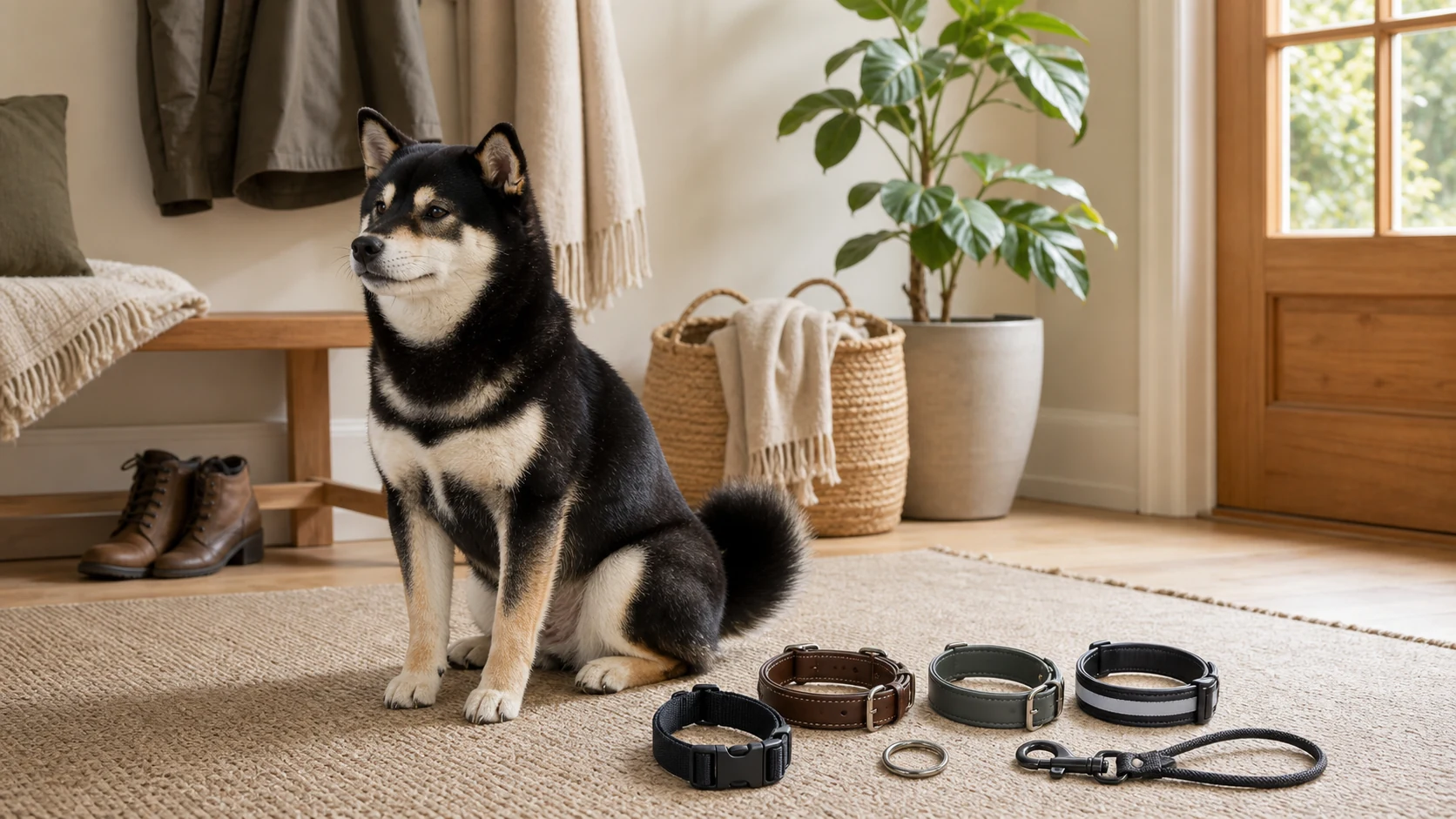
Dog collar material affects comfort, cleaning, odor, hardware weight, visibility, weather use, and how easy the collar is to inspect. For many dogs, a simple flat collar made from nylon webbing is the practical default for ID tags. Leather, coated webbing, reflective webbing, and specialty collars can make sense when they match the dog's size, coat, routine, and handling needs.
Start with the Dog Collars hub for the curated collar path or the broader Harnesses, Collars & Leashes pillar. Use this material guide with the Dog Collar Size Guide, Martingale Collar Guide, Dog Collar Size Calculator, Dog Harness vs Collar, and Collars and Leashes for Everyday Walks.
Quick read
Quick answer
- Nylon is the easiest starting point for many everyday ID collars because it is light, adjustable, common, and easy to replace.
- Leather can be comfortable and durable when maintained, but it dislikes repeated soaking and poor storage.
- Coated webbing can help with mud, rain, and odor because it wipes clean more easily than absorbent fabric.
- Reflective details help low-light routines but do not replace fit, secure hardware, and safe handling.
- Hardware matters as much as material: buckle, D-ring, ID ring, stitching, rivets, and clip compatibility all need inspection.
- Use a harness for leash attachment when neck pressure, pulling, coughing, gagging, or small-dog sensitivity is a concern.
Share & embed
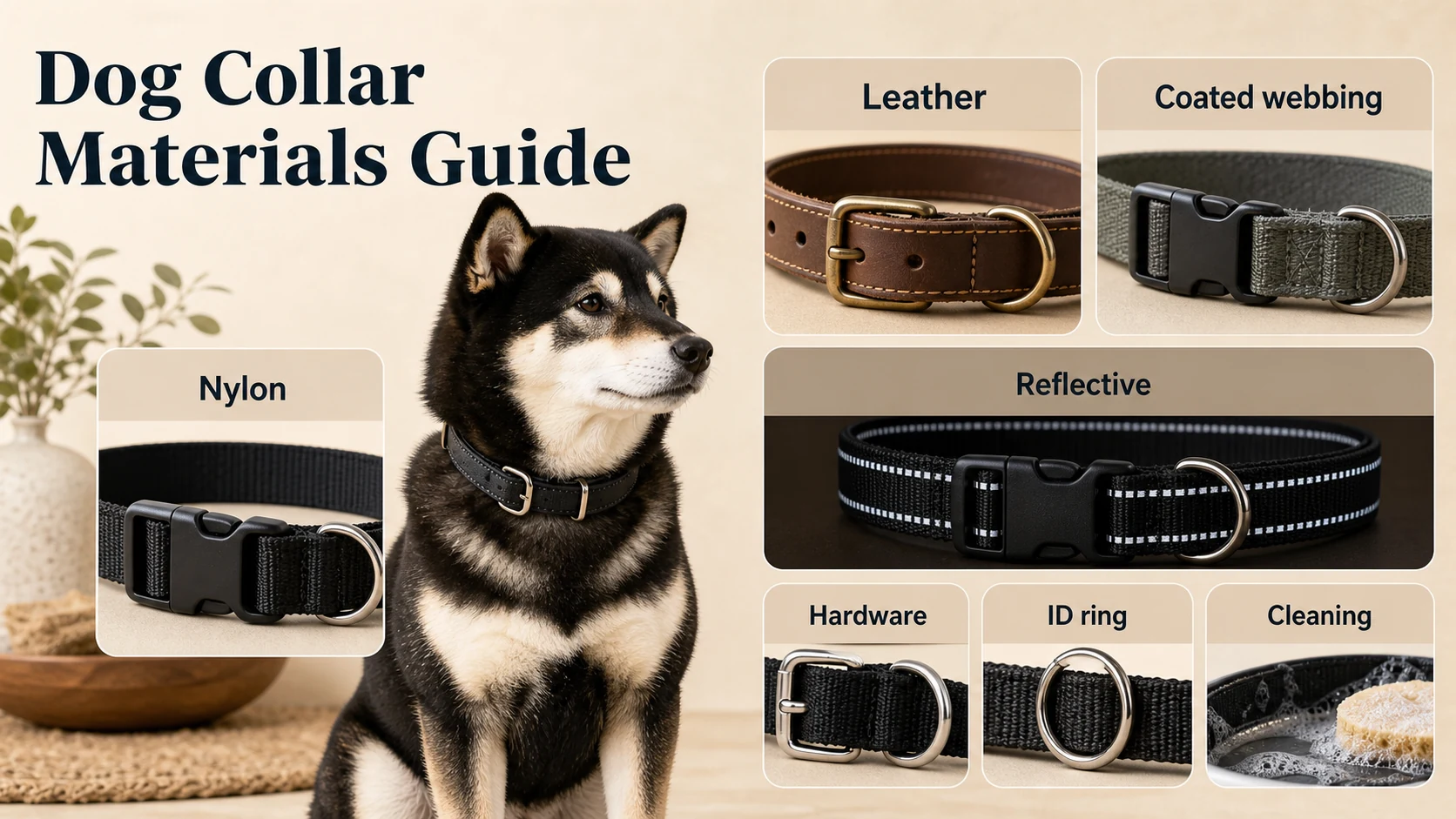
Collar materials at a glance
| Material | Best use | Watch for |
|---|---|---|
| Nylon webbing | Everyday ID collars, puppies, budget-friendly replacement | Edge rubbing, fraying, plastic buckle quality, odor after repeated wet use |
| Leather | Traditional feel, adult dogs, owners willing to maintain gear | Cracking, water damage, heavy hardware, poor stitching or rivets |
| Coated webbing | Mud, rain, snow, beach, odor-prone routines | Stiff edges, slick feel, buckle quality, unclear material claims |
| Reflective webbing | Early morning, evening, and low-light walks | Reflective trim does not fix weak buckles or poor fit |
| Chain or specialty collars | Narrow training or chewing edge cases | Weight, neck pressure, misuse risk, need for qualified guidance |
Nylon collars
Nylon webbing is the most practical first comparison for many dogs. It is widely available, light enough for small dogs, easy to adjust, and affordable to replace when it starts to fray or smell.
Check the edges with your fingers. A collar can look fine in photos but feel sharp at the edge or bulky near the buckle. Also check stitching, buckle quality, tag ring placement, and whether the collar width matches the dog's neck.
Nylon is not automatically low quality. A well-made nylon collar with clean stitching and appropriate hardware can be a better daily choice than a more expensive material that is too heavy, stiff, or hard to clean.
Leather collars
Leather can feel comfortable over time and can look cleaner in a home setup, but it needs care. Repeated soaking, poor drying, and lack of conditioning can lead to stiffness or cracking. Leather can also be heavier than nylon, especially when the buckle and D-ring are large.
Look for clear material wording, clean stitching or secure rivets, finished edges, and hardware that matches the dog. Be cautious with vague listings that focus only on style without showing the inside surface, buckle, D-ring, or size range.
Leather is usually not the simplest first collar for a muddy puppy, frequent swimmer, or dog whose collar needs constant washing.
Coated webbing collars
Coated webbing, including BioThane-style collars, can be useful when cleaning matters. The surface can often be wiped after mud, rain, snow, beach walks, or odor-prone routines. That can make coated collars easier to maintain than absorbent fabric.
The tradeoff is feel. Some coated collars are stiff, slick, or heavier than expected. Check whether the collar bends comfortably, whether the edges feel smooth, and whether the hardware is corrosion-aware for wet routines.
If a listing uses branded material claims, read the listing carefully. Treat "BioThane-style" or "waterproof" wording as a buying prompt, not as proof that the collar is right for every dog.
Reflective collars
Reflective stitching or panels can help in early morning or evening routines. It is a useful feature for dogs that wear a collar for ID during low-light walks, yard breaks, or travel stops.
Visibility is still a second-level feature. Fit and hardware come first. A reflective collar with a weak buckle, rough edge, or poor size range is not a good trade.
For low-light walks, pair collar visibility with a visible leash, safe route choice, and attention around cars, bikes, and driveways.
Hardware, ID rings, and width
The collar material is only one part of the decision. The weak point is often the buckle, D-ring, tag ring, stitching, rivets, or adjustment hardware.
Check:
- Buckle type and whether it closes cleanly.
- D-ring and ID ring placement.
- Stitching around high-stress points.
- Rivets or seams on leather collars.
- Collar width relative to the dog's neck.
- Hardware weight for small dogs and puppies.
- Whether tags hang comfortably without rubbing.
Use the Dog Collar Size Guide before deciding that a material is the problem. Sometimes the collar is simply too wide, too loose, too tight, or too heavy.
Commercial comparison points
These direct Amazon product CTAs are comparison starting points, not universal winners. What Dogs Like may earn from qualifying purchases. Affiliate links do not change the buying checks in this guide: measure first, compare current size charts, inspect hardware, and recheck fit after normal use.
Affiliate shopping checks
Compare collar material categories
What Dogs Like may earn from qualifying purchases. Affiliate links do not change the collar material checks in this guide.
Common mistakes
✓ Better buying habits
Better collar material habits
- Choose material after measuring the neck.
- Match width and hardware weight to the dog.
- Use reflective details when low-light visibility matters.
- Use coated webbing when cleaning and odor are the main issues.
- Maintain leather collars if you choose leather.
- Inspect buckles, D-rings, stitching, and tag rings regularly.
- Use a harness for walks when neck pressure is a concern.
× Mistakes to avoid
- Choosing collar material only by color or style.
- Buying heavy hardware for a small dog or puppy.
- Treating waterproof wording as a safety claim.
- Ignoring rough edges, cracked leather, or frayed nylon.
- Using a collar to manage strong pulling.
- Leaving a wet collar on without checking the skin and coat.
- Keeping damaged buckles, D-rings, or loose stitching in daily use.
Related guides
Use the Dog Collar Size Guide and Dog Collar Size Calculator before choosing any material. Read Dog Harness vs Collar if the leash might attach to a harness instead of a collar. Use Dog Collar vs Harness for Puppy when puppy growth, ID tags, and first-walk gear are part of the decision.
For the rest of the walking setup, read Collars and Leashes for Everyday Walks, Best Leash for Puppy if the dog is young, Dog Leash Length Guide, and Dog Leash Materials Guide. Use the Harness Fit Checklist if leash attachment moves to a harness. Return to the Harnesses, Collars & Leashes pillar for the full walking gear framework.
Helpful authority resources
The AKC guide to choosing the right dog collar covers collar styles, materials, features, cleaning, width, and fit considerations. The RSPCA leash-equipment guidance emphasizes suitable, comfortable, correctly adjusted collars or harnesses. ASPCApro's leash-handling guide is useful context for calm handling and avoiding constant leash pressure.
Frequently asked questions
What is the best dog collar material?
There is no single best material. Nylon is a practical default for many dogs, leather can work well with care, and coated webbing can help with wet or muddy routines.
Are leather dog collars better than nylon?
Not automatically. Leather can feel comfortable and durable when maintained, while nylon is lighter, easier to replace, and often simpler for puppies or everyday ID use.
Are waterproof dog collars worth it?
They can be worth comparing if your dog gets wet, muddy, or smelly often. Check stiffness, edge feel, buckle quality, and whether the material claim is clearly explained.
Should a puppy wear a nylon or leather collar?
Many puppies do better starting with a lightweight adjustable nylon collar because growth checks, hardware weight, and easy replacement matter more than style.
Do reflective collars make night walks safe?
Reflective details can improve visibility, but they do not replace a secure fit, safe route choice, visible leash, and careful handling around traffic.
Can a collar material stop pulling?
No. Collar material does not train loose-leash walking. If pulling creates neck pressure, coughing, gagging, or handling problems, reassess the setup and consider a well-fitted harness plus training support.